Thrustmaster vs Logitech in 2026: Where Each Brand Still Excels
OC Racing
February 1st, 2026
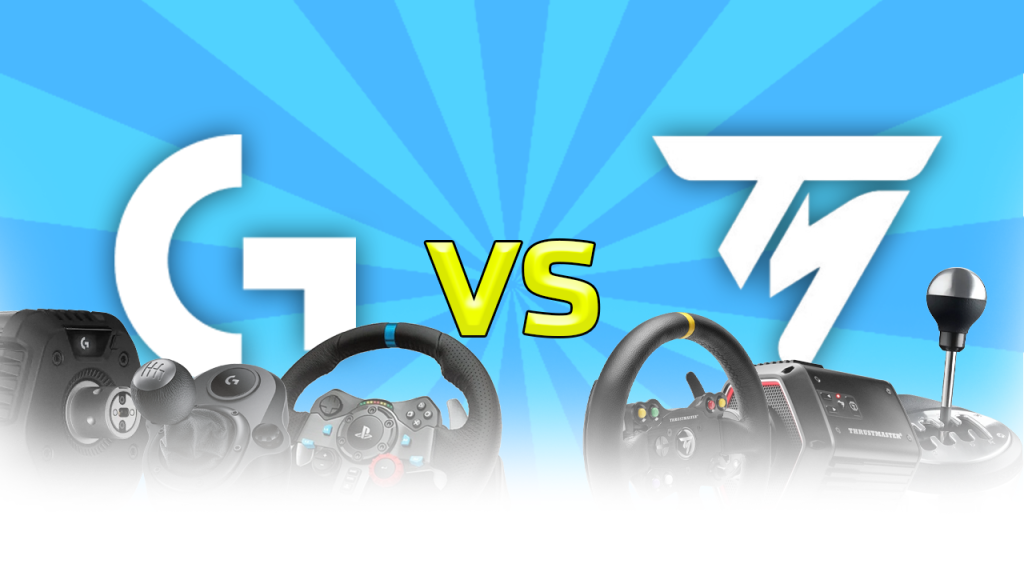
It’s 2026 and the sim racing market has moved faster than most people realize. Direct drive is no longer “high end”, entry level bundles are getting cheaper, and there are more good options than ever. Yet somehow, Thrustmaster and Logitech are still two of the biggest names in the space, especially for console users and first time buyers. The difference now is that they are not really chasing the same customer anymore. Logitech has leaned into polished, simplified systems that are easy to live with, while Thrustmaster has doubled down on variety, ecosystem depth, and upgrade paths.
So instead of doing the usual brand vs brand debate, I’m breaking this down by tier and by use case. Here’s how their current lineups actually stack up in 2026, what each brand does better, and which one makes more sense depending on where you’re starting.
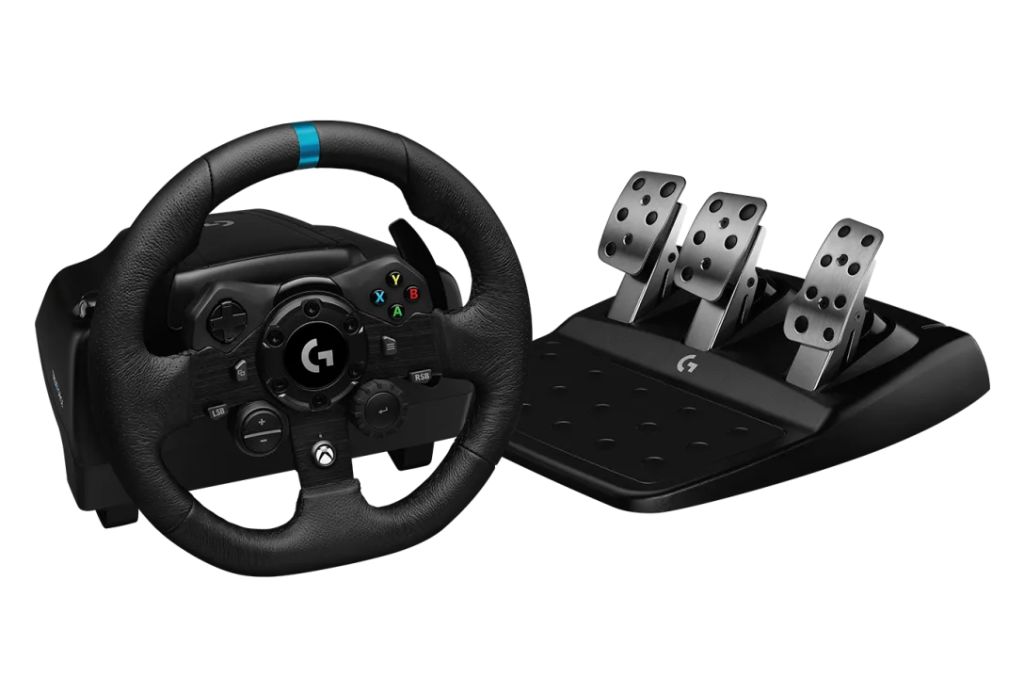
At the entry level, Logitech is still everywhere. The G29, G920, and G923 remain some of the most commonly sold sim racing wheels in the world. They are widely available, often heavily discounted, and extremely easy to resell. New pricing typically lands between $200 and $250, depending on region and bundle.
The reason these wheels still sell so well is not because they are modern, but because they are familiar. Setup is easy, compatibility is broad, and reliability is well proven. For someone who wants something simple that works on day one, Logitech still offers a very low barrier to entry.
That said, the technology itself is clearly dated. Gear driven force feedback feels loud, notchy, and imprecise compared to newer belt driven and direct drive alternatives. In 2026, that difference is no longer subtle.
Thrustmaster counters at this level with the T128 and T248. These wheels feel noticeably more modern in both design and driving feel. Force feedback is smoother, inputs feel more refined, and the overall experience is closer to what people now expect from a sim racing setup.
Both brands offer PC and console compatibility here, but if you are buying new in this price range today, Thrustmaster’s entry level options are easier for me to recommend based purely on driving feel and overall refinement.
Mid Range: Direct Drive Enters the Picture
The mid range is where things start to get more interesting.
Logitech’s RS50 sits in a somewhat unusual position. Base only pricing typically falls between $350 and $450, while full bundles with pedals and wheel can climb into the $699 to $799 range. What Logitech is offering here is a relatively compact direct drive system with clean force feedback and a strong focus on simplicity.
On track, the RS50 performs well. Force feedback is smooth, responsive, and detailed enough to feel like a proper step up from entry level gear. The base itself is solid, well cooled, and easy to live with. Where Logitech still falls short is ecosystem depth. Wheel and accessory options remain limited compared to most competitors.
Thrustmaster’s answer in this space is the T598. Priced around $599, it is marketed as a more complete, console friendly direct drive experience out of the box. You get a stronger ecosystem, more wheel options, and broader expandability.
That said, purely from a force feedback and feature perspective, I do prefer the RS50 base itself. Its tuning feels more refined, and the overall driving experience comes across as more polished. Thrustmaster wins on ecosystem and flexibility, but Logitech takes the edge in how the base actually performs on track.
High End: Performance vs Ecosystem
At the high end, the comparison becomes much clearer.
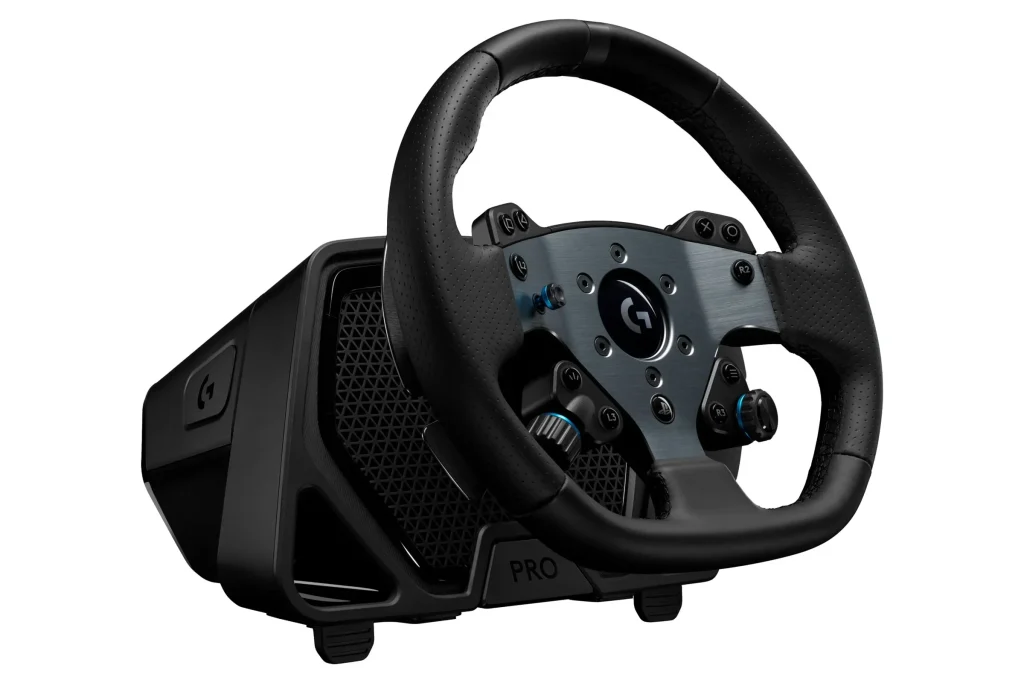
Logitech’s G Pro system sits between $999 and $1,199 depending on configuration. This is Logitech’s flagship offering, and it shows. The base delivers strong, detailed force feedback, excellent consistency, and a feature set that finally feels competitive at this level.
Build quality is excellent, thermals are well managed, and the driving experience feels composed even during long sessions. They clearly put serious effort into getting this right, and it stands as one of the strongest products they have ever released for sim racing.
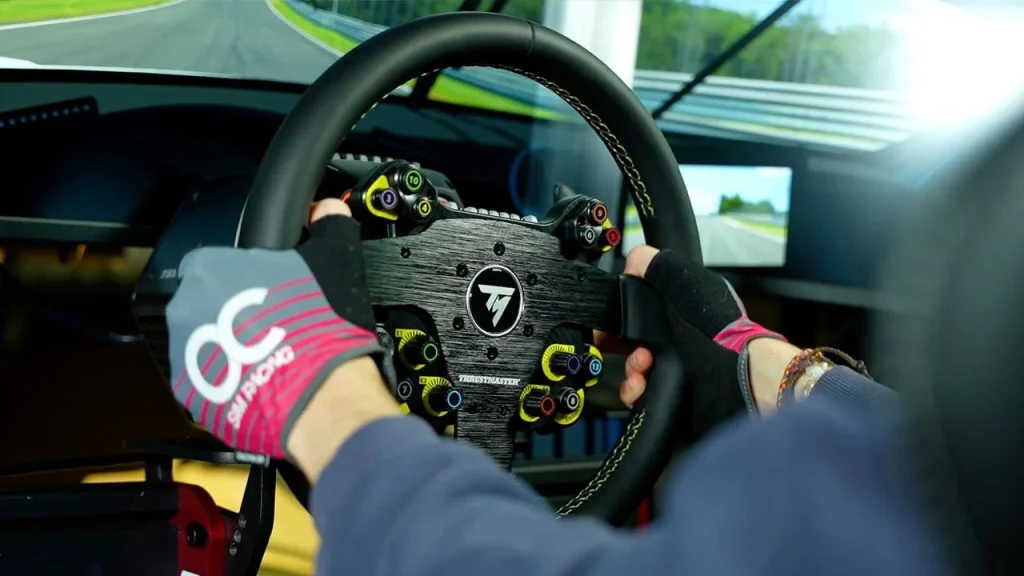
Thrustmaster’s T818 base typically comes in around $649, with branded bundles pushing the total cost higher. While the T818 offers solid performance and integrates well into Thrustmaster’s broader ecosystem, it does not quite match the G Pro in terms of base level features or overall driving feel.
Once again, Thrustmaster’s advantage is choice. Wheel options, licensed rims, and accessory support are far more extensive. But if we are talking strictly about the wheelbase itself, Logitech has the upper hand at the high end.
Ecosystem Depth and Long Term Flexibility
This is where Thrustmaster continues to shine.
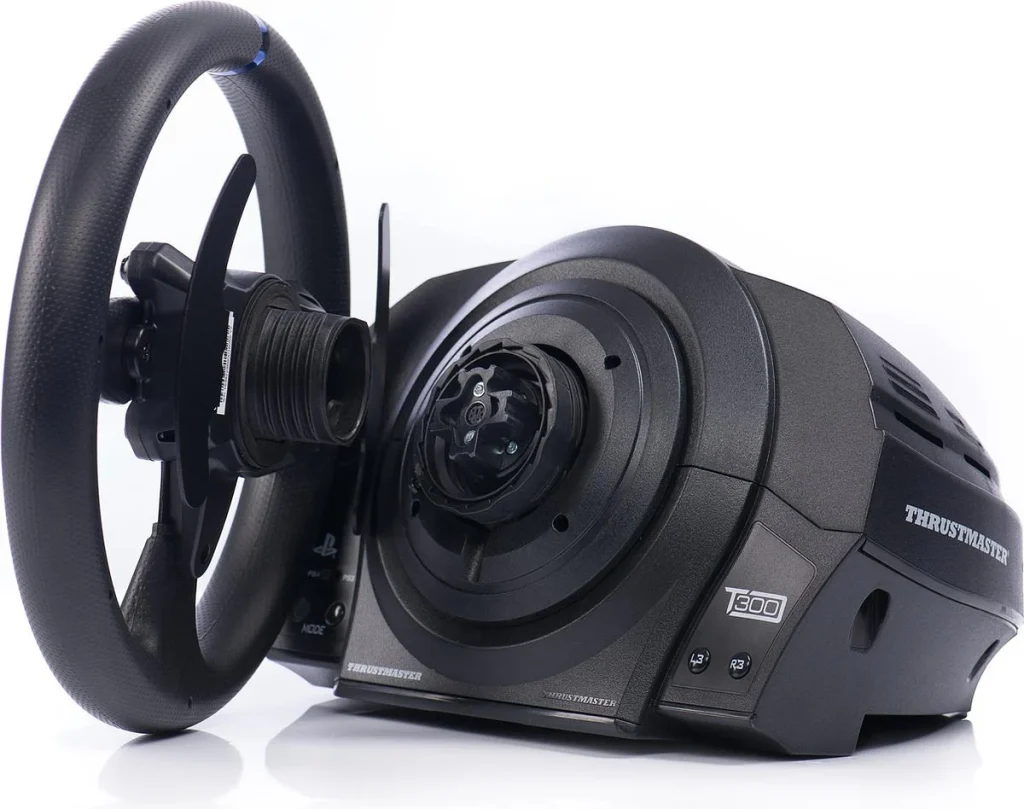
Beyond the direct head to head products, Thrustmaster offers a much wider range of hardware that Logitech does not compete with directly. The T300 series is still widely used, there are numerous licensed wheel options, and accessory compatibility across generations remains strong.
Logitech’s ecosystem is far more controlled and limited. While that can make things simpler, it also restricts long term upgrade paths. If you enjoy swapping wheels, adding accessories, or building a more personalized setup over time, Thrustmaster offers significantly more flexibility.
So Which Brand Makes More Sense in 2026?
The answer depends heavily on where you are entering the hobby.
At the entry level, Thrustmaster’s newer products feel more modern and offer a better driving experience if you are buying new. Logitech still makes sense if you find a good deal or value ease of resale and familiarity.
In the mid range and high end, Logitech’s wheelbases themselves are stronger in terms of force feedback quality and refinement. However, Thrustmaster remains more appealing if you care about ecosystem depth and long term expandability.
Neither brand is universally better anymore. They simply serve slightly different types of sim racers.
Final Thoughts
In 2026, Thrustmaster and Logitech are no longer direct mirrors of each other. Logitech has leaned hard into polished, self contained systems with strong base performance. Thrustmaster continues to offer breadth, flexibility, and a wider range of price points.
If you value driving feel above all else, Logitech’s higher end offerings are very compelling. If you value choice, compatibility, and long term flexibility, Thrustmaster still holds a clear advantage.
As always, the right answer depends less on brand loyalty and more on how you plan to use your sim racing setup.
It is 2026, and despite how much the sim racing market has evolved, Thrustmaster and Logitech are still two of the most recognizable names in the space. Both brands continue…
It has been a full year since I first reviewed the Conspit Ares wheelbase. Since then, Conspit has grown noticeably in relevance within the sim racing hardware space, not just…
Moza just dropped the KS Pro, a $330 formula-style wheel that looks familiar at first glance, but has a few genuinely interesting details once you spend time with it. Here…
The Logitech G29 is still everywhere in 2026, but that does not mean it still deserves to be. Here is why buying one new today makes very little sense.
The Logitech G29 and G920 were once the go-to beginner wheels in sim racing, but in 2026 they face tough competition from affordable direct drive systems like the Moza R3.…
Is iRacing actually overpriced, or simply misunderstood? A realistic breakdown of its pricing model, long term value, and who it really makes sense for.
Race Sim Studio’s GT-M Macca 72 V8 Evo is a McLaren 720S GT3 Evo-inspired Assetto Corsa mod with top-tier visuals, excellent physics, and strong GT3 drivability. At around £4.19, it…
Fanatec’s long awaited Podium Wheel Base delivers massive torque, excellent force feedback clarity, and FullForce support, but its size, price, and limited feature compatibility raise important questions. Here is my…