Long Awaited GT-M Bayer i6 Evo Released for Assetto Corsa
ace Sim Studio introduces the GT-M Bayer i6 Evo for Assetto Corsa, featuring advanced physics, extensive customization, and a new Balance of Performance baseline for 2026

After well over a decade, Logitech has finally released a new H pattern sim racing shifter. What surprised me most is that this is not really a direct replacement for the massively popular Driving Force Shifter, but more so an upgraded alternative. Coming in at $160, this is the all new Logitech RS Shifter, and after spending a good amount of time with it, I have to say my feelings on it are pretty mixed.
Because on one hand, this is clearly a more premium product than the old one. It looks better, it feels better built, and in a few areas Logitech has made some genuinely welcome improvements. But on the other hand, the part that matters most in a shifter, the actual shifting feel, left me disappointed. And unfortunately, that ends up shaping this whole review quite a lot.
Verified purchase options at lowest current prices:
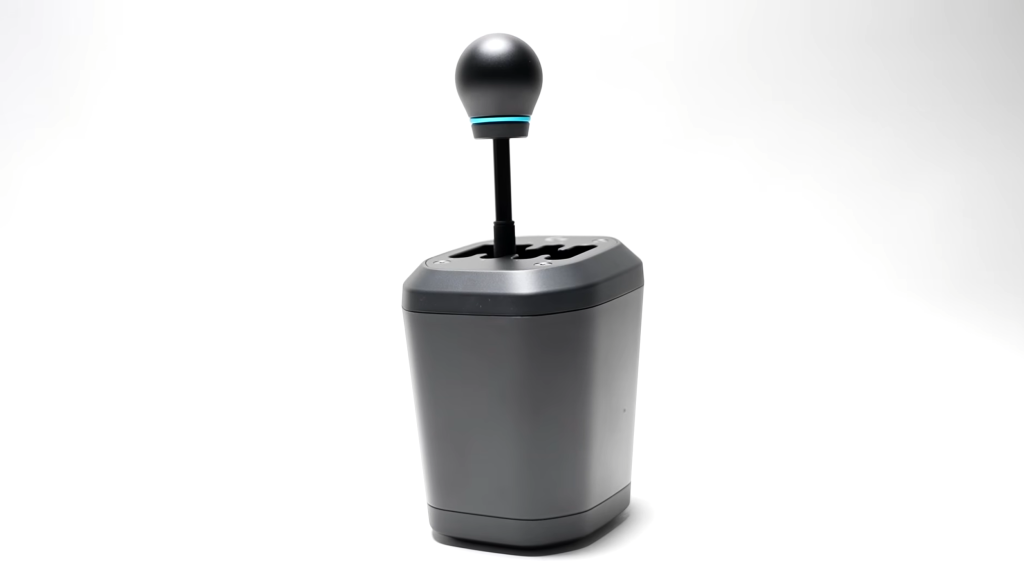
Sleek and simple in design, the RS Shifter uses a seven speed layout with a separate slot for reverse. At a glance, it looks clean and modern, and mounted on a rig it definitely gives off a more upscale impression than Logitech’s older Driving Force unit. The main housing is made of ABS plastic, which may not sound all that exciting on paper, but in person it actually does feel decently solid. It is stiff, it is rigid, and it does not come across as cheap once you have it in your hands.
That said, it is absolutely a fingerprint magnet. So while it looks sophisticated and subtle, especially on a clean cockpit, it is also one of those products that starts showing smudges pretty quickly. Still, from a visual standpoint, Logitech did a good job here. The proportions feel right, the gated layout is intuitive, and the overall design is restrained in a good way. Nothing about it feels overstyled or gimmicky, which I do appreciate.
Talking about mounting, Logitech includes a pretty heavy duty steel and nylon clamp that can be placed either on the back or on the bottom of the shifter. That gives it a good bit of versatility for anyone planning to use it on a table or desk, and if you have a dedicated cockpit, you can also hard mount it without needing the clamp at all. That is how I used it, and once bolted down, it stayed planted very well. There is very little to complain about on the mounting side.
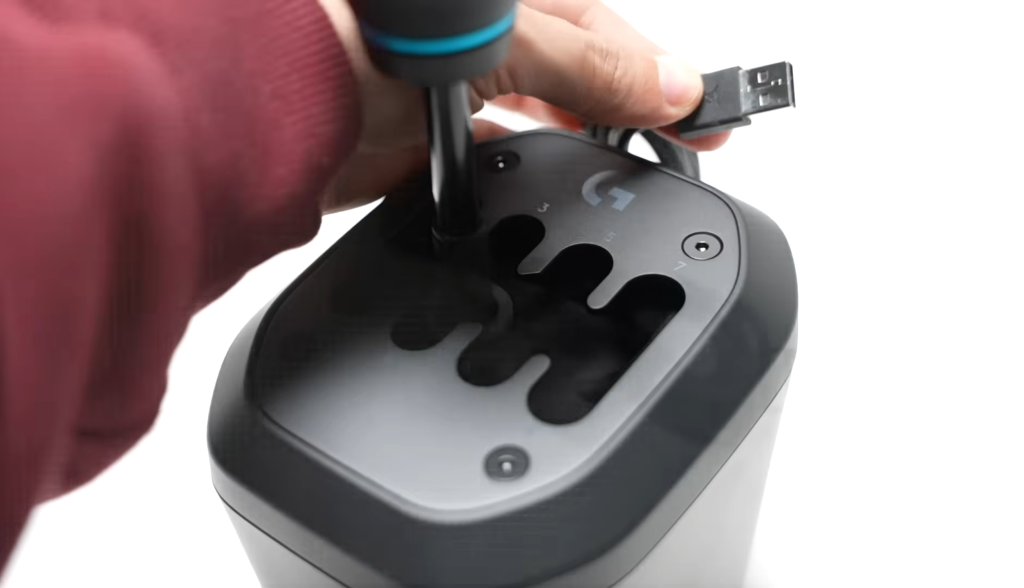
Unlike the old Driving Force Shifter, this one also connects independently through USB, either directly to a Logitech RS50 or G Pro wheelbase, or straight to a PC. That is a meaningful improvement and makes the product more flexible overall. It also means that if you plug it into one of those wheelbases and use it on console, it shares that same console compatibility. However, if you are using a Logitech G29, G920, or G923, you will need Logitech’s adapter to connect it to those older bases, since they do not have a direct USB input for it.
As standard, Logitech includes an aluminum shift knob, and this is actually one of the nicer parts of the package. It feels great in the hand, it is a good size, and because it has some weight to it, it adds a more premium feel to the experience. It can also be swapped out for other third party knobs using the same thread size, which is not groundbreaking but is still a nice touch. Inside the gated housing, there is also a fabric barrier to help keep dust and debris away from the internal components, and Logitech uses Hall effect sensors for contactless inputs. That should help a lot with reliability and longevity over time.
Before getting into the biggest issue, I do want to give the RS Shifter credit where it deserves it. From a structural standpoint, this thing is genuinely solid. There is basically no unwanted flex or wobble in the unit itself, and once it is mounted, it feels secure and confidence-inspiring. Paired with the weight and feel of the aluminum knob, the whole thing does have a premium on-hand feel. It is a noticeable step up from the old Driving Force Shifter in that respect, and that part is immediately obvious.
I also think Logitech got the basic ergonomics right. The travel and spacing between the gears feel natural, the layout never felt awkward, and the hand movement required from gear to gear makes sense. So from a pure usability standpoint, this is not some poorly laid out shifter with strange gate placement or an odd shape. In terms of how it sits on a rig and how your hand interacts with it, it is actually pretty good. That makes the main issue here even more frustrating, because it means the foundation is solid.
Now for the part that really matters. Unfortunately, on track and just to me personally, the RS Shifter feels unrealistically stiff. I have been testing it for quite a while, and I really just could not get used to the shifting action. Unlike a real car, where there is often at least some sense of progressive movement as you guide the lever through the gate, this feels far more binary. You are either fully in gear or you are not. Because of that, the whole action comes across as exaggerated and harsh rather than satisfying.
And if I am being totally honest, that made it feel a bit toyish despite the otherwise premium construction. There is just very little fluidity to it. Instead of feeling mechanical in a realistic and enjoyable way, it feels unnecessarily aggressive. Every shift comes with a very noticeable clunk, and while I do usually like a bit of mechanical feedback in a shifter, here it feels overdone. Several friends also tried it here in the studio, and all of them basically came away saying the same thing. The lack of smoothness stands out right away.
Part of the problem is that Logitech gives you no way to adjust or fine tune the resistance. And that, to me, is a pretty major drawback. Some competing shifters offer either more flexibility in feel or extra functionality entirely, while the RS Shifter gives you one very specific action and expects you to live with it. If that action works for you, great. But if it does not, there is not much you can do about it. I really do think this product would have been far better if there were a way to reduce the resistance and make the shifts feel smoother and more progressive.
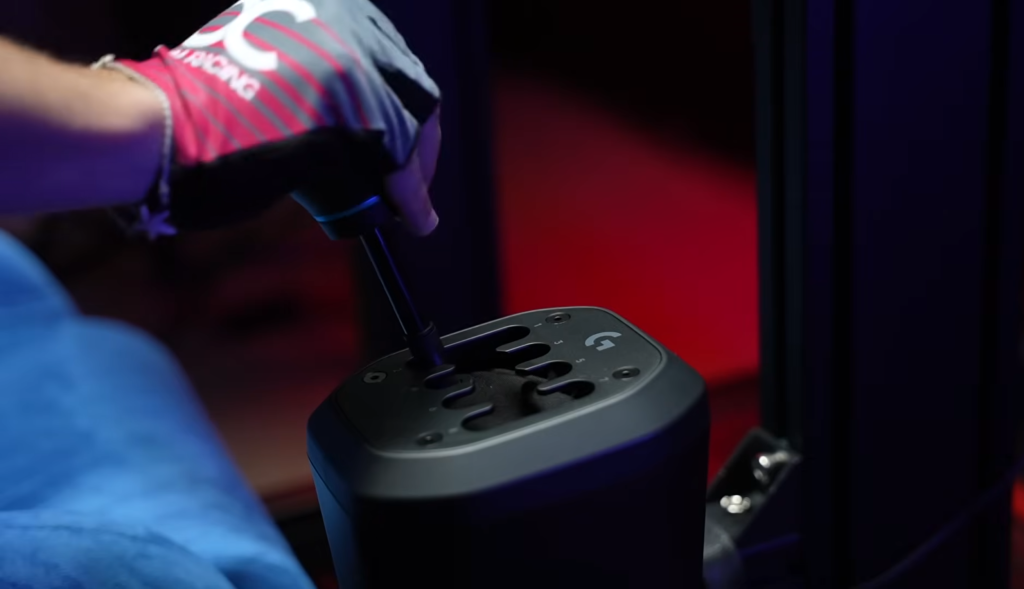
Apart from the general stiffness, the lockout gears also stood out to me for the wrong reasons. Engaging seventh and reverse takes a substantial amount of force, and while that alone is not necessarily a dealbreaker, the bigger issue is what happens when you try to come back out of seventh and go into sixth. The shifter wants to spring back toward the central neutral position with so much force that it becomes genuinely difficult to guide it properly.
Because of that, going from seventh to sixth was far harder than it should have been. More than once, I ended up going into fourth or even second instead. That is not the kind of thing you want from a shifter, especially one at this price point, because it starts affecting confidence and consistency. Again, it is not that the product feels weak or poorly built. Quite the opposite. It feels overly forceful in a way that gets in the way of clean, natural operation.
All things considered, the Logitech RS Shifter is competitive on paper, but if it were up to me, this would not be the route I would take. Yes, it is a clear upgrade over the old Driving Force Shifter, and yes, it makes sense for console users already invested in Logitech’s direct drive ecosystem. But when I look at what else is available around this same price point, I think several rivals simply offer a better experience.
I personally prefer the shifting feel of the Turtle Beach VelocityOne Multi Shift, the Moza HGP, the Thrustmaster TH8A, and the SHH Newt. Some of those feel smoother, some offer more flexibility, and some simply give you more features for the money. The Turtle Beach unit, for example, adds extra functionality with buttons, sequential use, and handbrake capability while also costing less. So while the Logitech RS Shifter definitely has a place in the market, especially for people wanting a clean Logitech ecosystem solution, I do not think it stands out as the best buy in this segment.
At $160, the Logitech RS Shifter gets a lot right in terms of build quality, rigidity, mounting flexibility, and general finish. It looks good, it feels sturdy, and in the hand it is undeniably more premium than Logitech’s older entry level offering. There is clear effort here, and in some respects this is exactly the kind of upgrade people have been wanting from Logitech for years.
But for me, the overly stiff and exaggerated shifting action is too big of a downside to ignore. A shifter can have solid materials and a nice knob, but if the actual act of changing gears does not feel good, that is going to define the experience. So while I can see the appeal of this product for some users, particularly those on console and already using Logitech’s newer wheelbases, I cannot recommend it over several of the alternatives in this price range. It is not a bad product, but it is one that could have been better.