Simlab Mercedes AMG Petronas F1 Team Cockpit Review (2026): Worth the Price?
OC Racing
February 8th, 2026
This is the brand new Mercedes AMG Petronas Formula 1 Team Sim Racing Cockpit. Yes, that is the full official product name, and yes, Simlab have once again teamed up with the Mercedes F1 team. This marks their second licensed product with the team following the previously released F1 wheel, and this time they have gone even bigger with a full Formula style chassis.
Designed using real world data, CAD files, and input from the actual team, Simlab claim this rig redefines the Formula cockpit genre. After having it built and testing it for several months, I am ready to go over what I like, what I do not like, and whether this cockpit is actually worth its enormous price tag.
There is no denying that Simlab absolutely nailed the overall design and finish of this rig.
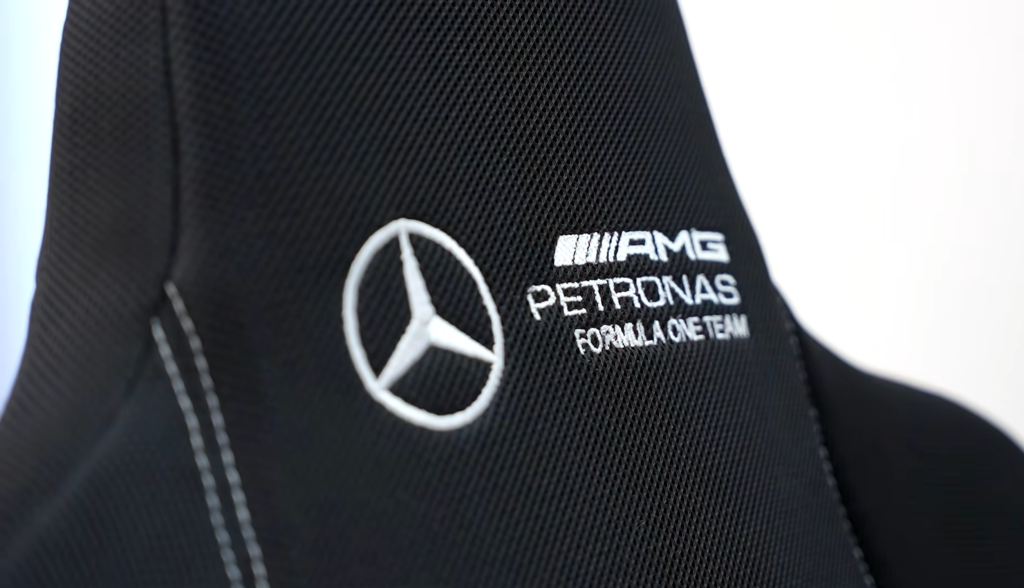
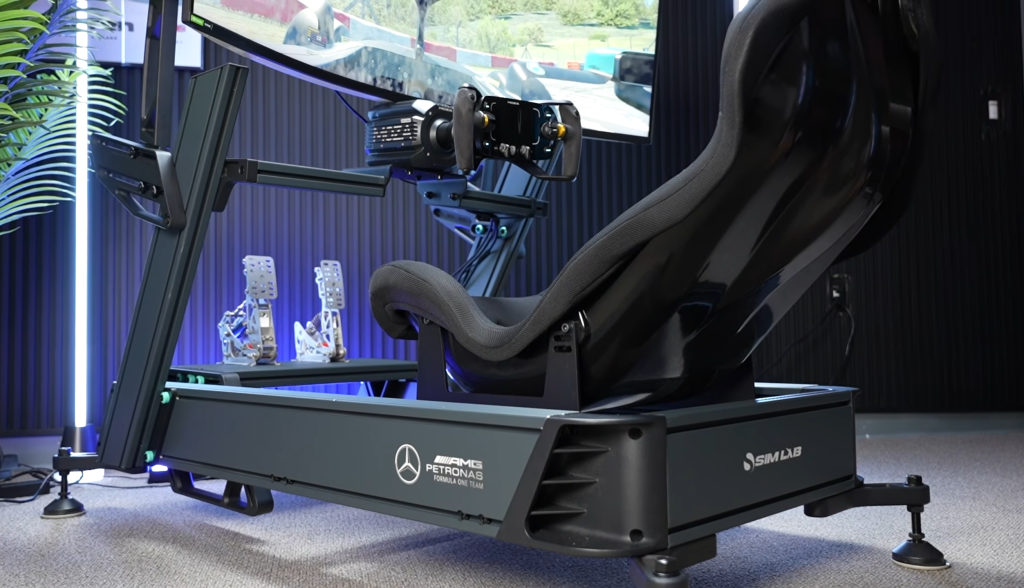
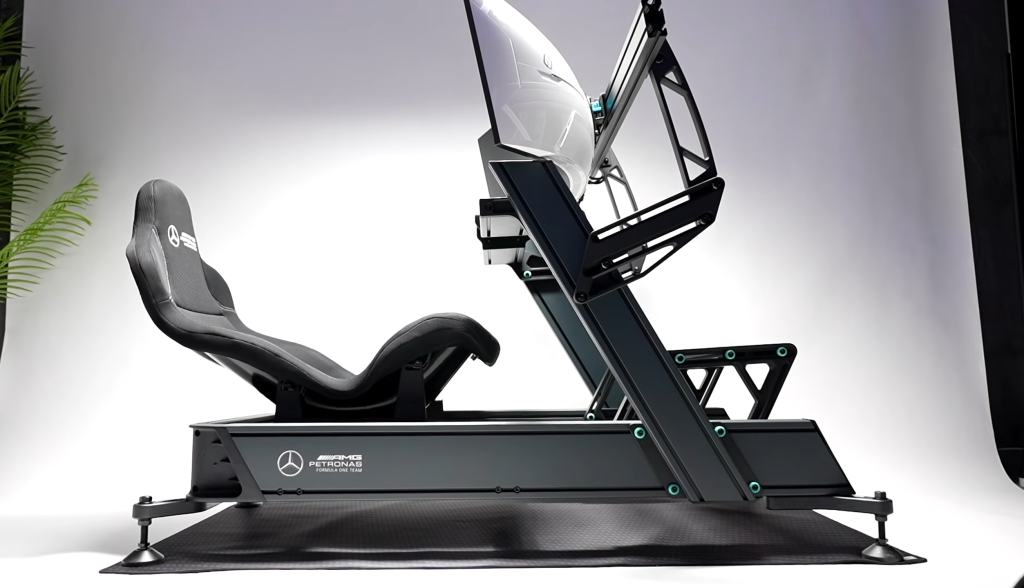
The custom aluminum profile comes in a space gray powder coated finish and uses some of the thickest profiles I have seen on a sim racing chassis. The Mercedes AMG Petronas F1 Team branding is tastefully integrated throughout. The team logo is stitched onto the seat and also featured on the rear sections of the chassis.
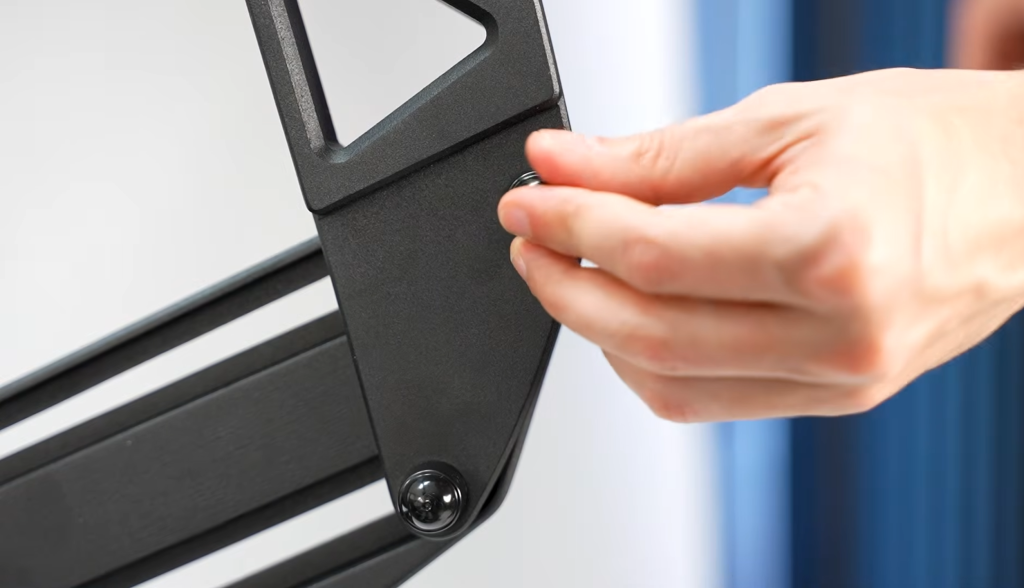
Custom corner brackets give the cockpit a futuristic look, and the four adjustable riser feet elevate the rig off the ground. This not only makes getting in and out slightly easier, but also gives it a wider and more aggressive stance. From a visual standpoint, it looks menacing.
However, some of these design decisions do come with trade offs. Simlab are not offering a dedicated shifter mount, at least not at the time of writing. The clean profile beams also reduce some of the modular flexibility you would normally expect from a traditional aluminum extrusion rig.
I also found the powder coated finish to be quite delicate. It is prone to scratching, and my unit had a small chip straight out of the box. At this price point, that is disappointing.
On a positive note, packaging was solid and the assembly process was smooth. Everything was neatly labeled and there was plenty of extra hardware included. My only real complaint is that there is no physical instruction manual. Instead, you are expected to use an online guide. For a premium product like this, I would have preferred something printed in the box.
Pricing Breakdown
Now we need to talk about the price, because this is not a small number.
In the United States, the chassis alone retails for around $1,100. The seat adds another $500. If you want to actually mount the seat properly, the required mounting brackets and seat slider cost an additional $100. The integrated single monitor mount is another $150.
Fully configured like mine, you are looking at roughly $1,850.
To be fair, this is one of the most unique Formula style cockpits available. When you factor in official Mercedes licensing, custom tooling, and the overall finish, the pricing is not completely outrageous. However, I strongly criticize Simlab for not including the seat mounting brackets either with the chassis or the seat. Charging extra for required hardware feels unnecessary at this level.
The Seat & Formula Position
The $500 seat is significantly more expensive than most competitors, but it is also clearly built with intent.
Developed with input from Mercedes, it aims to replicate a true Formula seating position. The breathable 3D fabric is extremely comfortable. I have spent hours in it without discomfort, and compared to other Formula style seats I have used, including the Alpine TRX seat, this one is more forgiving over long sessions.
Getting in and out of any Formula style cockpit is never going to be easy. However, thanks to the raised feet and seat slider, it is far more manageable here than on rigs like the Conspit FP Lite or older fixed position Formula chassis I have owned in the past.
If you are not committed to a low Formula seating position, this rig is simply not for you. But if you are, this is one of the most comfortable implementations I have tested.
Adjustability & Compatibility
As expected from an aluminum profile chassis, adjustability is solid.
You can dial in pedal distance, pedal angle, wheel height, and wheel tilt without too much difficulty. The seat slider makes fine adjustments easy once everything is mounted. That said, most adjustments still require tools. This is not a quick swap rig if multiple drivers of very different sizes plan to use it frequently.
The pedal plate design also requires some attention. Only pedals that can be bolted from the top down are compatible. You need to secure them into T nuts from above. Most modern pedals will work, but it is something to double check before buying.
Wheelbase compatibility is far less restrictive. The wheel deck supports nearly any modern direct drive base, so there are no real concerns there.
On Track Performance
After dozens of hours of use, I can confidently say this rig is rock solid.
Using a high torque direct drive wheelbase, I felt no flex whatsoever from the wheel deck. There were vibrations transferring into the chassis, which is expected on a rigid aluminum structure. If you are running a very strong base, I would recommend front mounting rather than using a universal deck for maximum stability.
The pedal deck was equally impressive. Even under heavy braking with high end load cell pedals, there was zero visible flex. No creaks, no movement, no surprises. It allowed me to remain consistent and confident under braking.
The seat also held up perfectly. Despite its high cost, it does what it should. It stays planted and does not introduce unwanted movement. That consistency matters, especially in longer races.
The integrated single monitor mount performed well too. While it is not as adjustable as a freestanding mount, it complements the rig aesthetically and I experienced no noticeable vibration affecting the display.
Final Thoughts
The Simlab Mercedes AMG Petronas F1 Team Sim Racing Cockpit is not for everyone. You need to want a Formula seating position. You need to be comfortable spending nearly two thousand dollars. And you need to value the design and official licensing enough to justify the premium.
For someone who meets those criteria, this is an easy recommendation. It is extremely well built, visually striking, and delivers the rigidity and immersion you would expect from a high end chassis.
For the majority of sim racers, however, this remains a niche product. A traditional aluminum profile rig at half the cost will deliver similar on track performance in a more versatile seating position.
Still, I have to give Simlab credit. Between their officially licensed wheel and now this cockpit, they have proven they are willing to push boundaries and create products that stand out. And in a market where many rigs start to look the same, that alone deserves recognition.
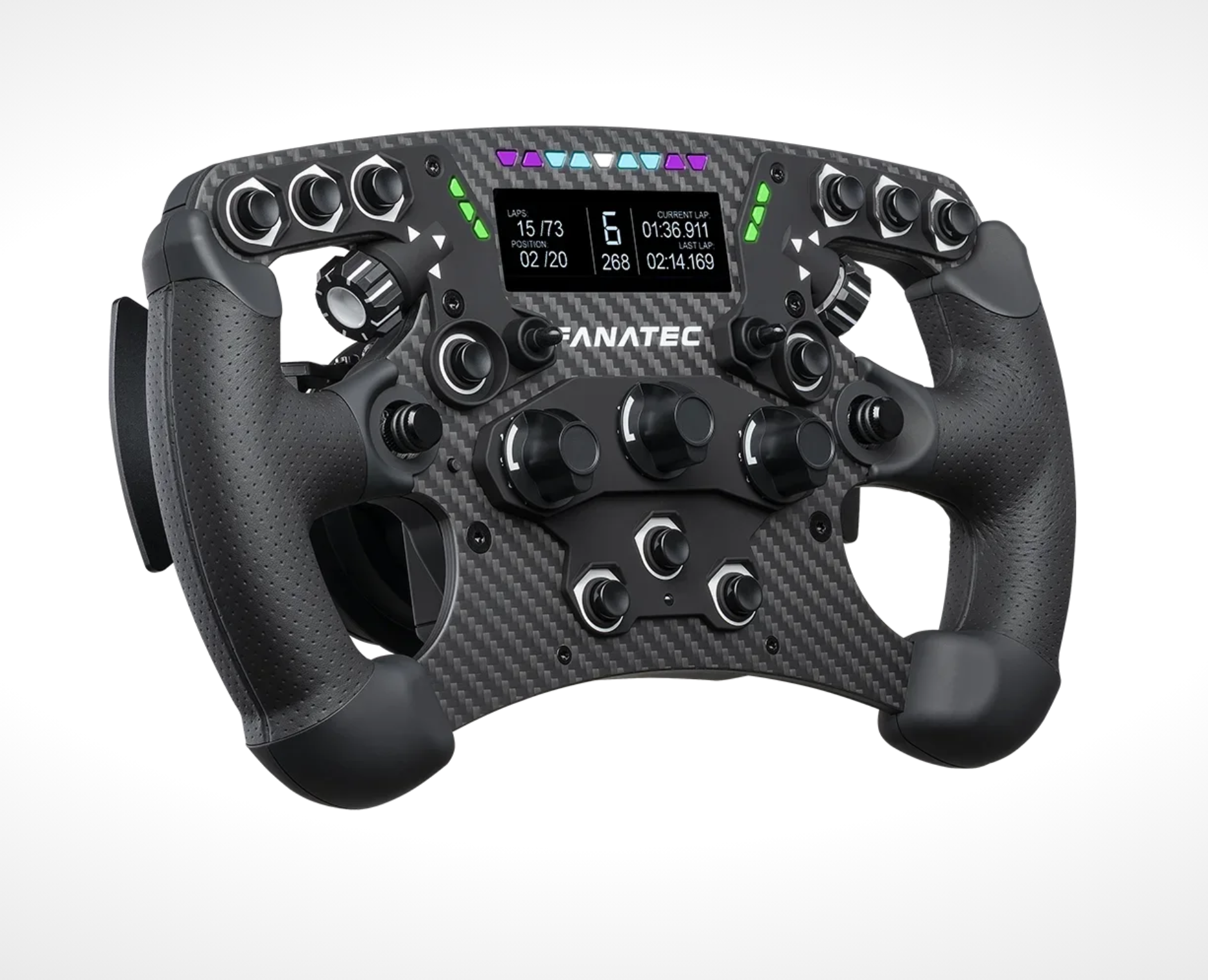
New Fanatec Formula V3 leaks suggest a real successor to the Formula V2.5 is coming soon, with a larger display, revised controls, and a $349.95 price.
A look at the best April Fools’ jokes in sim racing for 2026, from Fanatec and MOZA to RaceRoom and more. Here are the funniest fake products, absurd reveals, and…
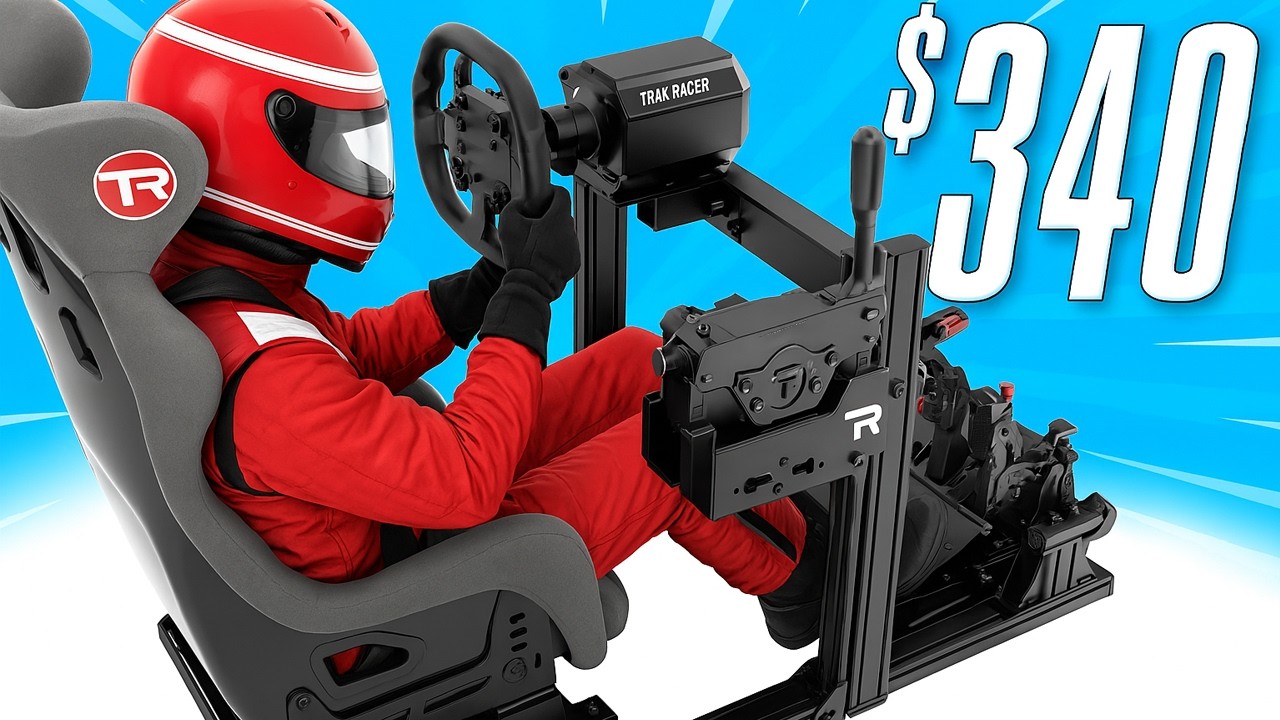
The Trak Racer TR40S is one of the most affordable aluminium profile cockpits available, offering adjustability, solid rigidity for the price, and strong compatibility. It is not perfect, but it…
Le Mans Ultimate V1.3 introduces reduced server hosting costs via RaceControl, addressing long-standing community requests. However, missing features like driver swaps continue to raise concerns for endurance racing players.
Car Mechanic Simulator 2026 has been officially revealed with co-op gameplay, expanded systems, and a playable demo. Here is everything currently known about the upcoming release.
Forza Horizon 6 PC requirements have been revealed ahead of its May 2026 release, outlining performance targets from 1080p low to 4K ray tracing and highlighting the increasing demand for…
VRC’s ERC Auriel 4 recreates the Audi A4 Super Touring era with strong physics, great cockpit detail, and a surprisingly quick Assen lap. It understeers hard on throttle and eats…
The Fanatec Handbrake V2 brings a stronger build, better adjustability, and real load cell precision, but frustrating limitations in compatibility and usability may hold it back. Here is how it…