The Pimax Crystal Super Ultrawide is one of those products that immediately sounds like it should be the answer. A massive 140-degree field of view, extremely high resolution, and the kind of immersive promise that makes every sim racer start imagining what their favorite track would feel like in VR. On paper, it looks like the sort of headset that could finally deliver the no-compromise sim racing experience a lot of us have been waiting for.
And after spending weeks testing it, I can say this much right away. When this headset is at its best, it delivers one of the most immersive sim racing experiences I have ever had. The sense of speed is incredible, the added peripheral vision really does matter, and the overall feeling of being inside the car is about as close to reality as I have personally seen from sim racing hardware. But at the same time, this is also a product with some very real drawbacks, and at this price, those drawbacks are impossible to ignore.
This is not the flawless, no-compromise VR headset that the price might lead you to expect, but it is still one of the most immersive sim racing headsets I have ever used.
Best for Sim racers whose priority is the strongest possible feeling
140-degree field of view VR headset for sim racing
VERDICT
This is not the flawless, no-compromise VR headset that the price might lead you to expect, but it is still one of the most immersive sim racing headsets I have ever used.
BEST FOR
Sim racers chasing the strongest in-car feeling
NOT FOR
Drivers wanting a flawless premium headset with no major downsides
TUNING Graphical settings adjusted to get the framerate where I wanted it
COMPARED AGAINST Pimax Crystal Light
VR in sim racing is still a tradeoff
Before even getting into this specific headset, I think it is important to acknowledge something that applies to VR in general. Sim racing in VR is a completely different experience compared to monitors, and I mean that in both a good and bad way. On one side, you get immersion that flat screens simply cannot replicate. You are sitting in the car, you can look around naturally, judge space more intuitively, use mirrors properly, and feel a level of depth that changes the whole experience. On the other side, VR still comes with the usual concerns like comfort, ease of use, motion sickness, compatibility, and very heavy system demands.
The Crystal Super Ultrawide does not change that reality. What it does do, however, is push the immersive side of the experience extremely far. And that is what makes it such an interesting headset. Because while this may not be the most practical piece of sim racing hardware I have used, it is absolutely one of the most convincing when everything is working the way it should.
Build quality is not what I expected for the money
At its price point, the first thing I really need to say is that the overall build quality left me a bit disappointed. The headset itself is made from a fairly cheap-feeling plastic, and it becomes a fingerprint and dust magnet almost immediately. It does not feel terrible, but for a premium VR headset at this level, I was definitely expecting something that felt more refined and more expensive in the hand.
The included controllers also do not do much to improve that impression. They feel a little underwhelming compared to what the rest of the product is trying to be, and while that may not matter a huge amount for people using this primarily in sim racing, it still affects the overall sense of quality. When you are spending this much money, you naturally start paying attention to every detail, and here, some of those details just do not feel premium enough.
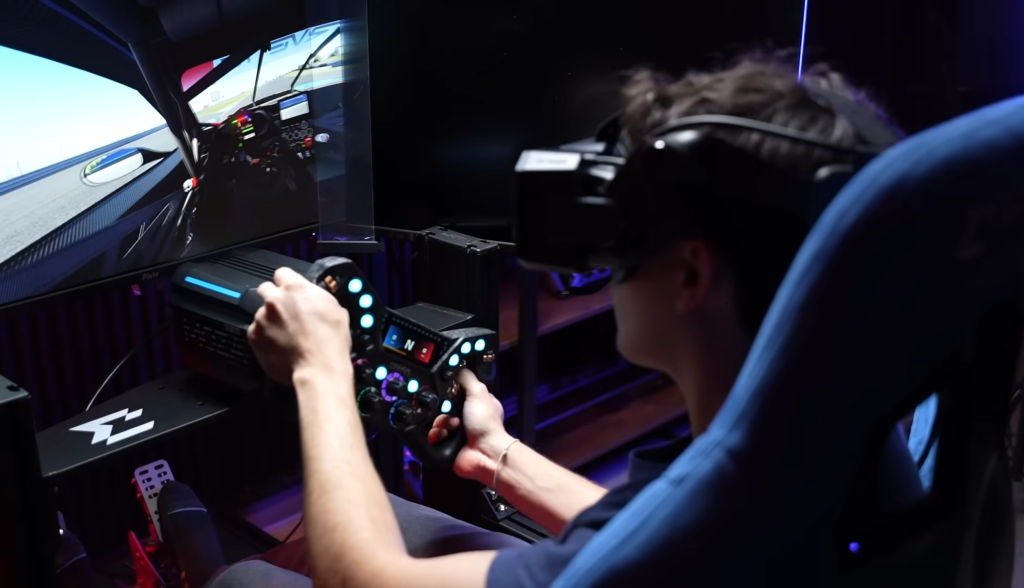
That said, comfort is actually better than the headset’s bulky appearance might lead you to expect. For me at least, once adjusted properly, the Crystal Super Ultrawide was fairly comfortable even during longer sessions. The weight did not become a major issue, and I never really felt like the size alone was ruining the experience. There is, however, one very important problem for sim racers specifically. Because of the rear adjustment knob and the cable placement, the back of the headset can hit the seat and stop your head from resting comfortably against it. And for some people, that alone could be a serious problem.
Worth knowing: the rear adjustment knob and cable can hit your racing seat and stop your head resting comfortably against it.
Once you get on track, the immersion is tremendous
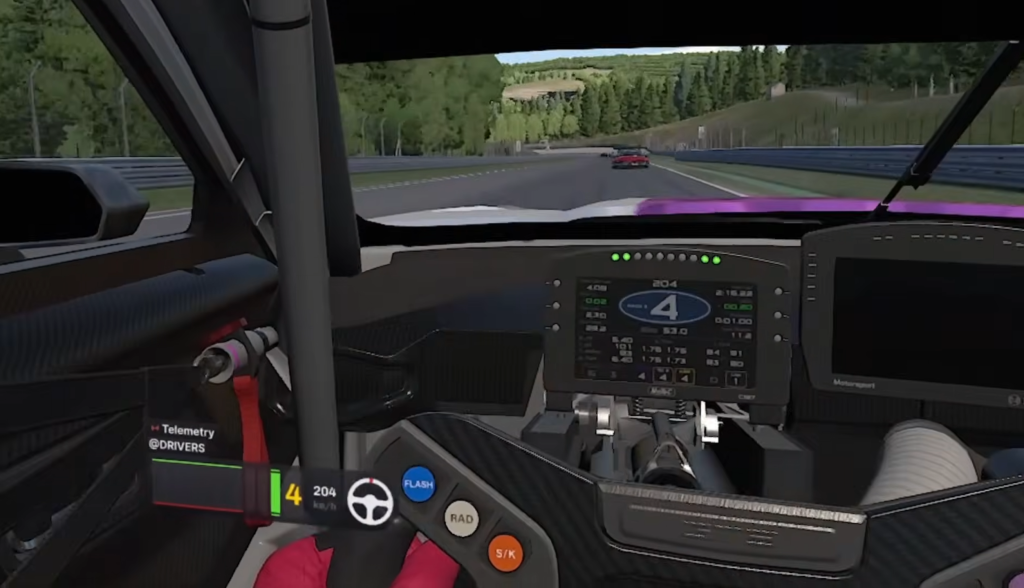
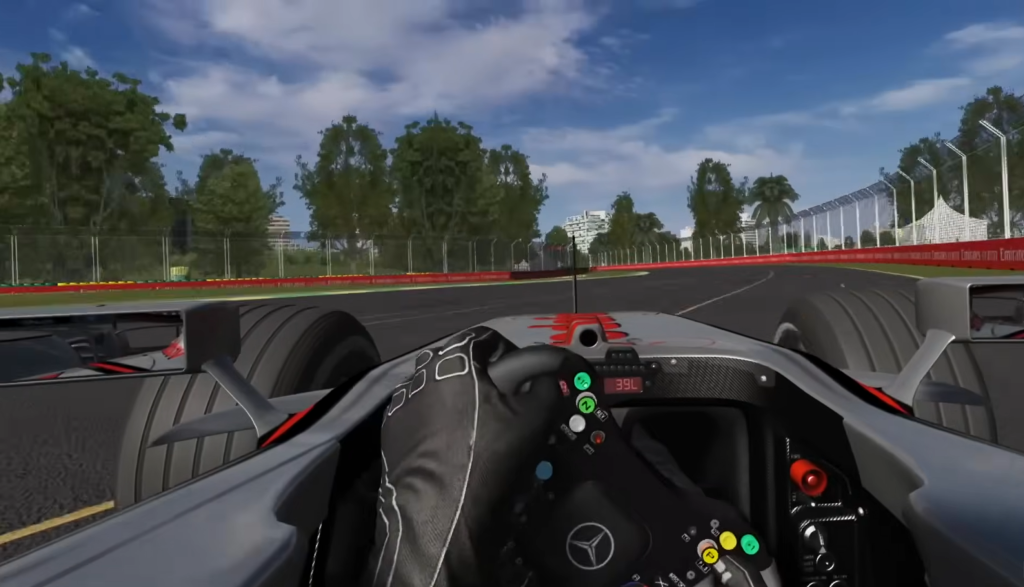
All of those concerns do start to matter a lot less the moment you get out on track. That is the strange thing about this headset. The lows are very obvious, but the highs are extremely high. Once I was actually sat in the car and driving, the sense of immersion was genuinely outstanding. The clarity in the center view is excellent, the field of view adds a real sense of peripheral awareness, and the whole thing becomes deeply convincing in motion.
This is especially true in sim racing, where the added field of view can do more than just look impressive. It changes how you perceive speed, it helps with spatial awareness, and it makes high-speed sections feel much more alive. With the Crystal Super Ultrawide, the experience often felt more natural than on a monitor, especially when judging distance to corners, cars ahead, and the general sense of depth on the road. That is one of the biggest things that stood out to me during testing. The sense of speed here is almost thrilling.
The wider field of view also helps reduce that tunneled feeling that some VR headsets can still have. The black edges are not gone entirely, but they are less distracting than on many other headsets I have used. It ends up feeling more like looking through a helmet visor, which for sim racing is actually a very convincing effect. That extra width may not sound revolutionary on paper, but in practice it is one of the most important strengths of this headset.
The takeaway: on track, the field of view, center clarity and sense of speed make this one of the most immersive sim racing headsets I have ever used.
The wider view helps with peripheral awareness and judging space in the car.Extra width reduces the tunneled feeling some VR headsets still have.Center clarity is excellent, with brake markers and cockpit labels easy to read.
Visual clarity is impressive, but your PC will pay the price
In terms of raw image quality, there is a lot to like here. The center clarity is very strong, and once everything is dialed in, small details like brake markers, fences, and cockpit labels are surprisingly easy to make out. That helps a lot in racing, because it makes the world feel stable and readable rather than soft or overly compromised. The headset does a very good job of making the sim feel sharp where it matters most.
However, getting that experience is not easy. This is a very demanding headset, and even on a seriously powerful PC, I had to make meaningful compromises to graphical settings in order to get the framerate where I wanted it. That is just the reality of running a headset this powerful in a title like Assetto Corsa, especially once you start adding visual mods and more demanding content. So while the clarity is impressive, it comes at a cost, and that cost is not just the purchase price. It is also the hardware you need to run it properly.
Price history
Seen at
$959.17
Readings
1
Retailer
1
Tracking since
26 Feb 2026
Last checked
26 Feb
Tracked daily across every shop we follow+Add to build
I also would not say the visual jump over the Pimax Crystal Light feels as massive as the price might suggest. Yes, it feels sharper, and yes, the wider field of view is noticeable, but the difference is not so dramatic that it completely redefines the experience in the way some people may hope. The biggest clear advantage here is the field of view more than some enormous leap in raw perceived clarity.
One of the things I really wish was improved further is the image quality outside the center view. In the middle of the lenses, where your eyes are meant to focus, everything is sharp and convincing. That central sweet spot is where this headset looks its best, and in that area, the visual experience is genuinely excellent. But outside of that, the quality drops off more than I would like for a product in this class.
There is some noticeable blurriness, some distortion, and some chromatic aberration once you move away from that center area. To be fair, at racing speeds you do not always notice it that much, because you are focused on driving and your attention naturally stays ahead. But the moment you slow down, look around more deliberately, or start examining smaller details, those limitations become easier to see. That is one of the main drawbacks of the lens setup here, and it stops the headset from feeling as flawless as the center clarity initially suggests.
So while this is still a very impressive headset visually, it is not a perfect one. The sweet spot is strong, but it is not wide enough to fully eliminate that feeling of the image falling away outside the center. That is something I really noticed over time.
Final thoughts
The Pimax Crystal Super Ultrawide is a difficult headset to sum up, because in some ways it is one of the most immersive sim racing products I have ever used, and in other ways it feels frustratingly imperfect for something this expensive. The build quality is not as premium as I expected. The rear design can be awkward in a racing seat. The system demands are massive. And the optical sweet spot still leaves room for improvement.
But even with all of that said, the moment you are actually on track, a lot of those frustrations start to fade into the background. The field of view, the center clarity, the sense of speed, and the feeling of real depth all come together in a way that is genuinely impressive. This is not the flawless, no-compromise VR headset that the price might lead you to expect, but it is still one of the most immersive sim racing headsets I have ever used.
So, would I recommend it? I think it really depends on what you want. If your absolute priority is the strongest possible feeling of being inside the car, and you are willing to accept the cost, the system demands, and the other tradeoffs that come with it, then the Crystal Super Ultrawide is genuinely remarkable. But if you are hoping for a perfectly rounded premium experience with no major downsides, this is probably not quite that headset. It is brilliant in some areas, frustrating in others, and unforgettable when everything comes together.
FINAL VERDICT
Recommended only if immersion is your absolute priority and you accept the tradeoffs.
Ideal buyer: Sim racers whose priority is the strongest possible feeling of being inside the car.
Major drawback: Massive system demands, and build quality that does not feel premium for the price.
Bottom line: Brilliant in some areas, frustrating in others, and unforgettable when everything comes together.
Sim racing hardware reviewer and creator. Every review on this site is hands-on tested across direct-drive wheelbases, pedals, cockpits, motion systems and accessories before a word is published.
Kunos Simulazioni has shared a detailed look at the future of Assetto Corsa EVO, outlining changes to the game's development direction and revealing more information about its long-awaited Free Roam…
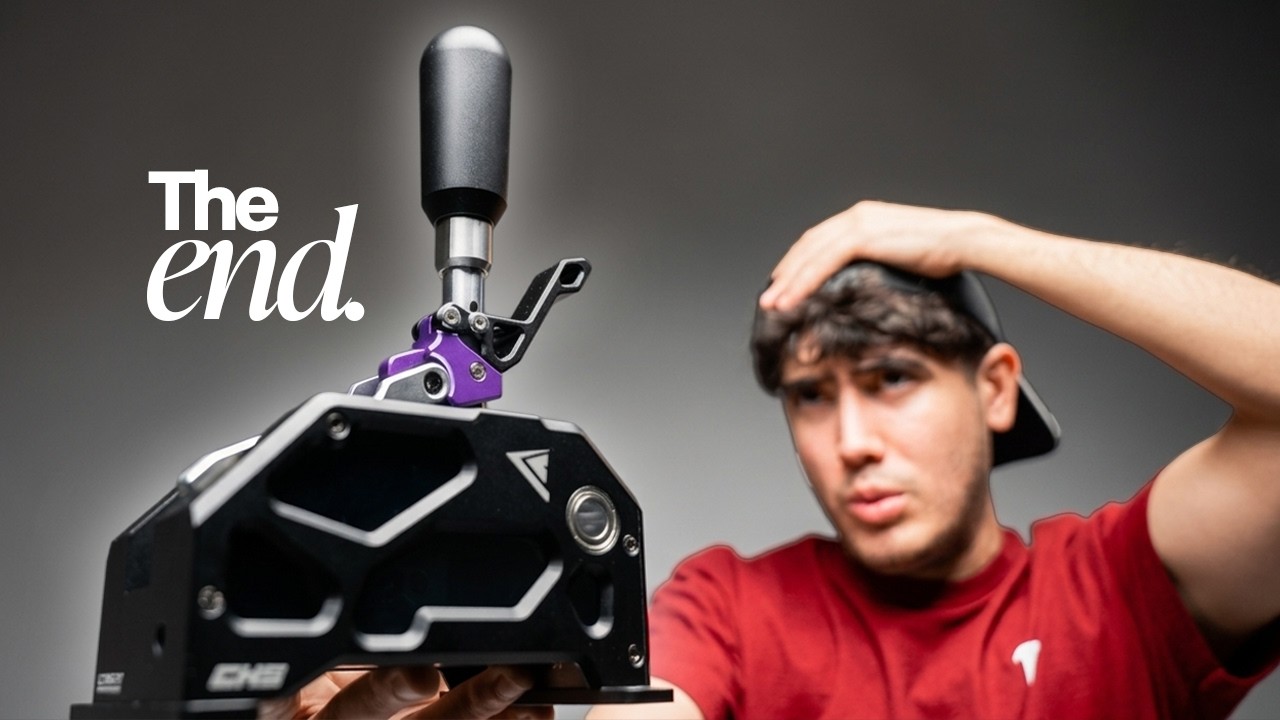
Conspit CHS · $369 Conspit sent this product to me for review. Conspit has entered the shifter market with the CHS, a dual-mode shifter that combines a 7-gear H-pattern with…
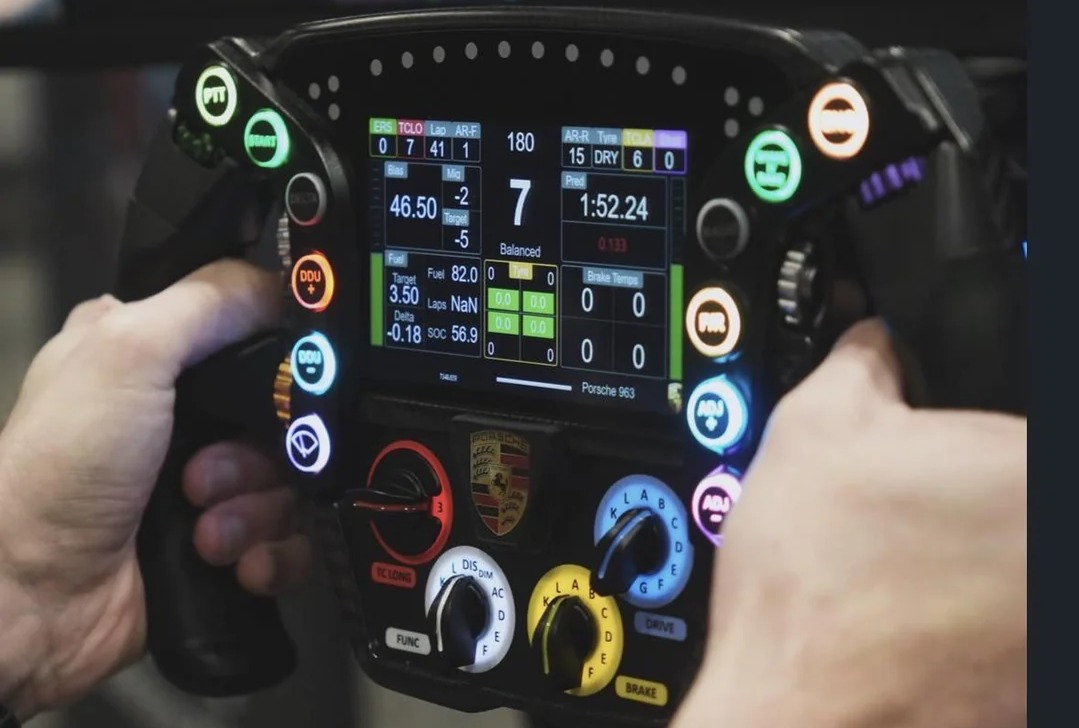
After making its public debut in Chicago, Sim-Lab is bringing its upcoming Porsche 963 replica steering wheel to SimRacing Expo Frankfurt for another major showcase.
Gran Turismo 7 Spec IV Part 1 arrives October 15 with Sportsland SUGO, six new cars including the Ferrari F355, new Brand Central challenges, Car Concierge, Car Viewer and more.
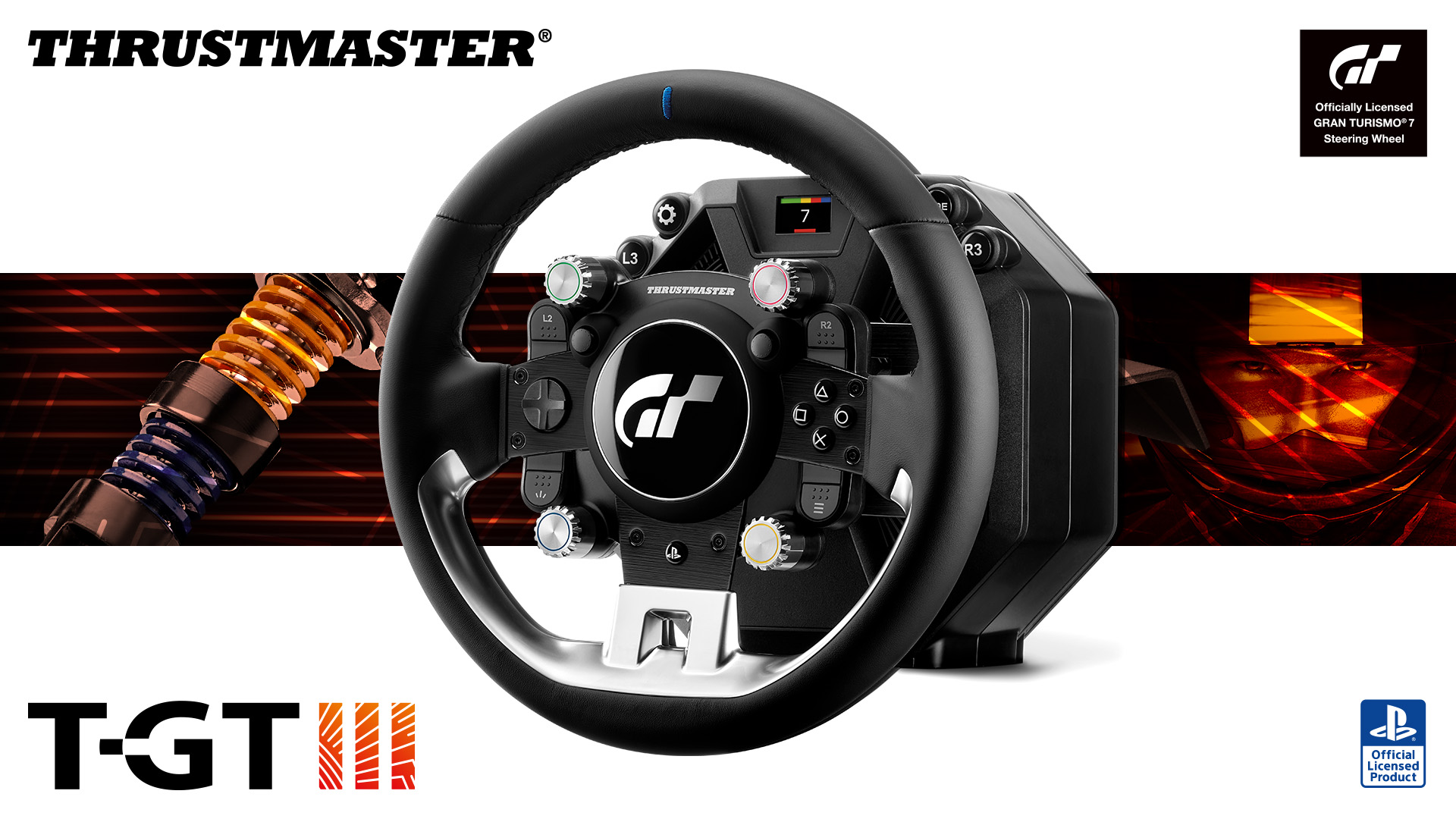
The new Thrustmaster T-GT III brings Direct Axial Drive, 5 Nm of constant torque, load cell pedals, and dedicated Gran Turismo 7 haptics to PS5 and PS4.
The Circuit One D Force 1 packs four motion actuators into a suitcase, installs in about 10 minutes, and trades big travel for detail you can actually use.
Assetto Corsa EVO Update 0.9 introduced a major overhaul to the game's GT tyre model, changing how cars behave around the limit across a wide range of GT machinery.
Project Motor Racing has received its Version 2.3 update, bringing the Lamborghini Temerario to the simulator alongside a new vehicle class, physics revisions, visual improvements and a series of changes…