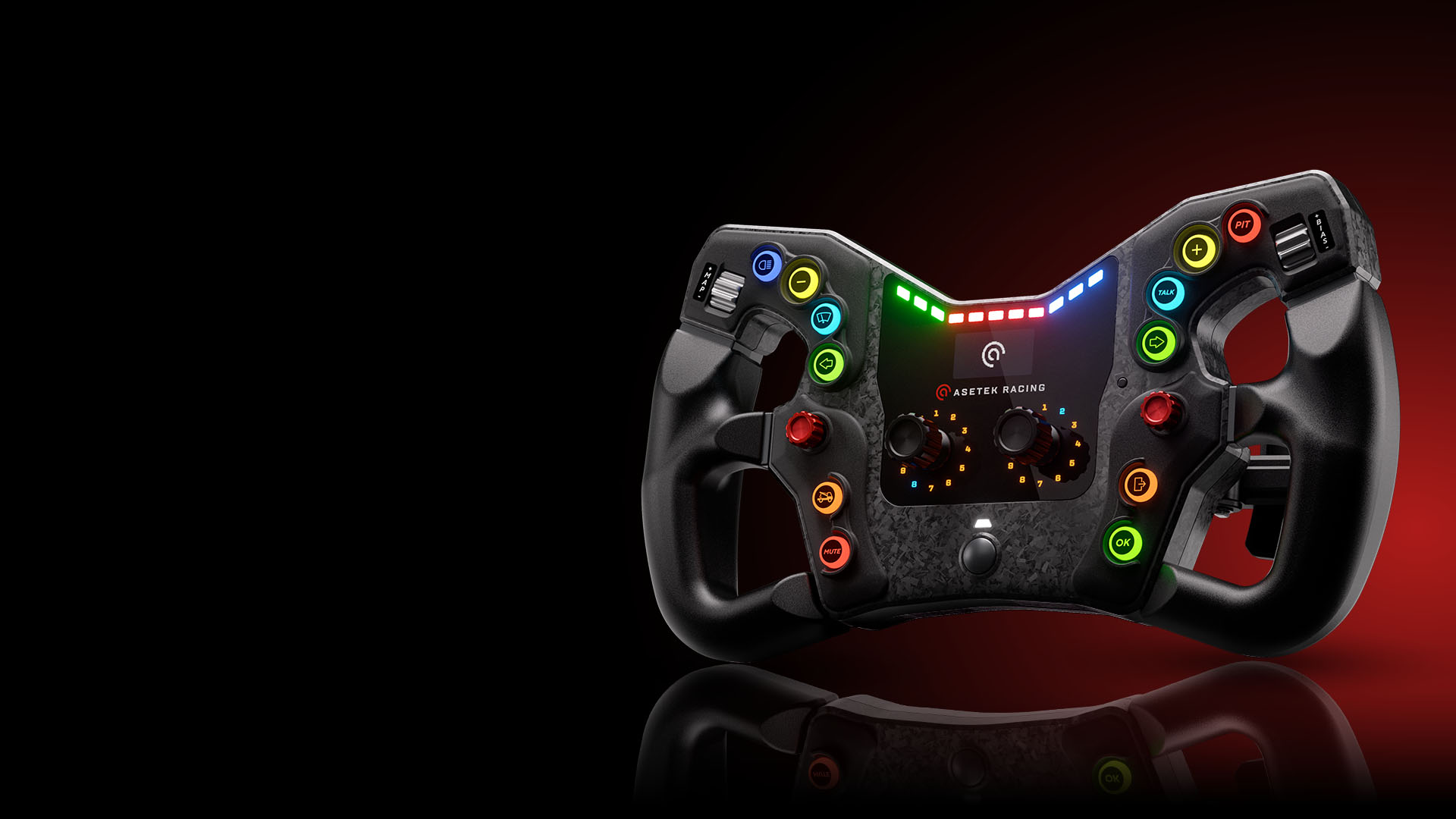
Asetek GT Nova Revealed at $299 With RaceHub Link
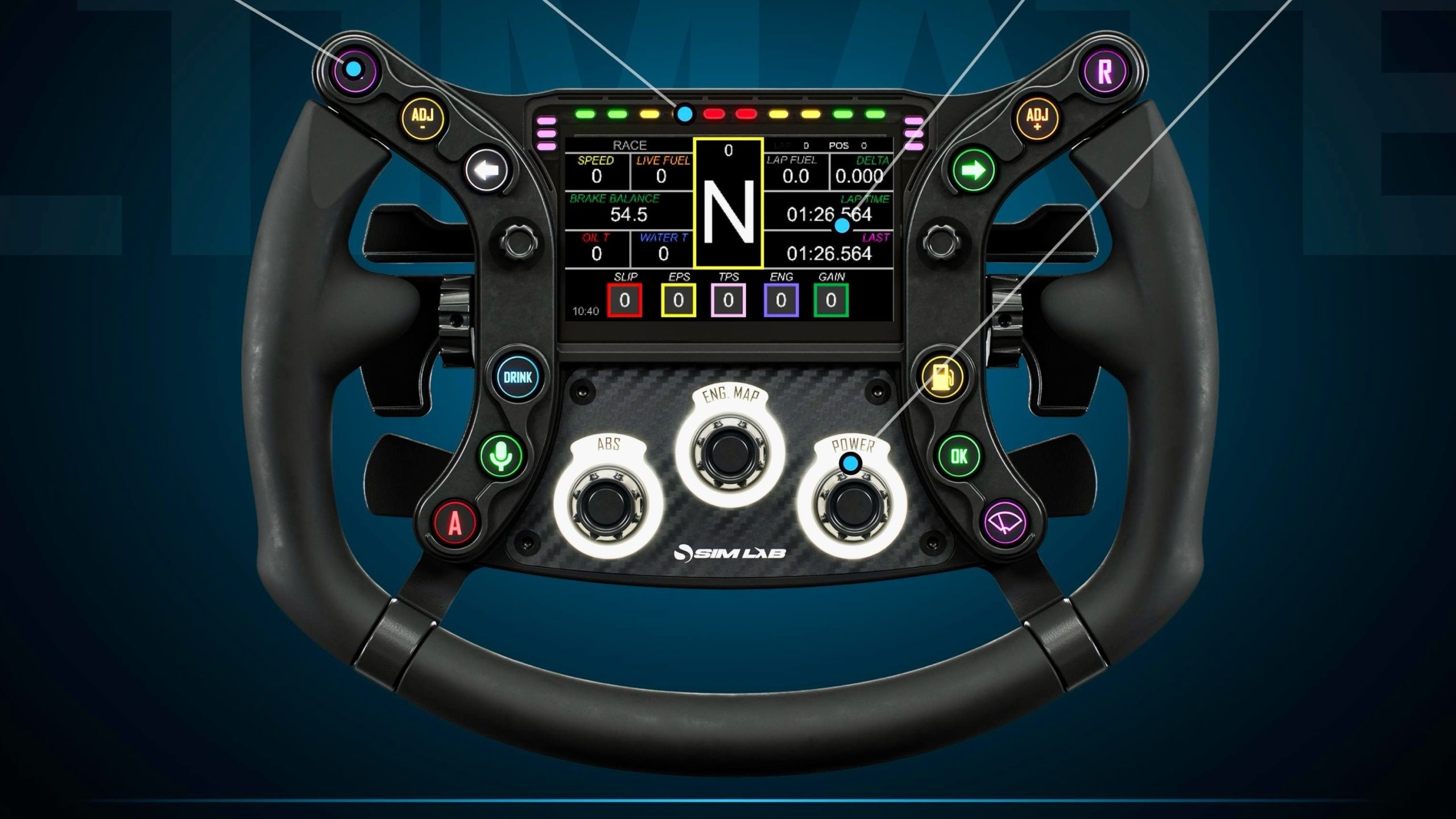
Asetek has revealed the GT Nova, a new 290mm GT steering wheel with an OLED display, RaceHub controls, MultiLink functionality, RGB lighting, and a $299.99 price.

If you have been sim racing for a while, you already know the Logitech G29 and G920 dominated the beginner market for nearly a decade. When the Logitech G923 was released, it promised to bring that same formula into modern sim racing, offering new technology, updated pedals, and improved design. I bought mine brand new for $423 after tax back in the day and reviewed it extensively. But now that it is 2026, it is worth re-examining this wheel in the context of today’s far more competitive entry level landscape.
In this review I will go over what the G923 still does well, where it falls short, how TrueForce holds up today, and most importantly how it compares to the competition in 2026. Spoiler alert, this wheel has aged both better and worse than you might expect.
G923
Good build and genuinely improved pedals, but the gear driven force feedback is outclassed by cheaper rivals in 2026 – only worth buying when the price is low.
Best for Beginners on an extremely tight budget, especially buying se
Good build and genuinely improved pedals, but the gear driven force feedback is outclassed by cheaper rivals in 2026, only worth buying when the price is low.
Tight-budget beginners, especially buying used
Drivers wanting the best performance per dollar in 2026
✓ Hands-on tested by OC Racing · ✓ Updated October 2026
Verified purchase options at lowest current prices:
Affiliate disclosure
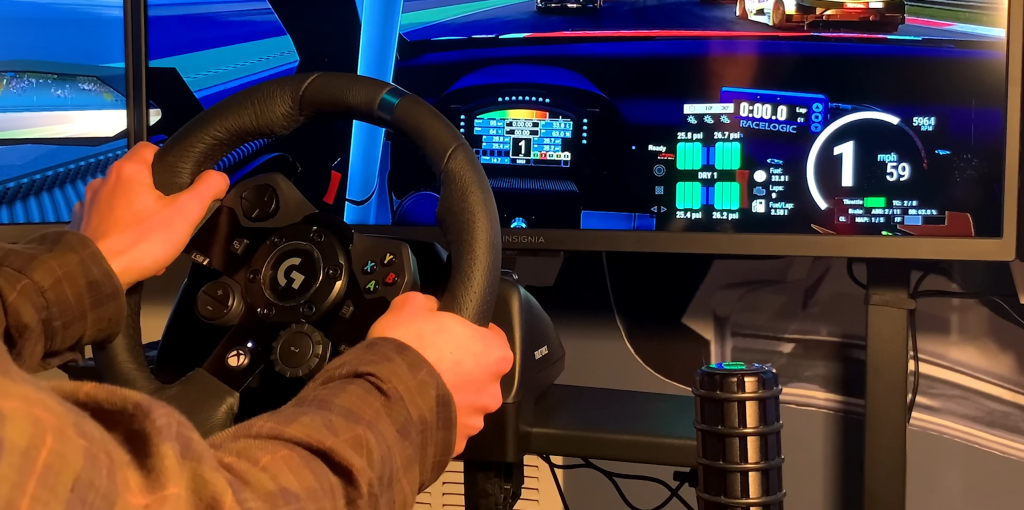
One thing that has always benefitted Logitech is the consistency in build quality. The G923 keeps the same leather wrapped rim that made the G29 so popular, and on hand it genuinely feels good. The stitching, the metal center plate, and the overall ergonomics are still solid, and the wheel has that familiar Logitech sturdiness that makes even beginners feel like they bought something high quality.
The layout remains unchanged with the same buttons, D-pad, rotary dial, and paddles. While the design looks clean, the actual input hardware has not evolved much. The D-pad still feels cheap, the small L3 and R3 buttons remain delicate, and the rotary encoder is as unreliable as ever. At a four hundred dollar price point, Logitech should have modernised these basics.
If you plan to use this on a desk, the clamps are strong and secure, and the cable management channels under the wheel are helpful. Overall, the physical build is still one of the G923’s stronger points, especially when compared to cheaper plastic wheels like the Thrustmaster T128.
The most meaningful improvement Logitech made with the G923 is the updated brake pedal. It now has a progressive spring that feels far more natural than the old G29 and G920’s brick-like brake. No, it is not a load cell, but for a non load cell set, these pedals are surprisingly solid.
Consistency is the biggest win here. The resistance ramps up smoothly, making threshold braking much easier than before. I found myself adapting quickly and maintaining steady braking points during longer races. The unit is mostly plastic but rigid enough, and the pedals do not flex under heavy input. Carpet grip teeth also help keep them in place if you are not using a cockpit.
Even today, this pedal set remains one of the G923’s strongest selling points, and honestly if Logitech sold it separately for around a hundred dollars, I still think it would be a popular option for very low budget rigs.
TrueForce is Logitech’s big signature feature on the G923. It uses in-game audio frequencies to provide additional vibration through the wheel, giving a buzzy, engine-like sensation. Think of it as a small ButtKicker effect transmitted through your hands.
In 2021 this system felt interesting but extremely limited because only a handful of games supported it. Now, in 2026, compatibility has improved due to Logitech’s newer Pro and RS50 wheelbases. More titles recognise TrueForce, and the feature has technically never been more usable.
However, on the G923 specifically, TrueForce does not dramatically improve the driving experience. This is still a gear driven wheel, and the gear system amplifies mechanical noise significantly. When TrueForce is active, the wheel becomes noticeably louder, to the point where you can literally hear the game’s engine rumble coming from the wheel housing. It is more of a fun gimmick than a performance tool, and on this gear driven system it simply adds noise without adding meaningful detail.
Worth knowing: on the G923, TrueForce adds noise without adding meaningful detail.
TrueForce works far better on Logitech’s direct drive units. On the G923 it remains something that is neat to try but not something that adds competitive value.
As for the actual force feedback, the story has not changed. Simply put, the G923 is weaker and less detailed than almost every modern competitor at this price. I could still fling the wheel around with a single finger at max settings. The force feedback is responsive, but too light and too muted, especially considering that the Logitech G29 and G920 still deliver nearly identical performance at a much lower price.
On track the G923 feels almost exactly like the older Logitech wheels. It is familiar, predictable, and smooth enough for beginners. It reacts quickly and gives a decent sense of control for drifting and rallying.
However, it is impossible to ignore the competition. Even the Thrustmaster T128, which is significantly cheaper, provides more convincing force feedback. The T248 has far stronger and sharper feedback as well, and while I prefer the Logitech’s build, the T248 gives a much more engaging driving experience. And when compared to the Moza R3 bundle, the G923 falls completely behind. The R3 is direct drive, stronger, smoother, quieter, and better built, and yet often cheaper than the G923.
The G923 still drives fine for what it is, but relative to the market around it, the driving experience sits somewhere between acceptable and outdated.
The entry level wheel market has changed a lot in four years. Here is where the G923 stands in 2026:
Against the Logitech G29 and G920:
The G29 remains the smarter buy. It is cheaper, performs almost identically, and is widely available second hand. The value difference is enormous.
Against the Thrustmaster T128:
If budget is the absolute priority, the T128 gives better force feedback. The G923 has better build quality and nicer pedals. Both are valid depending on price.
Against the Thrustmaster T248:
I strongly prefer the G923’s build and rim, but the T248 simply drives better. Its hybrid belt system gives more torque and far stronger feedback. Your choice comes down to price and preference.
Against the Moza R3 bundle:
This comparison is not even close. The R3 is miles ahead in power, precision, build quality, immersion, and upgradeability. I cannot recommend the G923 over the R3 in any situation unless the price difference is extreme.
In short, the G923 is only competitive today when the price is low enough. At full retail it is completely outclassed.
The takeaway: the G923 is only competitive today when the price is low enough. At full retail it is completely outclassed.
64 readings so far — not daily. · Sale prices predate daily tracking.
No retailer we track has this in stock right now.
The Logitech G923 still has charm and familiarity, and its build quality and improved pedals hold up well even today. For a beginner on an extremely tight budget, especially someone looking to grab one second hand for a fraction of the price, it is still a perfectly reasonable way to start sim racing.
But as a new purchase in 2026, the G923 makes far less sense. The performance gap between this gear driven system and the direct drive Moza R3 or even the hybrid belt T248 is simply too big to ignore. TrueForce has better support today, but on this wheel it remains more of a loud novelty than a meaningful upgrade.
If you are trying to enter the hobby as cheaply as possible, a used G29 or G923 is still a smart buy. If you want the best performance per dollar, the Moza R3 or Thrustmaster T128 offer far stronger value. And if you want something that genuinely feels modern, this is not the wheel I would choose.
The G923 is not a bad product, but the market has moved forward, and this wheel has not kept up.
Only worth buying when the price is low, especially second hand.
Ideal buyer: Beginners on an extremely tight budget, especially buying second hand.
Major drawback: Gear driven force feedback is weaker and less detailed than modern rivals.
Bottom line: The G923 is not a bad product, but the market has moved forward, and this wheel has not kept up.

Sim racing hardware reviewer and creator. Every review on this site is hands-on tested across direct-drive wheelbases, pedals, cockpits, motion systems and accessories before a word is published.
Design & development by CIDIX
· Sim rig builder, deals pipeline, simracing tools, comparisons, adspace & forum · Custom code licensed to OC Racing