
Sim Gaming Expo 2026 - Chicago, Sept 18–20
North America's first expo for sim racing, flight & VR. Test the latest gear, meet the creators, score show-only deals. Schaumburg, Chicago - September 18–20.

The MotionGear Haptic4 from MotionHouse is one of the most unique sim racing products I have tested. MotionHouse is a Korean company that has been building full turnkey motion simulators since 2015, and nearly a decade later they are expanding into the global market with this four-axis motion platform designed to bolt onto almost any aluminium profile rig.
I have been using it for several weeks and after a lot of testing, adjusting, and fine-tuning, I can confidently say this is one of the most entertaining and immersive pieces of sim racing hardware I have ever used.
Verified purchase options at lowest current prices:
Affiliate disclosure
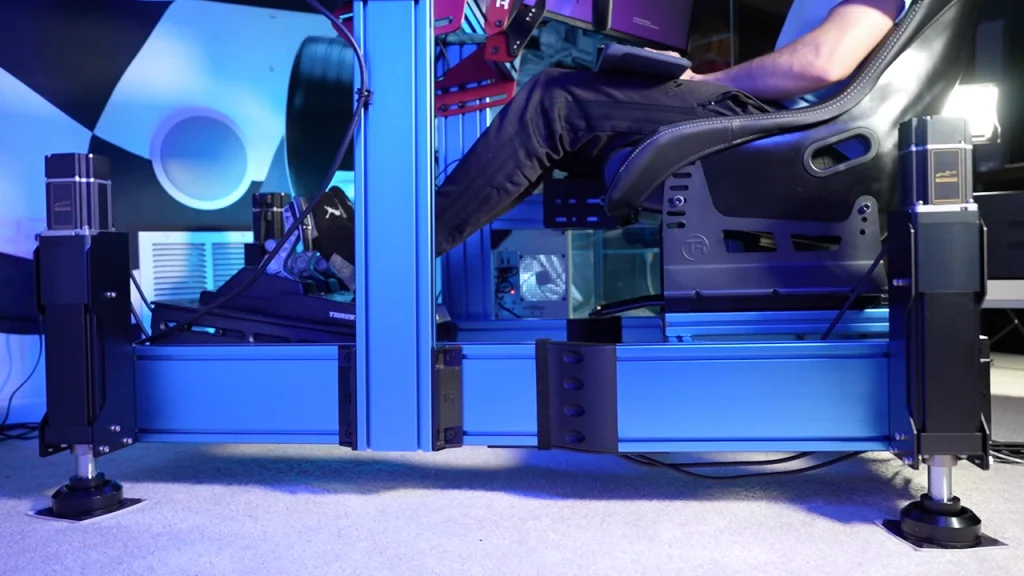
The MotionGear Haptic4 includes four motion cylinders that mount to each corner of your cockpit, along with a large control box that powers and manages the entire system. Installation is surprisingly simple for something in the motion category. Each cylinder plugs into the control box, the box plugs into your PC through USB, and the entire platform comes online through the MotionHouse software.
If you live in the United States, you will need a step-up transformer to provide the correct voltage. A three thousand watt transformer handled everything without issue on my setup. Here is the one i used: Transformer
Once powered on, the system enters standby mode, and from here the MotionHouse software handles configuration and testing. The software is very barebones, but it does exactly what it needs to do. You are able to test each axis, create presets, adjust intensity, and launch supported games. There is a long list of compatible titles, including PC and even console games, which is something most motion platforms do not support.
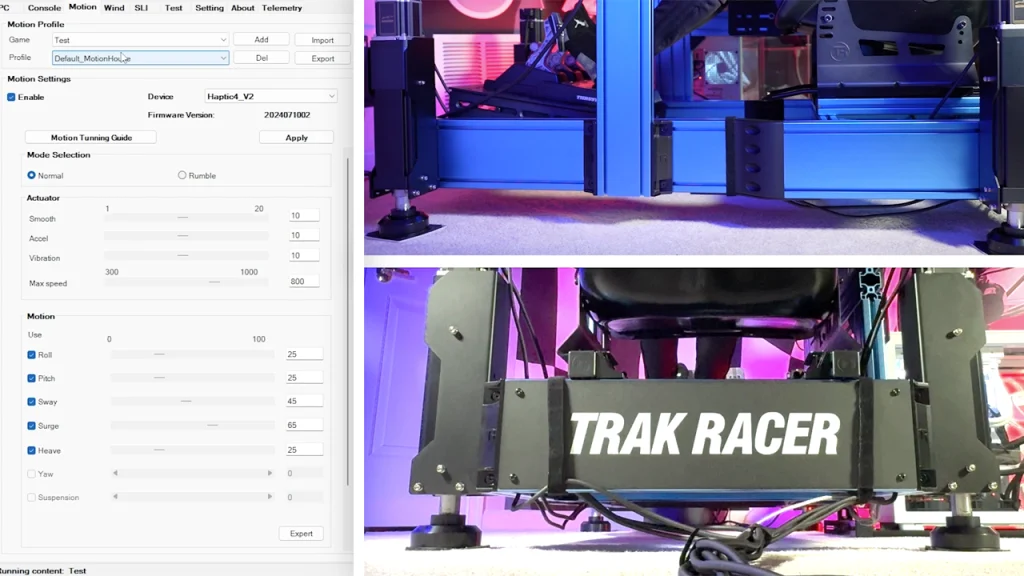
This is where the Haptic4 becomes genuinely impressive. The response speed and torque output are immediately noticeable. It has a maximum payload rating of around five hundred and fifty pounds, which easily handled my rig, my own weight, and even a quad-monitor setup. While I do not recommend mounting monitors directly to the rig with a motion system, the platform still coped well.
Each cylinder has seventy-five millimetres of travel. That might sound short compared to some motion platforms, but in practice it is intentional. The shorter stroke allows for extremely fast, precise movements without excessive shaking or the exaggerated roller-coaster style motion that can make a rig feel unrealistic. Since this system also provides haptic feedback such as curb vibrations, engine rumble, ABS activation, and traction loss cues, the shorter travel helps maintain detail during rapid oscillations.
On track, this combination delivers an incredible driving experience. Hitting curbs physically lifts the rig and shifts it sideways. In Dirt Rally 2, the car’s weight transfer, rough terrain, and jumps feel dramatically more lifelike. You rise into the air and land with a quick, controlled drop that feels surprisingly authentic.
In the default settings the system was very aggressive, so I toned it down to achieve a more realistic feel. After that adjustment, the immersion skyrocketed. I could physically feel brake lockup, traction loss, and the car approaching its limits. It gave me a clearer sense of what the vehicle was doing beneath me, making me more confident and more comfortable while pushing the car.
Motion systems will never directly make you faster, but a good one absolutely helps you feel more connected to the car. This is exactly where the Haptic4 shines.
Beyond the motion itself, the system features a dedicated haptics mode. In this mode the physical movement becomes more subtle, while high frequency vibrations up to four hundred hertz simulate road texture, engine vibrations, gear shifts, rumble strips, and more. The integration is excellent. When I placed the right wheels on the grass, the vibration came from the right side of the rig. When ABS engaged, I felt the pulsing clearly through the chassis.
While motion mode is more entertaining, haptic mode is surprisingly effective for consistent driving. It gives you a more controlled feel and helps you understand what the car is doing without the larger movements.
Despite all this feedback, noise levels are very reasonable. The system sits on dampened feet which keep most vibrations from traveling through the floor. It is not silent, but it is quieter than many motion platforms on the market.
The MotionGear Haptic4 starts at around $5000. That price alone makes it a premium product, but compared to fully integrated motion rigs that often cost two to three times more, it becomes much more appealing. This is especially true because the Haptic4 works with almost any existing aluminium cockpit, allowing users to upgrade without replacing their entire rig.
There are other motion solutions in the same category, but most lack four-axis support, haptic feedback, and this level of responsiveness at the same time. Another subtle advantage is how easy it is to configure compared to some motion platforms which require complex tuning or third-party plugins.
The MotionHouse MotionGear Haptic4 is not a product for everyone. At five thousand dollars, it sits firmly in the enthusiast category. It is also something you buy for enjoyment first and performance second.
But for those who can afford it and want a serious motion experience without a complicated setup, this system is one of the most impressive options available. The combination of rapid motion, detailed haptics, strong build quality, and broad game compatibility makes the Haptic4 a truly standout product.
It has been a long time since a sim racing accessory made me smile and laugh every single session. This one did exactly that. It is without question the coolest piece of sim hardware I have reviewed to date.