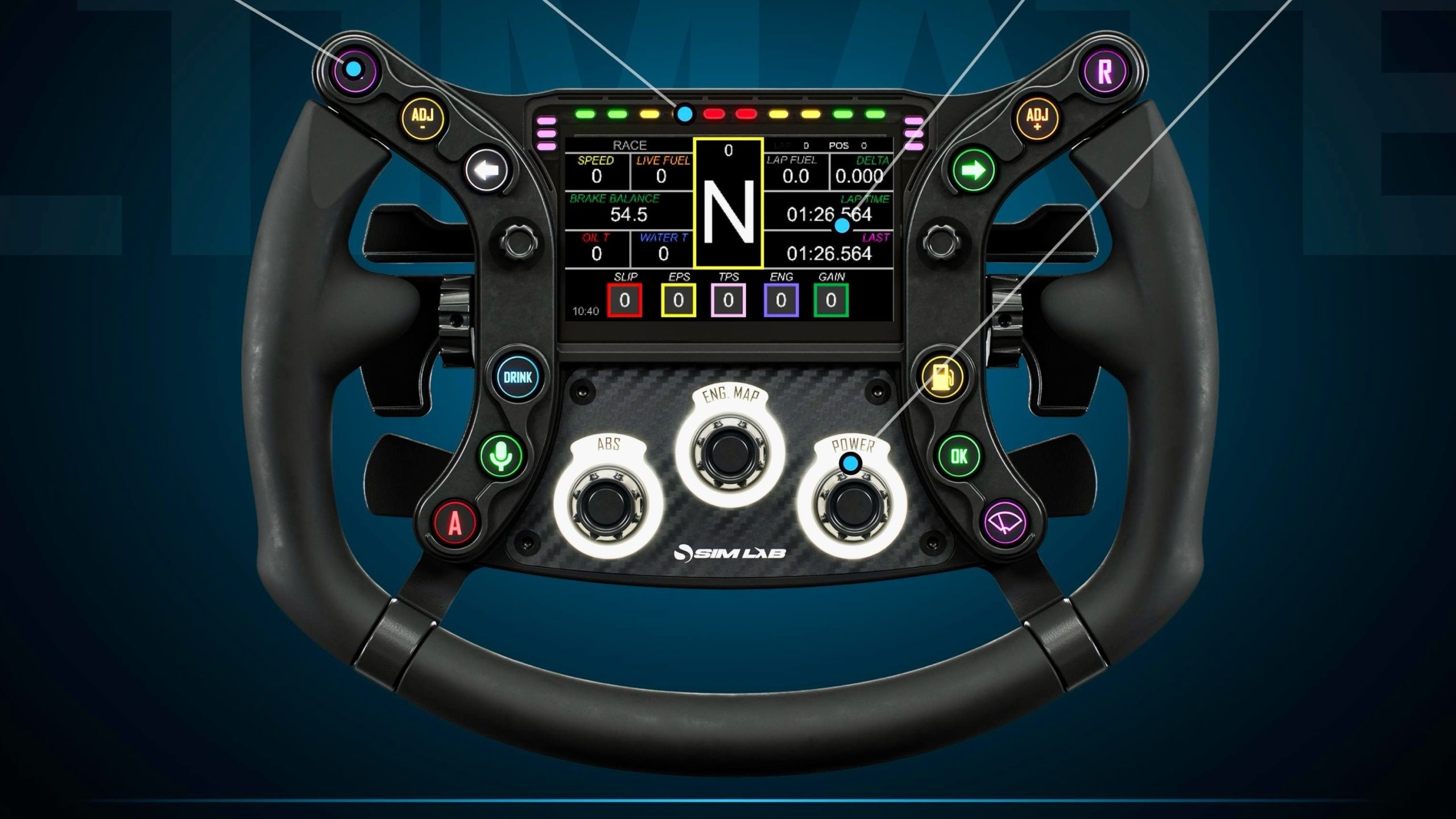
Sim-Lab unveils GTSL Ultimate steering wheel at Sim Racing Expo Frankfurt
Sim-Lab will unveil the GTSL Ultimate, a new version of its GTSL steering wheel platform, at Sim Racing Expo Frankfurt this weekend.

Reviewed by OC Racing
The VRS Direct Force Pro pedals have been on the market for several years and remain a favorite among competitive sim racers. Priced at $650 for the two-pedal set, they focus entirely on performance and consistency. After extended testing, here is my full review. For those interested, 5% off all VRS products can be had using this exclusive link.
The VRS Direct Force Pro pedals have been around for a few years now. They are well known within competitive circles and sit firmly in the mid to high-end segment of the market.
At $650 for the two-pedal combination that I have here, they are certainly not cheap. But they are also not built for the casual buyer who wants flashy presentation and polished packaging. These pedals target a very specific type of sim racer.
Today, I am breaking down the Direct Force Pro pedals in full. The good, the bad, and why they remain such an interesting option in 2026.
VRS Pro Pedals
Minimal packaging, no included hardware and very basic software, but the all-stainless build and spring-based brake deliver the long-term repeatability competitive drivers are paying for.
Best for Competitive sim racers who value long-term consistency and d
Minimal packaging, no included hardware and very basic software, but the all-stainless build and spring-based brake deliver the long-term repeatability competitive drivers are paying for.
Competitive racers who value consistency
Anyone who values presentation, polished software, and convenience
✓ Hands-on tested by OC Racing · ✓ Updated October 2026
VRS stands for Virtual Racing School, and that name says a lot about their philosophy. This is an American sim racing company with deep roots in competitive racing and structured driver development. Before they were known for hardware, they were known for coaching, telemetry analysis, and helping drivers improve through data.
That background matters. It means their perspective is not built around selling lifestyle products or chasing trends. It is built around performance metrics, repeatability, and what actually helps a driver become more consistent over hundreds of laps.
Their hardware reflects that mindset. They do not focus on flashy marketing, dramatic aesthetics, RGB accents, or premium unboxing experiences. They focus on delivering high-performance equipment designed for esports-level consistency. Everything feels engineered around function first, with aesthetics and presentation coming second, if at all.
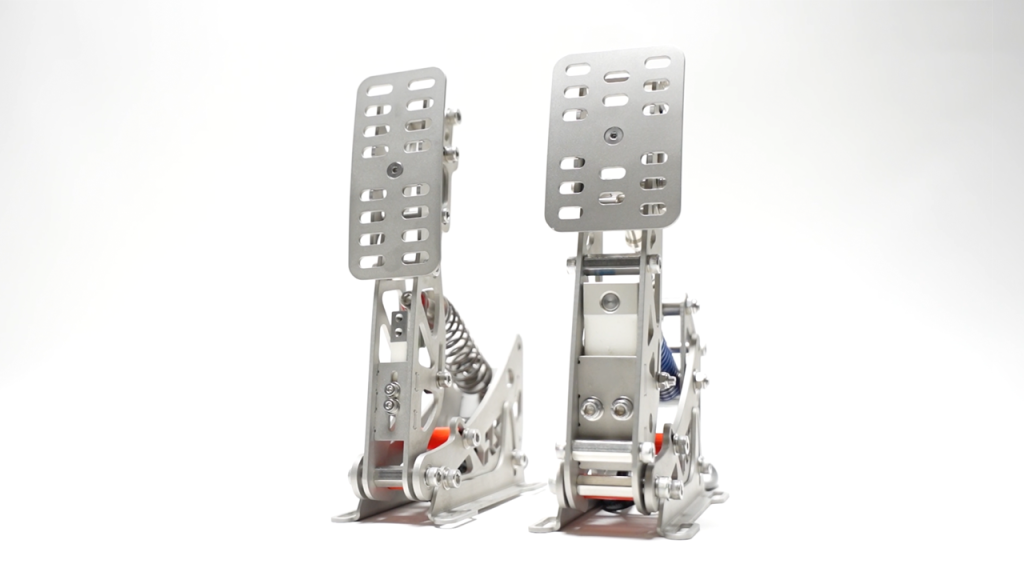
Despite the $650 price tag, the presentation is extremely minimal.
The pedals arrive in a plain brown cardboard box with foam padding. There is no premium packaging, no stickers, no tools included in the box, and not even mounting bolts or T-nuts for installation. You receive the pedals, a small control module for connecting them, and a USB cable.
The control module itself is not labeled, which means you will need to trial and error your way through connecting the throttle and brake correctly. It is not difficult, but it is not polished either.
VRS also sells the clutch separately for approximately $250, though I did not have that for this review.
The software continues this minimalist theme. It is very basic in appearance and functionality. It gets the job done for calibration and adjustments, but it is clearly not designed to impress visually. This is a performance-focused product, and VRS makes that clear from the first moment you open the box.
In my opinion though, at $650, I do expect more effort in the overall presentation.
Worth knowing: there are no mounting bolts or T-nuts in the box, and no tools included either.
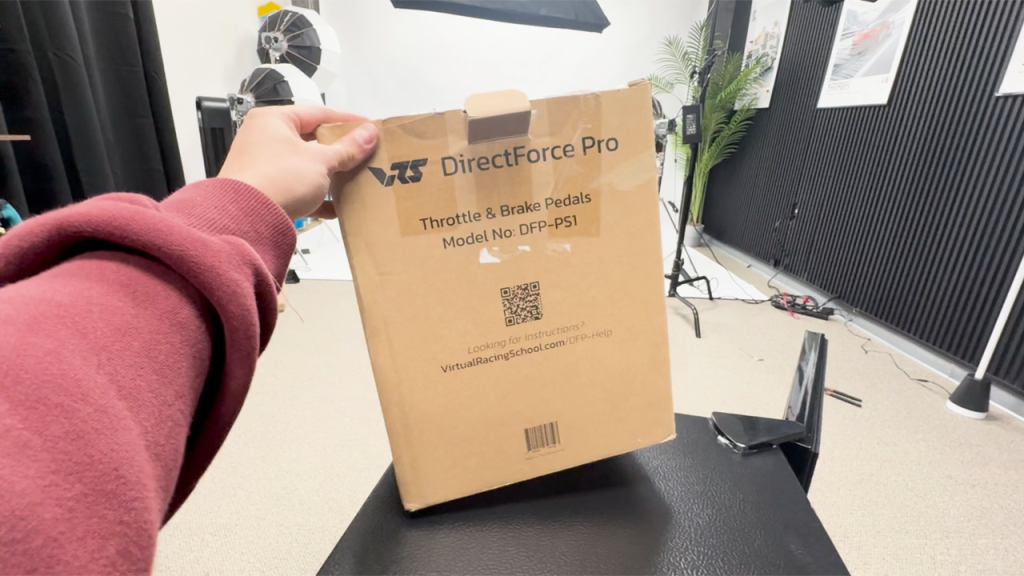

Once installed, the tone changes completely.
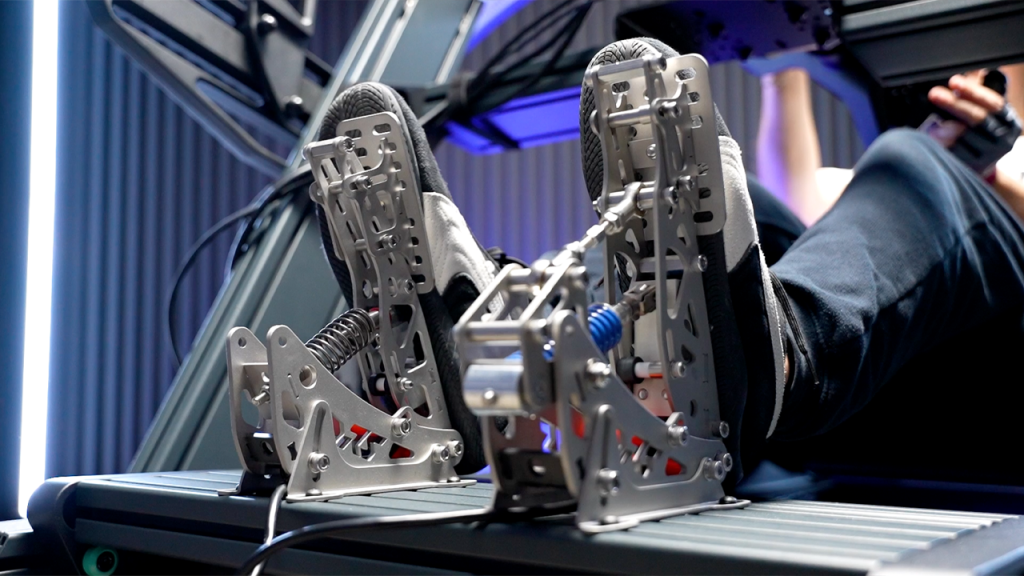
The pedals are constructed entirely from stainless steel. The design is mechanical and purposeful. There are no unnecessary design elements, no decorative flourishes. Mounted on my Sim-Lab Mercedes rig, it literally looks that I ripped them off a real race car.
The construction feels solid and uncompromising. There is no side-to-side play, no flex, no creaking. Everything feels tight and deliberate.
The only small complaint I have relates to the pedal faces. While they look aggressive and race-inspired, the cutouts can be slightly sharp if you race in socks. Over long sessions, they can wear through fabric. A rubber overlay option would have been a welcome addition.
The throttle pedal uses a load cell sensor and features a unique spring setup that may look slightly offset in its resting position. At first glance, it almost appears imperfect, like something is not aligned correctly. That is intentional. The geometry is designed to create a specific preload characteristic and linear response once pressure is applied.
Out of the box, the resistance is relatively light, which I personally prefer. However, if you prefer something heavier and more resistant, the throttle can be adjusted up to a maximum of 8.4 kg of force at the load cell. That range covers both drivers who like a feather-light pedal and those who want something more substantial underfoot.
And when I say adjustable, I truly mean it. You can change preload tension, total travel distance, pedal face height, pedal angle, spacing, and of course resistance. The mounting slots also allow for detailed positional changes, meaning you can fine-tune ergonomics based on ankle angle and seating position rather than just accepting a fixed geometry. It takes time and tools, but the flexibility is there.
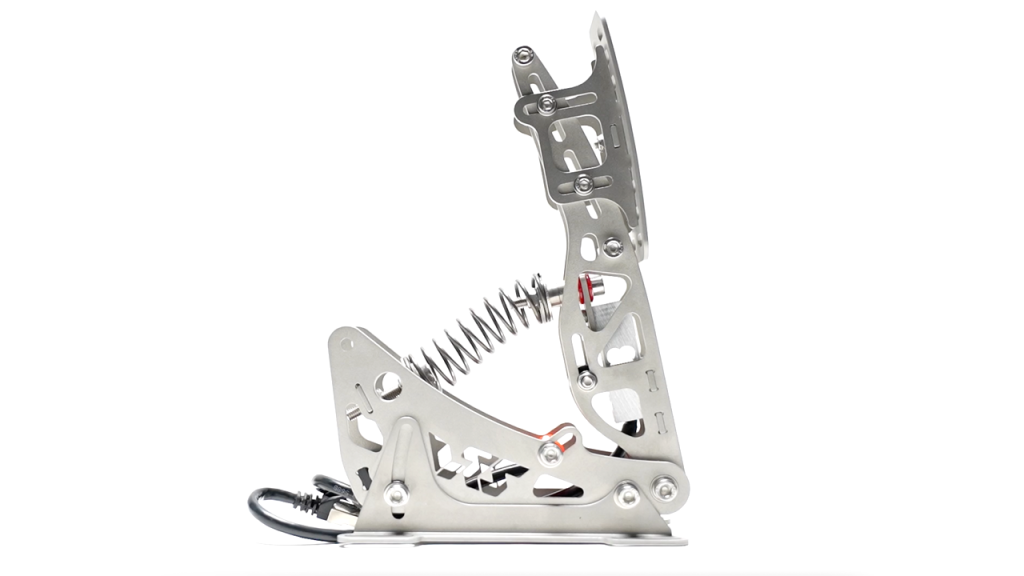
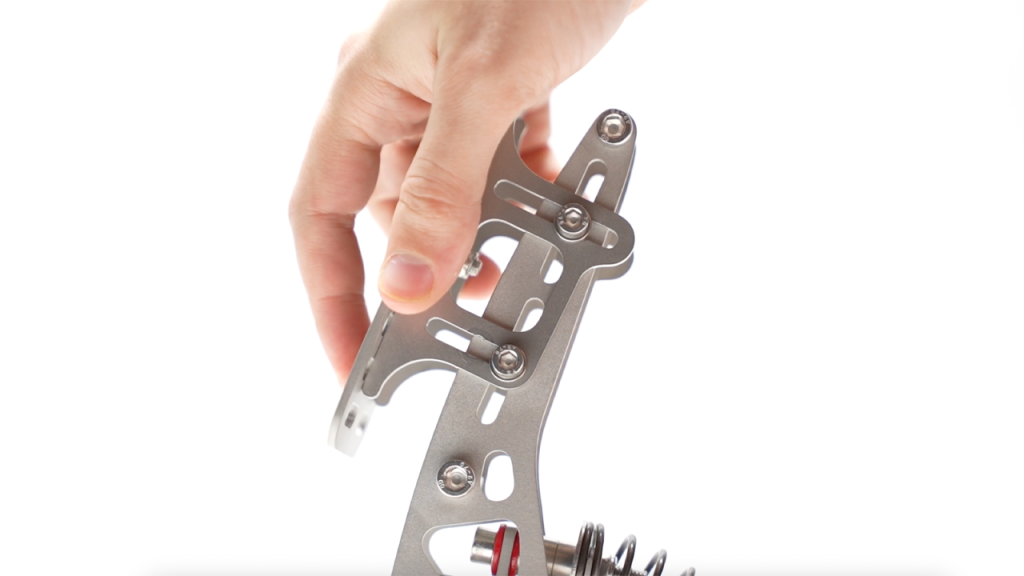
Mechanically, the throttle design is very clean. It uses a single spring without a supporting rod or complex linkage system. That simplicity results in an uninterrupted motion arc. There is no side-to-side wobble, no mechanical binding, and no transition point where friction suddenly changes. From zero input to full throttle, the movement remains consistent and predictable.
On track, that smoothness becomes extremely noticeable. When balancing the car mid-corner, small throttle corrections are easy to execute. There is no grittiness, no sticky initial movement, and no artificial resistance ramp. You press the pedal, and it responds exactly as expected.
That clean, linear behavior builds confidence. You can lean on the throttle progressively without second-guessing the pedal’s response. Over long sessions, that consistency reduces mental load because you are not compensating for mechanical quirks.
It feels mechanical in the best way possible. Not fancy, not engineered to feel dramatic, just solid, repeatable, and entirely predictable.
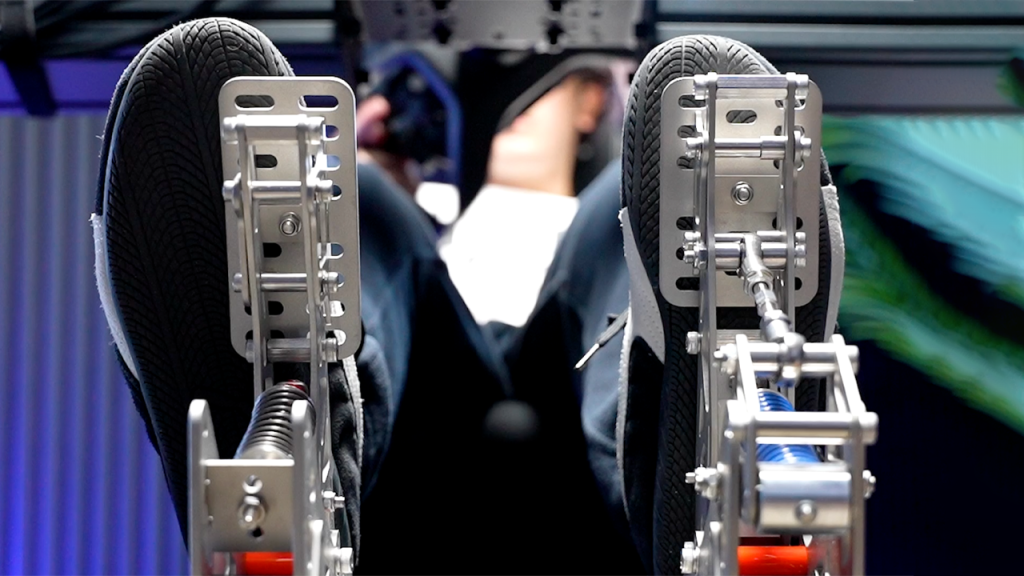
The brake pedal is where the price starts to make more sense.
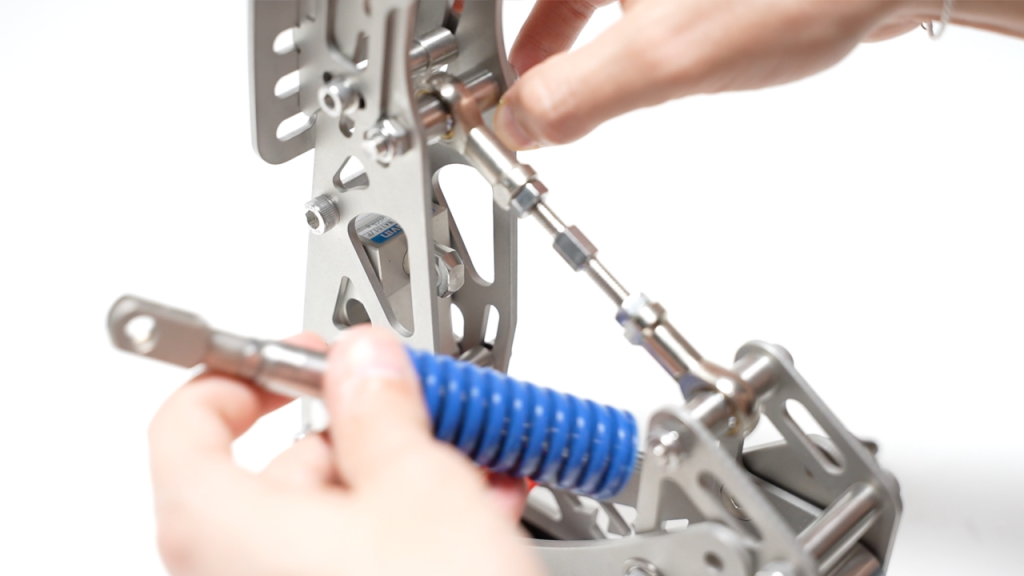
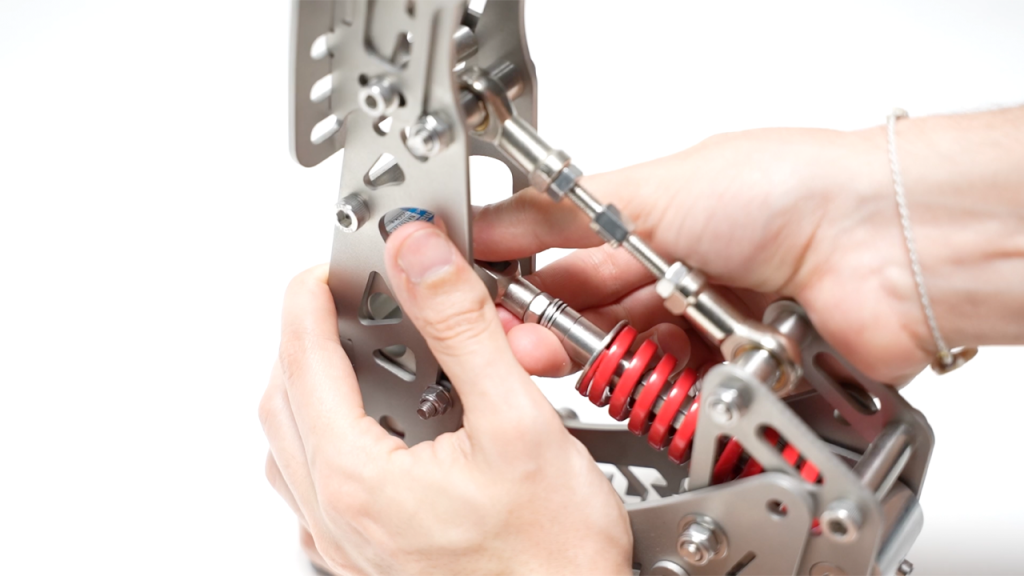
Like the throttle, it uses a load cell sensor, but the mechanical architecture here is far more serious. The brake is built around a spring-based resistance system rather than elastomers, and that distinction is important. The standard configuration includes a blue spring that delivers a softer, more progressive resistance curve. VRS also provides a stiffer red spring, which dramatically increases resistance and allows for up to 140 kg of maximum braking force.
To put that into perspective, 140 kg is more than most drivers will ever realistically use. It is there for drivers who prefer extremely firm, near race-car levels of brake stiffness. Most competitive drivers gravitate toward the red spring for maximum resistance and minimal pedal travel. Personally, I prefer a slightly softer feel with more modulation range, so I kept the blue spring installed.
What makes this brake particularly interesting is how the force builds. Because it is spring-based, the resistance ramps up in a very mechanical and predictable way. There is no squishy compression stage like you get with elastomers, and no sudden wall feeling unless you tune it that way.
Adjustability is extensive, but not convenient. You will need tools, none of which come included and you will also need patience as everything here is very mechanical and precise.
This is not a plug-and-play experience. It expects you to treat it like a serious piece of hardware. The first few hours can feel slightly frustrating as you experiment with resistance levels, pedal angle, and preload to find your ideal configuration. But once you get it right, you are unlikely to revisit it often. It feels like a long-term setup rather than something you constantly tweak.
On track, the payoff becomes obvious.
The brake feels exceptionally consistent. Because it relies on springs instead of elastomers, you do not get the gradual material fatigue or compression variation that can subtly change brake feel over time. The resistance curve stays stable. The pressure you apply today feels the same later.
The takeaway: because the brake uses springs instead of elastomers, 70% brake pressure today feels the same months later.
That consistency is crucial for building muscle memory. When you are chasing repeatable lap times, especially in competitive environments, you need to trust that 70% brake pressure today is identical to 70% months later. These pedals deliver that repeatability.
Trail braking feels precise and controlled. You can bleed off pressure smoothly without fighting against nonlinear compression. Threshold braking becomes easier to replicate lap after lap because the pedal response is clean and linear under load. There is no artificial damping masking your input.
It is not flashy. It is not theatrical. It is just consistent, mechanical, and confidence inspiring.

The VRS Direct Force Pro pedals are not for everyone.
For $650, some buyers (myself included) will expect premium packaging, included mounting hardware, tools, and perhaps a base plate. None of that is included here.
Instead, they invest in performance and mechanical quality.
If you value presentation, polished software, and convenience, there are other pedal sets at this price that may appeal to you more. But if your priority is long-term consistency, adjustability, and serious on-track performance, the Direct Force Pro pedals remain one of the strongest options in their segment.
They are not flashy. They are not glamorous. They are simply built to perform.
Minimal packaging, no included hardware and very basic software, but the all-stainless build and spring-based brake deliver the long-term repeatability competitive drivers are paying for.
Ideal buyer: competitive sim racers who value long-term consistency and durability.
Major drawback: no included mounting hardware, no tools, and very basic software.
Bottom line: they are simply built to perform.

Sim racing hardware reviewer and creator. Every review on this site is hands-on tested across direct-drive wheelbases, pedals, cockpits, motion systems and accessories before a word is published.
Design & development by CIDIX
· Sim rig builder, deals pipeline, simracing tools, comparisons, adspace & forum · Custom code licensed to OC Racing
VRS DirectForce Pro Pedals: Why So Many Sim Racing Pros Use Them - OC Racing says:
[…] Full VRS Directforce Pro Review TRUSTED hardware DISTRIBUTORS […]