One of the questions I get asked all the time is as follows: what is the best cheap direct drive wheel base? And honestly, that question is a lot more interesting now than it used to be, because a few years ago the answer was barely worth discussing. Direct drive used to sit in a completely different part of the market. It was expensive, hard to justify for beginners, and for a lot of people it was more of a dream upgrade than a realistic starting point.
Now, that has changed completely. We have direct drive options at multiple price points, from multiple brands, with bundles, console support, upgrade paths, and way more flexibility than before. So while there are quite a few good cheap direct drive options now, and each one has its own pros and cons, if I had to pick the one I think makes the most sense for most people, my answer would be the Moza R5. That does not mean the others are bad. Far from it. But if we are talking about the best balance of value, performance, and overall package, that is the one I would land on.
The biggest reason this conversation matters now is because budget direct drive is no longer some weird niche. It is normal. Brands like Fanatec, Moza, Logitech, Thrustmaster, PXN, and others have all pushed direct drive much further down into the affordable end of the market, and that is great news for newer sim racers. Instead of having to settle for older gear-driven or belt-driven technology by default, you can now get into direct drive much earlier and without completely losing your mind financially.
That matters because even at lower torque levels, direct drive still brings real benefits. Better fidelity, more detail, more immediacy, and a cleaner overall feel are the main ones. It is not just about strength. It is about how naturally and clearly the wheelbase communicates what the car is doing. So when someone asks me whether direct drive is worth chasing on a budget, the answer is already yes. The more important question now is which one makes the most sense.
The good cheap options all have a case
If you are looking at the lower end of the market, there are several products that deserve to be part of the conversation. Fanatec’s CSL DD is still an obvious one. Even in its 5 Nm form, it remains a strong entry point into the Fanatec ecosystem, and the fact that it can be upgraded to 8 Nm is still a big plus. If you care about future-proofing and want an easy path upward without replacing the base entirely, that matters. Fanatec also still holds value for people who want Xbox compatibility in the right configuration and want access to a very broad ecosystem of wheels and accessories.
The downside is that once you start piecing everything together, the value proposition can get a little less clean than it first looks. Depending on the bundle, region, and what exact setup you are building, you may still need to factor in wheels, pedals, or newer quick release hardware. So while the base itself is good, and in many ways still one of the most important products in this category, it is not always the easiest answer for a total beginner trying to get everything in one go.
Then there is the Moza R3, which is also very appealing, especially for beginners. It comes as a more complete package, and for people who want Xbox compatibility in an affordable bundle, it makes a lot of sense. You are getting a proper direct drive experience, a wheel, pedals, and a table clamp in a package that feels much more beginner-friendly than buying everything separately. The biggest limitation, of course, is the lower torque and the fact that it does not have the same upgrade path as something like the CSL DD. Still, for the right person, it is a very easy product to understand.
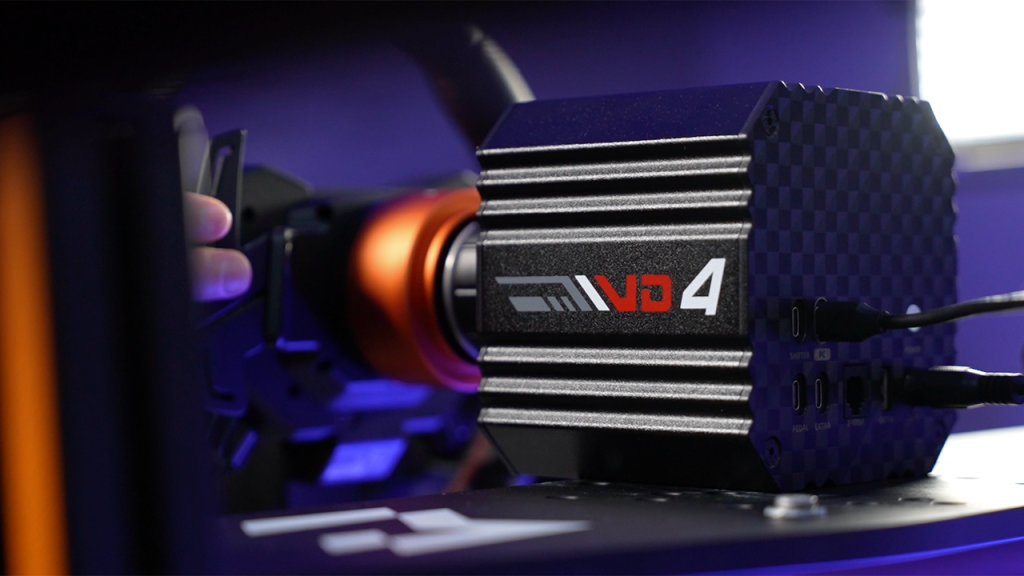
PXN’s VD4 also deserves mention because it targets a similar type of buyer. It is another bundle-style option aimed at giving you a lot right out of the box, and that is appealing for obvious reasons. If you are new, you probably do not want to spend your first few weeks in sim racing trying to decode ecosystem charts and compatibility notes. You want something that works. The tradeoff there is that PXN still does not have the same ecosystem depth or brand confidence that some of the bigger names do, so while it can absolutely make sense on value, it is not the option I would call the easiest long-term recommendation.
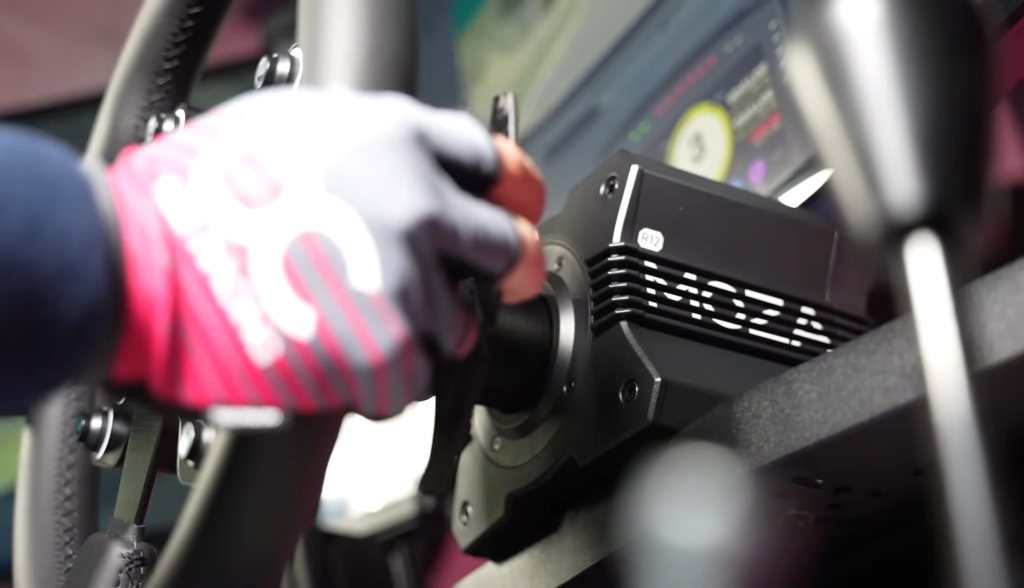
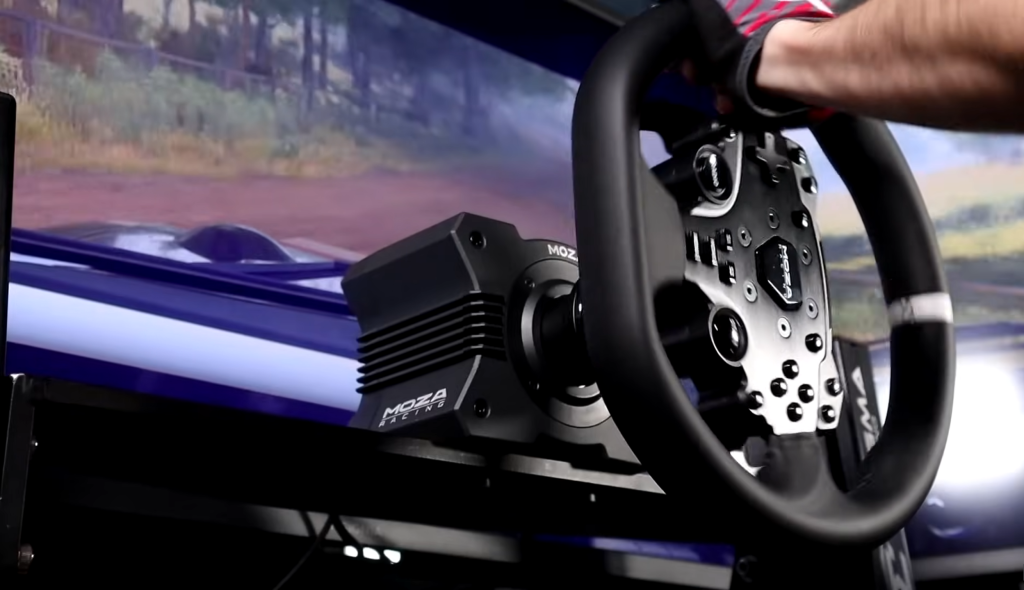
That brings me to the Moza R5, which is the one I would personally recommend if someone asked me for the best cheap direct drive wheel base right now. And yes, I know that “cheap” is relative here. It is not dirt cheap. It is not some impulse purchase. But in the context of direct drive sim racing gear, it still sits in a very strong spot and offers the kind of package that makes sense to a huge number of buyers.
Cheapest today: $379 at MOZA Racing US.
Between $285.69 and $379 over the last 12 months. The cheapest shop has changed recently, so we are not calling this a rise or a fall.
The reason I like the R5 so much is because it gets the balance right. At 5.5 Nm, it is strong enough to feel properly capable without becoming intimidating or awkward for the kind of beginner and lower mid-range setups most people are actually using. It comes in a bundle with an upgradable wheel and pedal set, and it also includes the table clamp, which matters more than people sometimes realize. For someone starting from scratch, those details matter a lot. A product that feels complete is often much more useful than a slightly cheaper one that leaves you immediately shopping for two or three other parts.
It is also just a solid, reliable bit of kit. The R5 has been around long enough now that people broadly understand what it is. It is not trying to be some crazy high-end monster. It is trying to be a dependable, well-rounded entry into direct drive, and I think it succeeds at that really well. The torque is enough to feel immersive and detailed, the ecosystem around it is solid, and there is enough room to grow without making the whole thing feel like a dead end.
That is the key for me. The R5 does not win because it dominates every category on paper. It wins because it avoids major compromises. It is not as weak as the very lowest-end options, not as piecemeal as some ecosystem-first solutions, and not as expensive as the console-focused packages that start creeping into a different class altogether. It lands in a sweet spot, and that sweet spot is where a lot of sim racers live.
MOZA R5 Racing Simulator Bundle
The best balance of value, performance and overall package at the cheap end of direct drive – it wins by avoiding major compromises rather than by dominating any spec.
Best for Beginners and lower mid-range setups starting from scratch w
That does not mean everyone should automatically buy the R5. If you specifically need Xbox compatibility at the lowest possible price, the R3 is probably going to make more sense. If you are already committed to Fanatec’s ecosystem or you really value the 5 Nm to 8 Nm upgrade path, the CSL DD remains very compelling. And if you are heavily focused on PlayStation, products like the Thrustmaster T598 or Logitech’s newer RS ecosystem start becoming more relevant, though usually at a higher overall entry cost.
So this is not really a case of one base destroying all the others. It is more about what I think is the best all-around answer for the widest group of people. And that is where the Moza R5 keeps coming back to the front for me. It feels like the most complete recommendation, not just the most interesting spec sheet.
If you had asked this question a few years ago, I probably would have had to hedge the answer quite a bit. Today, I do not think it is that complicated. There are multiple cheap direct drive wheel bases worth considering, which is already a great place for the hobby to be. The Fanatec CSL DD, Moza R3, and PXN VD4 all have genuine reasons to exist and genuine buyers they make sense for.
But if I had to narrow it down to one affordable direct drive wheel base that I think offers the best mix of value, usability, included hardware, and long-term satisfaction, I would pick the Moza R5. It is not the absolute cheapest route into direct drive, but it is the one that, to me, feels the easiest to recommend without adding a bunch of caveats. And in this part of the market, that counts for a lot.
I tried the latest BDH Active Shifter, and the updated system feels far more convincing, with proper shift lockouts, custom gate layouts, and a much more solid mechanical feel.
I got an early hands-on test with the new Simucube ActivePedal Sport, and despite lower force and travel, it delivers much of the same experience as the Ultimate for considerably…
Simucube has unveiled the ActivePedal Sport, a more affordable version of its force-feedback pedal technology. The new model will make its public debut at SimRacing Expo Frankfurt from 16 to…
Simagic is finally preparing to reveal its long-awaited Active Pedal during its global product launch on October 14, nearly two years after the first prototype appeared.
Race Sim Studio has released the Formula Hybrid 2026 for Assetto Corsa, bringing active aerodynamics, a new 350 kW hybrid system, adaptive ERS deployment, and an extensive suite of racing…
Kunos Simulazioni has shared a detailed look at the future of Assetto Corsa EVO, outlining changes to the game's development direction and revealing more information about its long-awaited Free Roam…