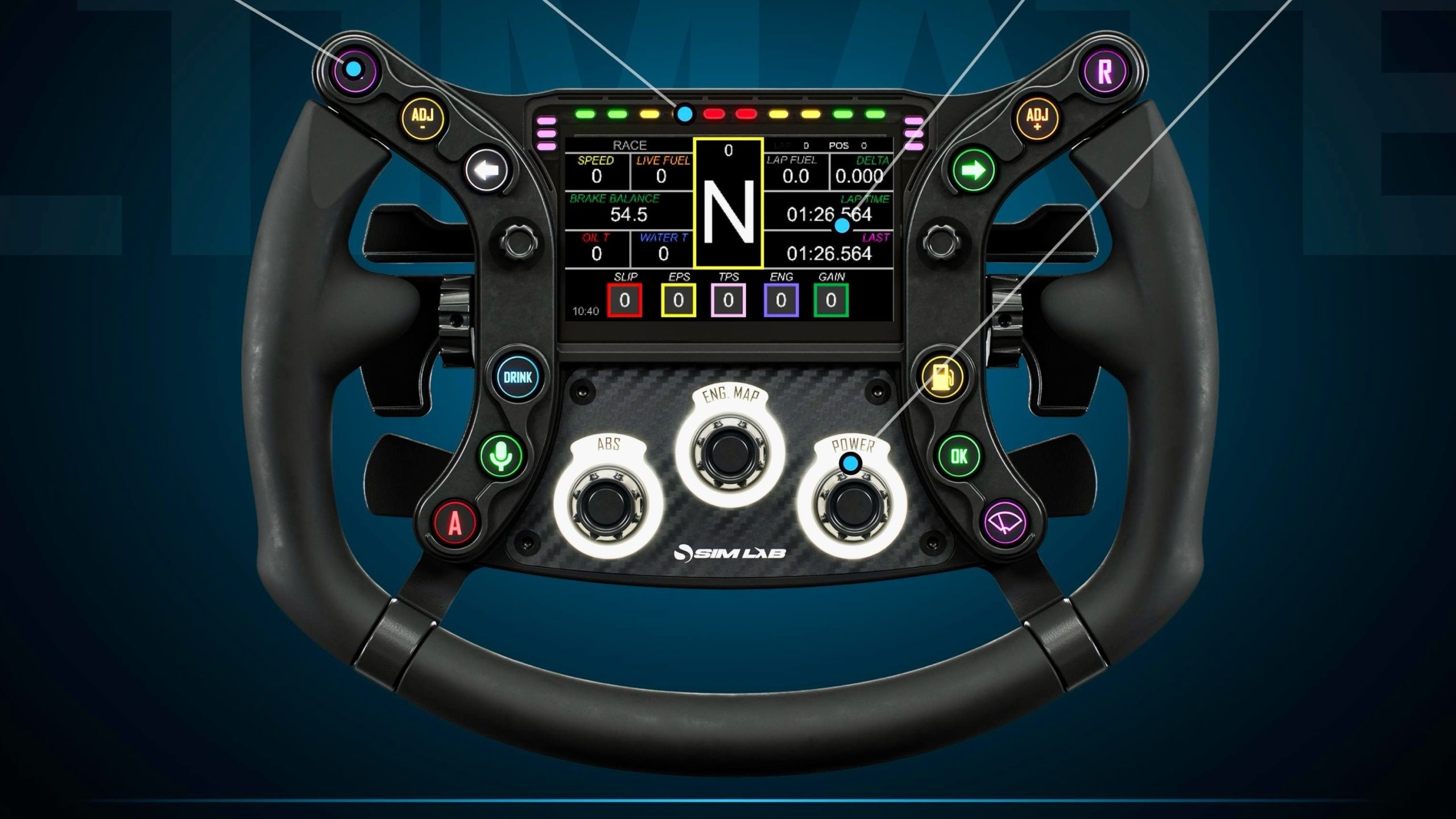
Sim-Lab unveils GTSL Ultimate steering wheel at Sim Racing Expo Frankfurt
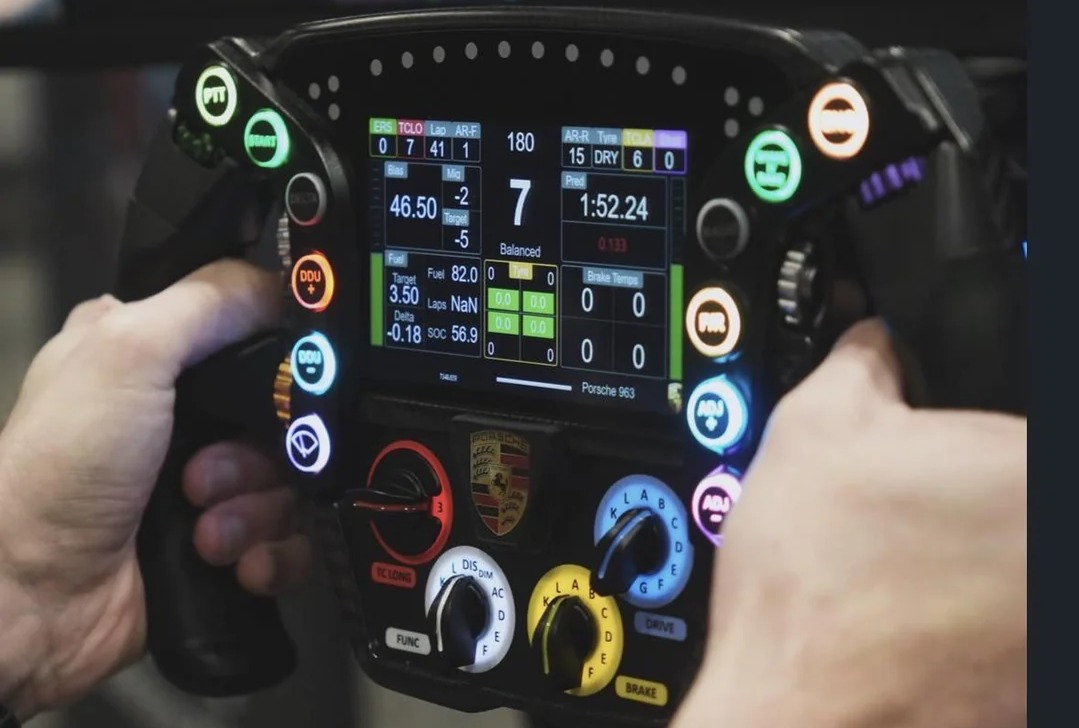
Sim-Lab will unveil the GTSL Ultimate, a new version of its GTSL steering wheel platform, at Sim Racing Expo Frankfurt this weekend.

Whether you like it or hate it, it is impossible to deny that iRacing has become the most recognizable name in sim racing. For many people both inside and outside the hobby, the word “sim racing” has almost become synonymous with iRacing itself.
And that is what makes it interesting. This is a platform that people constantly criticize for its cost, yet despite that it continues to dominate the competitive online racing space. The reason for that comes down to how the entire service is designed around one simple idea: structured racing that actually works.

The biggest reason iRacing is so popular is that the entire platform is built around organized multiplayer competition. Instead of online racing being something that feels like an extra feature, it is the entire foundation of the service. Everything from the interface to the scheduling system is built around getting drivers into races that actually matter.
Official races run all day across dozens of different series, which means you can log in at almost any time and find something to participate in. Drivers are matched through the iRating system so that most races place you with people who are relatively close to your pace. That alone makes a huge difference compared to the typical open lobby experience in other games, where skill levels can be wildly inconsistent and races often fall apart within the first few corners.
On top of that, the Safety Rating and license progression systems give drivers a real incentive to drive more carefully. If you constantly cause accidents or rack up incident points, your license progression slows down and you may even get demoted. It is not a perfect system and incidents still happen, but compared to most public multiplayer lobbies in other sims, the overall race quality tends to be far more consistent.
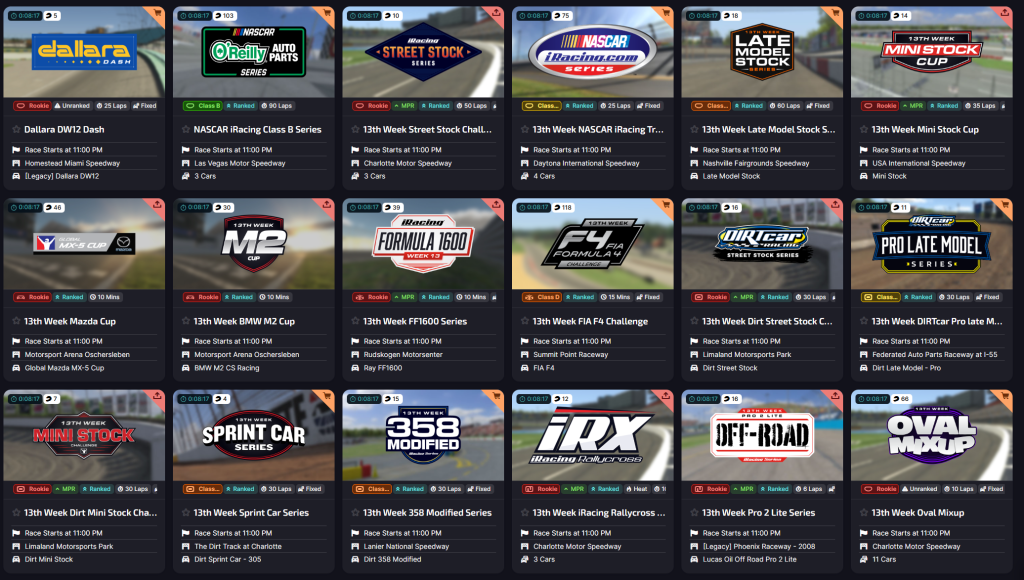
Another major factor behind iRacing’s popularity is simply how reliable the multiplayer experience feels. When you log into the service, everything is organized around scheduled sessions and official results. You register for a race, join the server, run your qualifying session, and then jump into the race knowing that everyone there is participating in the same structured event.
That reliability matters more than people realize. In many other racing sims, finding good multiplayer races can require joining private leagues, coordinating with communities, or hoping that public lobbies happen to be well behaved. iRacing removes most of that friction. You can simply log in, find a race within the next few minutes, and know that it will be part of an organized competitive system. It’s the kind of racing that other sims requires league communities for, but on demand.
The protest system also plays a role here. When incidents happen, there is at least a formal process for reporting repeated reckless behavior. While it does not eliminate bad driving entirely, it creates an environment where people know there are consequences for deliberately ruining races. That alone helps keep the overall experience from turning into complete chaos.
The pricing model is one of the most controversial parts of iRacing, and it is impossible to talk about the platform without mentioning it. Between the subscription and the additional cost for cars and tracks, getting fully invested in the service can become expensive fairly quickly, especially if you want to explore multiple racing disciplines.
At the same time, that pricing structure is also part of why the platform continues to function the way it does. The subscription model funds ongoing development, regular updates, and the infrastructure needed to maintain such a large online racing environment. New cars and tracks are released consistently, physics updates continue to refine the driving experience, and the overall service keeps evolving over time.
The cost also acts as a kind of commitment filter. That does not necessarily make the player base better drivers, but it does mean that most people participating are genuinely interested in racing rather than casually jumping into a lobby for five minutes. That level of investment contributes to the overall seriousness of the platform.
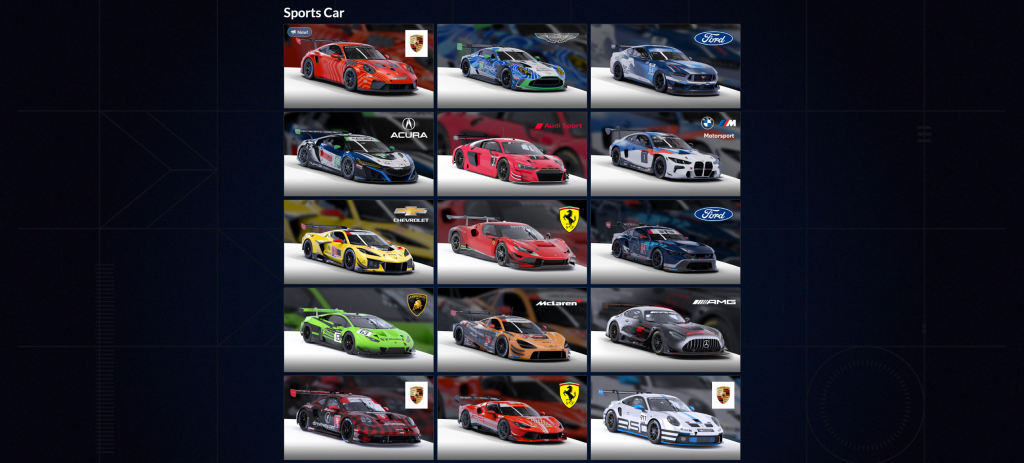
Another strength of iRacing is the variety it offers within a single ecosystem. Unlike many racing sims that focus heavily on one discipline, iRacing includes road racing, oval racing, dirt oval, and dirt road all under the same service. Within those categories you can find everything from beginner friendly rookie series to extremely competitive high level championships.
That variety keeps the platform interesting over long periods of time. A driver might start out racing something simple like the Mazda MX-5 rookie series and eventually move into GT racing, prototypes, or endurance events. Others may discover oval racing after initially joining for road courses. Because everything exists within the same system, switching disciplines does not require leaving the platform.
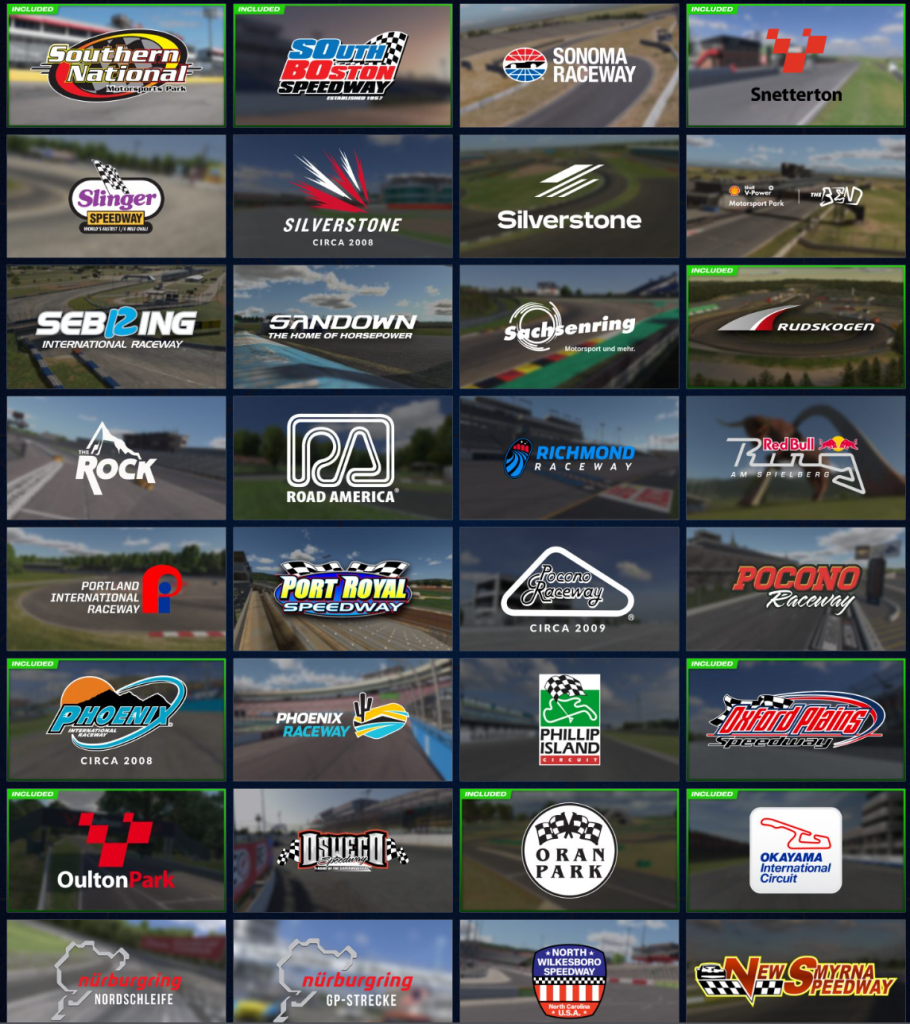
Ultimately, the reason iRacing remains so popular is simple. Even if other simulators may have stronger graphics, different physics philosophies, or unique features, very few offer the same level of structured, competitive online racing.
When you combine reliable multiplayer, matchmaking that actually groups drivers by pace, constant official races, and a large active player base, the overall racing experience becomes difficult to replace. That is why so many drivers continue to stick with iRacing even if they also enjoy other sims.

Design & development by CIDIX
· Sim rig builder, deals pipeline, simracing tools, comparisons, adspace & forum · Custom code licensed to OC Racing