The PXN GT One follows a formula that will feel very familiar if you have been paying attention to the sim racing market lately. It is a standalone GT-style steering wheel with thumb encoders, clutch paddles, backlit buttons, rotary controls, and a design language that clearly takes inspiration from the current wave of entry to mid-range favorites. The difference here is simple. PXN is trying to do all of that for less money.
And honestly, that is what makes this wheel interesting. The entry to mid-range wheel segment is probably one of the most competitive parts of sim racing hardware right now, but it is also one of the most exciting. Every year we are seeing more features, more customization, and more versatility trickle down into products that are becoming more affordable rather than more expensive. That is good for everyone. The GT One fits right into that trend, and in a few areas, it does a better job than you might expect.
PXN GT One Steering Wheel
Not revolutionary and it does not need to be: a familiar GT wheel recipe that keeps most of the features people actually care about, looks good, performs well and comes in at a very compelling price – an easy wheel to re
Best for Sim racers shopping on a tight budget who want to stretch th
Not revolutionary and it does not need to be: a familiar GT wheel recipe that keeps most of the features people actually care about, looks good, performs well and comes in at a very compelling price. An easy wheel to recommend.
BEST FOR
Budget sim racers who want maximum features
NOT FOR
Drivers wanting quiet, premium-feeling controls
WHAT I LIKE
Light and easy to use on track, with clear feedback detail
Strong control set with thumb encoders and clutch paddles
Fiberglass composite frame with a carbon fiber surface
Not every sim racer is shopping for a $1,000 wheel, and not every product needs to reinvent the category to matter. In fact, some of the most important hardware launches are the ones that take ideas we have already seen work, then bring them down to a more accessible price. That is pretty much the role the GT One is trying to play, and I think PXN understands that very well.
At around $220, with an aggressive intro offer pushing the launch even further, PXN is clearly trying to lower the barrier to entry again. And while that kind of pricing will obviously be one of the wheel’s biggest selling points, it would not mean much if the actual product underneath it did not hold up. Thankfully, there is more going on here than just a cheap price tag. The GT One is not groundbreaking, but it does package a lot of genuinely useful features into something that feels more complete than many people will probably expect.
Features and customization
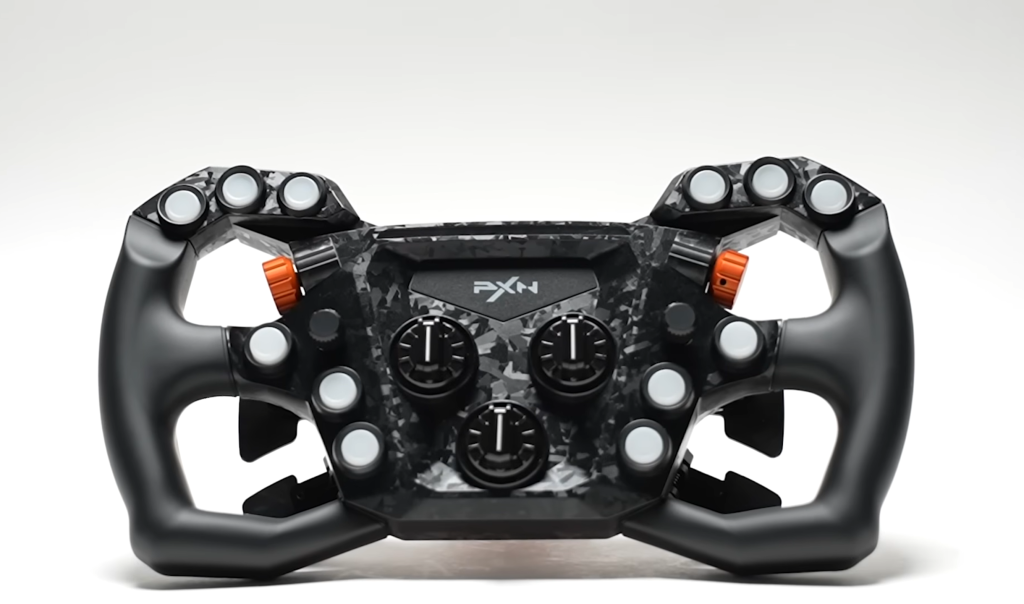
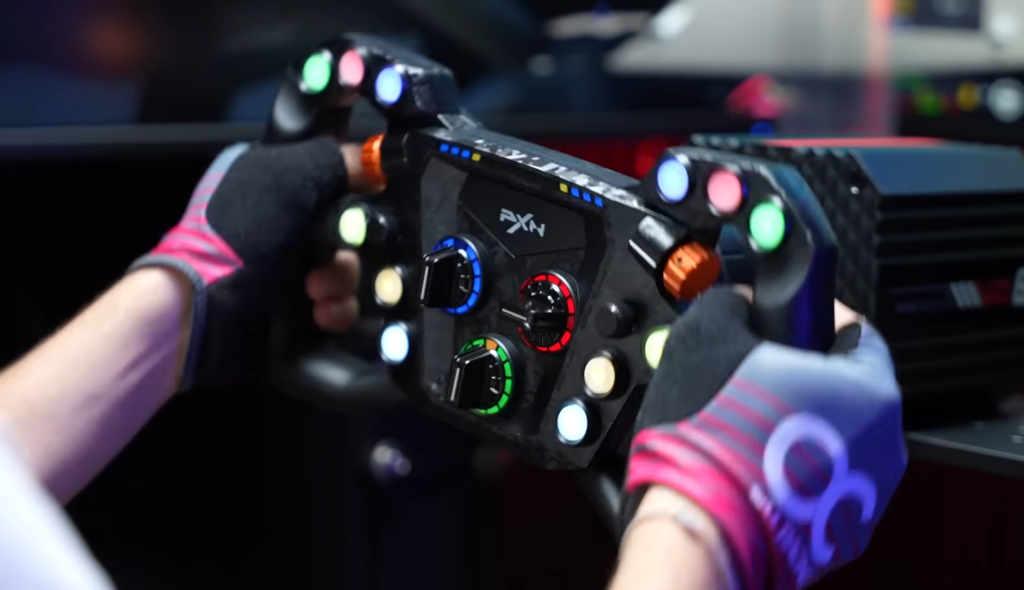
The GT One comes in at a comfortable 300mm in diameter, which already puts it in a sweet spot for a lot of sim racers. It is large enough to feel substantial and versatile, but not so large that it starts feeling awkward on lower-powered bases. In terms of controls, PXN has packed in a lot here. You get two 12-position thumb encoders, twelve backlit buttons, three central rotary encoders, and two multi-position switches with push functionality. That is a healthy amount of input flexibility at this price.
PXN also deserves some credit for the customization side of things. In the box, they include two full sticker sheets for labeling the buttons and encoders, which is a nice touch and one that helps the wheel feel a bit more personal right away. Then on the software side, using PXN’s own software or SimHub, you can configure the lighting for the buttons, the central encoders, and even the individual rev lights. That sort of control used to feel much more premium than it does now, and it is nice to see PXN not cutting corners there.
The buttons themselves are plastic, which is fairly standard at this price point, and they are definitely on the louder side. So no, this wheel does not feel ultra-premium in every small detail. But the overall layout is smart, the thumb encoders are actually very good, and the multi-position switches hold up nicely as well. On a budget-focused wheel, that is the kind of balance I would rather see anyway. Get the important things right first.
The takeaway: The GT One keeps the controls most drivers actually use, including thumb encoders, backlit buttons and clutch paddles.
Quality and Materials
One thing I do want to correct from the original video is the material discussion, because it matters here. The three central encoders are metal, not glossy plastic. The buttons are indeed plastic, and again, that is perfectly normal for a wheel at this price. But the central encoders being metal is worth noting because it gives the wheel a better sense of durability and helps the center section feel more solid than it would have otherwise.
The bigger correction is the frame itself. The GT One is not using some ordinary composite plastic shell dressed up to look more impressive than it really is. Its overall frame material is a fiberglass composite with a carbon fiber surface, and that is a more meaningful distinction than it may sound like at first. Compared to a lot of similarly priced wheels that lean more heavily on plastic-based construction, PXN’s fiberglass-reinforced structure should be stiffer, more durable, and less prone to flex over time.
That gives the GT One an actual material advantage over some competitors in the same price range, and I do think that deserves to be highlighted. Visually, the forged-carbon-style look may still be somewhat divisive depending on taste, but structurally, there is more substance here than I first gave it credit for. Personally, I actually do like the overall look of the wheel. My only real visual complaint is the texture change around the PXN logo, which makes that center area look a little like a screen was originally meant to go there and then never made the final cut.
As for the grips, they feel very similar to what we have seen from other GT wheels in this segment. They are firm, comfortable, and nicely shaped, though I did find them a little slippery at times. The flip side is that they do not hold onto dust and debris as aggressively as some grippier materials do, which some people may actually prefer.
Compatibility and the Rear Layout
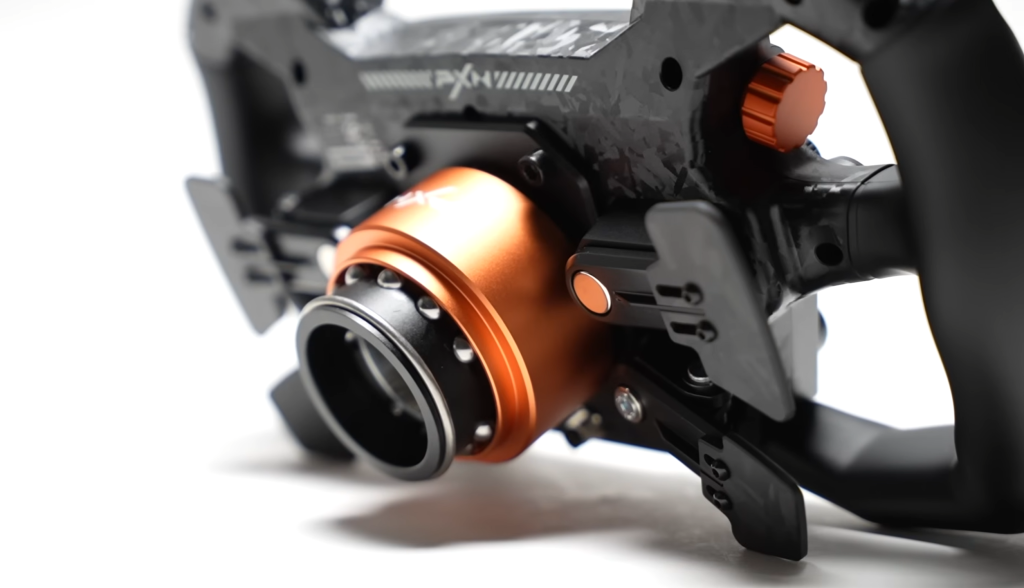
Looking at the back of the GT One, there is actually quite a bit to like. PXN uses its own quick release system here, which follows the same general energy-style idea that a lot of brands now use. Mounted natively on PXN’s newer VD series wheelbases, it holds up perfectly well with no notable flex or play. That part feels sorted, and that is what you want.
For people wondering about flexibility, PXN also gives you a pretty solid answer. With the $20 PXN ZQS adapter, you can fit other quick release systems, and with the included coiled USB cable, you can run the wheel independently over USB. That opens the door to third-party wheelbase compatibility, which is a very welcome feature and one that makes this wheel much easier to recommend. We have thankfully started seeing more brands move in this direction, and it is great to see PXN doing it here at this level of the market.
The rear shifter setup is strong too. You get carbon fiber magnetic paddle shifters and carbon fiber clutch paddles, both slightly adjustable. The main shift paddles are firm, tactile, and definitely loud. The clutch paddles have a decent amount of travel, though I would have liked a bit more resistance from them. Even so, having this kind of rear hardware at this price point still adds to the feeling that PXN is giving you a lot for the money.
On Track Performance
Paired with PXN’s VD6, the GT One actually delivers a very enjoyable experience on track. No, it does not feel like some ultra-premium wheel. The buttons rattle a little, and while the overall layout is very good, you do notice where some of the cost savings have gone. But once you get driving, those things start to matter a lot less. What stands out much more is how functional, light, and easy to use the wheel feels.
That low weight helps more than you might think, especially on a less powerful base. Because the wheel is so light, it is very easy to feel the details coming through. Road texture, curbs, bumps, and small feedback changes all come through clearly, and the wheel does a nice job of staying out of the way rather than muting the experience. That is an underrated strength in this part of the market.
Rigidity is solid as well. Under normal use, I really could not feel much flex at all. Only if I started pulling and pushing against the wheel in an unnatural way could I really get anything out of it. So from a practical standpoint, it holds up well where it matters. Add in the good ergonomics, well-placed controls, thumb encoders, clutch paddles, full button backlighting, and third-party compatibility, and the full package starts making a lot of sense.
Worth knowing: The main shift paddles are firm and tactile, but they are definitely loud.
Final Thoughts
The PXN GT One is not trying to be revolutionary, and I do not think it needs to be. What PXN has done here is take a familiar GT wheel recipe, keep most of the features that people actually care about, and package it into something that looks good, performs well, and comes in at a very compelling price. That alone gives it a place in the market.
No, I would not take it over something like a Moza KS Pro or a Simagic GT Neo if budget was not part of the conversation. Those wheels still offer a more refined overall experience. But that is not really the point here. The GT One gives you a large chunk of that same formula for less money, and for a lot of people, that is going to be the more important detail. If you are shopping on a tight budget and want to stretch your money as far as possible without giving up too much functionality, this is an easy wheel to understand and an easy wheel to recommend.
FINAL VERDICT
Recommended for budget-focused sim racers who want a lot of GT wheel features for $219.
IDEAL BUYER
Budget sim racers stretching their money as far as possible
MAJOR DRAWBACK
Loud, rattly plastic buttons
BOTTOM LINE
A familiar GT wheel recipe that looks good, performs well and comes in at a very compelling price.
Sim racing hardware reviewer and creator. Every review on this site is hands-on tested across direct-drive wheelbases, pedals, cockpits, motion systems and accessories before a word is published.
PXN Reveals New S-Series Wheel Bases and Formula Wheels at Gamescom 2026 - OC Racingsays:
[…] S16 is already available to try at Gamescom paired with the GT ONE steering wheel and Vector X pedals. Unfortunately, PXN has not announced pricing or release dates […]
Kunos Simulazioni has shared a detailed look at the future of Assetto Corsa EVO, outlining changes to the game's development direction and revealing more information about its long-awaited Free Roam…
Conspit CHS · $369 Conspit sent this product to me for review. Conspit has entered the shifter market with the CHS, a dual-mode shifter that combines a 7-gear H-pattern with…
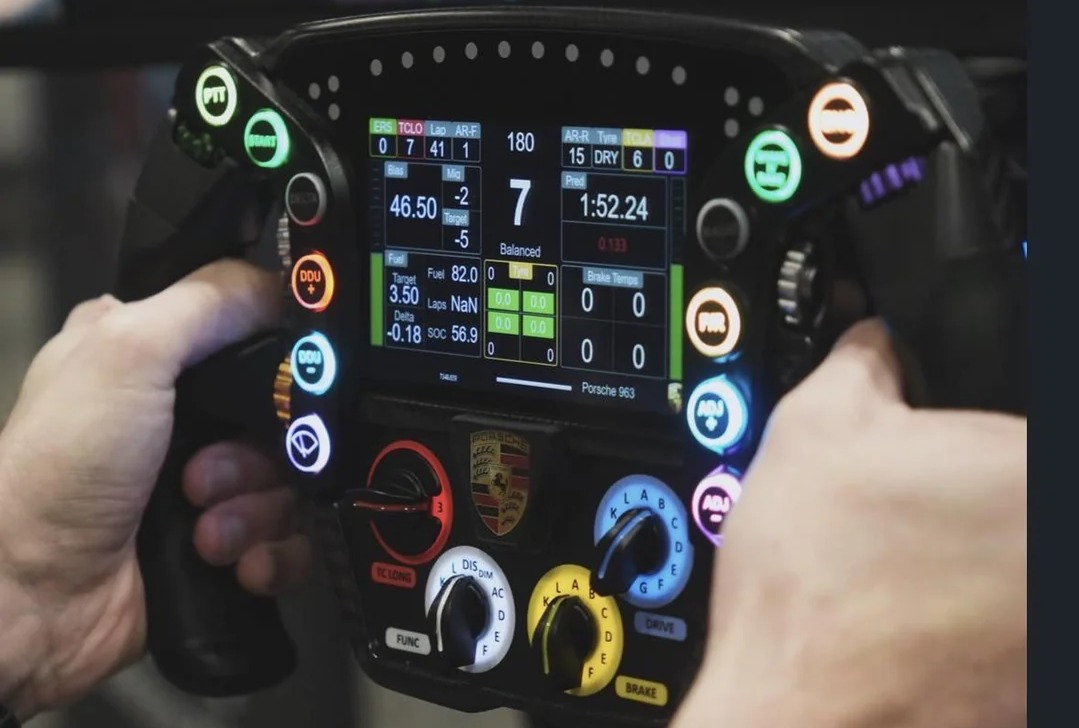
After making its public debut in Chicago, Sim-Lab is bringing its upcoming Porsche 963 replica steering wheel to SimRacing Expo Frankfurt for another major showcase.
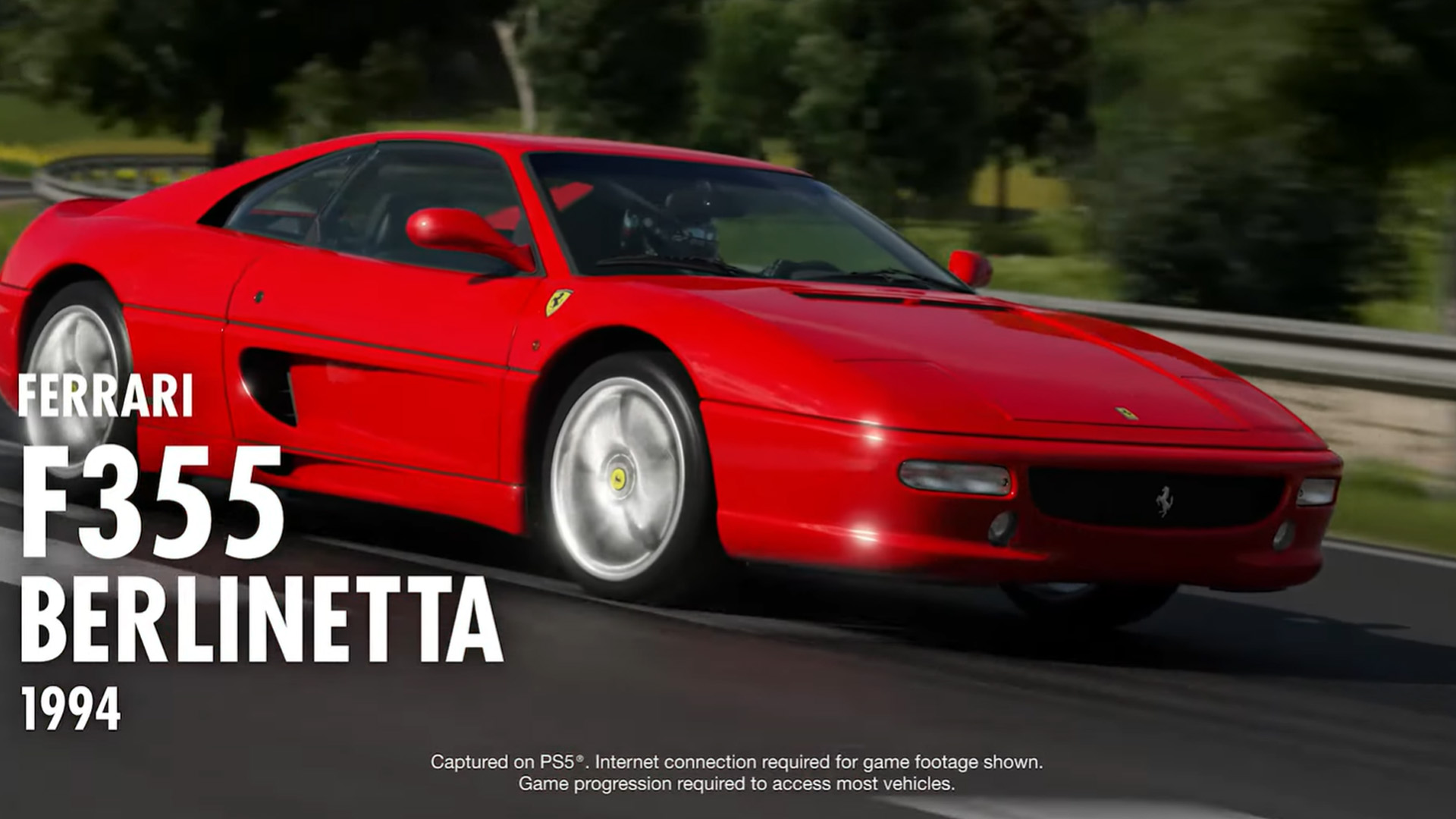
Gran Turismo 7 Spec IV Part 1 arrives October 15 with Sportsland SUGO, six new cars including the Ferrari F355, new Brand Central challenges, Car Concierge, Car Viewer and more.
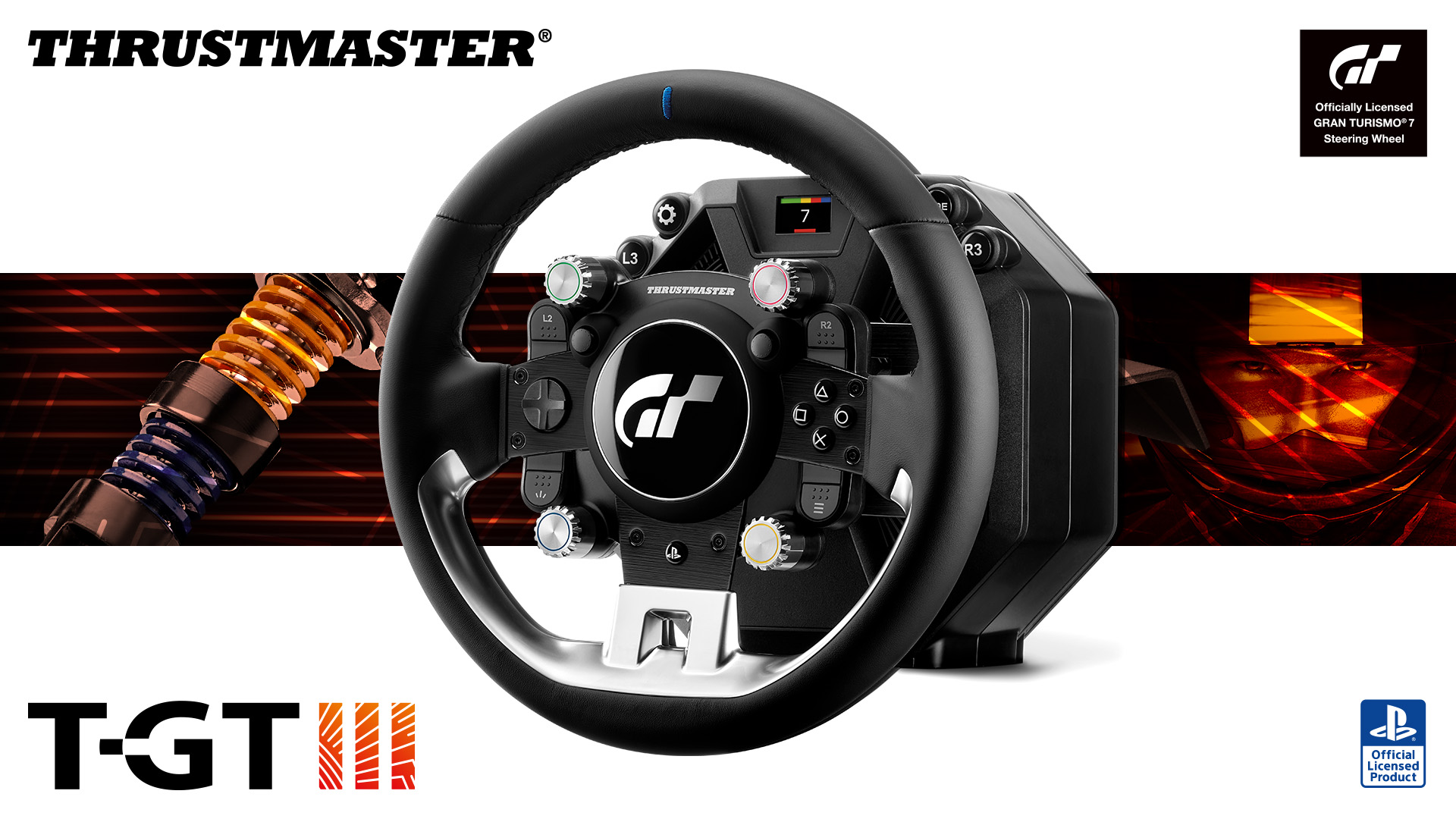
The new Thrustmaster T-GT III brings Direct Axial Drive, 5 Nm of constant torque, load cell pedals, and dedicated Gran Turismo 7 haptics to PS5 and PS4.
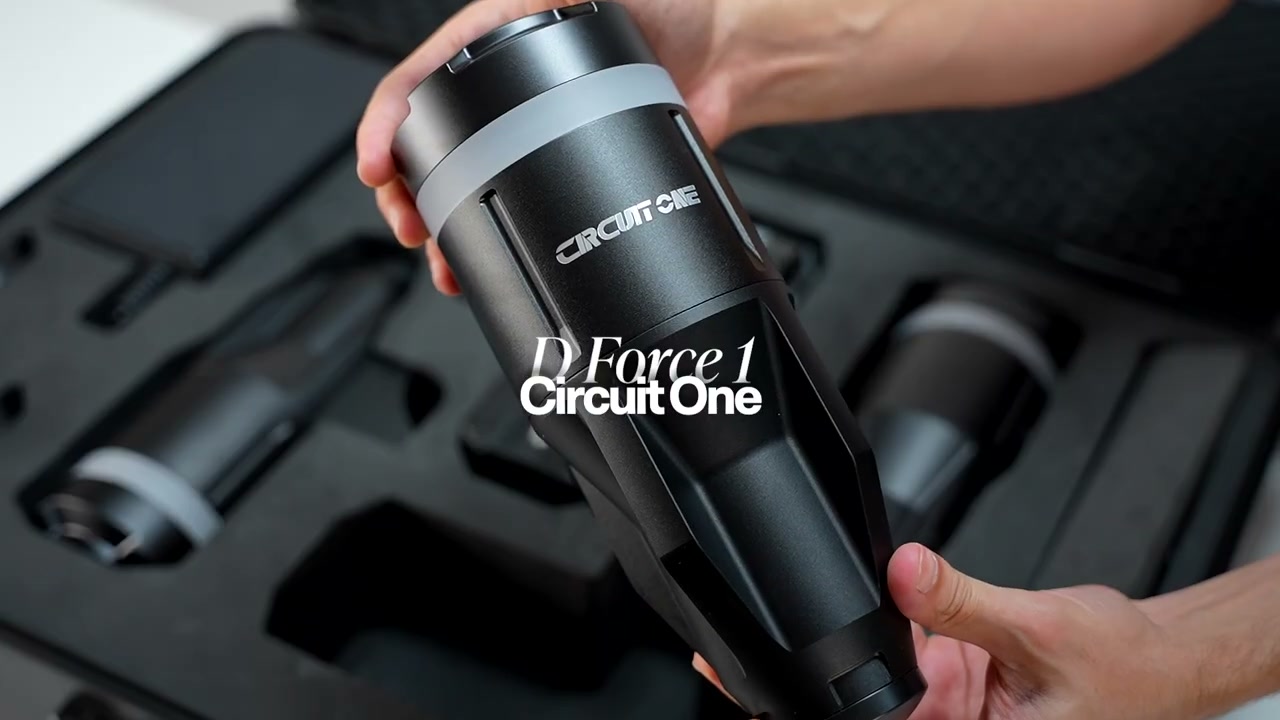
The Circuit One D Force 1 packs four motion actuators into a suitcase, installs in about 10 minutes, and trades big travel for detail you can actually use.
Assetto Corsa EVO Update 0.9 introduced a major overhaul to the game's GT tyre model, changing how cars behave around the limit across a wide range of GT machinery.
Project Motor Racing has received its Version 2.3 update, bringing the Lamborghini Temerario to the simulator alongside a new vehicle class, physics revisions, visual improvements and a series of changes…



PXN GT One: Everything You Need to Know About PXN’s $199 GT Wheel - OC Racing says:
[…] Full PXN GT One review PXN OFFICIAL WEBSITE TRUSTED PXN DISTRIBUTORS […]
PXN Reveals New S-Series Wheel Bases and Formula Wheels at Gamescom 2026 - OC Racing says:
[…] S16 is already available to try at Gamescom paired with the GT ONE steering wheel and Vector X pedals. Unfortunately, PXN has not announced pricing or release dates […]