
Sim Gaming Expo 2026 - Chicago, Sept 18–20
North America's first expo for sim racing, flight & VR. Test the latest gear, meet the creators, score show-only deals. Schaumburg, Chicago - September 18–20.

The PXN Vector X pedals are one of the more surprising recent sim racing launches because I do not think many people expected PXN to make this move yet. Instead of revealing another cheaper entry-level product, the brand has now shown a pedal set that looks far more serious and far more ambitious than what most people probably associate with it.
That is what makes this launch interesting right away. This does not look like PXN slightly dressing up a starter pedal set and hoping people call it premium. It looks more like the company is trying to enter a more competitive part of the market with a load cell brake, heavier construction, more included hardware, and the kind of adjustability buyers in this price range are going to expect. Since these are not properly out yet, the fairest way to cover them is as a what we know so far article.
Verified purchase options at lowest current prices:
Affiliate disclosure
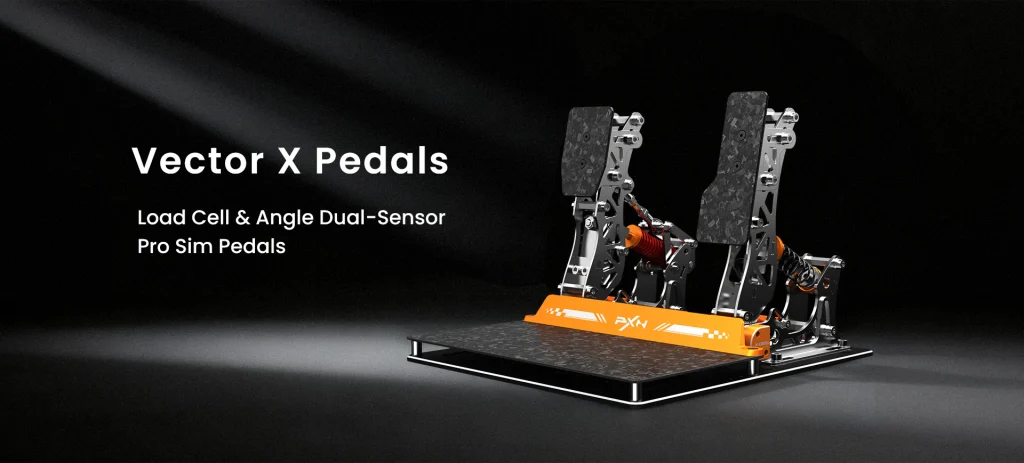
The first thing to understand is that the Vector X is not being positioned as a budget pedal set. Based on the information shown so far, the standard package includes a throttle and a load cell brake, while the clutch is optional for anyone who wants the full three-pedal setup. In terms of pricing, the two-pedal version is expected to retail for around $490, while the three-pedal version with the clutch moves up to around $580. PXN also showed an early-bird launch offer of around $430 for the standard set and $530 with the clutch.
That is a very different price conversation than many people still associate with PXN, and it means expectations are going to be much higher than usual. This is the brand trying to step into a part of the market where buyers are going to compare these directly against much more established names.
At least from the reveal and unboxing, PXN seems to understand that a product like this has to feel more premium from the moment it comes out of the box. Alongside the pedals themselves, you are getting the user manual, the heel plate, the pedal plate, adjustment sets, the controller box, and multiple springs for changing brake feel. That is a solid amount of included hardware and very much the sort of thing people expect once the price starts climbing into this range.
The heel plate is one of the first things that stands out visually. It is relatively thin, but it looks good and immediately helps the set feel more upscale. Then the pedal plate itself appears fully metal and has enough visible substance to avoid looking like some dressed-up budget part. PXN is not only charging more here. It also seems to be trying harder on presentation and materials.
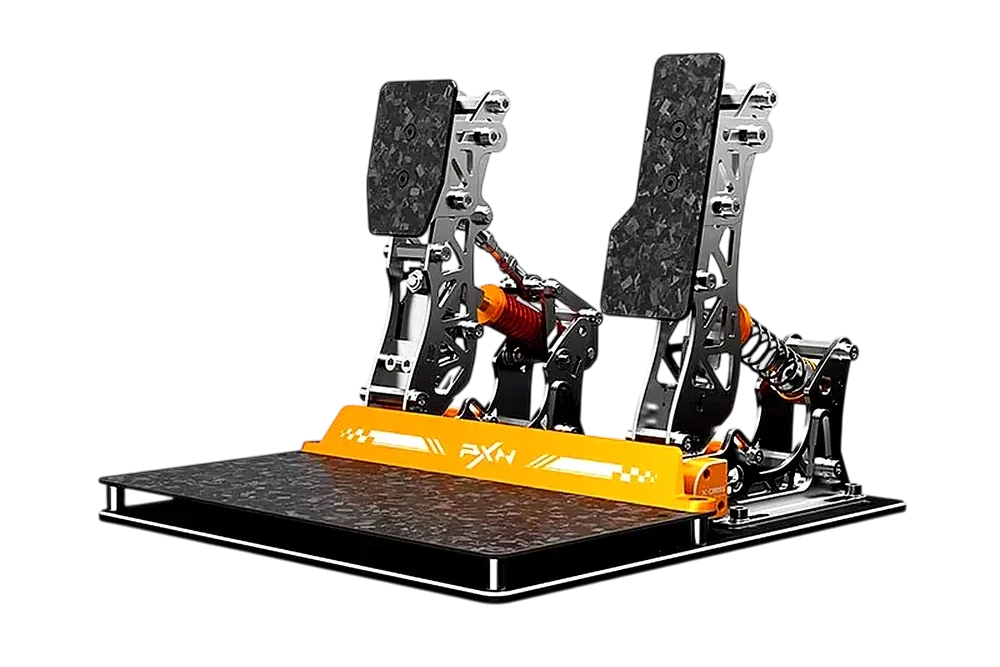
Starting with the throttle, the first thing that stands out is how much metal appears to be involved in the construction. Visually, it looks much more substantial than the sort of thing many people would probably expect from PXN. The pedal face also uses that forged carbon style finish, which gives it a more premium appearance than a simpler faceplate would have.
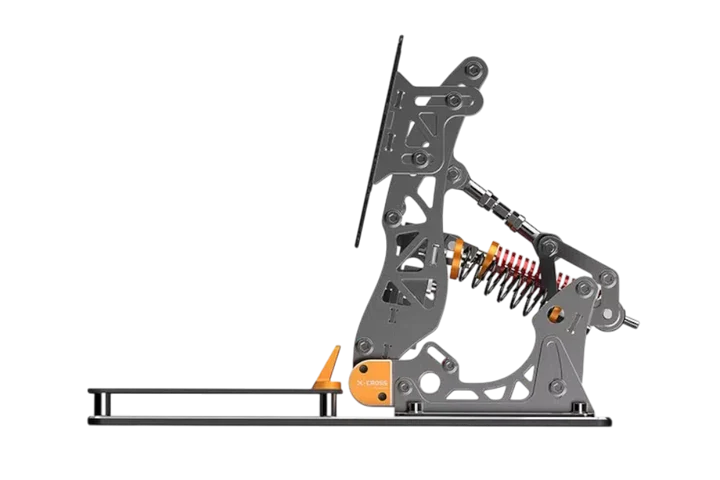
More interesting than the looks, though, is the design underneath. The throttle appears to use a bent spring arrangement, which immediately gives the impression that PXN is at least taking inspiration from more established premium pedal sets already on the market. That does not automatically tell us exactly how it will feel underfoot, but it does suggest these are not simply cheaper pedals trying to look expensive in launch photos.
The brake is obviously the main thing most people are going to care about, and this is where the Vector X starts looking much more serious. The brake uses a load cell, comes with interchangeable springs, and appears to offer a healthy amount of mechanical adjustment. Physically, it also looks substantial, with a heavy metal construction and the same forged carbon style face as the throttle. At this kind of price, buyers want real tuning options and a design that looks like it belongs in this bracket.
One of the more promising things about the Vector X is how much adjustment hardware seems to be included. Between the extra springs, the controller box, and the overall pedal architecture, PXN is clearly trying to position this as something more serious than a basic set you bolt down once and leave alone forever. That is good to see, because once you move into this price range, adjustability becomes part of the expectation rather than just a nice extra.
People shopping here usually want to tune brake feel, make proper setup changes, and adapt the pedals to their own rig and driving style. On first look, the Vector X seems to be saying the right things there. The real question is whether those adjustments turn out to be useful, easy to work with, and actually worth having once people spend proper time with the set. That is the part that still needs to be answered.
The reason the Vector X is interesting is not only because of the pedals themselves. It also matters because of what it says about PXN as a brand. This looks like a company trying to move further up the market and prove that it can build something aimed at more demanding sim racers rather than only competing for cheaper entry-level sales. That is a bold move, because the higher you go in sim racing hardware, the less forgiving buyers become.
At this level, nobody is going to care that the product is an ambitious surprise if the actual feel and quality do not back it up. These pedals need to be genuinely good. They need to feel premium, perform properly, and justify why a buyer should trust PXN here instead of going with a brand that already has more history in this exact space.
So far, the PXN Vector X looks like a genuine attempt by PXN to enter a more serious part of the pedal market. The price is clearly above the entry level, the hardware appears much more substantial than many expected, the load cell brake looks properly competitive on paper, and the included extras suggest PXN wants this to be viewed as more than just another cheaper product with nicer styling.
That does not mean it is automatically a winner. At this price, these pedals will need to do much more than simply look promising. They will need to feel good, perform well, and prove that PXN can genuinely compete here rather than just imitate the category from a distance. But based on what we know so far, I completely understand why people are curious. For now, that is really the story. The Vector X is one of the more unexpected launches in recent sim racing hardware, and it looks like PXN may finally be trying to push into higher ground.