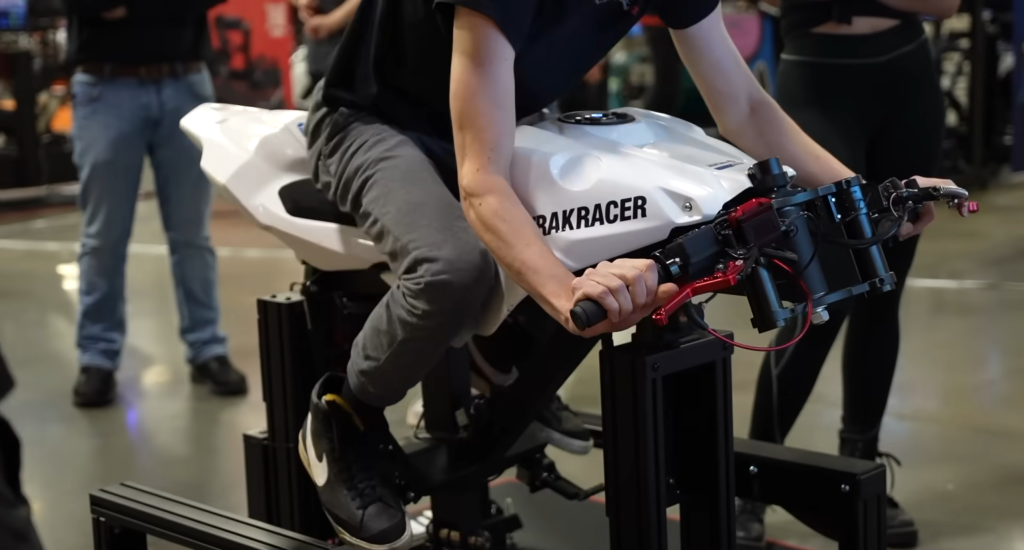
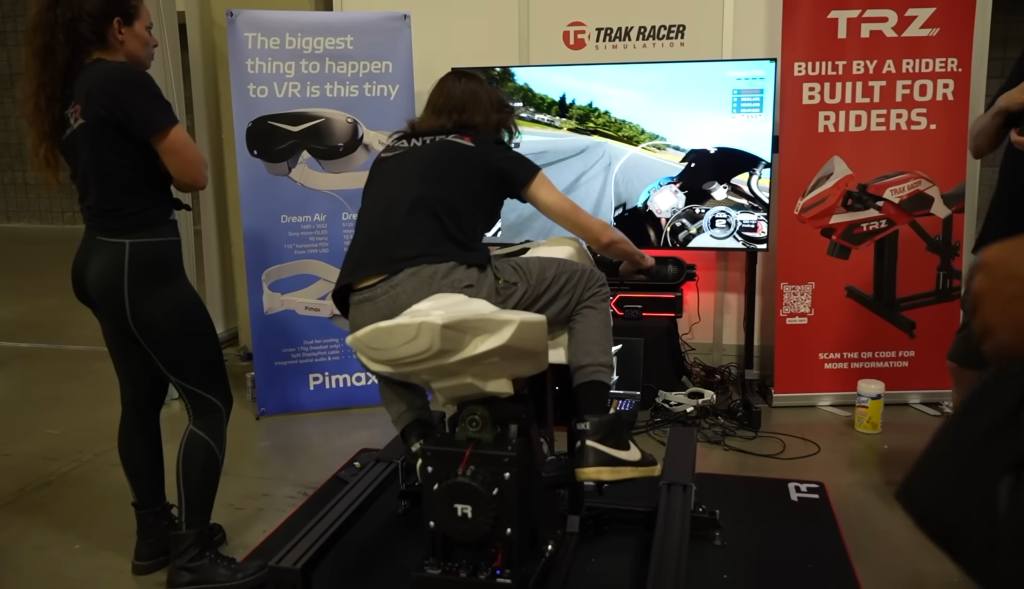
The Trak Racer TRZ Motorcycle Simulator is easily one of the most unusual sim racing products revealed this year, and it was also one of the most talked-about. The second you see it, you understand why. This is not just another cockpit with a new seat, a new color, or a new marketing angle. It is Trak Racer trying to bring a proper motorcycle simulation experience into the home in a much more serious way than most people are used to seeing.
And honestly, that alone makes it interesting. Sim racing hardware has gotten broader over the years, but bike simulation is still one of those areas that has always felt much less developed than cars, trucks, or even flight. So when something like the TRZ shows up at an expo and immediately starts drawing crowds, it is worth paying attention to. Since this is still very much an early-stage product story, the best way to frame it is simple. Here is everything we know so far about the Trak Racer TRZ.
$1,999.00 — unchanged since 22 Jul 2026 (3 months tracked).
Tracked daily across every shop we follow+Add to build
At $1,999 this is its usual price.
The lowest we have recorded is $1,975.80 on 22 Jul 2026.
What the TRZ actually is
The TRZ is Trak Racer’s new motorcycle simulator for home users, and at least based on how it has been introduced so far, the company is aiming quite high with it. This is not being framed like some novelty add-on or arcade-style curiosity. It is being presented as a serious motorcycle simulator designed to replicate the core sensations of leaning, balancing, weight transfer, and body movement in a way that normal gamepad or wheel-based setups simply cannot.
That matters, because it immediately tells you what this product is trying to be. The TRZ is not meant to replace a regular sim racing cockpit. It is trying to fill a gap that has existed in sim hardware for a long time. For bike fans, that is a pretty big deal. There are plenty of motorcycle games out there, but dedicated home hardware designed specifically around that experience has always been much harder to find.
Trak Racer has also developed the TRZ in collaboration with the RevZED Project, which is important because it helps explain why the rig feels more purpose-built than improvised. This is not some generic frame with handlebars bolted onto it. It appears to be a product with a more specific motorcycle simulation goal from the start.
The biggest surprise is how it works
One of the most interesting parts of the TRZ is that it does not appear to rely on a traditional powered motion platform to create the experience. Instead, the whole idea is much more rider-driven. Based on what has been shown so far, the simulator uses springs, pivot points, and a mechanically responsive structure that lets the rider control balance, lean, and weight transfer through their own body movement.
That makes the TRZ feel different from the sort of motion-based motorcycle simulator some people may have expected. The logic here seems to be that by avoiding motors in the main balancing system, you get something more direct, more immediate, and less dependent on the rig trying to guess what you want to feel after the fact. In other words, the rider is doing the work rather than the simulator trying to fake it for them.
That is also where the product starts becoming more interesting than just a visual gimmick. A lot of motorcycle simulation depends on the rider feeling involved in the balance of the machine, and from what has been described so far, that appears to be one of the main ideas behind the TRZ. It is trying to feel active, not passive.
Counter-steering and multiple riding styles are part of the pitch
Another detail that stands out is that the TRZ includes counter-steering as part of the experience, which is obviously a major part of riding dynamics. Interestingly though, that feature can apparently be turned off for users who are still learning or who want something a bit easier to get started with. That is a smart move, because a product like this needs to balance realism with approachability if it wants to appeal beyond only the most hardcore buyers.
There are also said to be different riding modes or steering approaches available, including lean-based and more arcade-style input options. That is worth paying attention to because it suggests the TRZ is not only trying to be authentic, but also flexible enough to work with different types of games and different user preferences. For something this niche, that kind of flexibility is probably necessary.
And really, that is part of what makes the TRZ look more thought through than expected. It does not seem to be trying to serve only one ultra-specific use case. It looks more like Trak Racer is trying to make the concept usable by a broader range of riders, even if the audience is still obviously going to be fairly niche overall.
Price and release timing are already big talking points
The biggest practical headline so far is the price. Trak Racer’s official listing has the TRZ at $1,999.95, and that immediately puts the product in a very interesting position. On one hand, it is obviously expensive. There is no point pretending otherwise. For a niche simulator that is not going to appeal to every sim racer, two thousand dollars is a serious number.
On the other hand, this is also not just a simple bracket or frame. It is the full control experience. That does not make it cheap, but it does at least help explain where the product wants to sit. Early reporting around the expo suggests launch is expected around October or Q4 2026, which means the TRZ still feels like a near-future release rather than something people can immediately buy and fully judge today.
That timing matters because it gives Trak Racer a bit of room to keep refining the message and the product itself before it lands properly. And for a product this unusual, that may be a good thing.
One important limitation needs to be said clearly
At least based on what has been reported so far, the TRZ will not launch with force feedback in the usual sense. That is one of the biggest talking points around the product right now, and understandably so. Some people are going to look at the price and immediately expect powered force feedback to be part of the package, especially in a category where realism is the whole point.
The explanation given so far is that software support is part of the problem. Motorcycle racing titles do not always offer the same level of telemetry support that sim racing hardware makers depend on for features like this, which makes developing force feedback around the platform much less straightforward. Trak Racer has apparently said that force feedback is still a priority for later, but it is not expected to be there at first.
That is probably the biggest asterisk hanging over the TRZ at the moment. It does not kill the product, but it absolutely changes how people will look at the price and the value proposition. It also means this is one of those products where the future roadmap matters a lot more than usual.
Haptics, wind, and other upgrades seem to be part of the long-term plan
What makes the TRZ story more interesting, though, is that Trak Racer does not seem to be treating the launch version as the final word. Early reporting suggests that post-launch support and add-ons are already part of the plan, including future options related to force feedback, haptics, wind simulation, motion, and other control upgrades. That is encouraging, because a product like this probably needs to grow over time rather than rely only on its launch-day form.
That also lines up with what was shown at the expo. The unit on display was reportedly fitted with haptics for extra immersion, and that makes sense because tactile feedback is exactly the sort of thing that can help bridge the gap while deeper software support develops. For now though, that still leaves the TRZ feeling like a product with a lot of promise and a lot of future possibility rather than something fully finished in every direction from day one.
That is not necessarily a bad thing. It just means expectations need to be set correctly. The TRZ looks promising, but it also looks like the beginning of a platform rather than the final perfect version of it.
Why the TRZ matters even if it stays niche
The most important thing about the TRZ may simply be that it exists at all. Sim racing hardware has become incredibly broad, but bike simulation has always felt like one of the most underserved parts of the hobby. So even if the TRZ remains a niche product, it still matters because it pushes the category forward in a way very few mainstream companies have really tried to do before.
And honestly, that is what makes it easy to root for. The TRZ may end up being a bit too expensive for many people, and the lack of force feedback at launch is definitely going to raise questions, but it is also trying something that feels genuinely different. It is not another safe release. It is not another slightly revised cockpit. It is a company taking a swing at a category that has needed more serious attention for a long time.
Final thoughts
So far, the Trak Racer TRZ Motorcycle Simulator looks like one of the most interesting and unusual hardware announcements of the year. It is a home-use motorcycle simulator developed with the RevZED Project, built around rider-controlled balance and weight transfer, and priced at just under two thousand dollars. It also looks like a product that still has a lot of room to evolve once it actually reaches the market.
The biggest open questions right now are obvious. How strong will the real riding experience feel over longer sessions, how much will the lack of launch force feedback matter in practice, and how quickly will the promised ecosystem of upgrades actually grow. Those are important questions, and they will shape whether the TRZ becomes a cool niche curiosity or something much more important.
But for now, the early story is simple. The TRZ looks bold, unusual, and far more serious than a lot of people probably expected. And for a category like motorcycle simulation, that already makes it worth watching closely.
Simagic is finally preparing to reveal its long-awaited Active Pedal during its global product launch on October 14, nearly two years after the first prototype appeared.
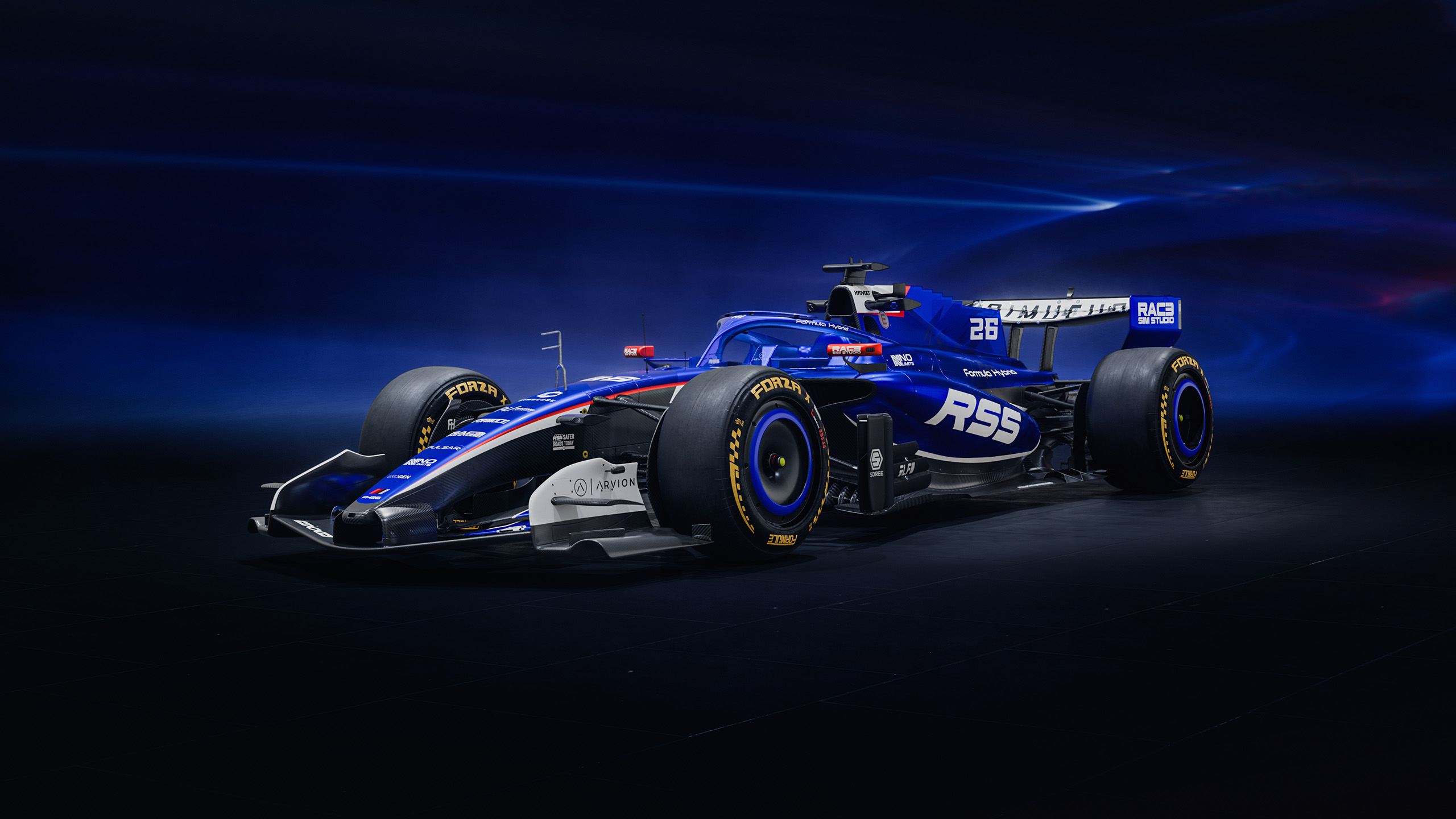
Race Sim Studio has released the Formula Hybrid 2026 for Assetto Corsa, bringing active aerodynamics, a new 350 kW hybrid system, adaptive ERS deployment, and an extensive suite of racing…
Kunos Simulazioni has shared a detailed look at the future of Assetto Corsa EVO, outlining changes to the game's development direction and revealing more information about its long-awaited Free Roam…
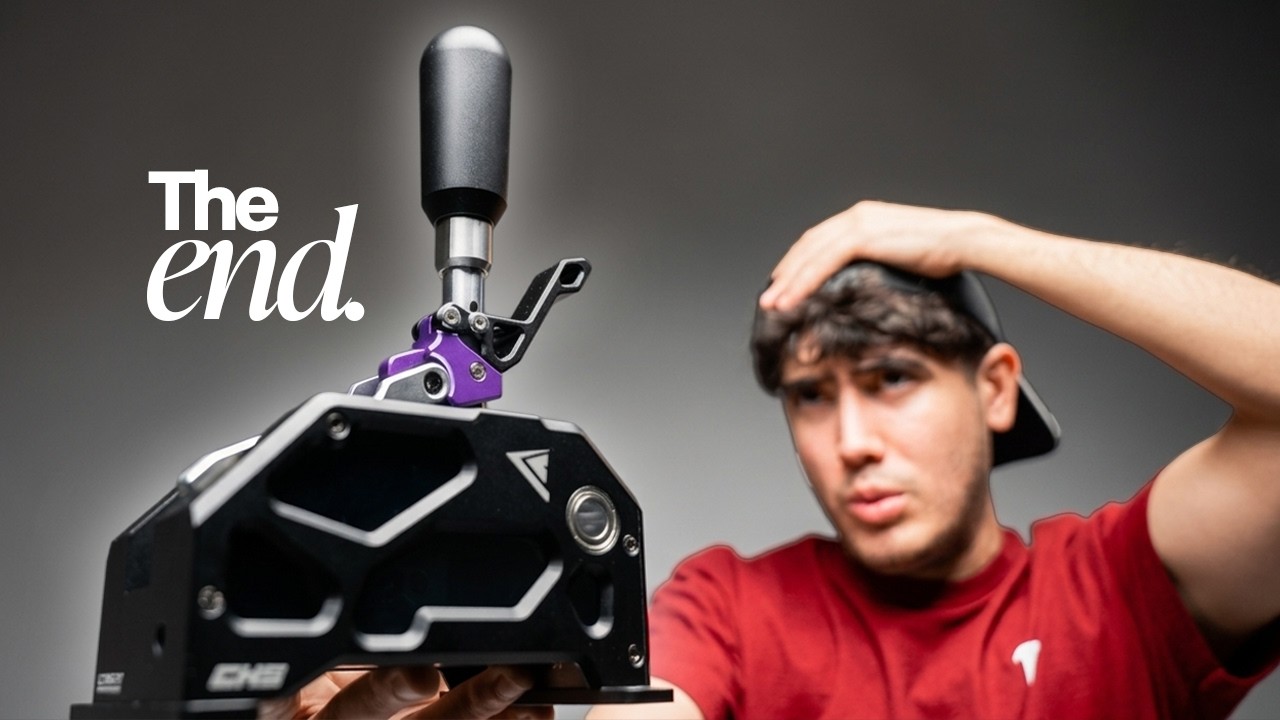
Conspit CHS · $369 Conspit sent this product to me for review. Conspit has entered the shifter market with the CHS, a dual-mode shifter that combines a 7-gear H-pattern with…
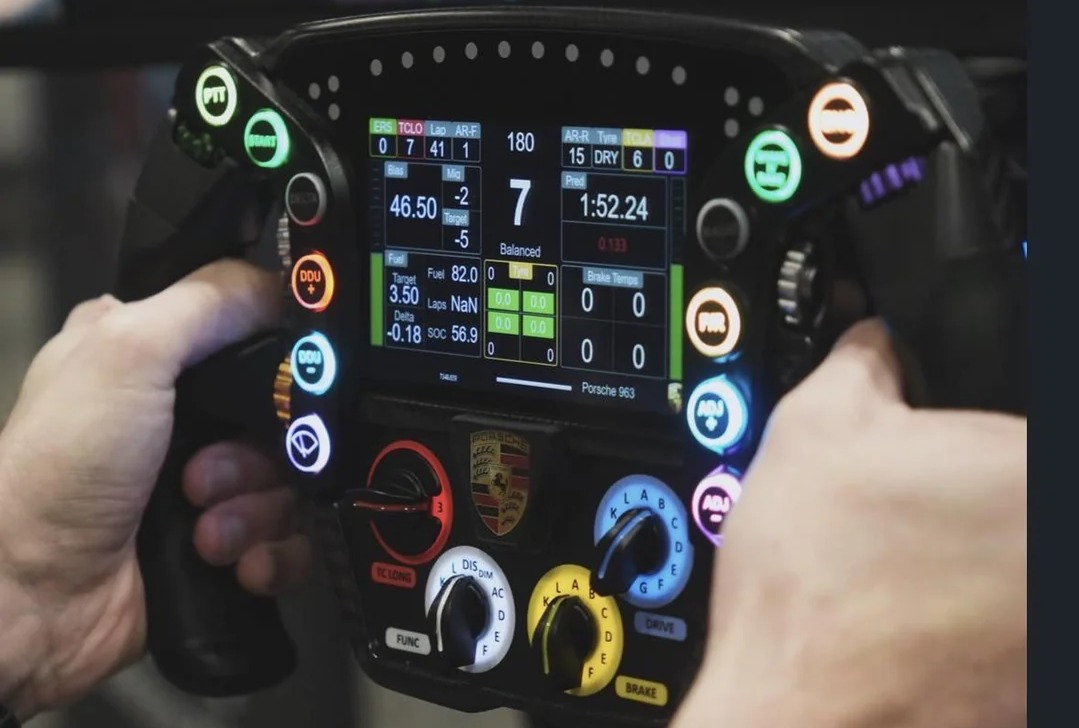
After making its public debut in Chicago, Sim-Lab is bringing its upcoming Porsche 963 replica steering wheel to SimRacing Expo Frankfurt for another major showcase.
Gran Turismo 7 Spec IV Part 1 arrives October 15 with Sportsland SUGO, six new cars including the Ferrari F355, new Brand Central challenges, Car Concierge, Car Viewer and more.
The new Thrustmaster T-GT III brings Direct Axial Drive, 5 Nm of constant torque, load cell pedals, and dedicated Gran Turismo 7 haptics to PS5 and PS4.
The Circuit One D Force 1 packs four motion actuators into a suitcase, installs in about 10 minutes, and trades big travel for detail you can actually use.