Asetek GT Nova Revealed at $299 With RaceHub Link
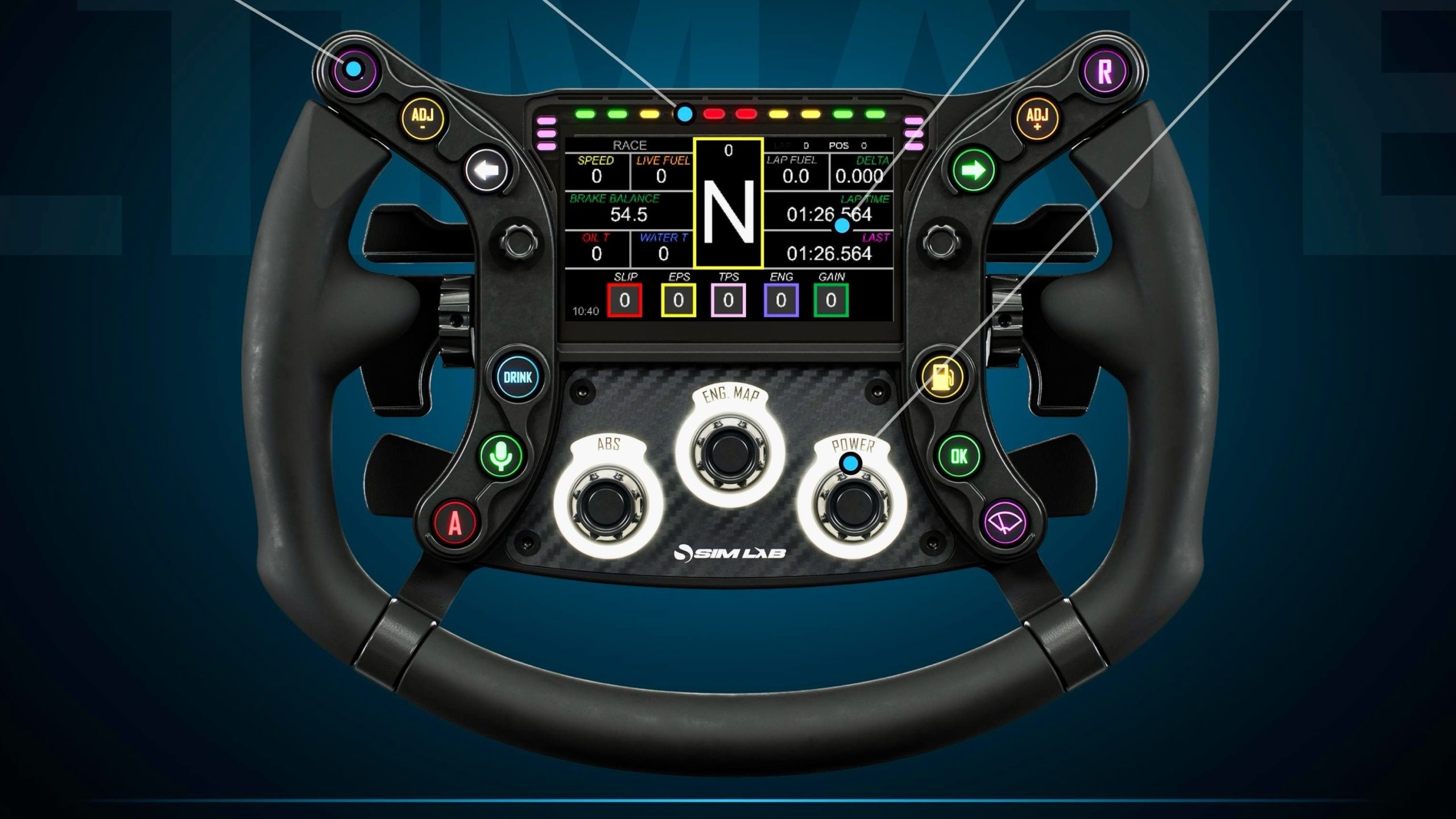
Asetek has revealed the GT Nova, a new 290mm GT steering wheel with an OLED display, RaceHub controls, MultiLink functionality, RGB lighting, and a $299.99 price.

The Sensit Haptics MTC-P Extreme 2 is probably one of the most creative haptic solutions in sim racing right now. Traditional buttkickers need to be bolted on somewhere, external transducers add more wiring and more hassle, and most haptic pads either look awkward or force you into a very specific type of seat. This system takes a very different approach, and that is what makes it interesting straight away.
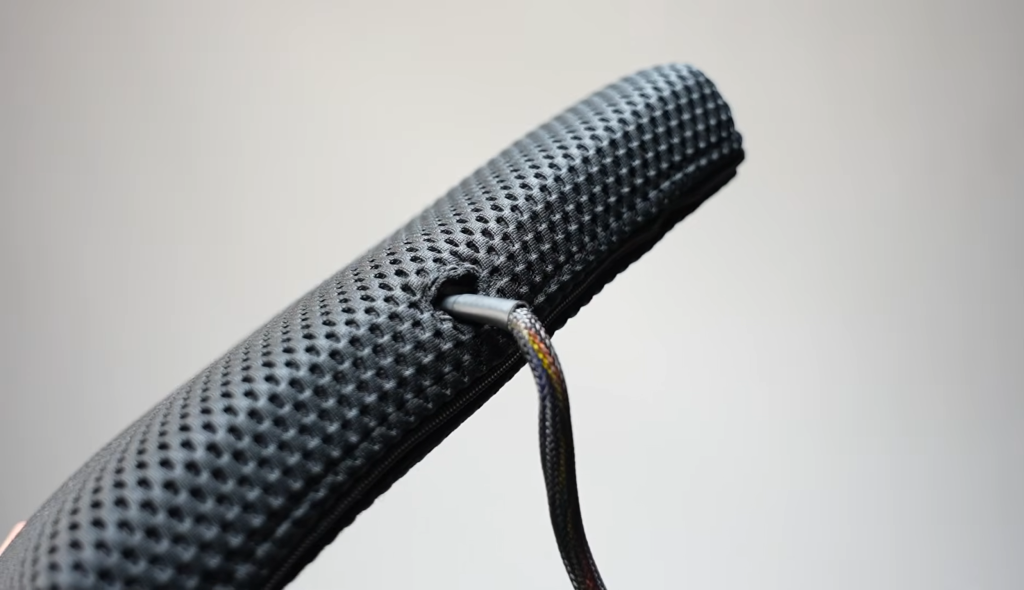
Instead of adding something onto your rig, the MTC-P Extreme 2 replaces the cushion inserts of your existing seat. Two cables are routed underneath, a compact control unit sits out of sight, and from there a single USB cable runs to your PC. The result is a much cleaner, much more integrated setup than most other haptic systems out there. Of course, the big catch is the price, because at around $650, this is not exactly a budget-friendly upgrade.
Sensit Haptics MTC-P Extreme (Gen2)
Not the best-value haptic upgrade in sim racing, and not trying to be: what you pay for is a clean, subtle, comfortable and surprisingly quiet seat-integrated system that hits genuinely hard once it is dialled in. Gettin
Best for People building a higher-end rig who care about a hidden, re
Not the best-value haptic upgrade in sim racing, and not trying to be: what you pay for is a clean, subtle, comfortable and surprisingly quiet seat-integrated system that hits genuinely hard once it is dialled in. Getting there takes a lot of tuning.
Higher-end rig builders wanting hidden haptics
Sim racers wanting the cheapest strong vibration, or unwilling to tune
✓ Hands-on tested by OC Racing · ✓ Updated October 2026
Verified purchase options at lowest current prices:
Affiliate disclosure
Get €60 off using code ‘OC60’ at the official Sensit website.
| Shop | Price | |
|---|---|---|
| Sim-Motion | €599.00≈ $671.05 | Buy |
The biggest selling point here is not only the haptics themselves, but the way they are delivered. These pads are designed to slot directly into seats with removable cushions, which means the final look is far more subtle than the typical bolt-on solution. On the right seat, it can look almost OEM, and that really matters for people who care about having a cleaner and more refined rig.
That does mean compatibility is a little more limited than something like a buttkicker. These are not universal in the same way. They are best suited to seats from brands that use removable cushions, and that includes plenty of popular options, but not every seat on the market. So before even talking about performance, this is one of those products where the fitment question matters a lot.
The takeaway: the MTC-P Extreme 2 delivers haptics through your seat cushions, so fitment with removable cushions matters before performance.
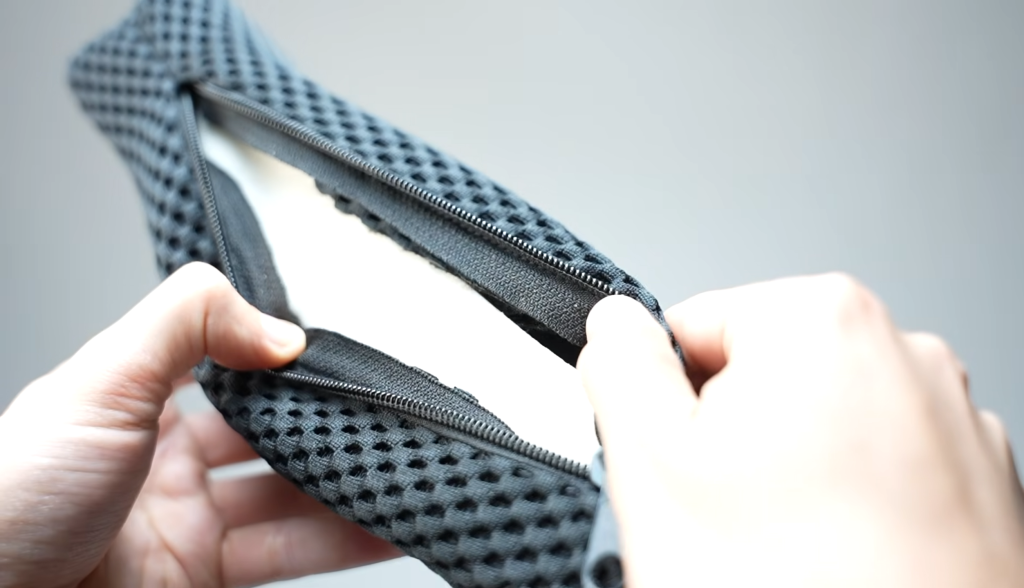
One thing I will give Sensit a lot of credit for is the comfort. These pads are actually very nice to sit in. They are well padded, use a breathable mesh fabric, and after longer sessions they stayed cool, firm, and comfortable. In fact, I would genuinely consider them an upgrade over the standard cushions that came in my seat.
That is important because a product like this lives directly where your body does. If the comfort had been poor, the whole concept would have started falling apart immediately. Thankfully, that is not the case at all. They look premium, they feel premium, and they do not come across like some compromised aftermarket insert built only for function.
The actual hardware layout is one of the more interesting parts of the MTC-P Extreme 2. Only two of the included inserts contain the haptics themselves, while the rest are just there for fitment and padding. The lower back section contains eight actuators, made up of two larger and six smaller ones, while the lower seat cushion contains six actuators, with two larger and four smaller units. Altogether, that gives you a total of 14 actuators across the system.
What that means in practice is that the upper and lower seat pads can be controlled in separate sections rather than acting like one big vibrating cushion. On paper, that gives the system a lot of potential, and in the software you can see that Sensit is clearly aiming to offer more than just a generic rumble effect. This is meant to be a much more layered and much more configurable haptic solution than the average alternative.
Within the Sensit software, you get separate force adjustments for gear shifts, engine vibration, ABS, wheel slip, and road feel, each from 0 to 100 percent. There are also two presets. One is more immersive and lets you feel more of the overall experience, while the other is more competitive and focuses more on driving cues such as ABS and wheel slip.
Out on track, I spent most of my time in the immersive mode, and to be fair, it does exactly what the name suggests. Gear shifts in particular felt very good, with each upshift delivering a sharp and defined kick through the seat that made the drivetrain feel more physical. Engine vibration was also constantly present in the background, and ABS, wheel slip, and road feel all came through with good strength.
That said, I did end up spending quite a bit of time adjusting things. At the default settings, the overall intensity felt too high and at times more distracting than useful. This is not one of those weak haptic systems where you wish it had more punch. If anything, the issue here is the opposite. The actuators are strong enough that bad tuning can make the whole thing feel exaggerated very quickly.
Worth knowing: the actuators are strong, so default settings can feel too intense. Plan time to tune them down.
With a claimed 5 ms latency and a frequency range of 10 to 20,000 Hz, the system felt very responsive. There was almost no obvious delay between what was happening in game and what I felt in the seat. The actuators themselves also have far more punch than you might expect from something built directly into a seat cushion. This is not a light buzz or some vague background rumble. When the effects are turned up, the seat can hit surprisingly hard.
Still, not everything was perfect. While the overall strength and responsiveness were impressive, I was not clearly able to tell the difference between certain road textures from the haptics alone, and I also did not get especially clear left-to-right detail. For example, if part of the car was on a curb, I could absolutely feel that something was happening, but not always with the directional clarity I would have liked.
One of the more interesting discoveries during testing was that switching over to SimHub improved the overall usefulness of the system. Sensit’s own software is easy enough to use, but SimHub gave me much more control and, after a lot of back and forth, I was able to get a better overall result. There was maybe a tiny bit more delay, but in return I got clearer separation between effects and better directional information.
It still did not feel like a full four-corner transducer setup in terms of obvious left and right detail, but it definitely became more informative and more convincing. The catch, of course, is time. Getting the most out of this system requires tuning, and a lot of it. Once dialed in, the MTC-P Extreme 2 became far more enjoyable, more useful, and more immersive than it was out of the box.
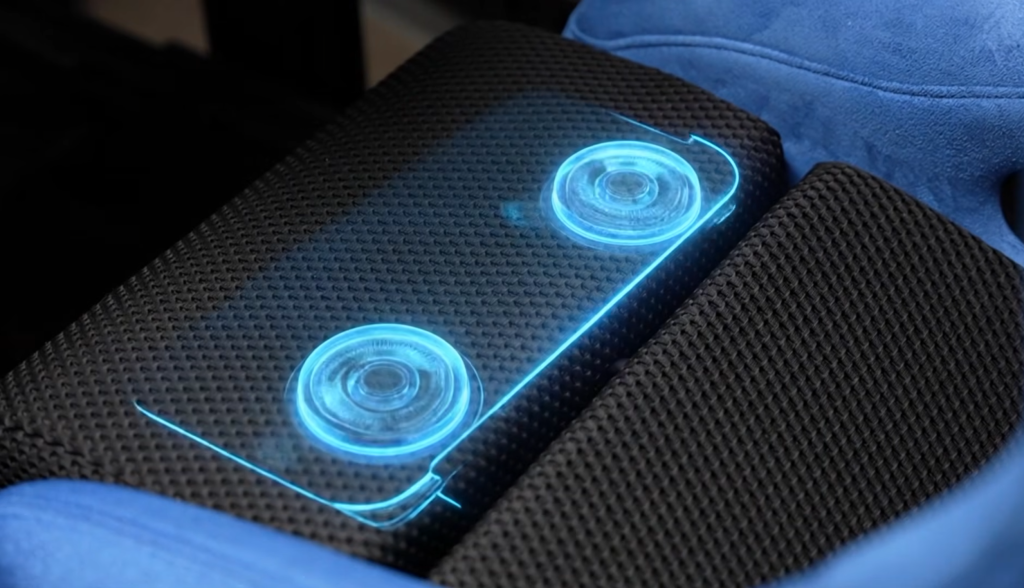
For how potent these actuators can be, I was actually surprised by how quiet the whole system remained. The vibrations did not seem to disperse through the rig in the same way a buttkicker often does, which means you get much more of the sensation in your body and much less of the rig itself shaking and humming away underneath you.
That is another part of the premium appeal here. This system feels more self-contained, more refined, and less messy than the typical bolt-on alternative. You are not only paying for haptics. You are also paying for how cleanly those haptics are delivered.
At its current price, the Sensit Haptics MTC-P Extreme 2 is clearly not meant to be the haptic solution for the masses. If all you want is strong vibration for the lowest possible price, a buttkicker or a more traditional transducer setup still makes more sense. Those options will give most people a big part of the immersion for much less money, and for many rigs that will remain the more sensible choice.
But the MTC-P Extreme 2 is not really trying to win that value battle. What you are paying for here is the delivery. You are getting a setup that is clean, subtle, comfortable, surprisingly quiet, and genuinely strong once dialed in properly. For people building a higher-end rig who care about having a hidden, refined, almost OEM-looking haptic solution, that matters a lot.
So no, I would not call this the best-value haptic upgrade in sim racing. But for the right person, I do think it can justify its premium. If you want strong seat-integrated feedback, excellent comfort, and one of the cleanest haptic solutions I have tested, the MTC-P Extreme 2 is a genuinely interesting option, and one that I will be keeping in my own rig.
Not the best value option, but a clean, strong and quiet seat-integrated system once tuned.
Ideal buyer: People building a higher-end rig who care about a hidden, refined, almost OEM-looking haptic solution.
Major drawback: Premium price and the tuning time needed to dial it in.
Bottom line: Buy it for clean delivery, comfort and quiet strength, not for value. Code OC60 takes €60 off at Sensit.

Sim racing hardware reviewer and creator. Every review on this site is hands-on tested across direct-drive wheelbases, pedals, cockpits, motion systems and accessories before a word is published.

Design & development by CIDIX
· Sim rig builder, deals pipeline, simracing tools, comparisons, adspace & forum · Custom code licensed to OC Racing