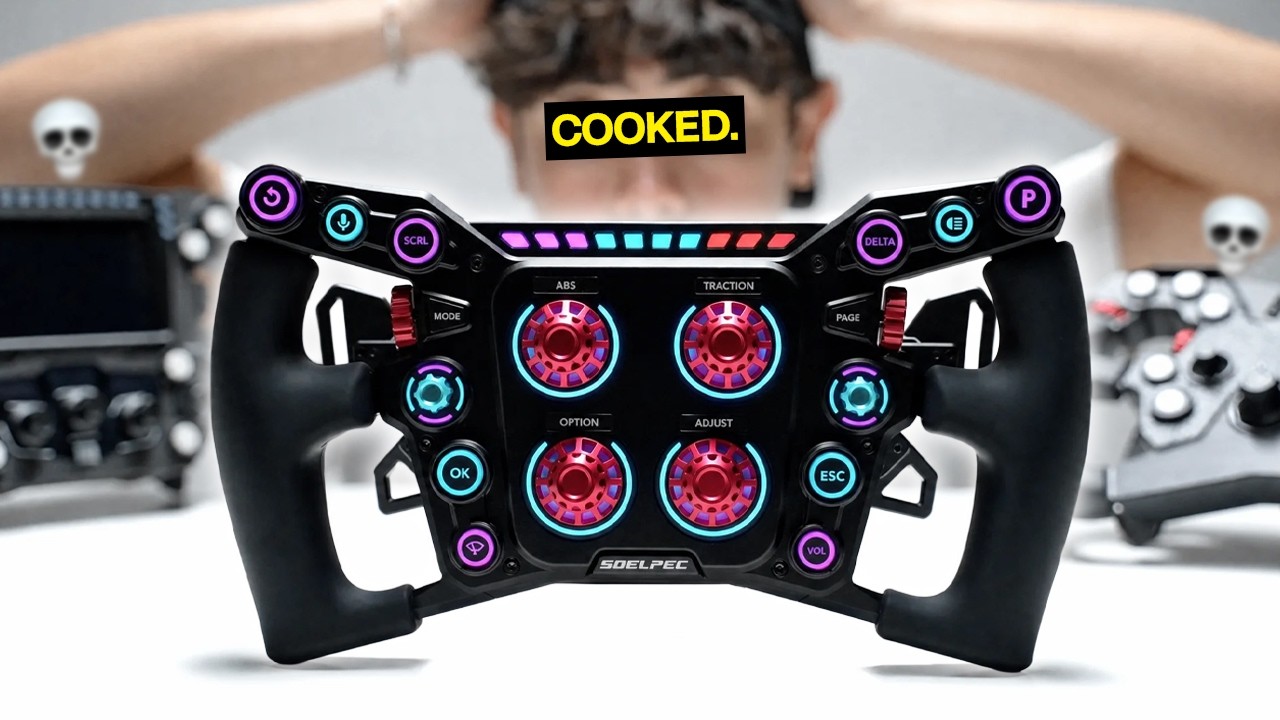
Soelpec Terra LX Review: A Premium GT Wheel That Gets the Details Right
The Soelpec Terra LX is a German-made 297 mm GT wheel with the best grips I have used, deep SimHub customization, and a premium $1,199 price tag.

Reviewed by OC Racing
Before getting into the cockpit itself, a necessary disclosure. Trak Racer provided the TR5 at no cost for review. They had no input on this article and did not see it before publication. As always, all thoughts and opinions here are entirely my own.
I have been using the Trak Racer TR5 for around two to three months, and during that time I have equipped it with considerably higher-end hardware than it is really designed for. I wanted to push the chassis and find out where its limitations actually are.
I was fairly skeptical at first, but the TR5 ended up surprising me. Marketed primarily toward beginner and mid-range sim racers, this $599 complete cockpit handles far more serious hardware than I initially expected.
The Trak Racer TR5 is a surprisingly capable complete cockpit that offers strong adjustability, broad compatibility, and enough rigidity for far more serious hardware than its $599 price suggests.
Beginner to mid-range racers wanting a complete rig.
High-end racers who need a heavier profile chassis.
Review unit provided by Trak Racer at no cost. Trak Racer had no input on this review.
The TR5 retails for $599 with both the chassis and seat included. That is important because sim racing seats alone can easily cost several hundred dollars, particularly once brackets and sliders start getting added separately.
The chassis uses a white tubular carbon steel frame and was genuinely very easy to assemble. You also get the reclining seat, wheel deck, pedal tray, shifter and handbrake mount, rubber feet, cable ties, and the hardware required to put everything together.
The seat combines faux leather and microsuede, while the frame itself has a handful of small branded details that help the whole thing look more polished. It feels like a complete product rather than a collection of generic tubular pieces bolted together.
One of the stronger parts of the TR5 is how much adjustment Trak Racer managed to build into a relatively simple tubular chassis. The middle section of the frame can expand or contract, allowing the overall cockpit length to accommodate a wide range of driver heights.
The seat can recline very far backward or move considerably more upright. Combined with the adjustable pedal tray, this gives you some freedom to create anything from a normal GT-style position to something closer to a more reclined formula-inspired setup.
Both the wheel deck and pedal tray offer adjustments for height, angle, and distance. The shifter mount can also slide forward and backward, although its height is fixed.
Making adjustments does require loosening and retightening hardware, so this is not something you will want to change constantly. Trak Racer does at least include useful markings around areas such as the pedal tray, making it easier to return to previous positions.
I would be careful with the white finish while doing this. I managed to scratch mine relatively easily while making adjustments, which is worth keeping in mind if you want to keep the cockpit looking perfect.
I had no significant problems mounting any of the hardware I tested. The wheel deck and shifter plate use broad mounting patterns, while the two-piece pedal tray makes installing different pedal sets particularly straightforward.
Trak Racer also sells several accessories specifically for the TR5. These include a cup holder, headphone and VR holder, caster wheels, and an integrated single monitor mount.
The caster wheels are particularly useful because the complete cockpit is not something I would want to drag around regularly. I do wish they were included as standard, especially on a chassis specifically targeting beginners who may not have a permanent sim racing space.
| Material | carbon steel |
|---|---|
| Adjustable | Yes |
| Foldable | No |
| Weight | 30 kg (66.1 lb) |
| Compatibility | Universal (Logitech, Fanatec, Thrustmaster, MOZA, Simagic, Simucube, Trak Racer) |
Last verified: October 2026
The optional integrated single monitor mount costs around $120 and supports displays up to 50 inches. It integrates nicely with the cockpit, looks clean, and includes a useful cable management insert.
The main problem is adjustability. There is not much freedom to reposition the display once everything is installed, and because the monitor is physically connected to the cockpit, vibrations from stronger direct drive wheel bases can make the screen shake slightly.
This became noticeable with the higher-end equipment I was deliberately using during testing. With a more typical entry or mid-range wheel base, I would expect the problem to be considerably smaller.
If you already have a desk or inexpensive freestanding monitor stand available, that may still be the better solution. The integrated option looks much cleaner, but convenience comes with a few compromises.
This was the area I was most curious about. I deliberately tested the TR5 with hardware that is considerably more demanding than what most buyers will probably install on it.
Starting with the shifter mount, I used a fairly substantial Simagic handbrake and repeatedly pulled on it aggressively. There is some visible flex, but very little of it actually translates into something noticeable while driving.
With more typical equipment such as a Moza HGP, Thrustmaster TH8A, Simagic DS-8X, or similar mid-range hardware, I would have essentially no concerns.
The pedal tray shows more movement. Using my VRS pedals with a stiff load cell brake, you can physically see the metal flex when significant pressure is applied.
Surprisingly, it looks considerably worse than it feels. I rarely noticed the movement while actually driving, and it never reached the point where I felt it was affecting my braking consistency. A thicker pedal plate would improve things, but with entry or mid-range pedals I would not consider this a major issue.
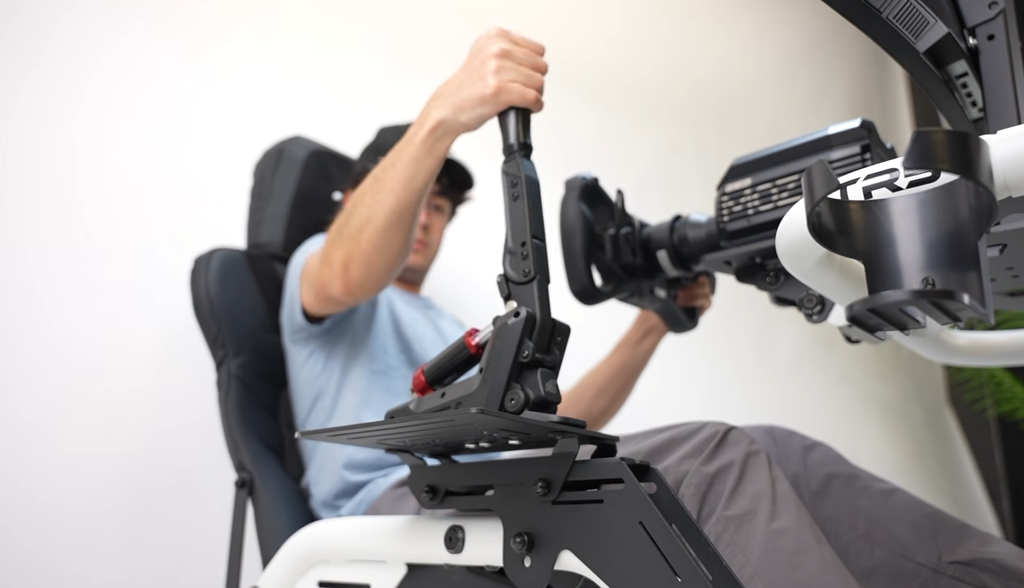
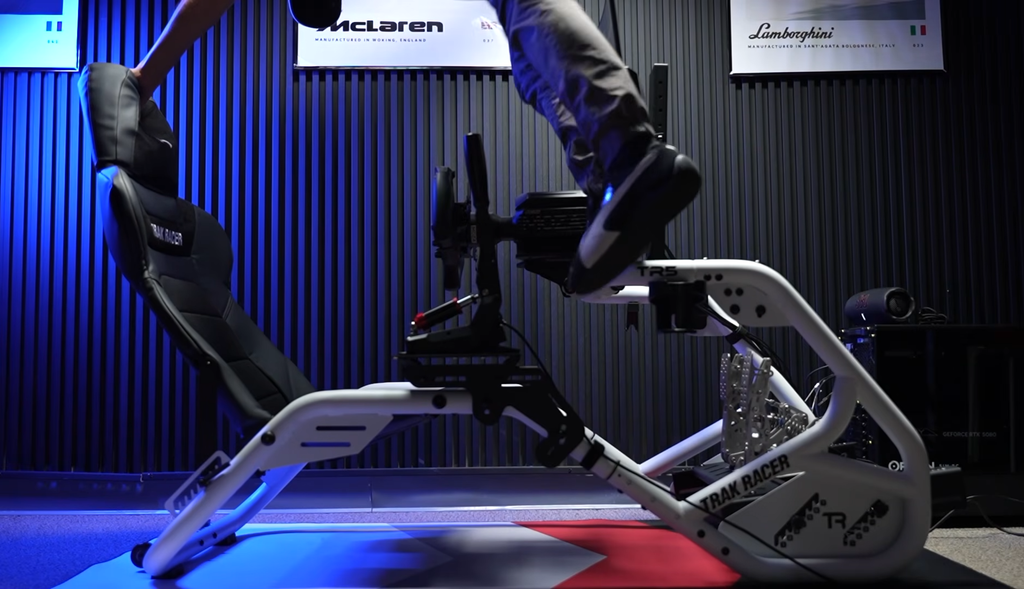
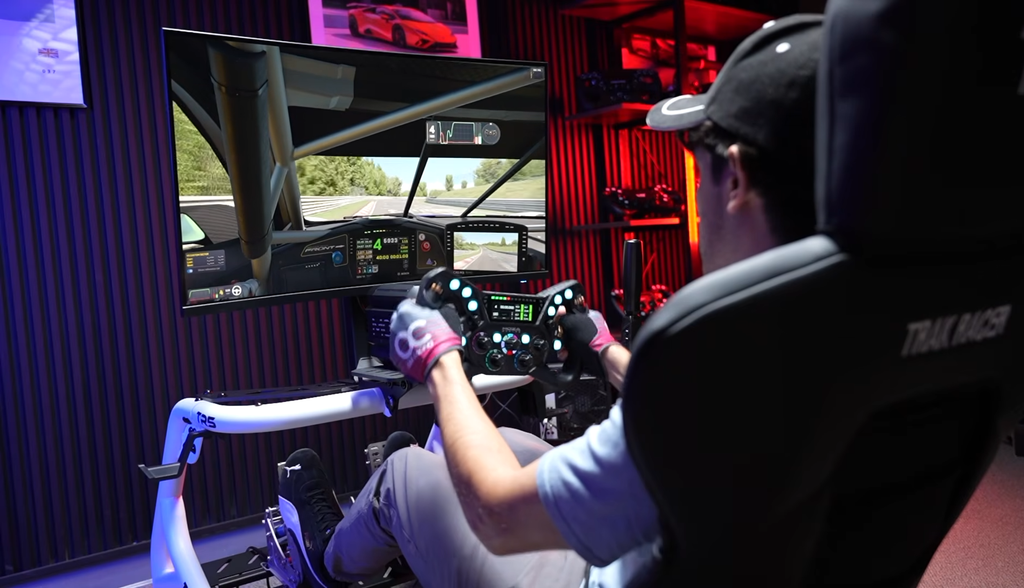
The wheel deck ended up handling high-end hardware better than I expected. I tested the cockpit with a Moza R25 producing close to its full 25 Nm, which is far beyond the type of wheel base I would normally pair with the TR5.
If I deliberately pull vertically on the steering wheel, the frame will move. During normal driving, however, even with the R25 turned up very high, the cockpit remained impressively composed.
There is certainly more movement than you would get from a heavy aluminum profile chassis. That is completely expected, but I spent more time worrying about the force coming through the wheel than noticing movement from the TR5 itself.
For the direct drive wheel bases most people will realistically pair with this cockpit, rigidity should be more than adequate.
The included reclining seat also ended up being better than expected. It does not provide the tight, supportive feeling of a dedicated bucket seat, but getting in and out is easy and the overall seating position is comfortable.
It almost feels like sitting in a comfortable foldout chair. That may not sound particularly exciting, but for longer sim racing sessions, comfort can matter considerably more than aggressive side bolsters.
Ventilation could be improved, as I eventually noticed heat building around my lower back. Even during longer sessions, though, I never experienced any substantial discomfort.
The seat is also rigid enough for the intended market. It will move more than a proper fiberglass bucket under heavy braking, but pairing something much more expensive with a $599 complete cockpit would somewhat defeat the purpose of the TR5.
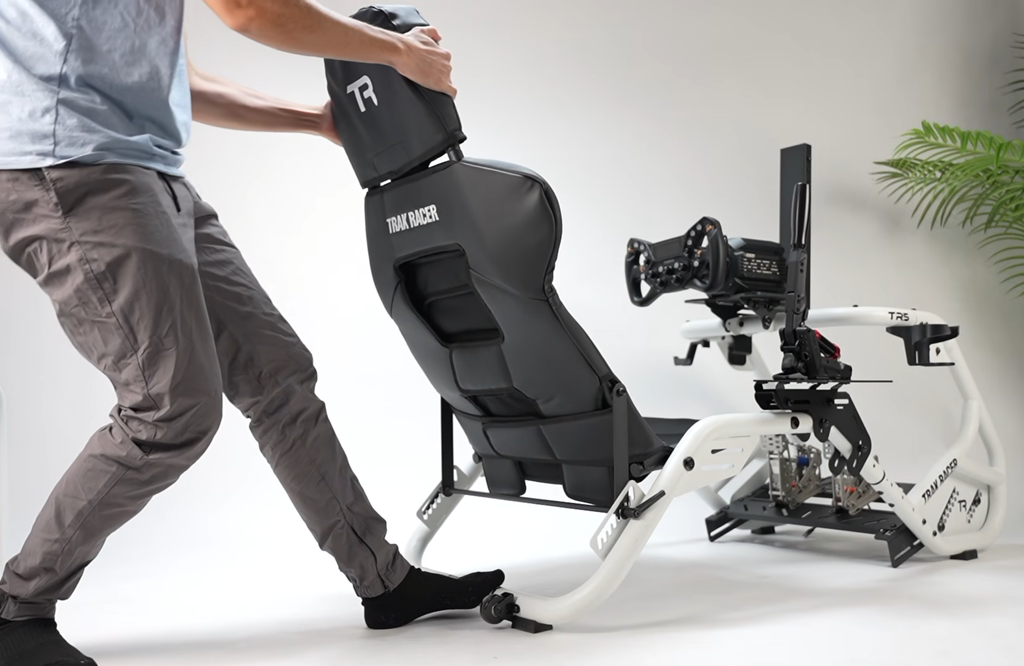
After several months with it, I genuinely think the Trak Racer TR5 is a pretty good cockpit. It is not the most rigid option available, it is not as modular as aluminum profile, and anyone already using extremely high-end hardware should probably still look toward a heavier profile chassis.
That is not really the customer the TR5 is designed around. For $599, you are getting a complete cockpit with a seat, impressive adjustability, strong hardware compatibility, decent comfort, straightforward assembly, and enough rigidity to handle considerably more serious equipment than I expected.
There are still things I would change. The monitor mount needs more adjustment, the white coating scratches relatively easily, and I think the caster wheels should be included.
For a beginner or mid-range sim racer who wants a complete cockpit without immediately jumping into the cost and complexity of aluminum profile, though, the TR5 makes a surprisingly strong case for itself.
Recommended. A complete $599 cockpit that suits beginner to mid-range racers.
Ideal buyer: Beginner to mid-range racers wanting a complete rig.
Major drawback: Pedal tray flex under a stiff load-cell brake.
Bottom Line: The Trak Racer TR5 is a surprisingly capable complete cockpit that offers strong adjustability, broad compatibility, and enough rigidity for far more serious hardware than its $599 price suggests.
Check Price: $599TR5 Hybrid Racing Simulator
The Trak Racer TR5 is a surprisingly capable complete cockpit that offers strong adjustability, broad compatibility, and enough rigidity for far more serious hardware than its $599 price suggests.
Best for Beginner to mid-range sim racers who want a complete, comfor
Price tracked since 21 Dec 2025 — 105 readings.

Sim racing hardware reviewer and creator. Every review on this site is hands-on tested across direct-drive wheelbases, pedals, cockpits, motion systems and accessories before a word is published.


Design & development by CIDIX
· Sim rig builder, deals pipeline, simracing tools, comparisons, adspace & forum · Custom code licensed to OC Racing
Trak Racer TR5: Everything You Need to Know - OC Racing says:
[…] Full TR5 Review Official Trak Racer Website Trusted Trak Racer Distributors Add to Build […]