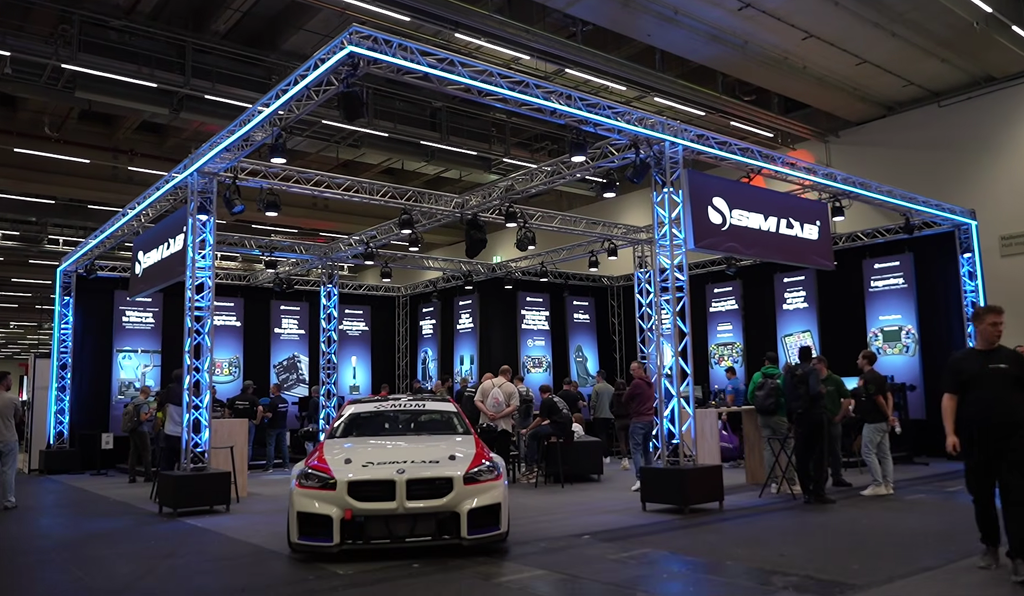
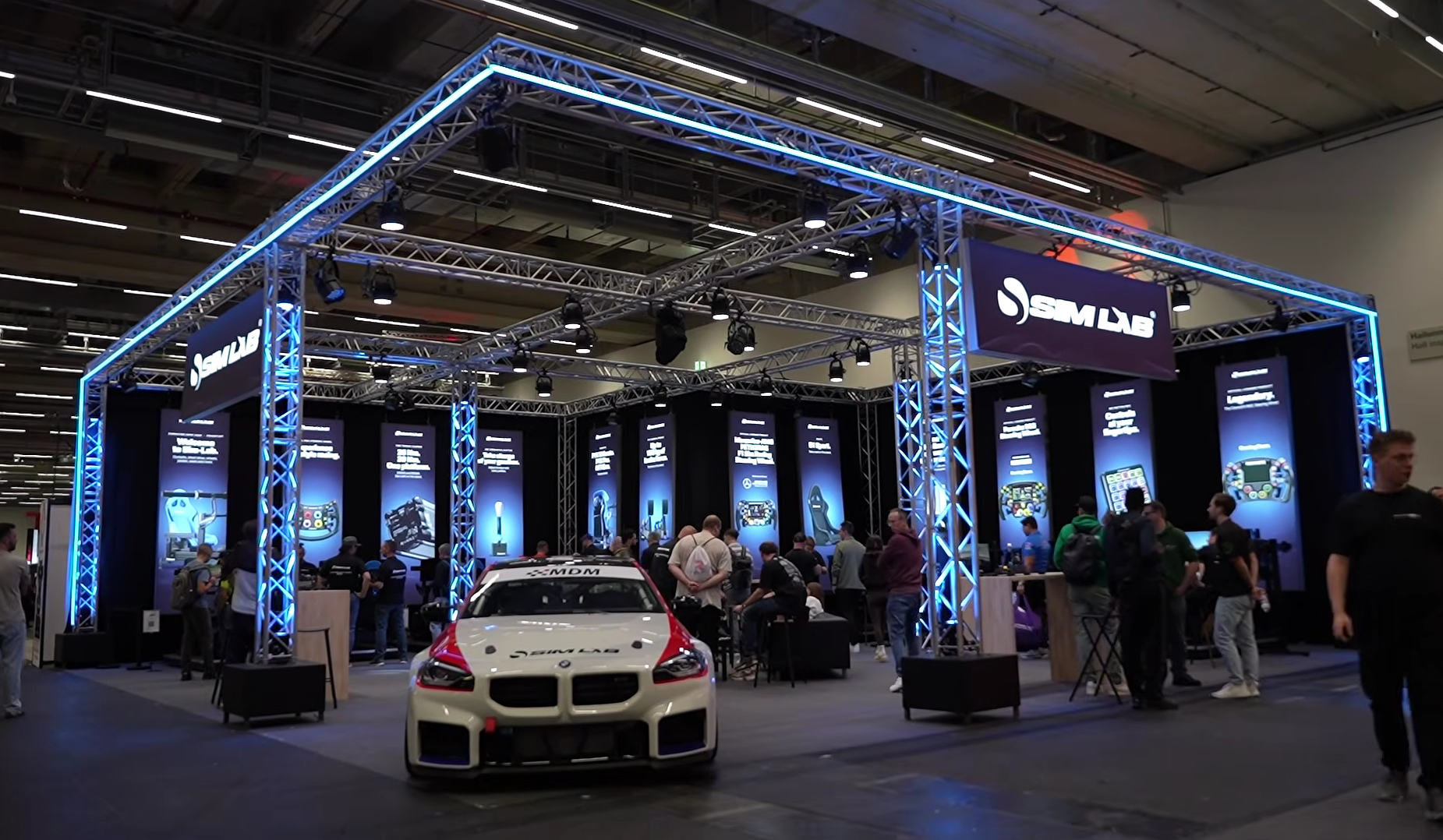
Sim-Lab has one of the biggest booths at SimRacing Expo Frankfurt this year, and honestly, it feels like a pretty good demonstration of how far the company has expanded beyond aluminum profile cockpits.
The booth itself looks fantastic, with huge banners, several complete simulators, and everything from new direct drive wheel bases to steering wheels, displays, and button boxes. We spent some time trying the new hardware, and there is quite a lot worth talking about.
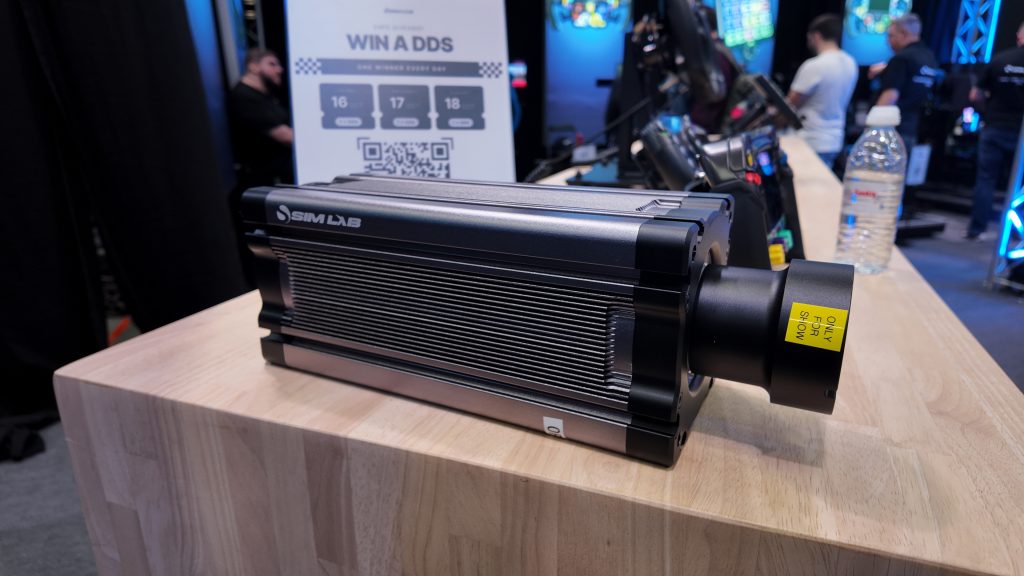
Probably the biggest hardware addition is the DDS TorqueSync lineup. We tested both the DDS26 and DDS39, producing 26 Nm and 39 Nm respectively, and outside of the obvious difference in maximum torque, the overall experience between them is pretty similar.
TorqueSync is Sim-Lab’s approach to minimizing latency and keeping the force feedback response extremely direct. RaceDirector also allows you to add and tune telemetry-driven force feedback effects independently, meaning things like understeer, oversteer, gear shifts, and other vehicle behavior can be emphasized separately from the force feedback coming directly from the simulator.
That gives you a surprising amount of control over how the base feels. You can keep things relatively traditional or build a much more customized feedback profile around the information you personally want to feel.
The power supply is also integrated into the wheel base itself, which makes cable management considerably cleaner. The units do get noticeably warm during operation, but they are designed around using the aluminum housing to dissipate heat.
Both bases felt extremely smooth and powerful during my short test. The DDS39 obviously gives you considerably more torque overhead, but unless you actually plan on using those forces, the DDS26 gives you much of the same overall experience.
GTSL Ultimate, Porsche 963 and Cosworth CCW Mk3
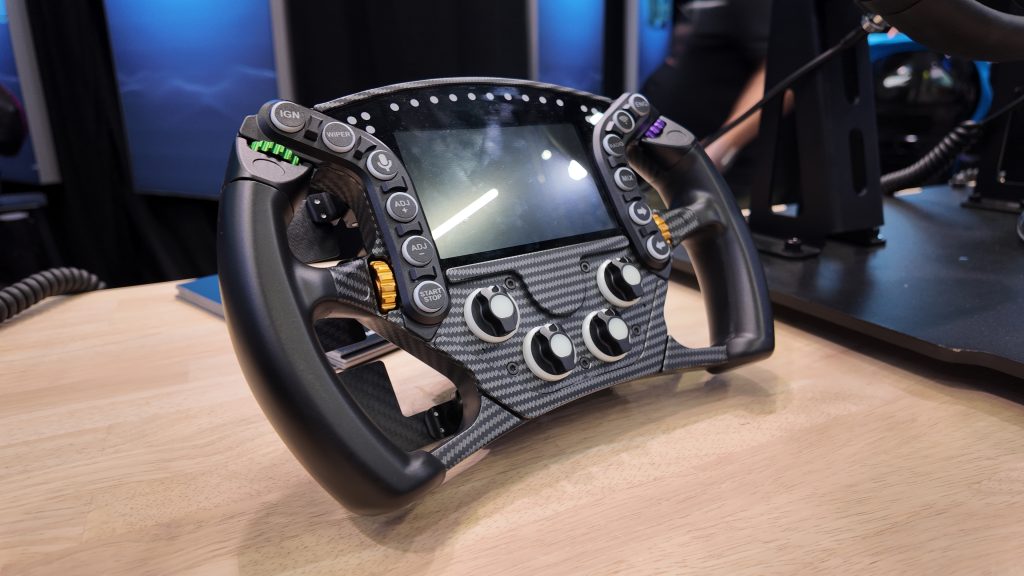
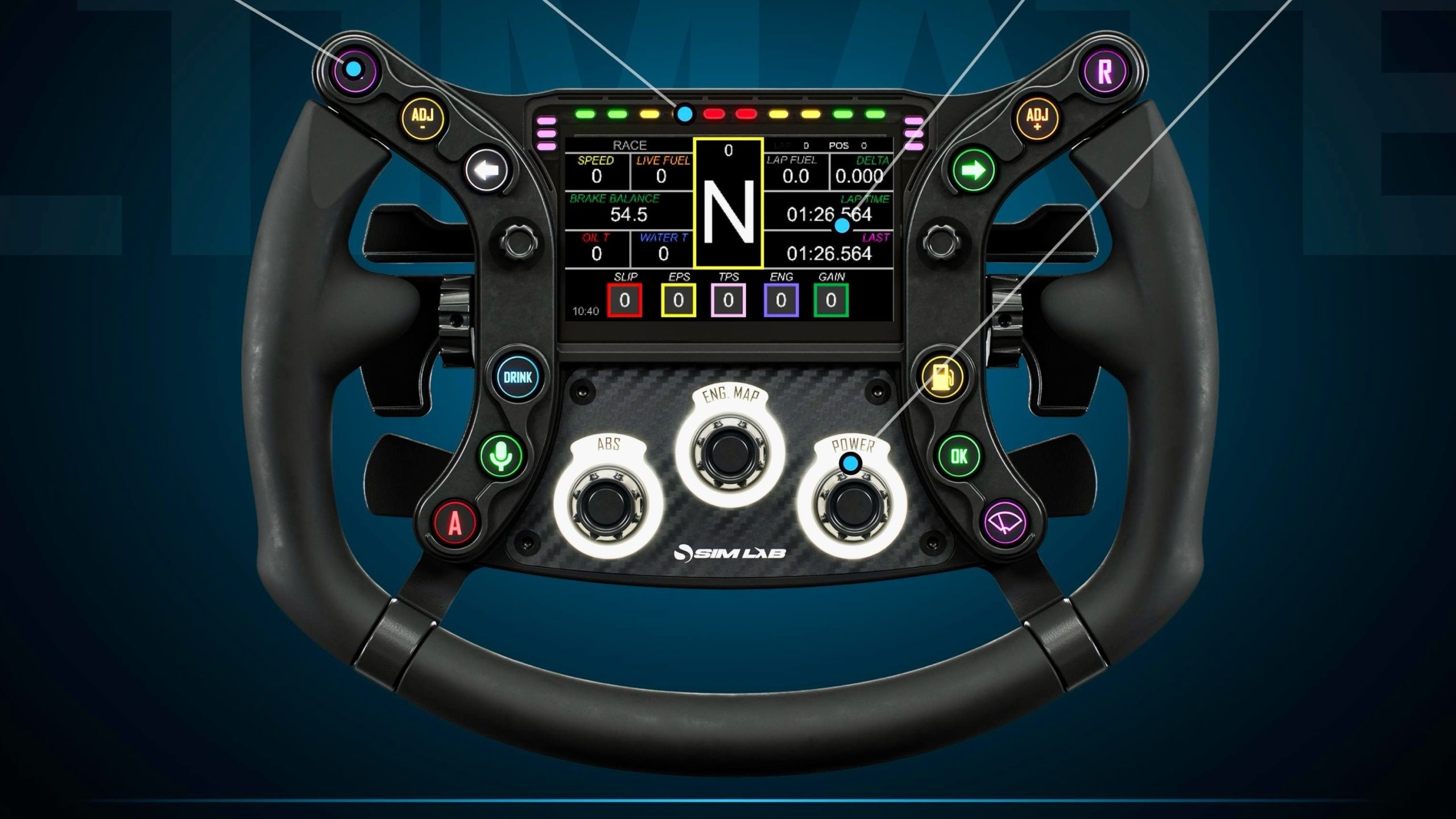
Sim-Lab also had several new steering wheels on display. The GTSL Pro is already available at around the €550 mark, while the new GTSL Ultimate takes the same unusual inverted D-shaped design and adds an integrated display.
The rear paddle layout is especially nice. There are two rocker-style paddle assemblies that can handle shifting and auxiliary controls, alongside two clutch paddles underneath. Build quality felt very good for the price point, and integration with RaceDirector keeps the lighting and controls tied neatly into the rest of Sim-Lab’s ecosystem.
The Ultimate is expected to land somewhere around €800, although final pricing has not yet been confirmed. If that holds, it gives Sim-Lab a pretty interesting entry into the upper mid-range wheel market without immediately jumping into its extremely expensive replica hardware.
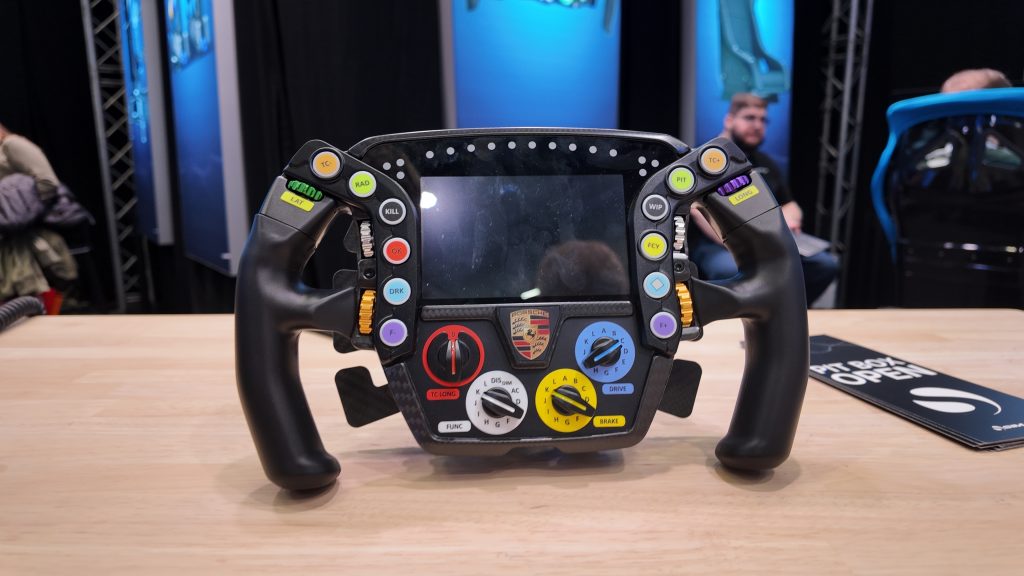
And speaking of that hardware, both the Porsche 963 wheel and Cosworth CCW Mk3 were here too. These fall into a very different category, with motorsport-level construction and the kind of replica quality we have already seen from Sim-Lab’s Porsche 911 RSR and Mercedes-AMG Formula One wheels.
The Porsche 963 looked essentially production-ready, while the CCW Mk3 still felt more like a prototype. Sim-Lab also confirmed that an IndyCar-oriented version of the Cosworth wheel is planned, although exactly whether that means different grips or a separate complete version is still to be seen.
DBX, MLD and Even a BMW M240i Cup Car
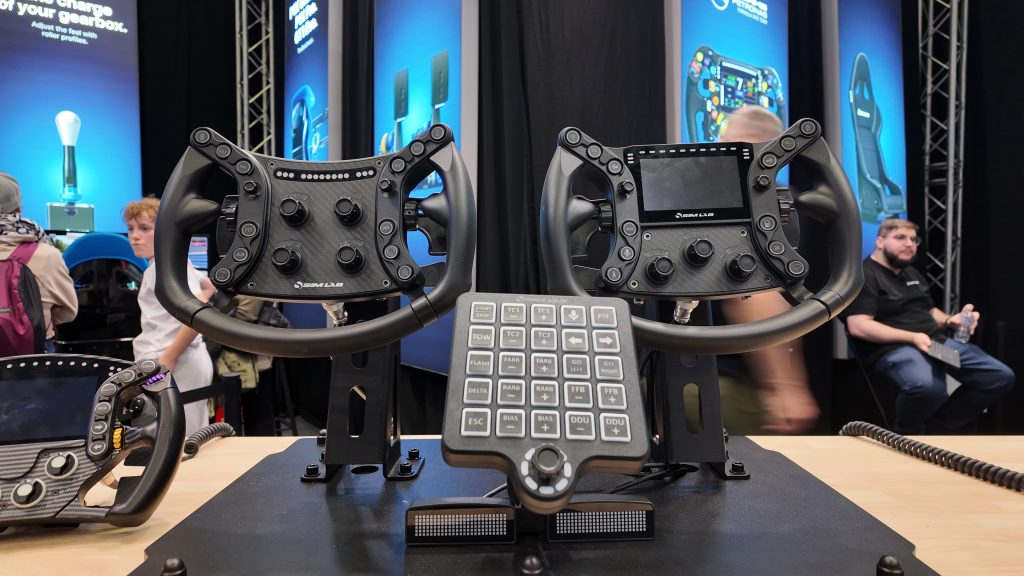
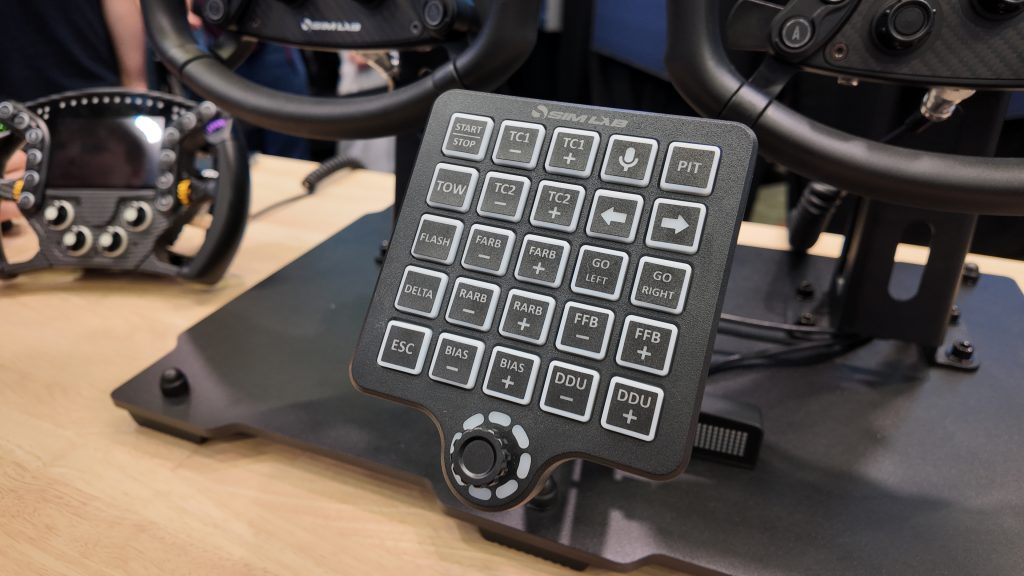
There was plenty of smaller hardware around the booth too. The new DBX Dashboard Box uses a 5 by 5 array of illuminated buttons alongside a seven-way multifunction switch, all packaged into a compact enclosure with a surprisingly nice mounting clamp.
The lighting can be used for normal button identification or telemetry-based information, giving you considerably more flexibility than a conventional fixed-label button box. The overall construction also felt appropriately solid without turning the unit into something unnecessarily massive.
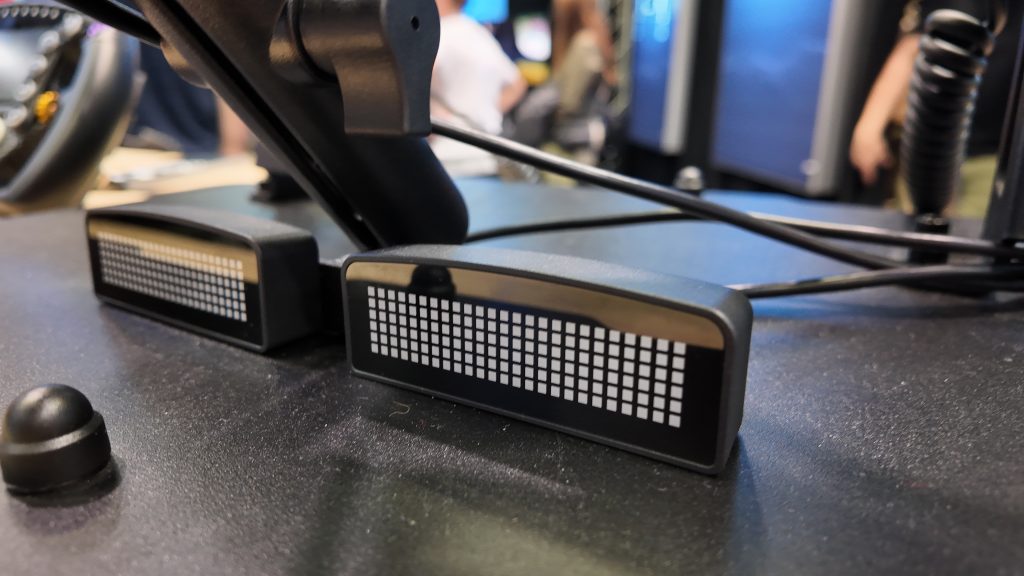
Sim-Lab was also showing its version of the MLD display system. The concept originally came from SimRep Engineering and is now being integrated into Sim-Lab’s hardware and RaceDirector ecosystem.
The setup at the booth was displaying information such as gears, lap times, and flags, and it worked really well. It is a simple idea, but spreading information across small dedicated LED displays can be considerably easier to read while driving than trying to cram everything onto one dashboard.
And because apparently the booth was not already big enough, Sim-Lab also had a BMW M240i Racing Cup car sitting alongside everything else. Pretty cool.
Final Thoughts
Sim-Lab’s booth is probably one of the better representations of where the company is heading. Cockpits are still a huge part of the brand, but it now has its own direct drive bases, mid-range wheels, extremely high-end replica wheels, button boxes, displays, pedals, shifters, and software tying everything together.
The DDS TorqueSync bases were the hardware I was most interested in actually driving, while the GTSL Pro looks like a much more attainable way into Sim-Lab’s steering wheel ecosystem. The Porsche 963 and Cosworth CCW Mk3 sit at the opposite end, and both feel every bit as serious as their pricing will probably suggest.
There is a lot here, and after spending some time around the booth, Sim-Lab is starting to feel considerably more like a complete sim racing hardware manufacturer than the cockpit company most people originally knew it as.
Sim-Lab brought one of the biggest booths to SimRacing Expo Frankfurt, with its DDS TorqueSync bases, new GTSL Ultimate, Porsche 963 and Cosworth wheels, DBX button box, MLD displays, and…
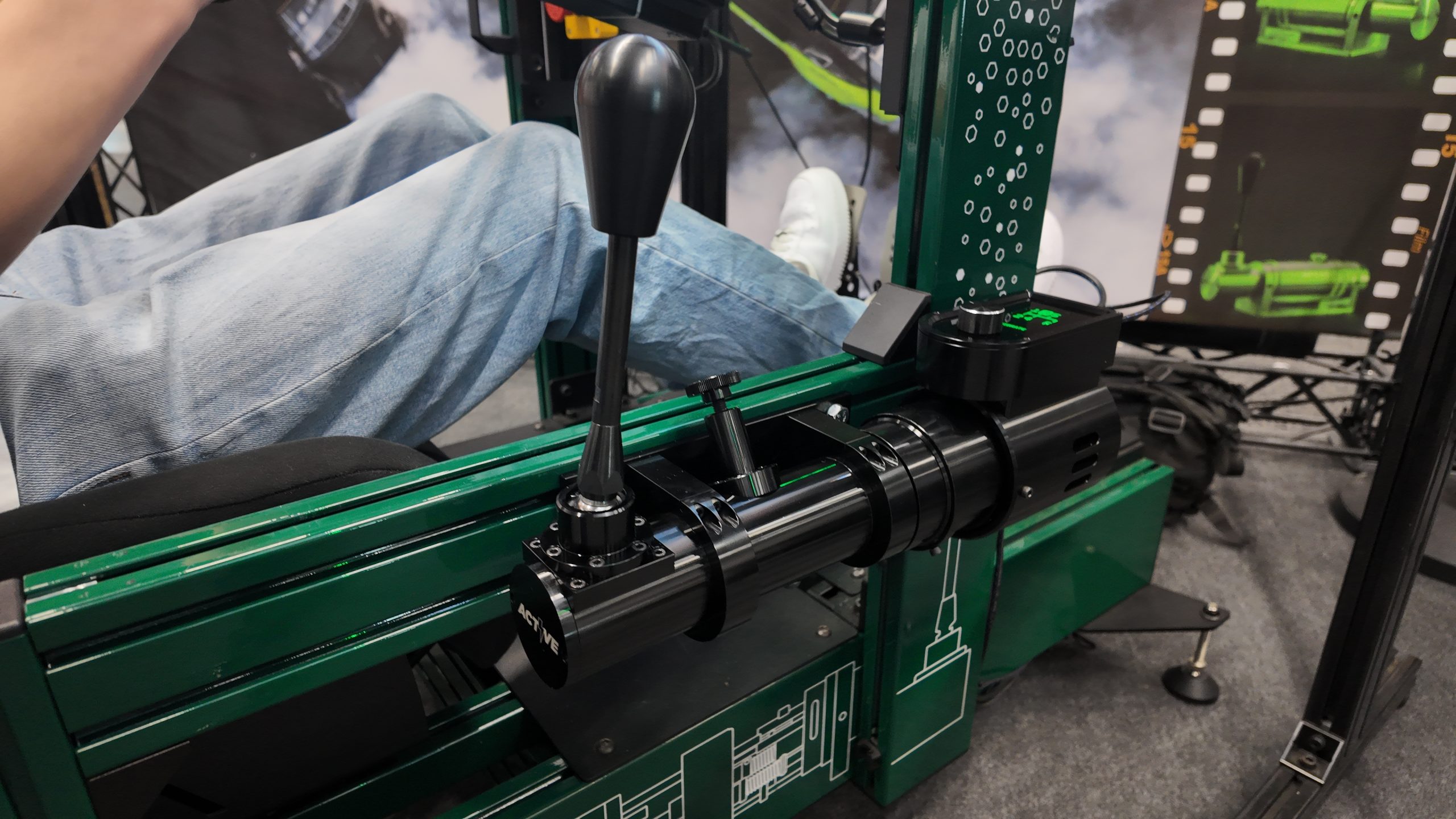
I tried the latest BDH Active Shifter, and the updated system feels far more convincing, with proper shift lockouts, custom gate layouts, and a much more solid mechanical feel.
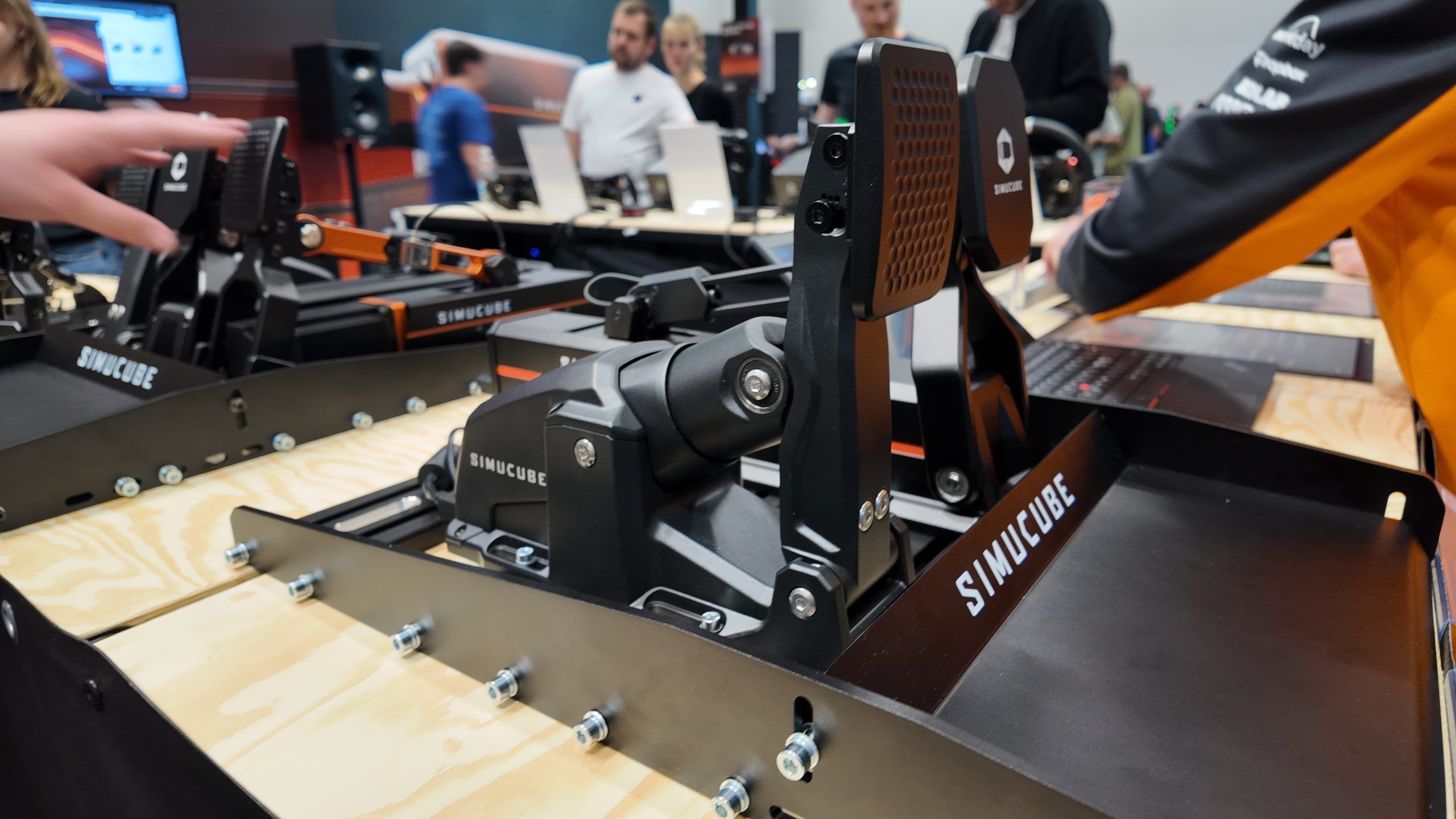
I got an early hands-on test with the new Simucube ActivePedal Sport, and despite lower force and travel, it delivers much of the same experience as the Ultimate for considerably…
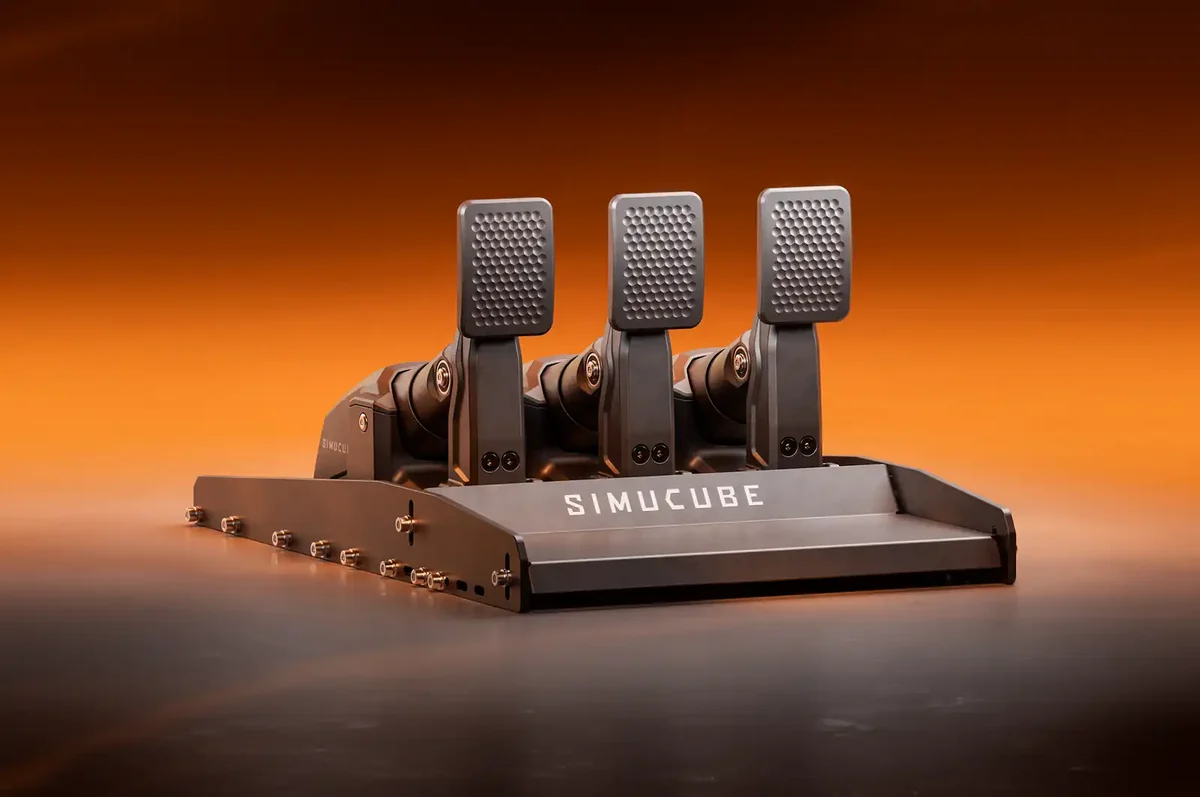
Simucube has unveiled the ActivePedal Sport, a more affordable version of its force-feedback pedal technology. The new model will make its public debut at SimRacing Expo Frankfurt from 16 to…
Simagic is finally preparing to reveal its long-awaited Active Pedal during its global product launch on October 14, nearly two years after the first prototype appeared.
Race Sim Studio has released the Formula Hybrid 2026 for Assetto Corsa, bringing active aerodynamics, a new 350 kW hybrid system, adaptive ERS deployment, and an extensive suite of racing…