Circuit One sent this product to me for review. All thoughts and opinions are entirely my own.
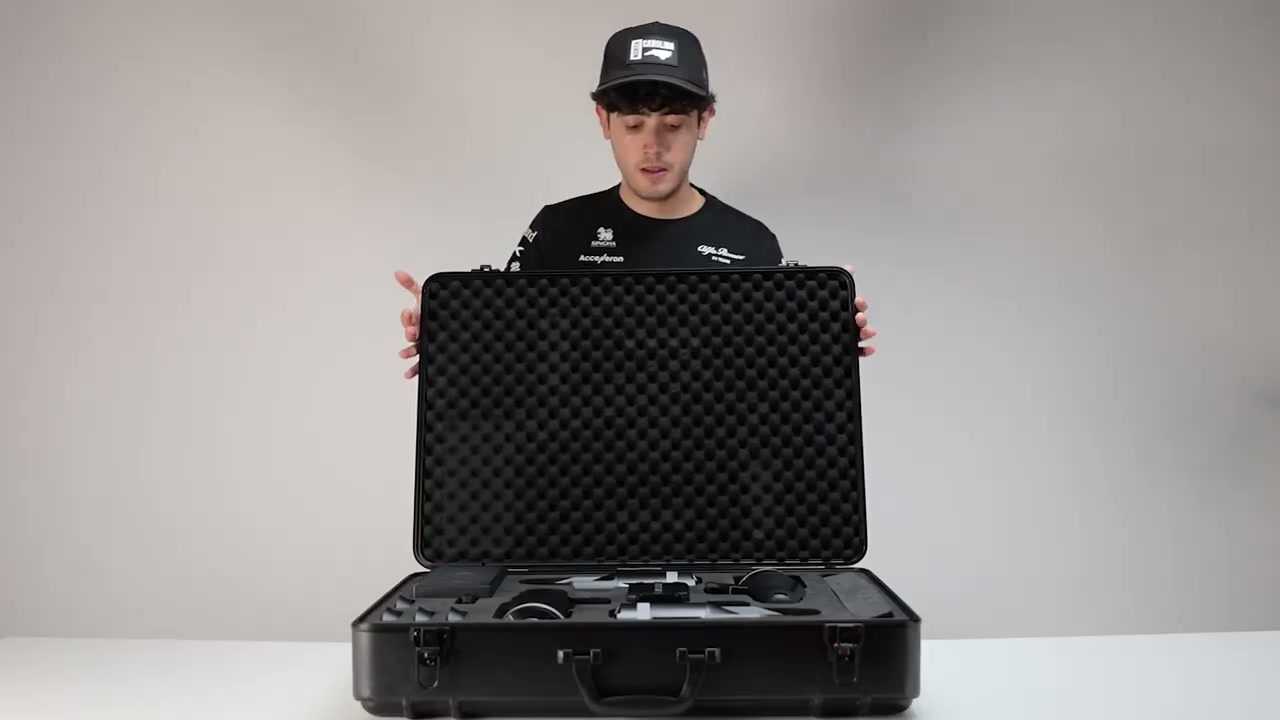
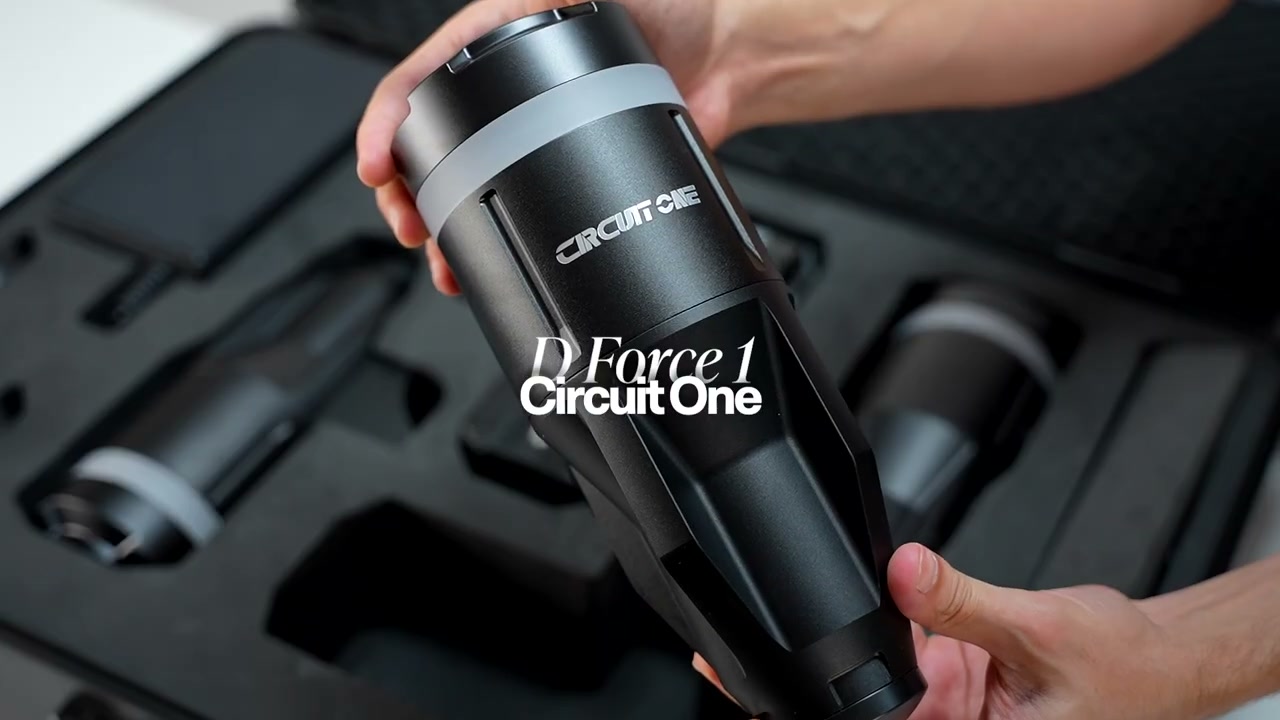
In the niche world of sim racing motion platforms, everybody is currently talking about this. The D Force 1 from Circuit One is a complete 3-DOF, four-actuator haptic motion system that, believe it or not, fits inside a suitcase. Opening it makes you feel like a super villain.
What you find inside is surprisingly tame, and that turns out to be the whole idea. In my testing, this has been the easiest motion platform I have ever installed, and one of the most informative I have driven. The interesting question is whether 50 mm of actuator travel is enough.
★ OC RACING RECOMMENDED
Circuit One D Force 1
3-DOF 4-Actuator Haptic Motion Platform
VERDICT
The Circuit One D Force 1 gives up dramatic, amusement-ride movement in exchange for some of the most usable road and braking detail I have felt from a motion system, and it does it quietly.
BEST FOR
Sim racers who want a compact, quiet platform that tells them what the car is doing.
NOT FOR
Drivers who want big, dramatic, amusement-ride movement.
What I Like
✓ Installs in about 10 minutes, no external control box
✓ Superb small-detail feedback, ABS you can use
✓ Very quiet, near-perfect default tuning
What I Don’t
✕ 50 mm travel caps big pitch and roll
✕ Engine vibration and some effects do not scale yet
TUNING Every setting tried; left near stock, only rumble strips turned up
COMPARED AGAINST Moza HMA150, used back to back
REVIEW UNIT Sent by Circuit One for review
Price and What Is Included
Circuit One does not sell the D Force 1 directly. It works through distributors instead, including Simufy in Europe and SIMHQ in North America. At the time of writing, the system retails for $4,700, and Circuit One has told me it will drop to $4,000 on Black Friday.
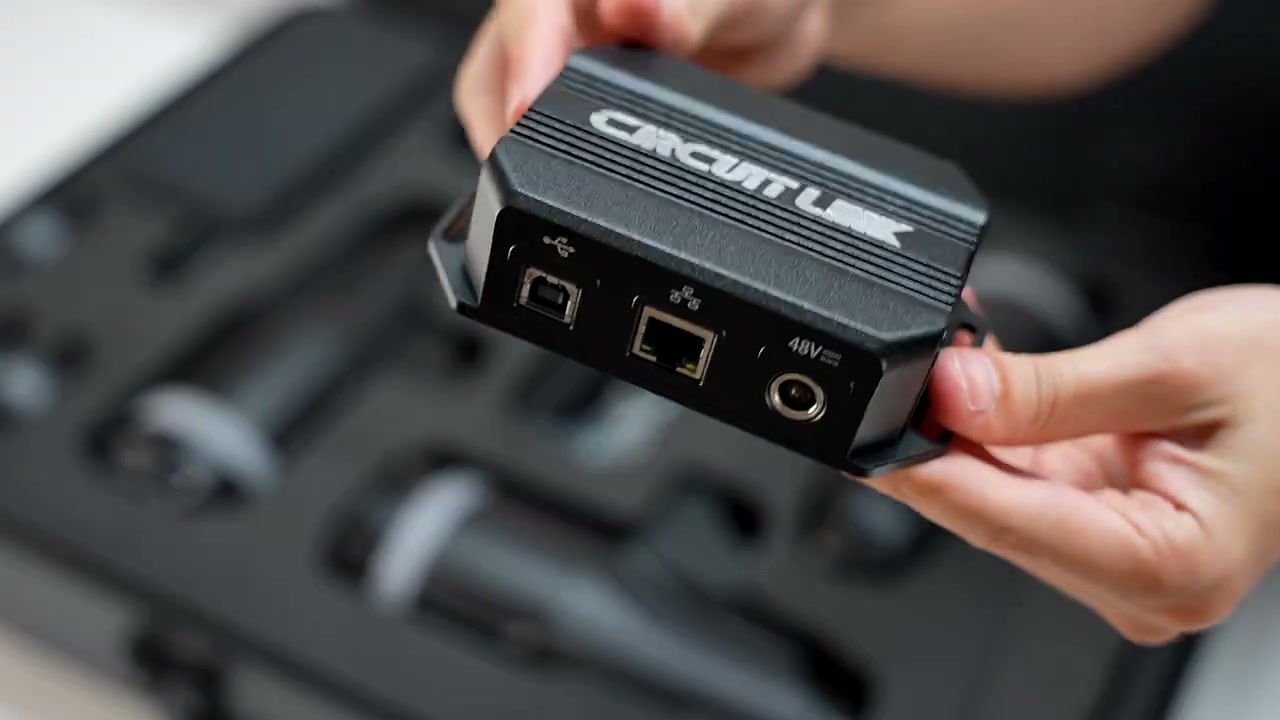
Inside the suitcase you get the four motion actuators, the single LINK control module, four floor cups, a surprisingly small power supply, eight bolts, eight nuts and an allen key. Everything the system needs travels in one case, which is still a strange thing to say about a motion platform.
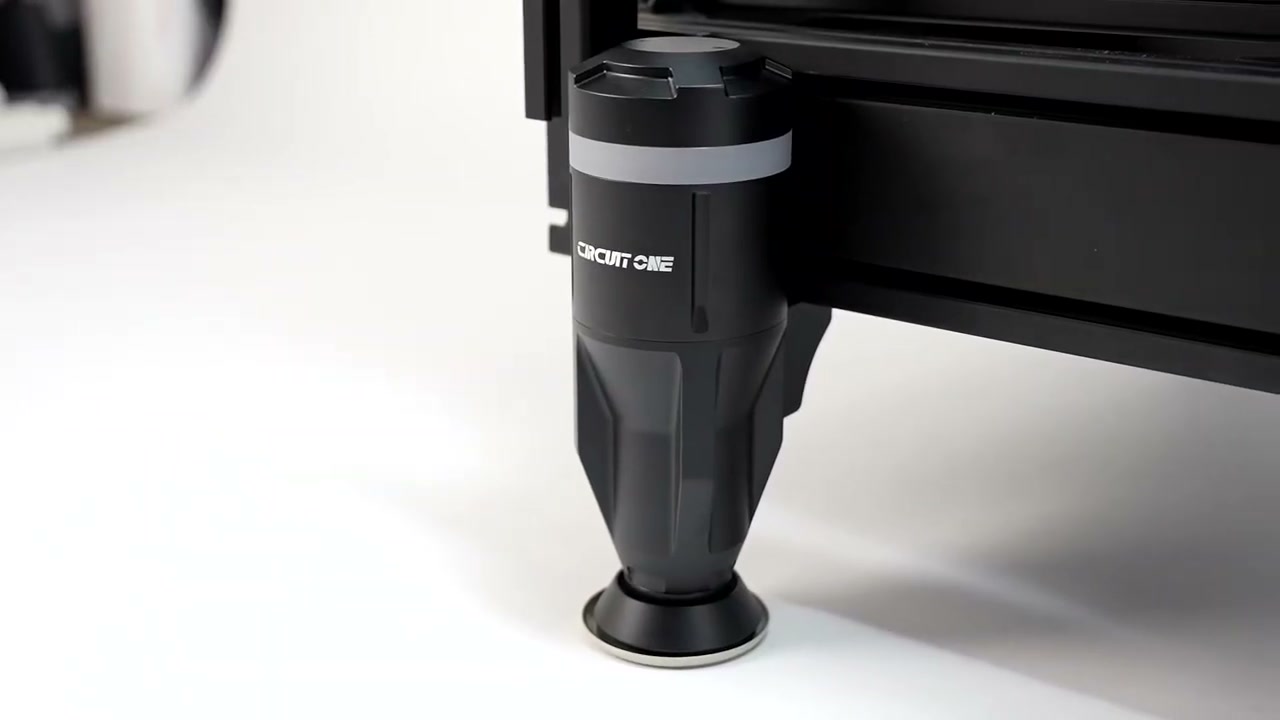
The actuators themselves are small but mighty. Each one is rated for up to 180 kg of lift, they are machined entirely from CNC aluminum alloy, and the mounting brackets come pre-installed. There is no bulky external control box. Like Moza’s HMA150, the electronics live inside the actuators. You route the included cables to the LINK module, connect one cable to the power supply, plug it in, and you are done.
Everything travels in one case: four actuators, the LINK module, cables and the power supply.The LINK module is the only control box. The electronics live inside the actuators.
Installation Takes About 10 Minutes
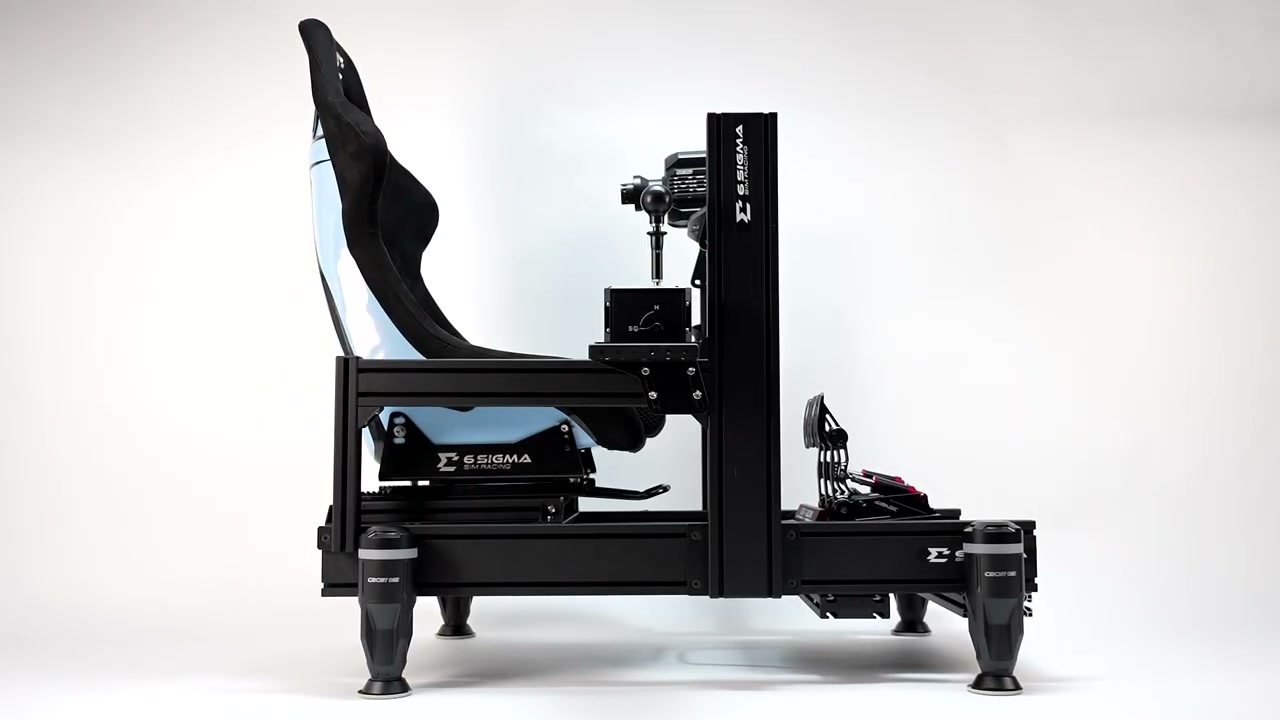
Without exaggeration, installation took me about 10 minutes from start to finish, and that was while filming it. Each actuator mounts to an aluminum profile chassis with just two bolts and two T-nuts, thanks to those pre-installed brackets. Quite literally the easiest and fastest install I have had on a motion platform.
Once it is together, the D Force 1 looks conservative. It is not large and bulky, it does not look powerful, and if I am honest it does not look serious. It almost looks underwhelming. That is by design, and it leads straight into the specification that defines this system.
Mounted on a profile rig with two bolts and two T-nuts per actuator.
50 mm of Travel Is the Defining Trade-Off
Those actuators have 50 mm of stroke. That is a full 100 mm less than Moza’s HMA150 and 50 mm less than Vero’s comparable Champion GT. The downside is obvious: there is less physical range to work with. Big elevation changes, heavy braking pitch, aggressive acceleration and large compressions cannot throw you around as far as they can on longer-travel systems. If you want dramatic, amusement-ride motion, 50 mm puts a hard ceiling on it.
But that does not mean you sacrifice the details. Road texture, vibration, small bumps, curbs and other high-frequency information need very little actual displacement in the first place. It is the big movements where limited travel becomes hard to hide. With 150 mm/s of actuator speed and just 50 mm of travel, Circuit One is clearly prioritizing short, precise movements over huge displacement. And while Moza’s HMA150 is faster on paper at up to 300 mm/s, outright speed and stroke are not the entire story.
The takeaway: more travel does not necessarily mean more information. The D Force 1 trades big movement for detail you can actually use.
50 mm of stroke, 150 mm/s and 180 kg of lift from each CNC aluminum actuator.
Specifications
← Swipe sideways for the full table →
Configuration
3-DOF, 4 actuators
Actuator stroke
50 mm
Actuator speed
150 mm/s
Load capacity
180 kg per actuator
Haptic frequency range
0-100 Hz
Construction
CNC-machined aluminum alloy
Control
LINK control module (USB/network), electronics internal to actuators
Lighting
Built-in telemetry-reactive RGB
Compatibility
PC; native Gran Turismo 7 via network telemetry; SimHub support coming soon
Price
$4,700 ($4,000 Black Friday)
Last verified: October 2026
On Track: Detail You Can Actually Use
Out on track, the philosophy becomes obvious. Rather than constantly throwing me around, the D Force 1 communicates what the car and the road are doing underneath me, and it does it very well. Road texture comes through clearly, smaller bumps have definition, curbs have the kick you would expect, and ABS activation gives you another physical cue for what the car is doing.
ABS in particular is really, really good. Under heavy braking you can clearly feel it pulsing through the chassis, and unlike an effect that exists purely for immersion, this is feedback you can actually use. If I am right on the braking threshold and ABS starts kicking in, I do not need to see or hear it anymore. I can physically feel it happening underneath me. There is also very little perceptible delay, and the 0-100 Hz haptic range gives the system plenty of room to communicate quicker effects without struggling to keep up with the game.
What surprised me most is that it felt this good straight out of the box. Circuit One’s default tuning is honestly almost spot on. I played with pretty much every setting, and the only thing I really changed was the rumble strips, which I turned up simply because I wanted them a little more aggressive.
It is also remarkably quiet. Even working hard, the actuators make very little mechanical noise. If you race in an apartment, upstairs, or late at night, bothering your neighbors should not be much of a concern.
ABS pulsing under heavy braking is feedback you can actually use.
Where It Falls Short
Not every effect is perfect. Engine vibration is disabled by default, and after turning it on I quickly understood why. I found it more distracting than immersive, and the vibration does not seem to change with engine RPM. Low in the rev range or near redline, it feels essentially identical. Oddly, I could not get any engine vibration with the car in neutral either.
Body pitch and roll was another strange one. Even after adjusting those settings, I could not feel them doing much of anything. And while these effects are telemetry-driven, some do not scale dynamically the way I would expect. Rumble strips are the clearest example: crawl over one at 1 mph or hit it at 100 mph, and the vibration pulse feels identical.
That distinction matters, because the limitation here seems to be in how some of the telemetry is currently being translated into effects, not in what the actuators themselves can produce. That is a software problem, and software problems can be fixed.
Worth knowing: the weak effects look like a software translation issue, not a hardware limit, which is why they can improve with updates.
Software
The software controlling all of this is in-house, and it is genuinely intuitive. There are individual controls for the different motion and haptic effects, everything is clearly laid out, and getting the system dialed in did not take much time at all.
There are two changes I would really like to see. Acceleration and braking should have separate adjustments instead of being controlled together. And I would love the ability to isolate an effect while testing it. Right now, to understand exactly what one setting is doing, you have to manually turn everything else off. A button that temporarily shuts everything else off and lets you feel just that one effect would make tuning significantly easier.
Telemetry Lighting, Gran Turismo 7 and SimHub
The software also controls the built-in telemetry lighting, which I expected to be a complete gimmick and ended up liking way more than I thought. Beyond normal RGB effects, the lighting reacts to ABS and traction control activation, displays flag signals, and gives you another visual layer of information about what is happening in the sim. It is not hugely noticeable, since you almost need to be looking down to really see it, but it is still really cool.
One compatibility feature I was not expecting is native Gran Turismo 7 support. Using the game’s network telemetry, the LINK box connects to your network, the system can be configured through a browser on your phone or tablet, and from there it pulls telemetry directly from Gran Turismo. I did not personally test that feature, but it is a clever addition.
What is missing for now is SimHub compatibility. Circuit One has confirmed to me that it is coming very soon, and I think that could address several of my issues with the current effects. The customization and control SimHub brings could really open up what these actuators are capable of.
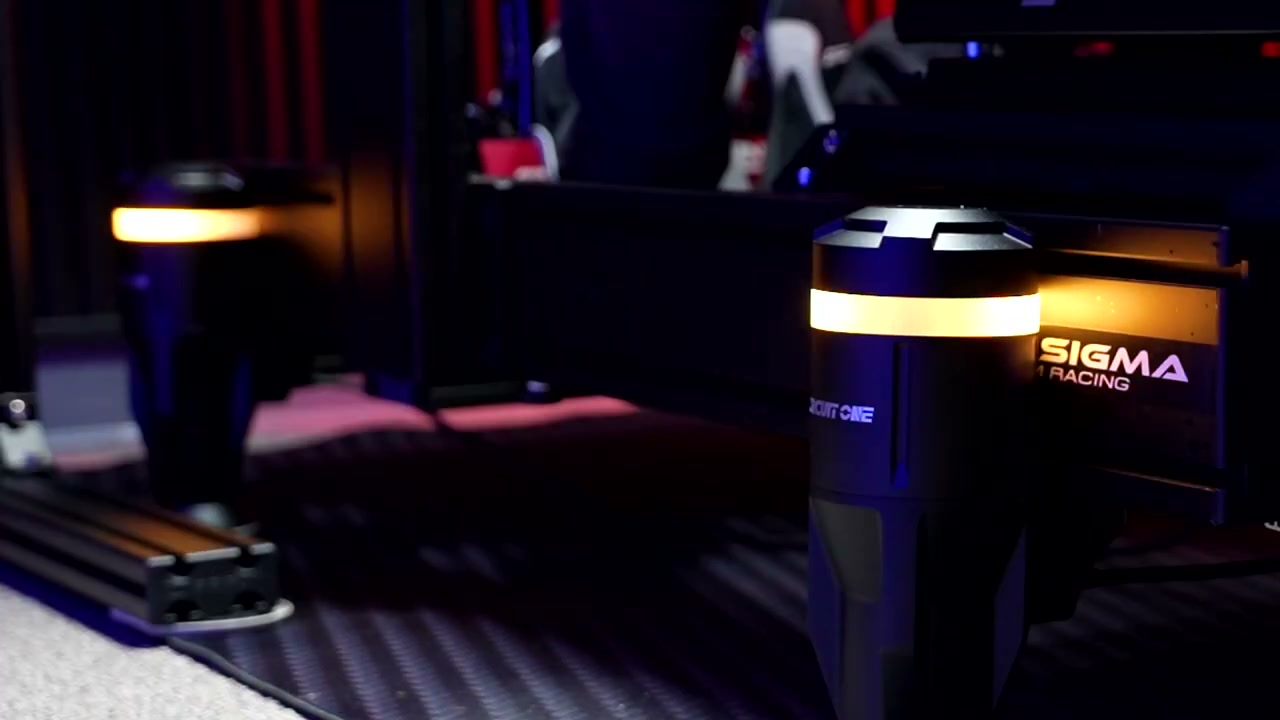
Telemetry-reactive lighting for ABS, traction control and flag signals.
Price vs the Competition
At $4,000 on Black Friday, the D Force 1 sits in an interesting spot. Moza’s HMA150 is considerably cheaper at $3,000, while offering 150 mm of travel and up to 300 mm/s speeds. Sigma’s comparable four-actuator DK2 comes in around $5,300 with the same 50 mm of travel but faster 213 mm/s actuators. Vero’s Champion GT is $6,500, with 100 mm of travel and 250 mm/s speeds.
Moza undercuts it and absolutely wins on paper. But having used both systems back to back, the D Force 1 feels better, at least for now and in my opinion. The HMA150 has considerably more dramatic large-scale movement, while the D Force 1 feels more immediate and refined in the smaller stuff. I feel like I am getting more information through it, rather than simply more movement. And with the Sigma and Vero systems costing roughly $1,300 and $2,500 more, the D Force 1 slots neatly between the entry-level HMA150 and those more expensive systems.
← Swipe sideways for the full table →
System
Price
Travel
Speed
OC Racing take
Moza HMA150
$3,000
150 mm
300 mm/s
Biggest movement for the money, coarser detail
Circuit One D Force 1
$4,700 ($4,000 Black Friday)
50 mm
150 mm/s
★ Our pick: best detail and usable feedback
Sigma DK2
~$5,300
50 mm
213 mm/s
Same travel, faster actuators, roughly $1,300 more
Vero Champion GT
$6,500
100 mm
250 mm/s
More travel and speed, roughly $2,500 more
US prices from each manufacturer, checked October 2026. The D Force 1 drops to $4,000 on Black Friday.
+ PROS
✓Installs in about 10 minutes, with pre-installed brackets and no external control box
✓Superb small-detail feedback: road texture, curbs and bumps come through clearly
✓ABS pulsing you can feel and actually use at the braking limit
✓Default tuning is nearly spot on straight out of the box
✓Very quiet actuators, apartment and late-night friendly
✓Telemetry-reactive lighting for ABS, traction control and flag signals
✓Native Gran Turismo 7 support over network telemetry
− CONS
✕50 mm of travel caps big pitch, roll and elevation movement
✕Engine vibration does not change with RPM, and does nothing in neutral
✕Pitch, roll and rumble strip effects do not scale with speed
✕No SimHub support yet, though Circuit One says it is coming soon
✕Software merges acceleration and braking into one adjustment, with no effect solo mode
✕$4,700 list price is steep next to the $3,000 Moza HMA150
Final Verdict
So is it worth it? I think so. More than anything, the D Force 1 changed the way I look at motion systems. More travel does not necessarily mean more information, and more movement does not necessarily mean more immersion. This is a motion platform for someone who wants to feel the car.
If you want big, dramatic motion, buy something with more travel. If you want to feel road texture, curbs and your ABS working, and you want it in a quiet package that installs in 10 minutes, this is the system to look at. The software still has room to improve, and SimHub support is still coming, but I am not left wishing these actuators had more than 50 mm of travel. I am left wondering how much more Circuit One can do with it.
FINAL VERDICT
A motion platform for someone who wants to feel the car, not be thrown around by it.
Ideal buyer: drivers who want road texture, curbs and ABS detail in a quiet, compact package that installs in 10 minutes.
Major drawback: 50 mm of travel caps big pitch and roll, some effects do not scale yet, and SimHub support is still to come.
Bottom line: if you want to feel the car, this is the system to look at. Sold through Simufy in Europe and SIMHQ in North America.
Sim racing hardware reviewer and creator. Every review on this site is hands-on tested across direct-drive wheelbases, pedals, cockpits, motion systems and accessories before a word is published.
The Circuit One D Force 1 packs four motion actuators into a suitcase, installs in about 10 minutes, and trades big travel for detail you can actually use.
Assetto Corsa EVO Update 0.9 introduced a major overhaul to the game's GT tyre model, changing how cars behave around the limit across a wide range of GT machinery.
Project Motor Racing has received its Version 2.3 update, bringing the Lamborghini Temerario to the simulator alongside a new vehicle class, physics revisions, visual improvements and a series of changes…
After years of being exclusive to PC, BeamNG.drive is finally making its way to the PS5. BeamNG has confirmed that the soft-body driving simulator will launch in Early Access on…
The long-awaited free roam mode for Assetto Corsa EVO is finally approaching. Kunos Simulazioni has confirmed that the first version of the Eifel Free Roam Mode will be introduced with…
Sim Gaming Expo 2026 brought Moza, Sim-Lab, Simucube, Heusinkveld, VRS, Simagic and dozens of other brands together for one massive weekend in Chicago.