MOZA supplied this sample at no cost, MOZA is a paying sponsor of the site. They had no input on this article and did not see it before publication.
Before getting into the platform itself, a necessary disclosure. Moza provided the HMA150 at no cost for review. Moza is also a paid sponsor of the channel, but the company had no input on this article and did not see it before publication. As always, all thoughts and opinions here are entirely my own.
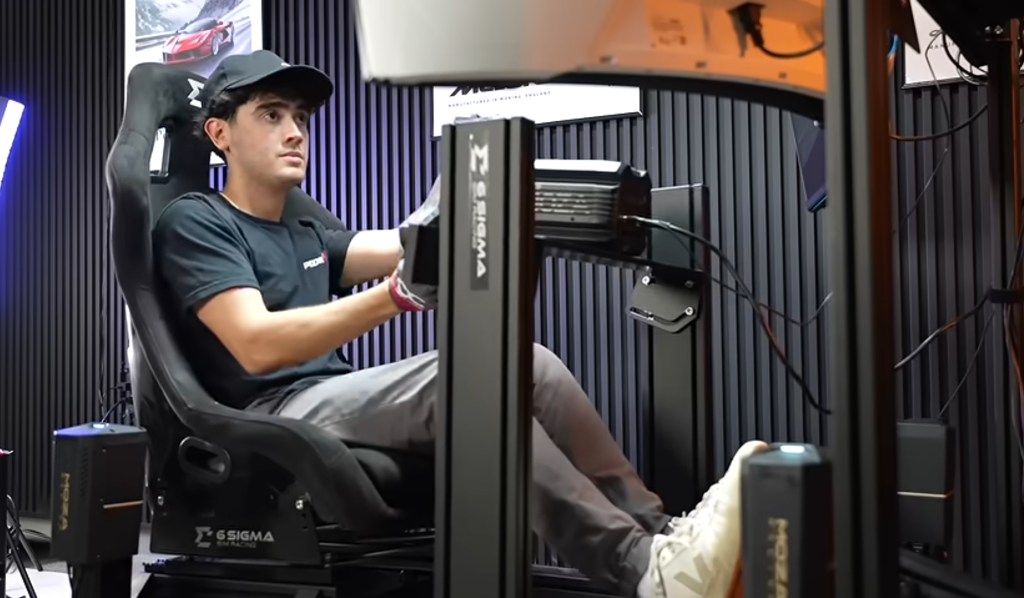
The Moza HMA150 is the company’s biggest sim racing release yet, and one of the products I have tested most thoroughly. I have used it for several months, taken it to multiple events, brought it to Sim Racing Expo Charlotte, and had hundreds of people drive this exact unit. I have also broken it, fixed it, and learned what it is like to own over time.
At $3,000, it remains expensive, though it is surprisingly competitive beside many other four-actuator systems. The hardware is fast, the installation is cleaner than most, and once properly tuned, it adds a physical layer to the simulator that is difficult to replicate any other way. There are important caveats.
MOZA HMA150 Haptic Motion System (4 Actuators)
Not a competitive upgrade and not something every sim racer needs, but the hardware is fast, the motion feels natural once tuned, and the clean installation is a major advantage over systems that rely on bulky external c
Best for Someone who already owns a high-end simulator and wants a ma
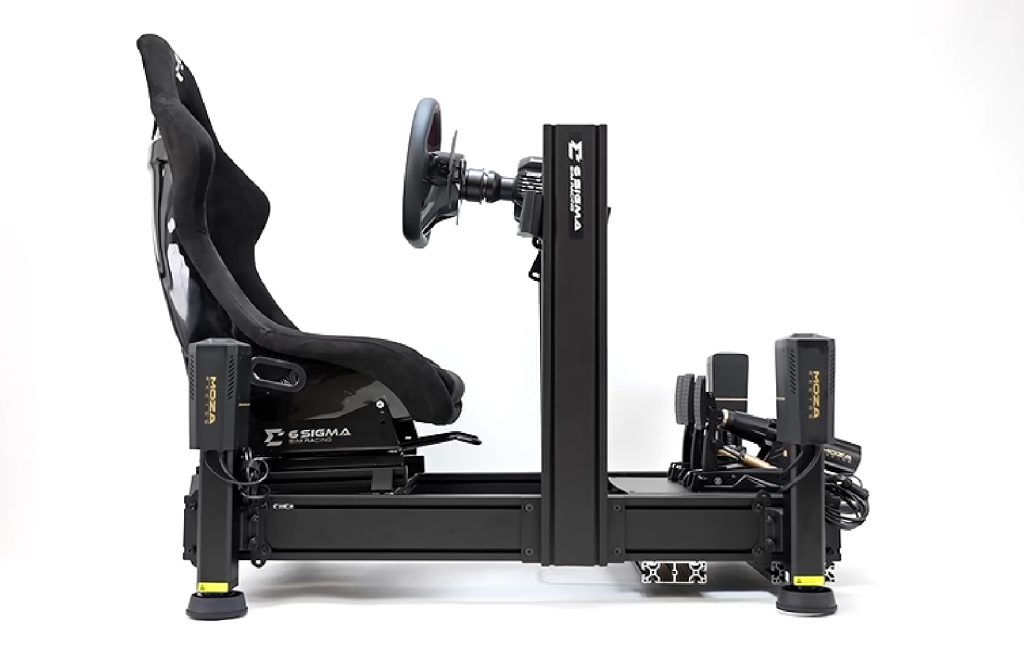
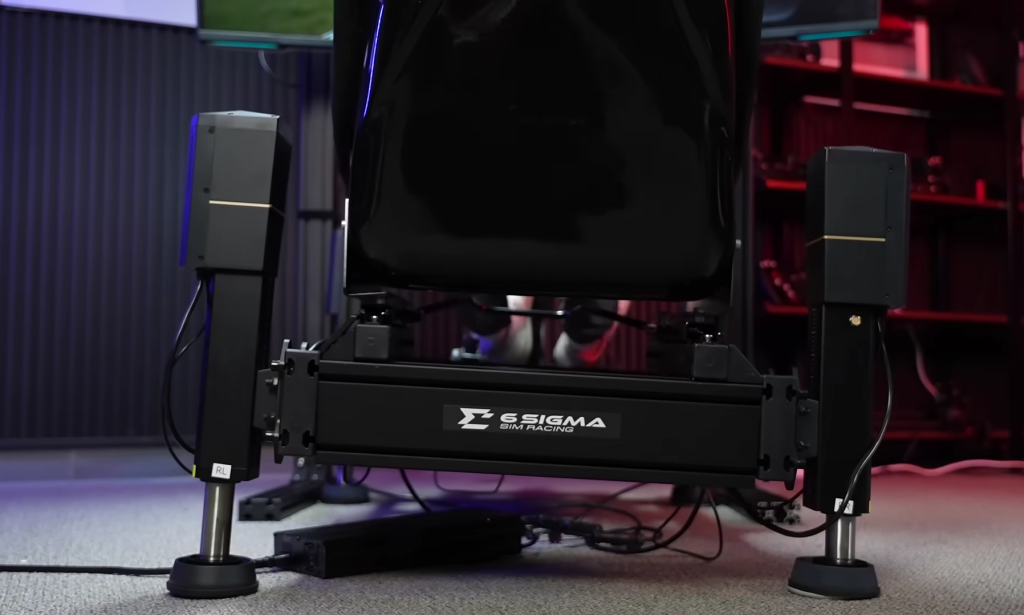
The HMA150 includes four actuators, the cups they sit in, mounting brackets for aluminum profile cockpits, the necessary cables, a large power supply, and a small plastic USB hub. A major advantage is the lack of a bulky external control box, as Moza integrated that hardware into the actuators.
That makes the finished installation much cleaner. Each actuator still has two cables coming out of it, and those need to be routed carefully. If they are left in the wrong position, they can be pinched when the system powers down and lowers the rig. I learned that one the hard way.
Reliability Has Been Mostly Good, With One Major Failure
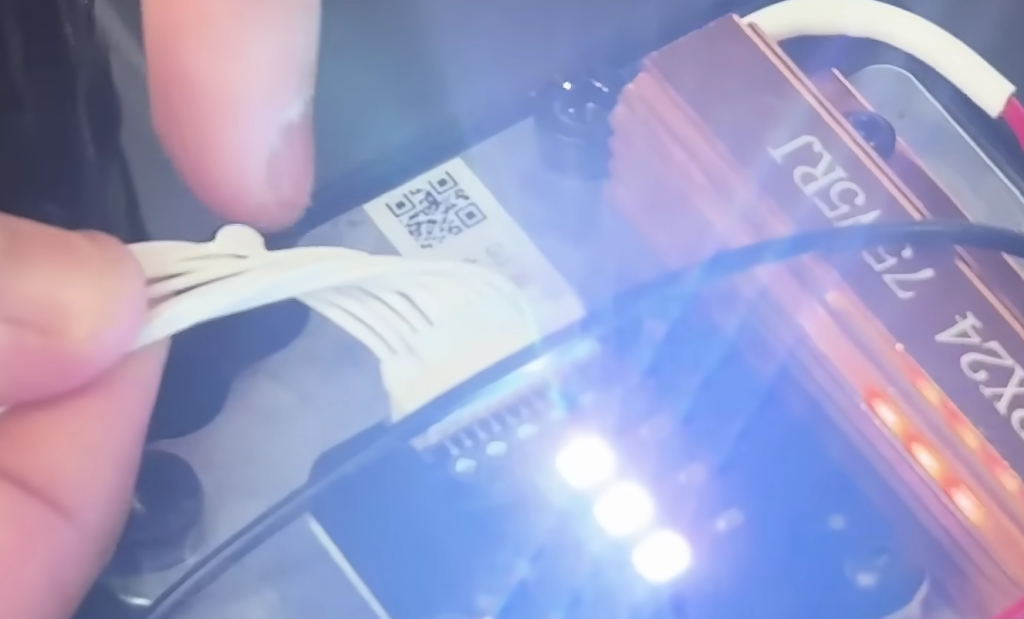
After several dozen hours, my system completely failed. I started receiving motor error messages, and the platform refused to initialize. The issue came from a cable inside the rear-left actuator that had been pinched during production when the top cap was installed. After extended use, the cable eventually broke.
Moza was helpful and the repair was simple. Following their instructions, I removed the damaged section, soldered the wire back together, and had the platform working again in around 20 minutes. Still, nobody should have to do that on a premium motion system. If this becomes a common issue, it would be a serious long-term concern.
Apart from that failure, the HMA150 has been reliable. I have run it for close to 10 hours at a time, used it outdoors in the heat, and taken it through multiple event weekends. The original power supply was absurdly loud, but Moza replaced it with a much quieter revision.
The Hardware Is Genuinely Impressive
Each actuator has 150 mm of travel, a maximum speed of 300 mm per second, and peak acceleration exceeding 1g. The HMA150 is a 3-DOF system, meaning it provides pitch, roll, and heave movement.
Pitch tilts the simulator forward and backward to represent braking and acceleration. Roll creates side-to-side movement for cornering and weight transfer. Heave moves the entire rig vertically to recreate bumps, compressions, kerbs, and elevation changes. It also includes built-in haptics, though those are a smaller part of the experience.
The actuators react quickly, and I never noticed any obvious delay between what happened in the simulator and what the platform did. When properly adjusted, the movement feels smooth, natural, and surprisingly analog rather than robotic.
The Default Settings Need Significant Work
The standard profiles were honestly not good. Pitch and roll were far too aggressive, heavy braking tipped the rig forward excessively, and cornering created too much side-to-side movement. Larger kerbs could also feel violent rather than convincing.
The default settings mainly showed off the actuator speed and travel rather than creating believable motion. I spent a lot of time adjusting the Moza motion software, which is intuitive but still requires patience.
Once I reduced the movement and found a more restrained setup, the experience improved considerably. Braking and acceleration became easier to read, weight transfer felt more convincing, and elevation changes became physical without constantly throwing me around. Tuning is essential here.
The Built-In Haptics Are Only Average
The built-in haptics add vibration through the cockpit and are most noticeable over kerbs or during brake lockups. They give the platform some extra texture, but they are not especially strong or clearly defined.
Many effects feel too similar, making their purpose hard to identify. I would still recommend separate pedal motors, bass shakers, or a seat-based system for clearer and more localized feedback. The included haptics are a nice bonus, not a full replacement.
Motion Does Not Automatically Make You Faster
I would not claim that the HMA150 improved my lap times. In some situations, the additional movement can make precise inputs harder, especially under braking or when trying to repeat the same technique every lap. For serious competition, I would either turn it off or use a very restrained profile.
Where it makes sense is immersion. Braking zones, elevation changes, compressions, kerbs, and weight transfer become physical sensations instead of things you only see and hear. Casual driving becomes more engaging, VR feels considerably more convincing, and showing the simulator to someone for the first time becomes far more memorable.
Motion is primarily an immersion upgrade, not a guaranteed performance upgrade.
Noise and Installation
The actuators produce mechanical sounds and vibrations, but the overall noise level is not unusual for a system like this. The included actuator cups do a good job of absorbing vibration before it reaches the floor.
A floor mat helps even more. It will never be silent, but the noise remained reasonable in my testing, especially after the revised power supply was installed.
Final Thoughts
The Moza HMA150 is not something every sim racer needs. At $3,000, it costs more than many complete setups, requires a rigid cockpit, and adds another layer of complexity. I also would not treat it as a competitive upgrade. It has not made me faster, and for serious racing, I still prefer the consistency of a stationary simulator.
Where it succeeds is immersion. The speed is there, the motion feels natural once tuned, and the clean installation is a major advantage over systems that rely on bulky external control boxes. It makes casual driving more engaging, VR more believable, and the simulator more exciting.
The value also becomes easier to understand beside other four-actuator systems, many of which cost significantly more. Some alternatives are more refined, but at $3,000, the HMA150 is extremely competitive within an already expensive category.
There are first-generation concerns. Moza needs to ensure the internal cable failure I experienced remains isolated, improve the standard profiles, and prove it can support a complex mechanical product over the long term. Even with those caveats, after months of use and multiple events, I understand the appeal. For someone who already owns a high-end simulator and wants a major improvement in immersion, the HMA150 delivers.
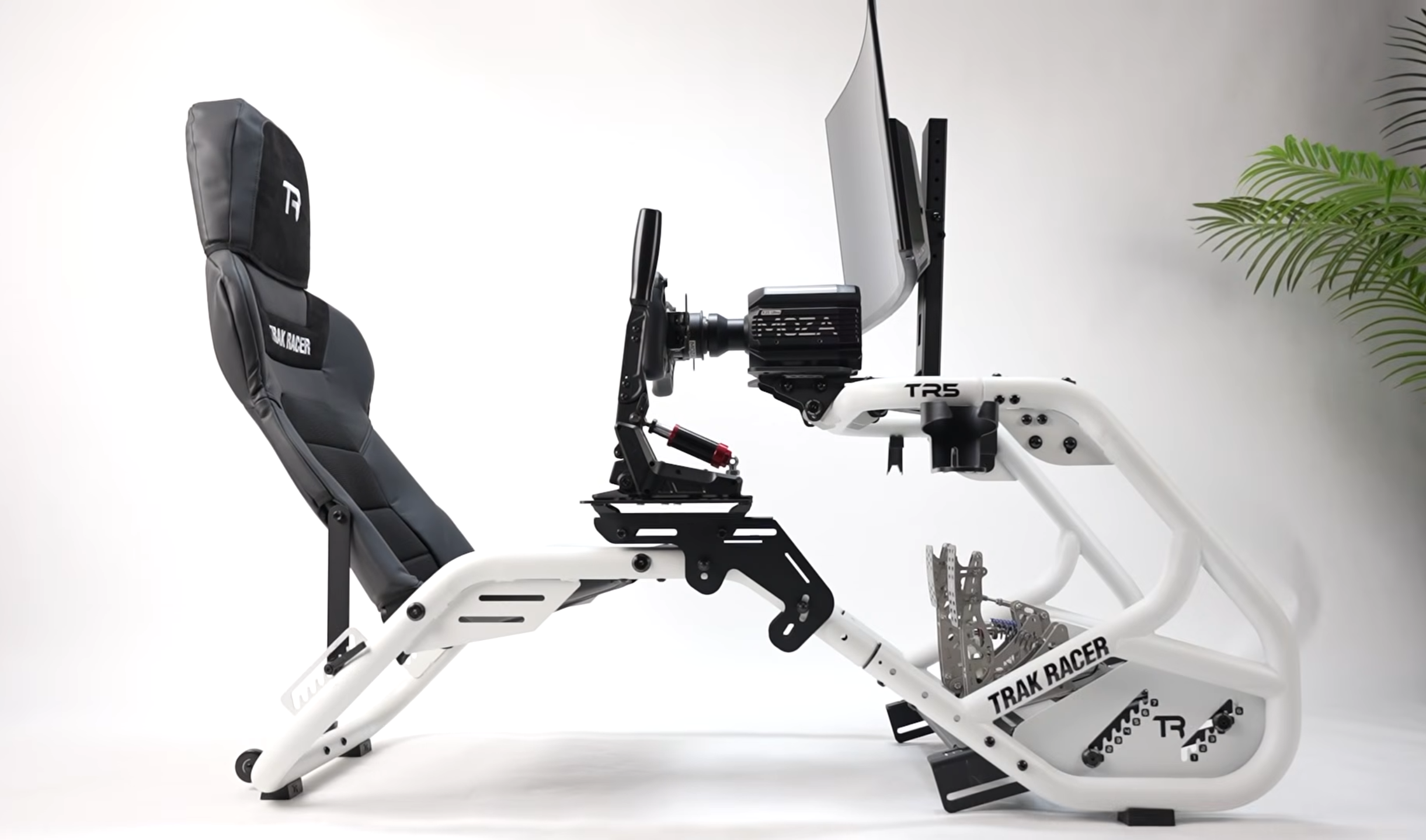
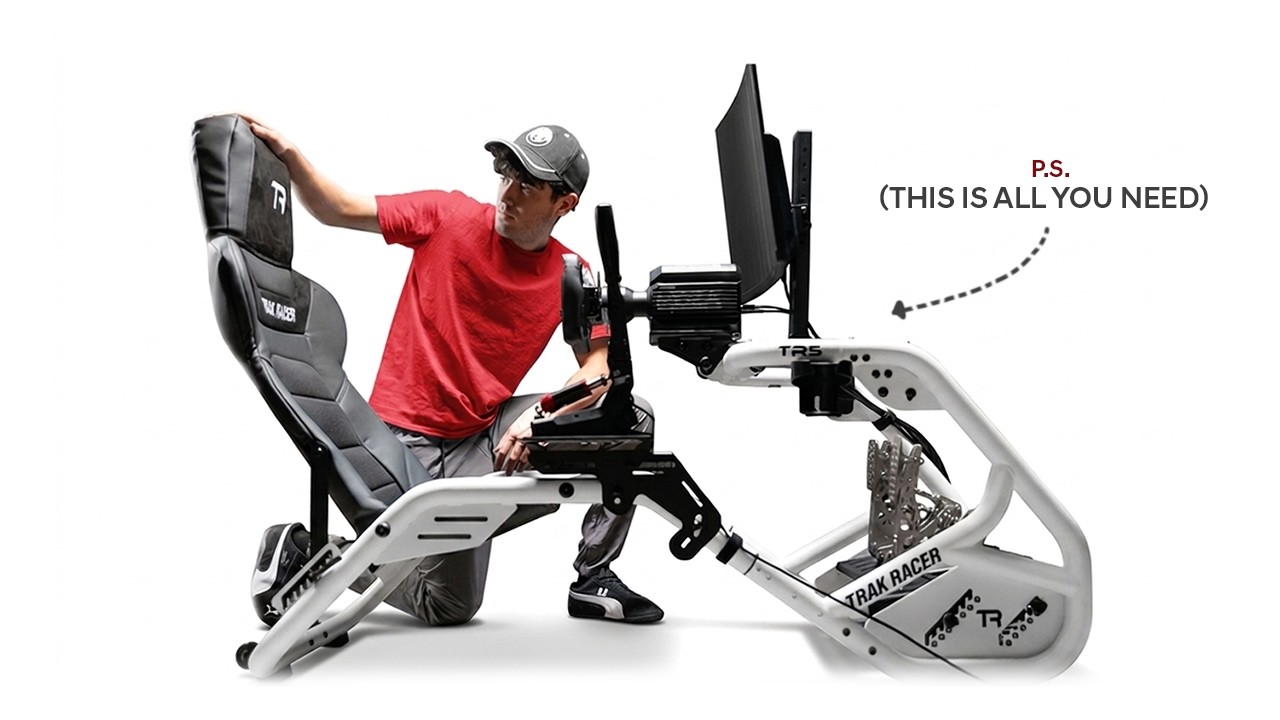
The HMA150 sounds amazing. even with the minor flaws but it iearly in its life. What is the sim frame shown in the video? I would like info on what cockpit is suggested, If there is a way to create a bundle that would be even better.
Thanks for your help and I look forward to joining the Moza Fan base.
Gamescom 2026 Sim Racing Hardware: Moza, PXN and the Biggest Reveals to Expect - OC Racingsays:
[…] the products already being teased. Moza has had an extremely busy 2026 with the R5 Pro, R16 Ultra, HMA150 motion system, new flight hardware, and its upcoming PlayStation and Gran Turismo products, so Gamescom could end […]
Sim Gaming Expo 2026 brought Moza, Sim-Lab, Simucube, Heusinkveld, VRS, Simagic and dozens of other brands together for one massive weekend in Chicago.
Sim-Lab has brought several new products to Sim Gaming Expo 2026, led by a Porsche 963 steering wheel alongside its DDS wheel bases and new control hardware.
The Trak Racer TR5 combines a complete seat and chassis package with impressive adjustability, broad compatibility, and more rigidity than I expected for $599.


Brad says:
The HMA150 sounds amazing. even with the minor flaws but it iearly in its life. What is the sim frame shown in the video? I would like info on what cockpit is suggested, If there is a way to create a bundle that would be even better.
Thanks for your help and I look forward to joining the Moza Fan base.
Moza HMA150 Motion Platform: Everything You Need to Know - OC Racing says:
[…] MOZA Official Website Trusted Moza Distributors Full HMA150 Review […]
Gamescom 2026 Sim Racing Hardware: Moza, PXN and the Biggest Reveals to Expect - OC Racing says:
[…] the products already being teased. Moza has had an extremely busy 2026 with the R5 Pro, R16 Ultra, HMA150 motion system, new flight hardware, and its upcoming PlayStation and Gran Turismo products, so Gamescom could end […]