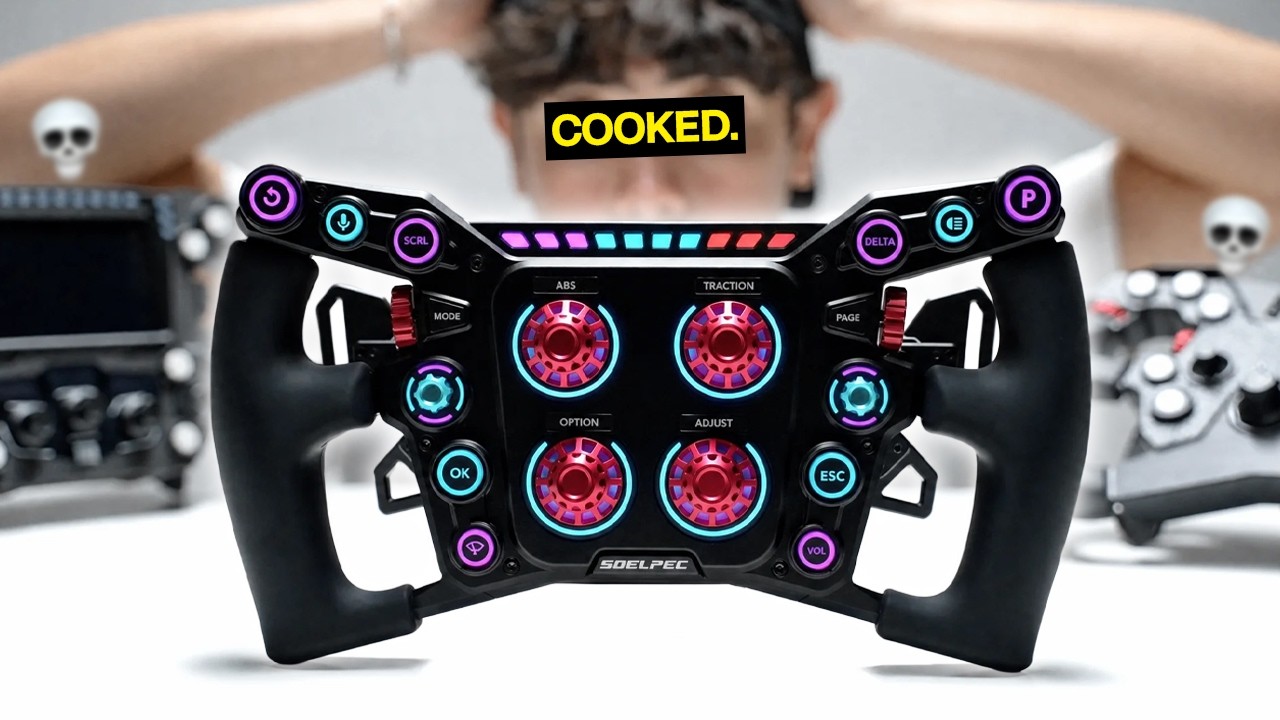
Soelpec Terra LX Review: A Premium GT Wheel That Gets the Details Right
The Soelpec Terra LX is a German-made 297 mm GT wheel with the best grips I have used, deep SimHub customization, and a premium $1,199 price tag.

Thrustmaster has been making sim racing hardware for a very long time, and in 2026 its ecosystem has become absolutely massive. There are cheap wheels for beginners, older belt-driven hardware that is still hanging around, newer Direct Drive bases, several generations of pedals, and enough steering wheels and accessories to make the whole lineup pretty confusing.
So, if you’re trying to figure out what any of it actually means, here’s the important part of the Thrustmaster sim racing ecosystem in 2026, explained as simply as possible.
Verified purchase options at lowest current prices:
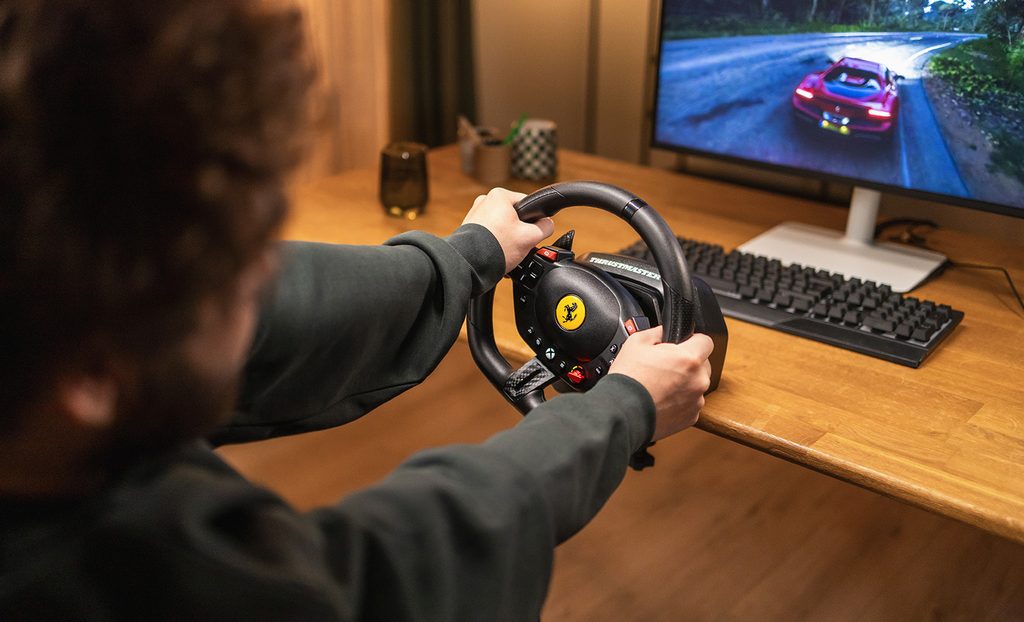
At the very bottom is the T98 Ferrari 296 GTB. This is designed primarily for beginners and younger players, with a Ferrari-inspired wheel, 240 degrees of rotation, and a simple bungee cord system that automatically recenters the wheel.
The important distinction is that the T98 does not have Force Feedback. You get resistance and self-centering, but the wheel cannot actively reproduce things like curbs, oversteer, tire slip, or changes in steering load from the game.
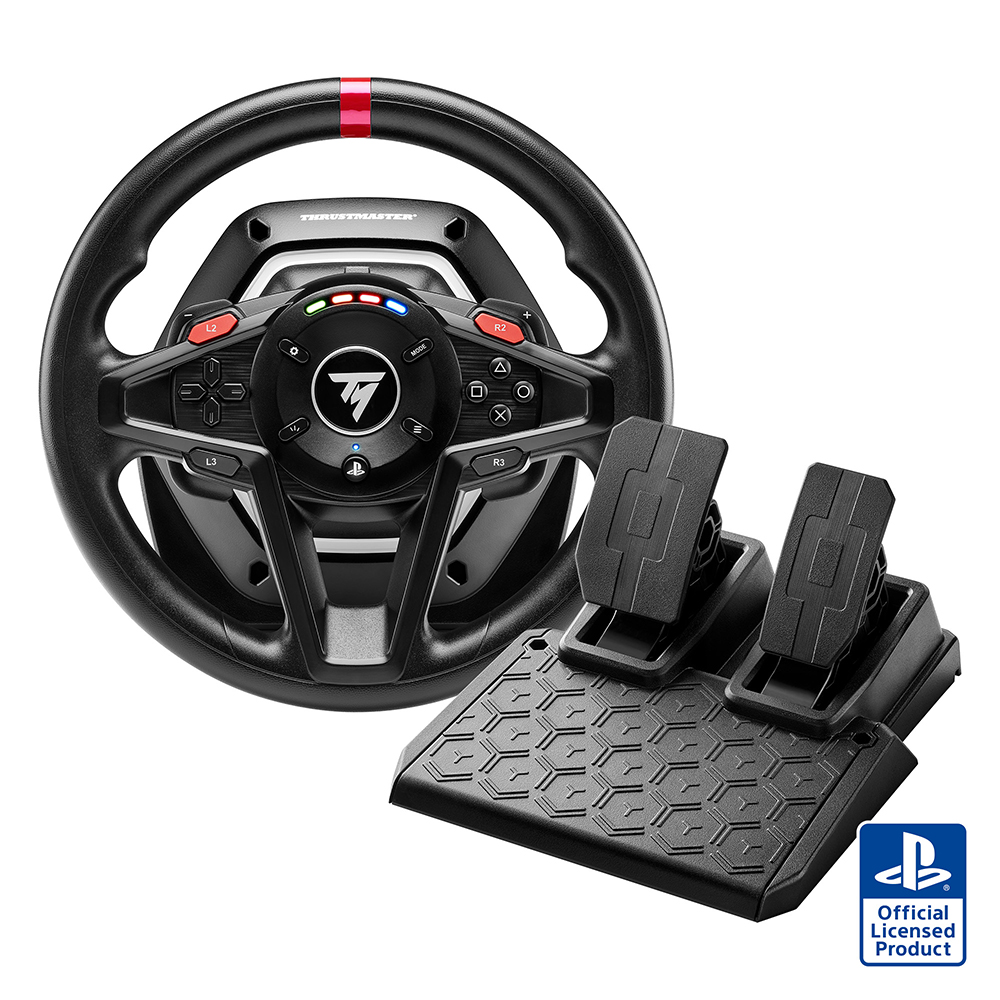
One step above that is the T128, which is where proper Force Feedback begins. It’s still a fairly basic all-in-one wheel, generally paired with the two-pedal T2PM set, but it’s a much better starting point if you actually want to feel what the car is doing.
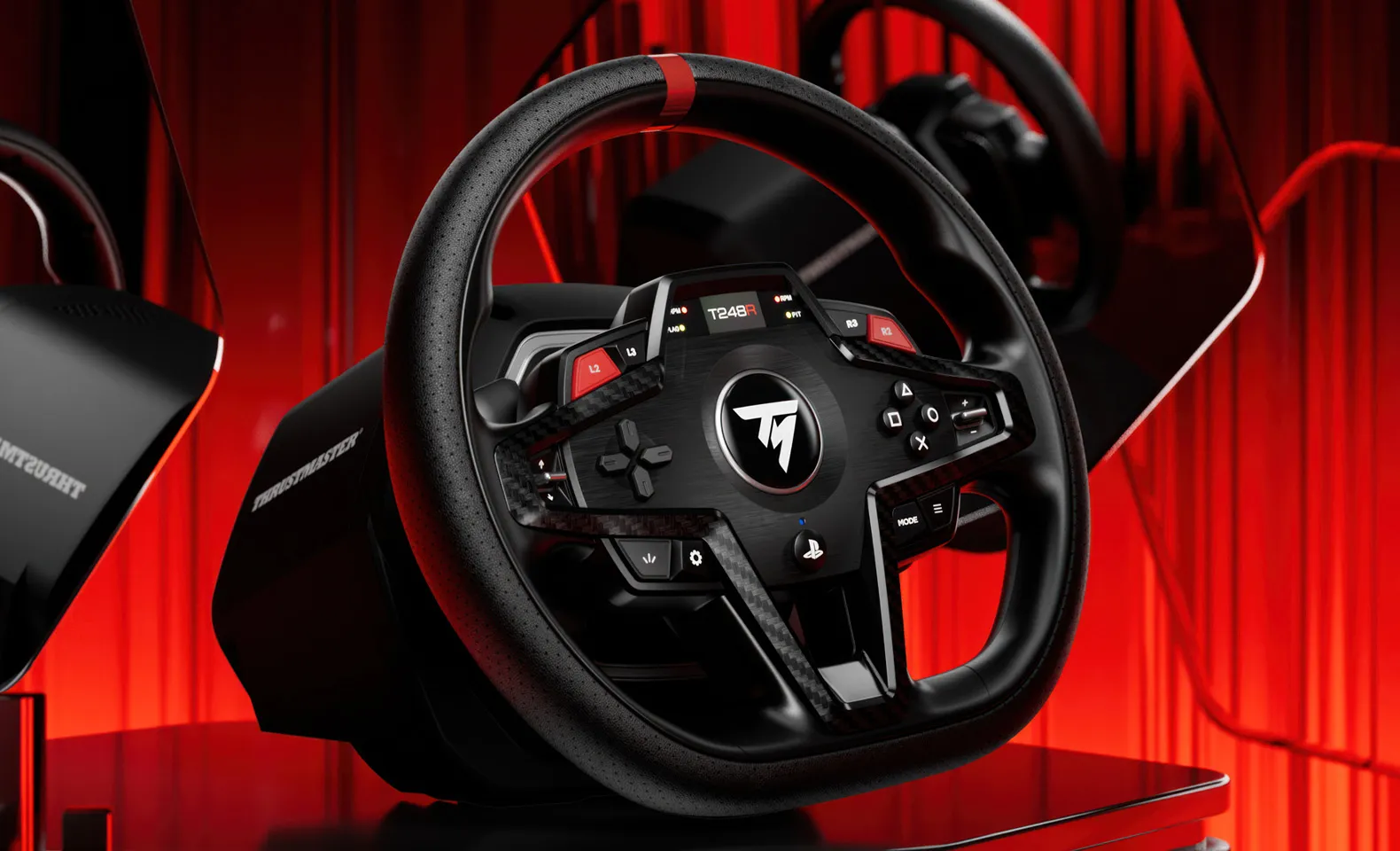
Then you have the newer T248R. This uses Thrustmaster’s hybrid T-HD Force Feedback system with 3.1 Nm of torque, adds a built-in color LCD display and LEDs, and comes with the three-pedal T3PM set. For someone who wants a complete setup without moving into Direct Drive yet, this is currently the strongest option in that traditional entry-to-mid-range category.
This is where things get slightly confusing, because Thrustmaster has been around long enough that there is a huge amount of older hardware still in circulation. Wheels like the TMX, T150, T300, TX, TS-PC, TS-XW, and T-GT II all belong to previous generations of the ecosystem.
The T300 and TX in particular were incredibly popular belt-driven bases, while the T-GT II sat much higher up the range as Thrustmaster’s premium Gran Turismo-focused option. They can still be perfectly usable today, especially if you find one cheaply, but I probably wouldn’t build a brand-new ecosystem around them unless the price made a lot of sense.
Thrustmaster’s newer hardware has clearly moved toward Direct Drive, and that’s where the lineup gets much more interesting.
The T598 is the Direct Drive base I’ve been using recently, and for most people looking at the current Thrustmaster ecosystem, this is probably where I’d start. It uses what Thrustmaster calls Direct Axial Drive, built around an axial-flux motor designed to deliver very smooth Force Feedback without the cogging you can sometimes feel from more conventional motors.
It produces 5 Nm of constant torque, but also has a +100% overshoot capability for short, stronger Force Feedback effects. There’s also Thrustmaster’s HARMONY system for higher-frequency effects, along with a Race Dash display directly on the base for changing settings and viewing telemetry.
The biggest advantage is that the standard T598 comes as a complete package. You get the base, detachable 30 cm Sportcar wheel, Raceline Pedals LTE, desk clamp, and everything required to start driving immediately.
There are now separate PlayStation and Xbox versions of the T598 too, both of which also work on PC. Just make sure you’re buying the correct one for the console you actually use.
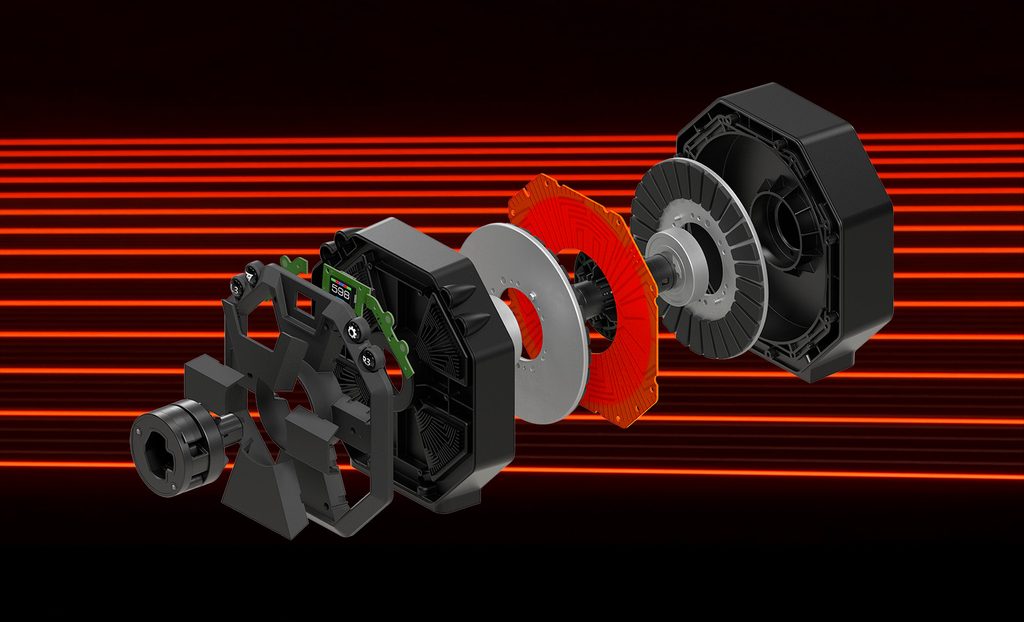
Above the T598 sits the T818, Thrustmaster’s more powerful Direct Drive base. This delivers 10 Nm of constant torque, so it’s a substantial step up if you’re using a proper cockpit and want considerably more steering force.
The current T818 Black Edition also receives updated connectors and some reliability improvements over the original version. The main limitation is platform support, because the T818 remains a PC-only wheelbase.
That makes the T598 much easier to recommend for someone who wants console support, while the T818 makes more sense for a dedicated PC setup where the extra torque is actually going to be used.
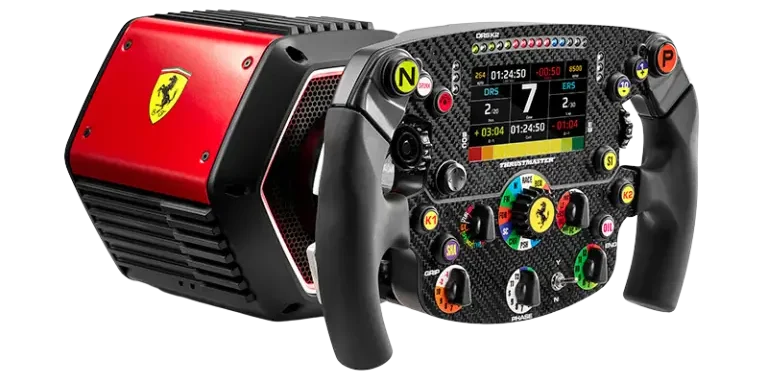
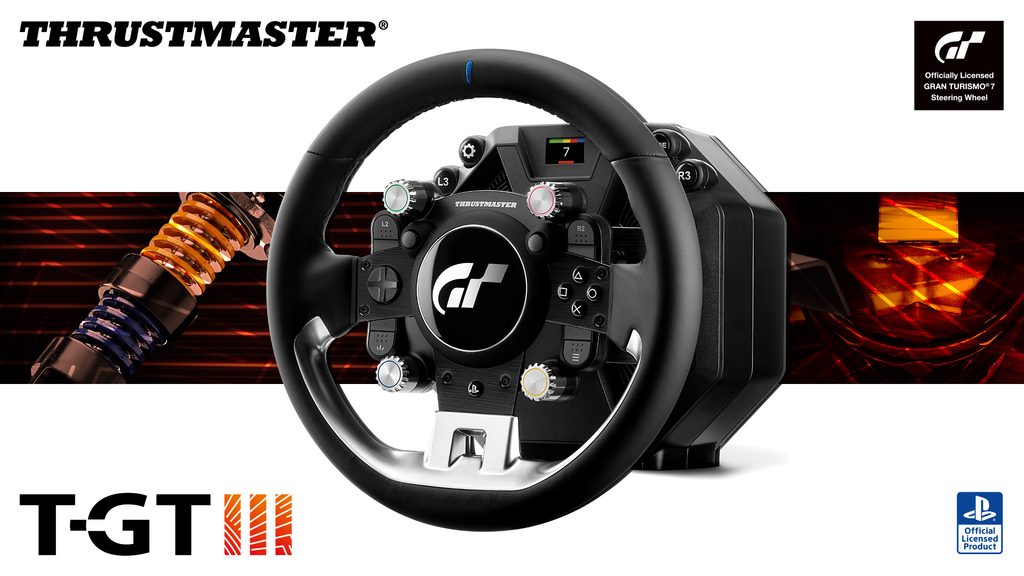
One major addition for 2026 is the T-GT III, which effectively brings Thrustmaster’s newer Direct Axial Drive technology into its Gran Turismo lineup. The previous T-GT II was still based around older belt-driven technology, so this is a pretty significant upgrade.
The T-GT III produces 5 Nm of constant torque with up to 10 Nm of overshoot capability, and combines that base with the familiar 28 cm T-GT wheel and a new Raceline two-pedal Load Cell set. That brake uses a 100 kg load cell, making this one of the most complete PlayStation-focused packages Thrustmaster has offered so far.
It’s specifically designed around Gran Turismo 7 and works on PS5, PS4, and PC, so it’s a much more specialized option than the regular T598.
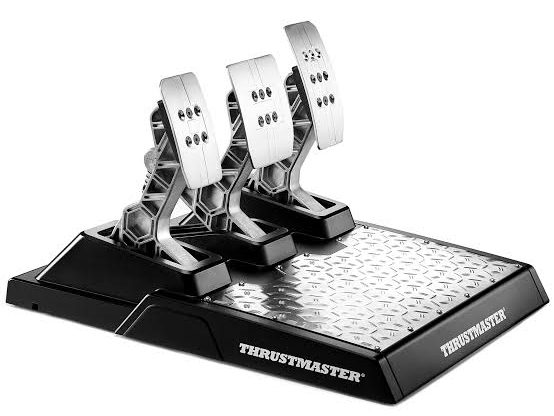
At the affordable end, you have pedal sets like the T2PM and T3PM. The T2PM is a simple two-pedal magnetic set commonly paired with the T128, while the T3PM adds a clutch and adjustable brake resistance and is bundled with wheels like the T248R.
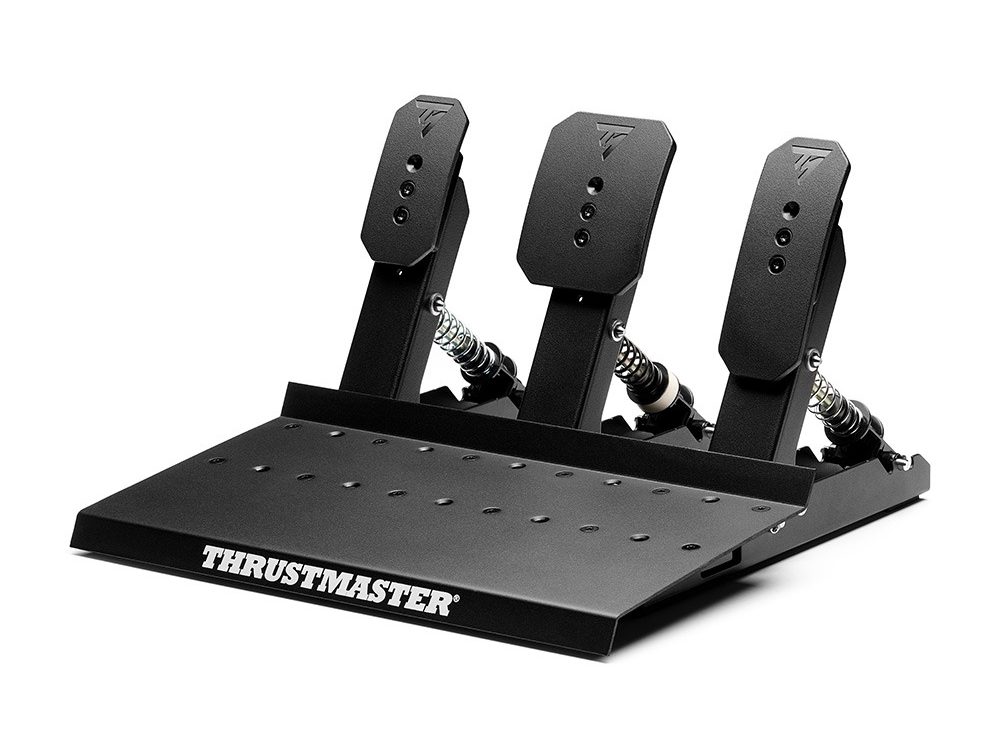
The newer Raceline family is more interesting. Raceline Pedals LTE is the two-pedal set included with the T598, while Raceline Pedals III expands the same idea into a standalone three-pedal setup.
You can then move to the Raceline Pedals III LC, which includes a Load Cell brake from the factory. Alternatively, the Raceline LC Upgrade can convert compatible Raceline Pedals LTE or Raceline Pedals III hardware to a Load Cell brake later on.
The older T-LCM Pedals are still part of the ecosystem too and remain a perfectly legitimate Load Cell option, although the Raceline platform is clearly where Thrustmaster is moving its pedal lineup.
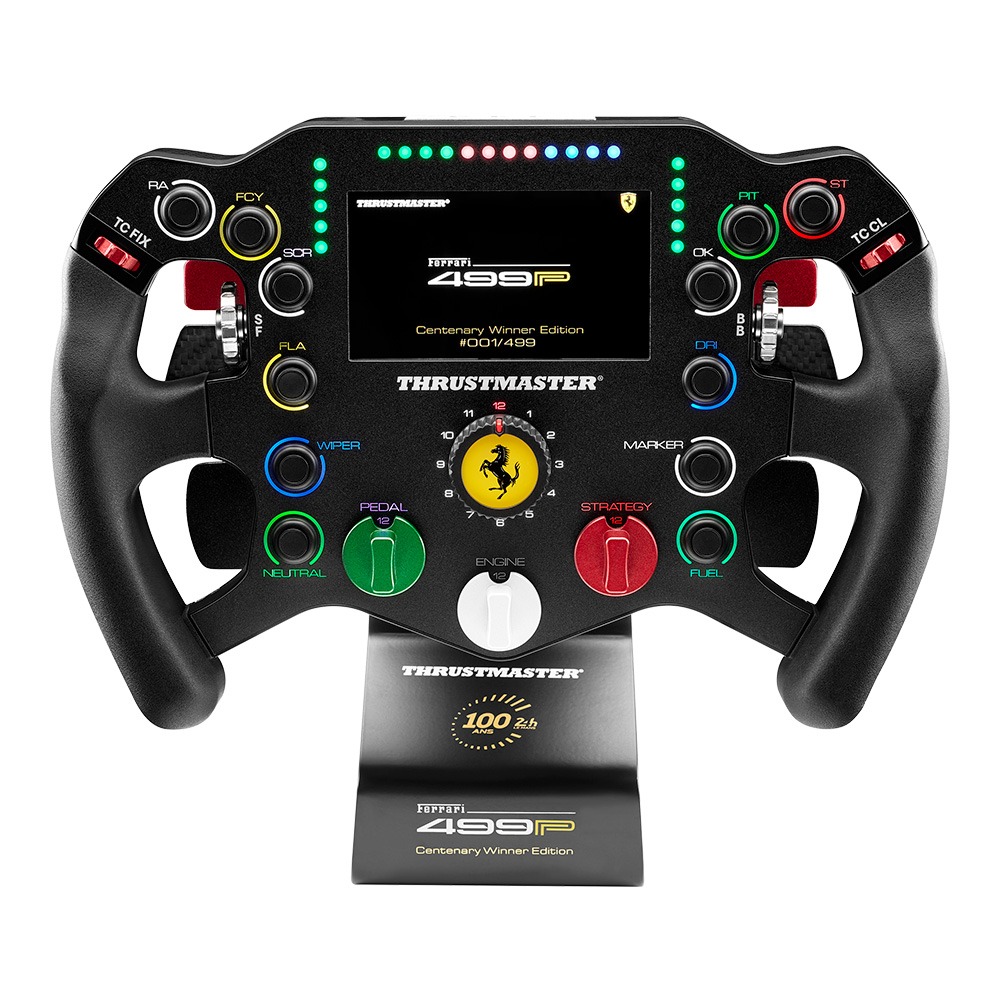
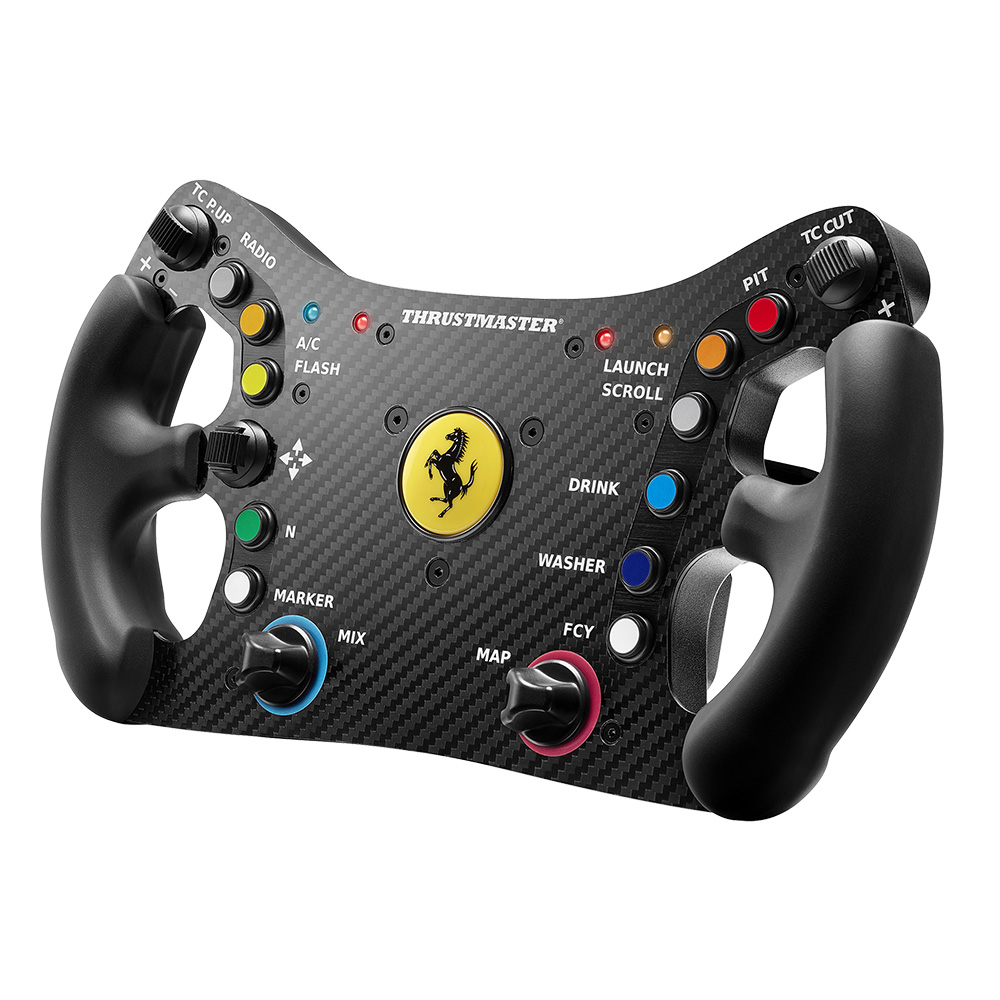
One of the biggest advantages of buying into Thrustmaster has always been the amount of wheel rims available. The current lineup covers Formula, GT, hypercar, road car, rally, and more traditional round-wheel layouts, with plenty of licensed Ferrari hardware mixed in.
Some of the more notable current options include the Formula Wheel Add-On Ferrari SF-25 Edition, Ferrari SF1000, Ferrari 488 GT3, Ferrari 499P, Hypercar Wheel Add-On, EVO Racing wheels, and the newer GT Wheel Add-On. There are also plenty of older rims still around if you’re already invested in the ecosystem.
Compatibility does vary between generations though. Some of the newest wheels are specifically designed around the T598 and T818, while older bases may require adapters or may not support them at all, so this is one area where it’s worth checking compatibility before buying.
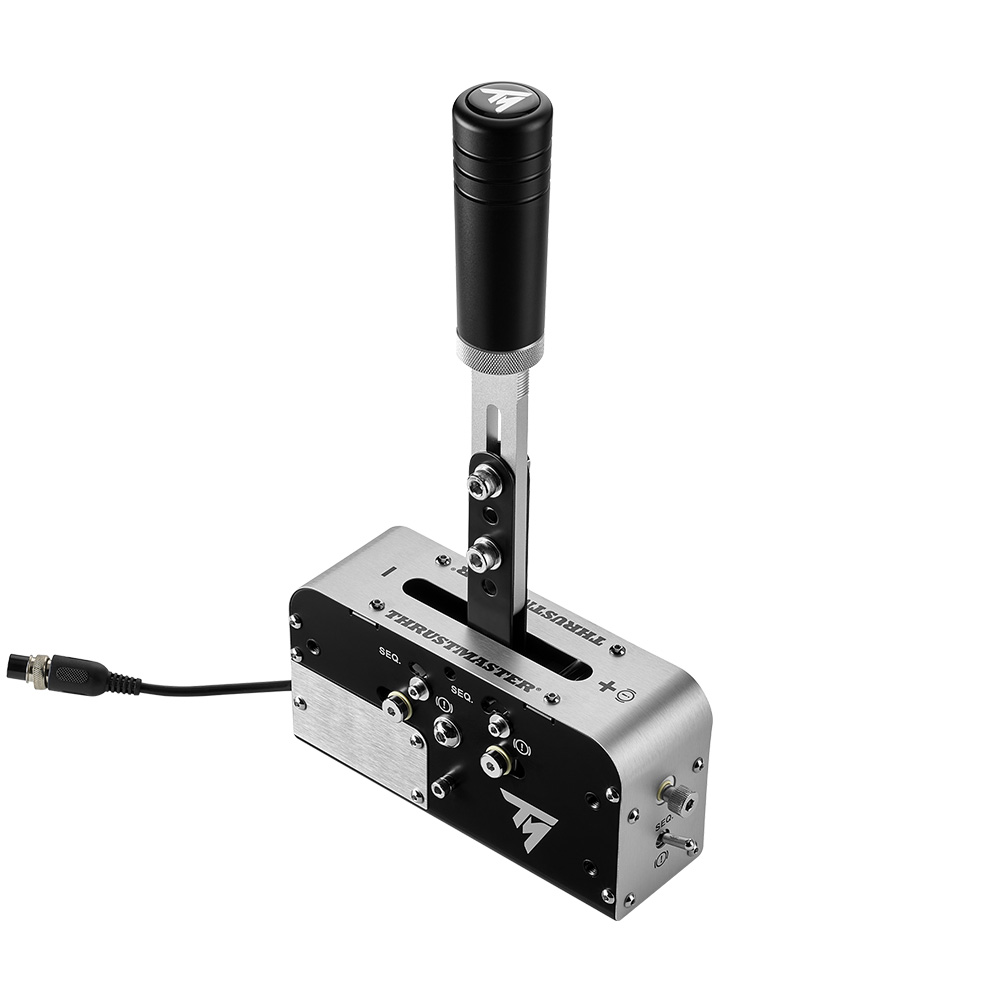
For manual shifting, the inexpensive option is the TH8S. It’s a simple H-pattern shifter and makes the most sense for someone who wants to add manual shifting without spending a huge amount of money.
The more premium option is the TH8A, which uses considerably more metal in its construction and can work as both an H-pattern and sequential shifter. It’s an older product at this point, but it remains one of Thrustmaster’s main higher-end shifter options.
Then there’s the TSS Handbrake, one of my favorites from the ecosystem. It can function as a progressive analog handbrake for rally and drifting, or be configured as a sequential shifter, which makes it a surprisingly versatile accessory.
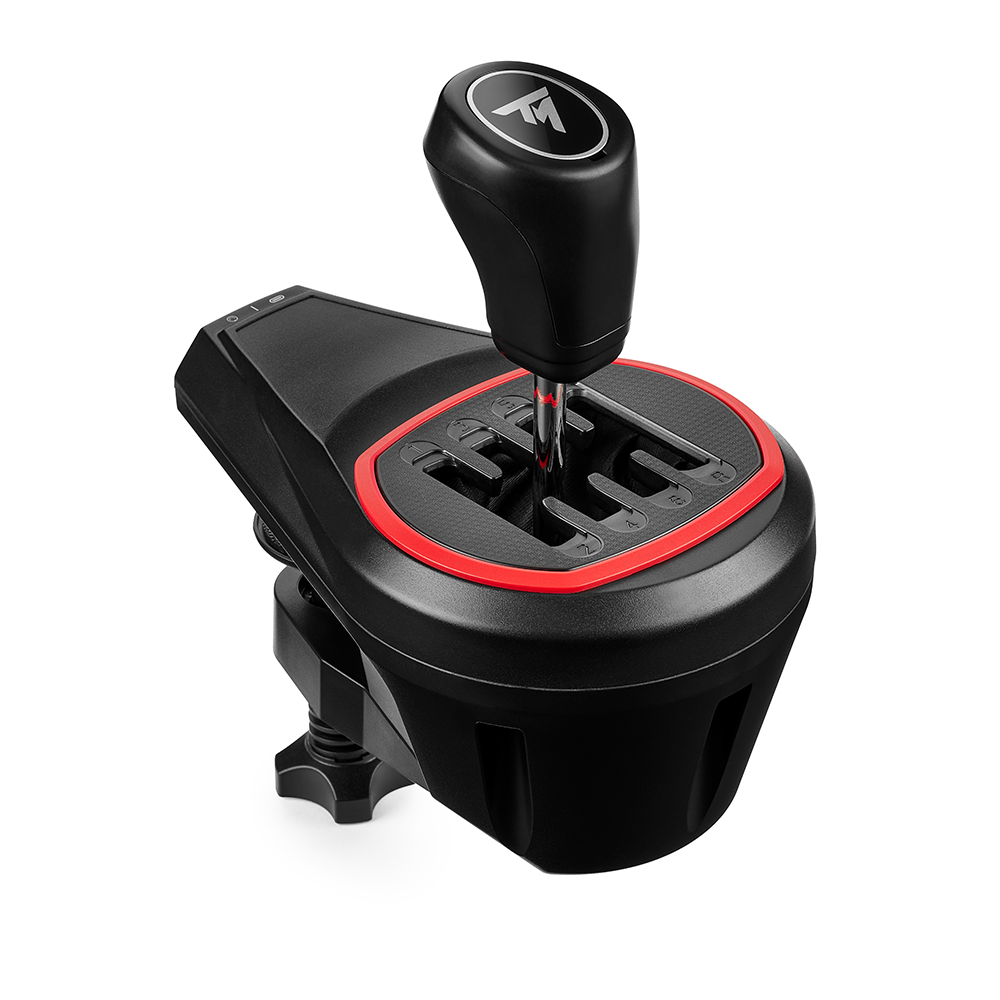
One advantage Thrustmaster has over quite a few sim racing brands is strong console support. A large part of the ecosystem can be used on PlayStation or Xbox, including newer Direct Drive hardware.
But that doesn’t mean the same base works on both. Products like the T128 and T598 are sold in different platform-specific versions, while the T818 is PC-only and the T-GT III is focused on PlayStation and PC.
So if you’re buying into the ecosystem from scratch, choose your wheelbase around your platform first. The pedals, rims, shifters, and other accessories become much easier to figure out after that.
Racing is only part of what Thrustmaster makes. The company also sells dedicated SimTask equipment for trucking and farming simulators, including steering and truck-focused accessories designed around games like Euro Truck Simulator and Farming Simulator.
Then there’s an entirely separate flight simulation ecosystem with joysticks, throttles, rudder pedals, yokes, and licensed Airbus and Boeing equipment. So if you’re someone who jumps between racing, trucking, farming, and flight simulators, there’s a surprisingly large amount of hardware sitting under the same brand.
Thrustmaster’s ecosystem can look pretty chaotic at first, mostly because new Direct Drive hardware now exists alongside years of older wheels, pedals, and accessories. Once you separate the generations though, it becomes much easier to understand.
The T98 is the simple beginner option, the T128 and T248R handle the traditional Force Feedback market, and the T598 is probably the most sensible entry into modern Thrustmaster Direct Drive. The T818 gives PC users more power, while the T-GT III now offers a much more serious Gran Turismo-focused package for PlayStation.
Then you can build around that with Raceline pedals, Load Cell upgrades, Ferrari and GT wheel rims, shifters, and the TSS Handbrake. It’s a huge ecosystem, but at least in 2026, the path through it finally makes a little more sense.
Design & development by CIDIX
· Sim rig builder, deals pipeline, simracing tools, comparisons, adspace & forum · Custom code licensed to OC Racing