VR always seems like the obvious answer for sim racers chasing immersion. If you want to feel more inside the car, use your mirrors naturally, and look around without being limited by a single screen, it makes a ton of sense. It also appeals to people who simply do not have the space for triples, which is a very real limitation for a lot of setups.
But there is another reason VR becomes so tempting, and that is price. Especially on the used market, older headsets can be picked up for surprisingly little money. That makes VR sim racing look like one of the cheapest ways to add a huge amount of realism to your setup. So after spending some time with it myself, here is what I learned from trying VR sim racing on a budget, what I liked, what I did not, and what I think people should keep in mind before jumping in.
Why budget VR is so appealing
For me personally, immersion matters a lot more than it probably does for most people. I care about feeling connected to the car, feeling present in the environment, and getting drawn into the experience. Things like aesthetics, having the cleanest looking setup, or even improving my absolute pace do matter, but they sit lower on the list. So naturally, VR seemed like a very appealing option.
That was especially true because my budget was not huge. A good triple screen setup takes space, planning, mounts, and a pretty decent amount of money. A used VR headset, on the other hand, can cost somewhere around 100 to 150 euros. At that point, it starts to look like one of the best value-for-money ways to make sim racing feel dramatically more immersive. At least on paper, it sounds like a no-brainer.
What I ended up buying
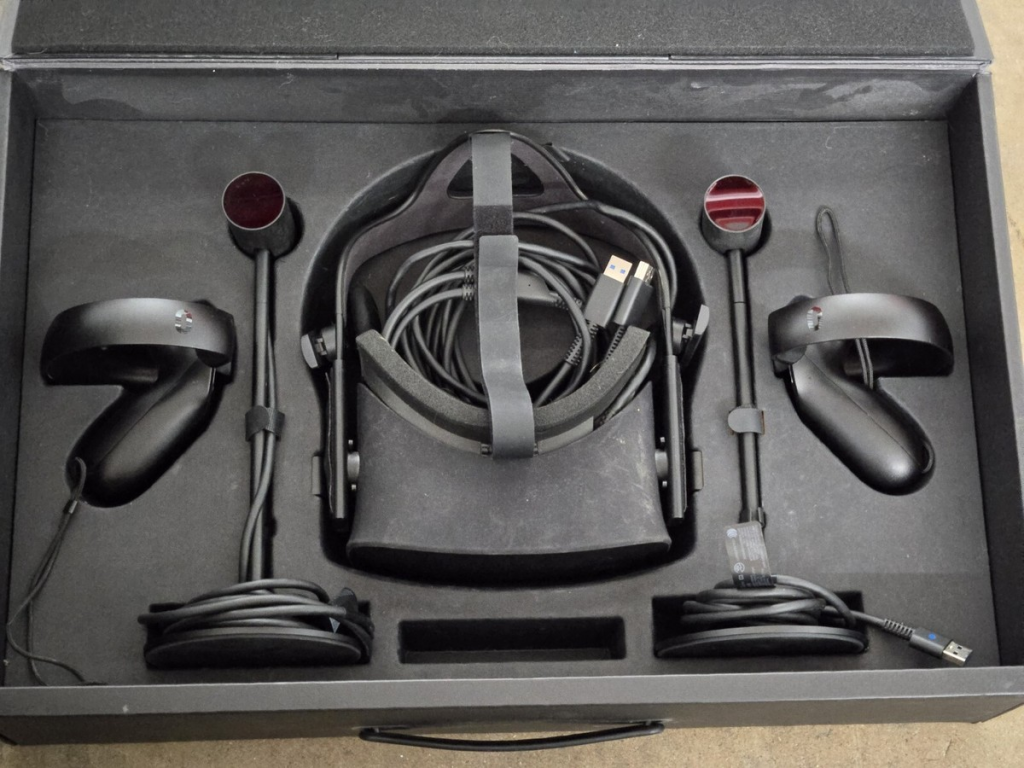
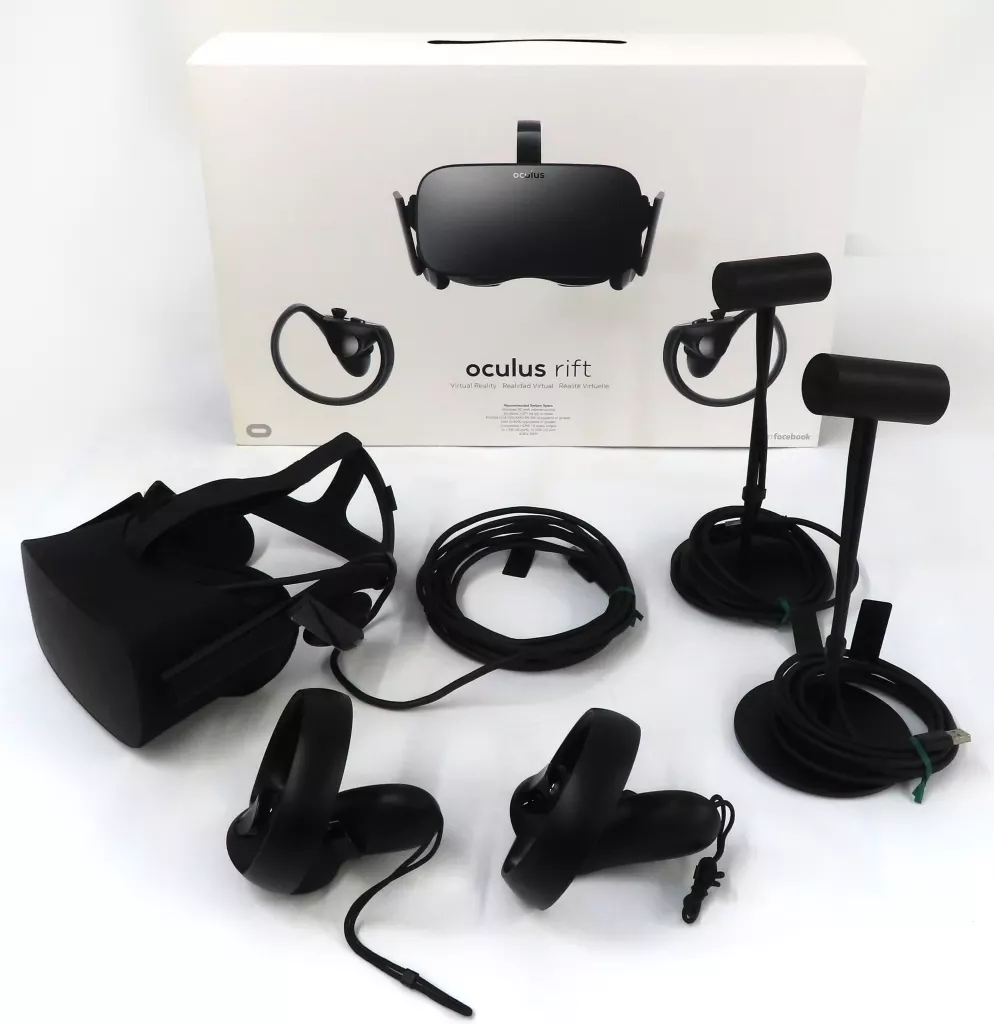
After doing some research and spending a bit of time looking through Marketplace, I ended up picking up one of the cheaper options out there, an Oculus Rift CV1. This headset originally came out in 2016, which means the one I bought is now officially ten years old. That is ancient in VR terms, and it shows. Still, for the money, it felt like a good way to test the waters without committing to something expensive.
Because it is such an old headset, it misses out on a lot of the features people now take for granted. There is no standalone functionality, no storage, no hand tracking, and none of the more modern conveniences that newer headsets bring. The Rift CV1 can only be run directly from my PC, and for my use case, that is completely fine. I was not buying it for general VR use anyway. I was buying it for sim racing.
That distinction matters. If you want a headset for all kinds of games and broader VR use, a Rift CV1 is obviously a much harder sell today. But for something like Assetto Corsa, which is what I mainly play, it is actually pretty simple. I can bind a button to reset my view, jump into the car, and start driving. Once I am in, I do not really need much else from the headset itself.
And yet, despite how promising that all sounded when I bought it, two years later I still do not use it nearly as much as I thought I would. That probably says a lot already.
The first experience is incredible
I should mention that I already had a perfectly decent screen setup before trying VR. I still race on a 32-inch 1440p monitor, and in terms of image quality, it is absolutely good enough. So I was not coming from a terrible setup or looking for a basic improvement. I already had something solid. Even then, the first proper experience I had with the Rift in sim racing felt unreal.
It was not my first time trying VR in general, but it was my first time using a proper headset for sim racing, and I absolutely loved it. The sense of presence is the part that immediately grabs you. Being able to lean your head out slightly, naturally check your mirrors, look into the apex, and glance over at cars sitting in your blind spots makes the whole thing feel far more alive. It is hard to explain until you try it, but when it works, it is genuinely impressive.
That is why VR gets so much praise in sim racing circles. On first impression, it really does feel like a major step closer to actually being in the car. Your brain buys into it much more easily than it does on a single screen, and for a while that feeling is amazing. It adds a layer of realism that is very hard to replicate in other ways, especially on a tighter budget.
Once the magic fades, the drawbacks become obvious
After that early wow factor wears off, though, the downsides start becoming much easier to notice. The biggest one on the Rift CV1 is resolution. Considering how old the headset is, that is no surprise, but it still matters a lot in actual use. The image simply is not very sharp by modern standards, and that becomes especially noticeable outside of the pure act of driving.
Things like changing setups, reading lap times, checking leaderboards, or making in-car adjustments become much more annoying than they should be. While actively driving, the lower resolution is still not ideal, but it is manageable. The bigger issue is everything around the driving. Menus, text, overlays, and finer details all become much harder to deal with, and over time that friction adds up.
I also found that my pace took a hit. Compared with driving on a screen, I was generally around half a second slower per lap in VR. That is not a massive amount, and I know some people are actually faster in VR, but in my case it was noticeable. Whether that comes down to comfort, clarity, familiarity, or just the particular headset I was using, I cannot say for certain. But it was there.
Motion sickness is the real wildcard
The other major issue is motion sickness, and this is where things get really personal because it varies so much from person to person. For me, after around half an hour to forty-five minutes of driving, I start to feel dizzy. The worst part is that it does not stop the moment I take the headset off. I end up feeling off for the next couple of hours, which is a real annoyance and makes longer sessions much less appealing.
That limitation matters a lot for the kind of sim racing I do. Endurance racing is the main form of racing I enjoy, and if a headset starts making me feel rough before I even get through a proper stint, that is a serious problem. It turns VR from something that could be used regularly into something that only really works for short sessions.
Of course, this will not be the same for everyone. Some people already get motion sickness sitting in the back of a normal car, while others can spend hours in VR and feel absolutely fine. That is why this part is so difficult to predict. If you have the chance to test a headset before buying one, I would strongly recommend doing that. If you cannot, then just know that motion sickness is a very real risk, especially with older hardware.
Where I stand on it now
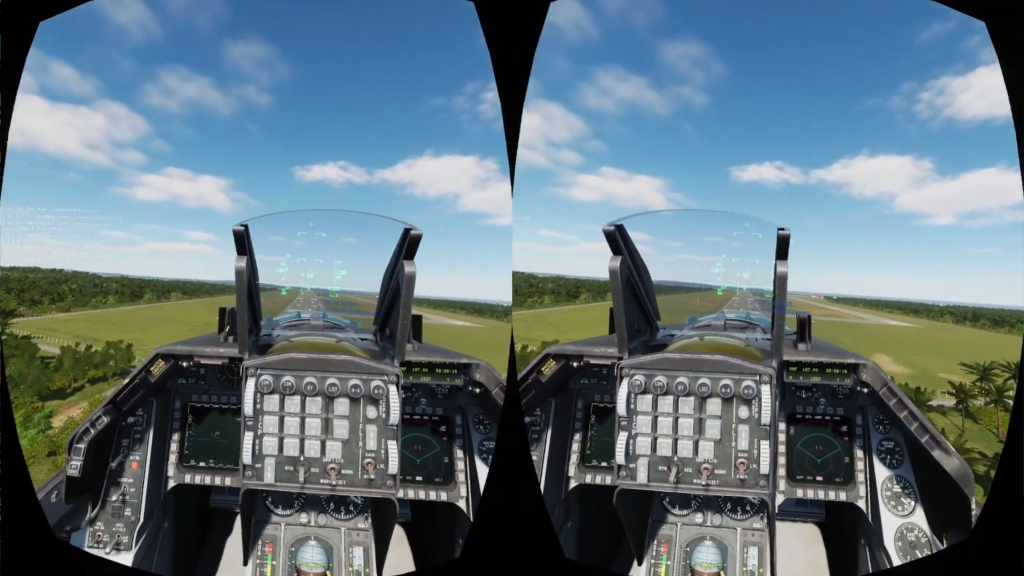
Even with all of that in mind, I have not sold my Rift. I still use it every few weeks for shorter Assetto Corsa sessions, and whenever I do, it is a lot of fun. Getting it working in Assetto Corsa is easy enough thanks to the built-in Rift support under the screen type settings, so it never feels like a huge hassle to set up. I also use it occasionally in DCS, which is a completely different kind of experience but one where VR also makes a lot of sense.
So it is not like the headset became a total waste of money. It still gets used, and when I am in the mood for a shorter, more immersive session, it absolutely delivers. But it did not become the ultimate realism solution I hoped it would be. It became more of a fun option than a permanent answer.
I have also tried both an Oculus Quest and a Quest 2, and those experiences felt noticeably better for me. I suspect the higher resolution played a big role in that, and I also felt a lot less motion sickness using them. I was on a completely different rig at the time, so I could not properly compare lap times, but the overall experience felt easier, cleaner, and more comfortable. That made it pretty clear to me that not all VR headsets feel the same, and older budget headsets do come with very real trade-offs.
Final thoughts
VR can absolutely be a great budget option for sim racers who want a more realistic and immersive driving experience without spending the kind of money or space required for triples. If your main goal is immersion, and you are happy to buy used, there is a lot of appeal there. Even an old headset like the Rift CV1 can still deliver moments that feel genuinely special.
At the same time, you really do get what you pay for. Older, cheaper headsets can still be fun, but they come with compromises in resolution, usability, comfort, and sometimes motion sickness as well. For some people, those compromises will be worth it. For others, they will be enough to stop VR from becoming a regular part of their setup.
For me, VR sim racing on a budget was worth trying, and I do not regret it. I learned that the immersion is absolutely real, but so are the limitations. So if you are thinking about going down the same route, just make sure you go into it with the right expectations. That way, if it clicks for you, it can be a brilliant upgrade. And if it does not, at least you will know why.
Simagic is finally preparing to reveal its long-awaited Active Pedal during its global product launch on October 14, nearly two years after the first prototype appeared.
Race Sim Studio has released the Formula Hybrid 2026 for Assetto Corsa, bringing active aerodynamics, a new 350 kW hybrid system, adaptive ERS deployment, and an extensive suite of racing…
Kunos Simulazioni has shared a detailed look at the future of Assetto Corsa EVO, outlining changes to the game's development direction and revealing more information about its long-awaited Free Roam…
Conspit CHS · $369 Conspit sent this product to me for review. Conspit has entered the shifter market with the CHS, a dual-mode shifter that combines a 7-gear H-pattern with…
After making its public debut in Chicago, Sim-Lab is bringing its upcoming Porsche 963 replica steering wheel to SimRacing Expo Frankfurt for another major showcase.
Gran Turismo 7 Spec IV Part 1 arrives October 15 with Sportsland SUGO, six new cars including the Ferrari F355, new Brand Central challenges, Car Concierge, Car Viewer and more.
The new Thrustmaster T-GT III brings Direct Axial Drive, 5 Nm of constant torque, load cell pedals, and dedicated Gran Turismo 7 haptics to PS5 and PS4.
The Circuit One D Force 1 packs four motion actuators into a suitcase, installs in about 10 minutes, and trades big travel for detail you can actually use.