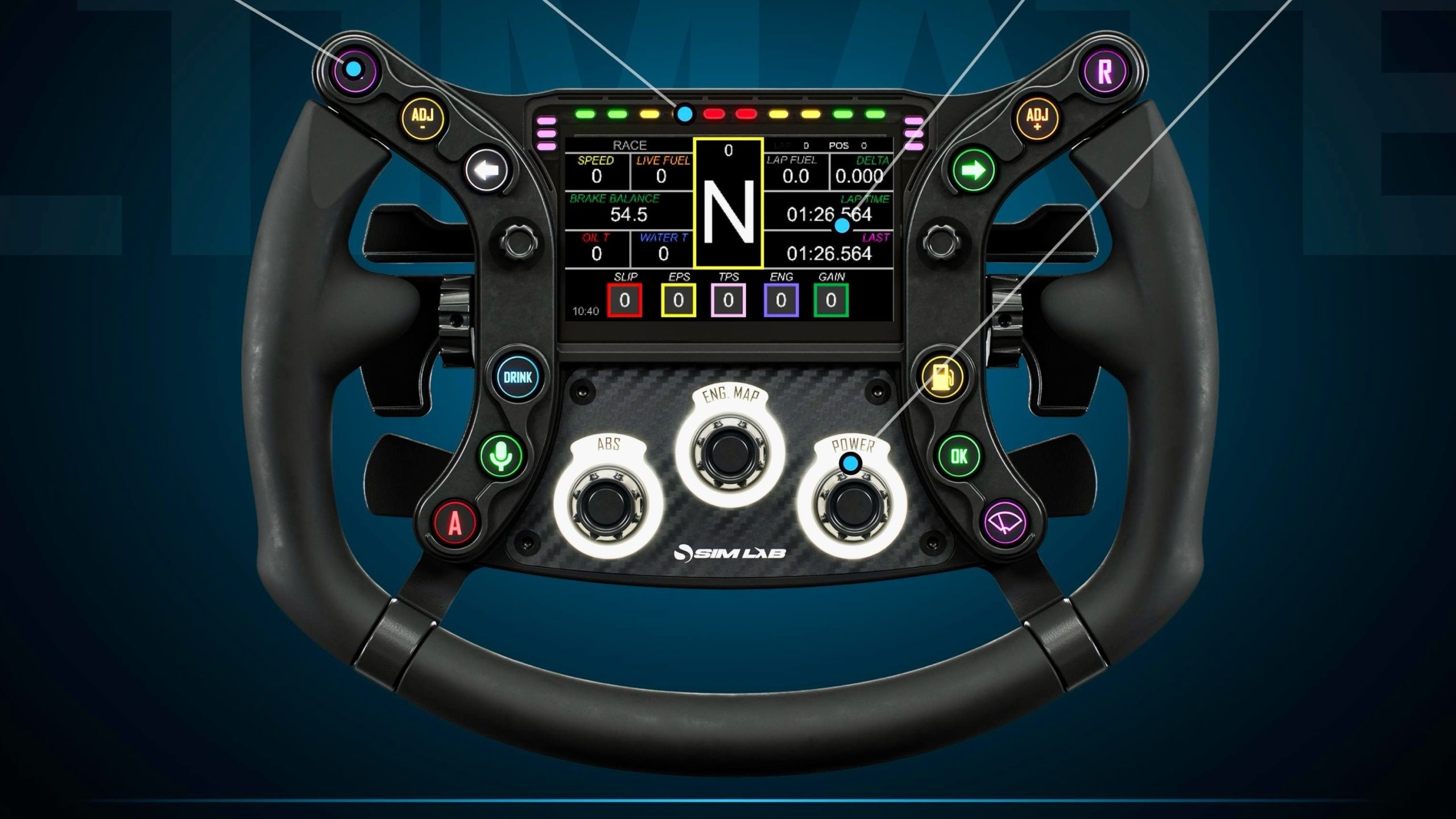
Sim-Lab unveils GTSL Ultimate steering wheel at Sim Racing Expo Frankfurt
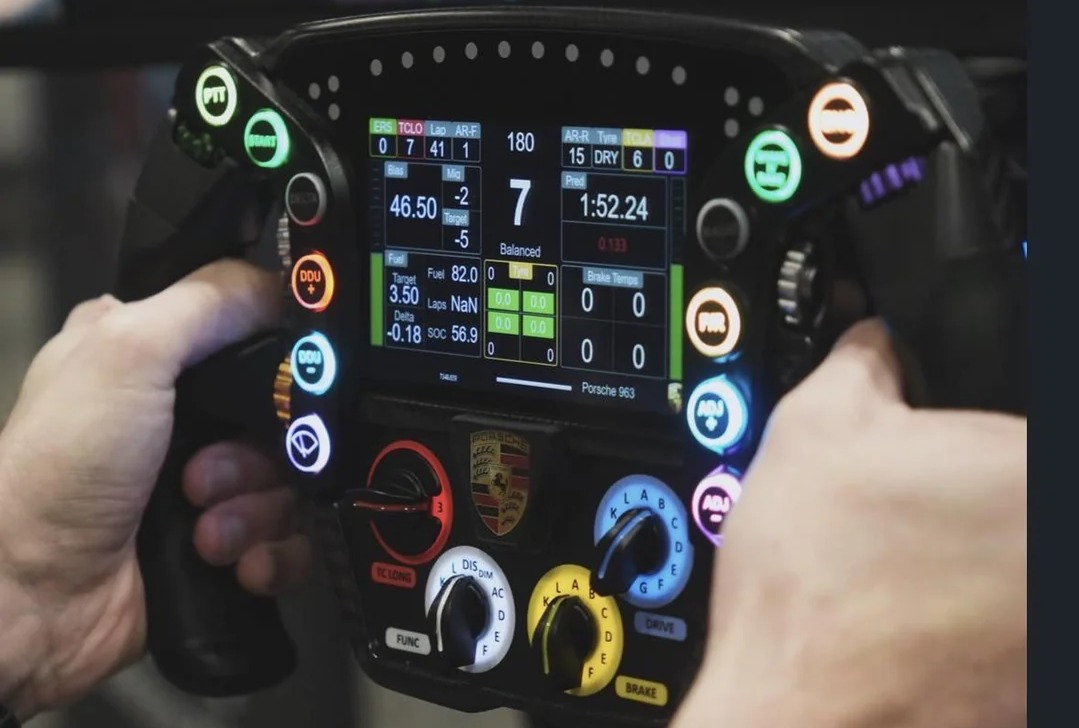
Sim-Lab will unveil the GTSL Ultimate, a new version of its GTSL steering wheel platform, at Sim Racing Expo Frankfurt this weekend.

The Trak Racer TRX V2 is one of those cockpits that gets your attention immediately. Before you even start talking about rigidity, value, or adjustability, the first thing you notice is that it looks different. In a market filled with very functional but often very plain aluminum profile rigs, the TRX V2 feels like something that was clearly designed to stand out.
And that is really the best place to start, because this cockpit is not trying to be the most basic or most utilitarian option you can buy. It is trying to offer something more premium, more visually interesting, and more versatile in terms of seating position than the usual square-profile alternative. So if you want the quicker version of what this rig is all about, here is everything you need to know about the Trak Racer TRX V2.
Verified purchase options at lowest current prices:
Affiliate disclosure
Racing TRX V2 Black
A striking tubular flagship with excellent tool-free adjustment, held back by a frustrating build and a little pedal-tray and seat flex – and a total that climbs well past the frame price.
Best for Drivers who switch between Formula and GT positions, and sha
Price tracked since 21 Dec 2025 — 82 readings.
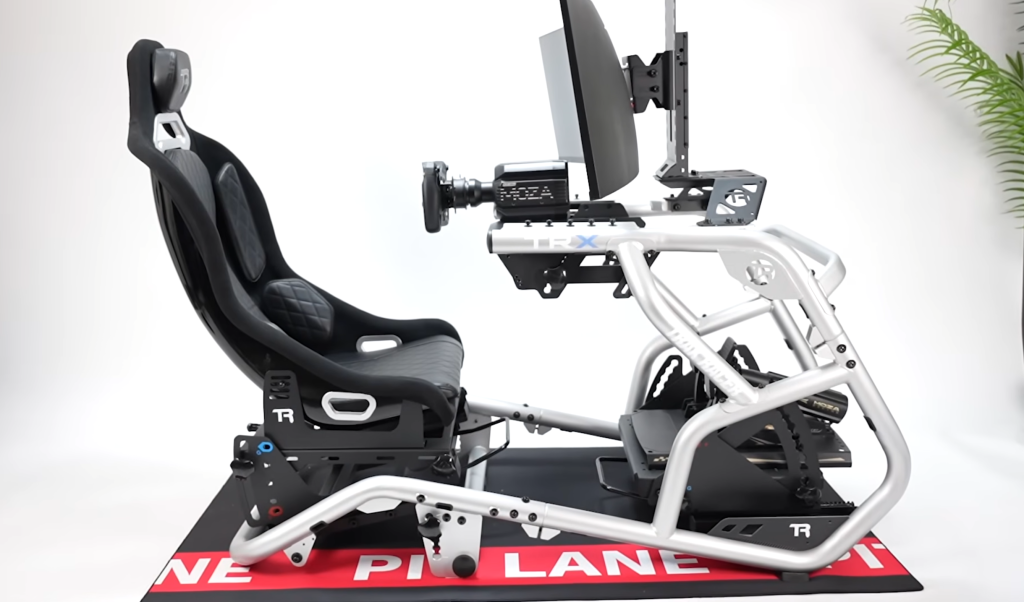
The main idea behind the TRX V2 is actually pretty simple. It is Trak Racer’s flagship tubular frame cockpit, and its biggest selling point is the ability to move between a Formula-style seating position and a more traditional GT or road car layout in just a matter of minutes. More importantly, those changes can be made without tools, which is a huge part of what makes this rig stand out.
That matters because not everyone wants one fixed driving position forever. Some people drive a wide mix of cars. Some people share their rig with others. Some people use their cockpit for events, showrooms, or content where multiple drivers of different heights need to jump in and out quickly. In those situations, fast adjustability becomes a real selling point rather than just a cool extra feature.
That is also why the TRX V2 feels so different from a typical aluminum profile setup. It is not only trying to be strong. It is trying to be flexible, attractive, and more experience-focused overall. That gives it a very clear identity, which I think is important in a part of the market where many rigs can start to feel interchangeable.
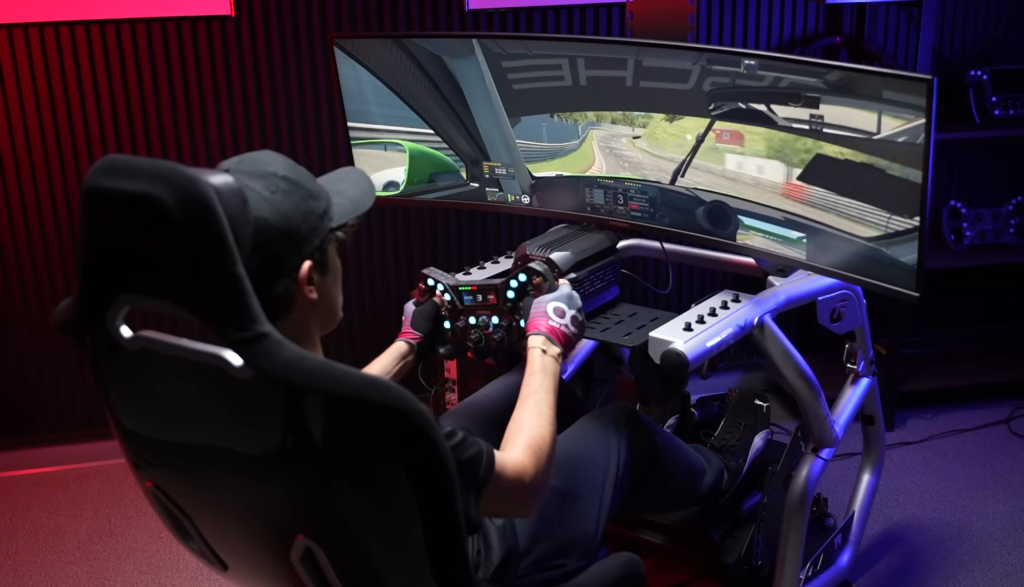
Visually, the TRX V2 is one of the best-looking cockpits I have tested. Especially in the Silver Arrow colorway, it has real presence. The curved tubular frame, the cut-out branding, the small design details around the chassis, and the general shape all help it feel more premium and more distinctive than a lot of other rigs out there. If looks matter to you, this cockpit absolutely has appeal.
Unfortunately, actually putting it together is not nearly as enjoyable as looking at the finished result. And honestly, this is one of the first things potential buyers should know. The TRX V2 is not especially fun to assemble. Because of the tight tolerances and the number of curved tubular sections that all need to line up properly, the build process can become frustrating very quickly.
The biggest thing with this cockpit is that you really need to leave almost everything loose until the very end. Tighten one section too early, and another part can shift slightly out of position, which then makes the next step much harder than it should be. That is just the nature of the design. It is definitely satisfying once everything is finally aligned and bolted down, but the journey to get there is not exactly smooth.
So if you hate fiddly assembly, take that seriously. The finished product may absolutely be worth the effort, but the process itself is one of the weaker parts of the whole experience.
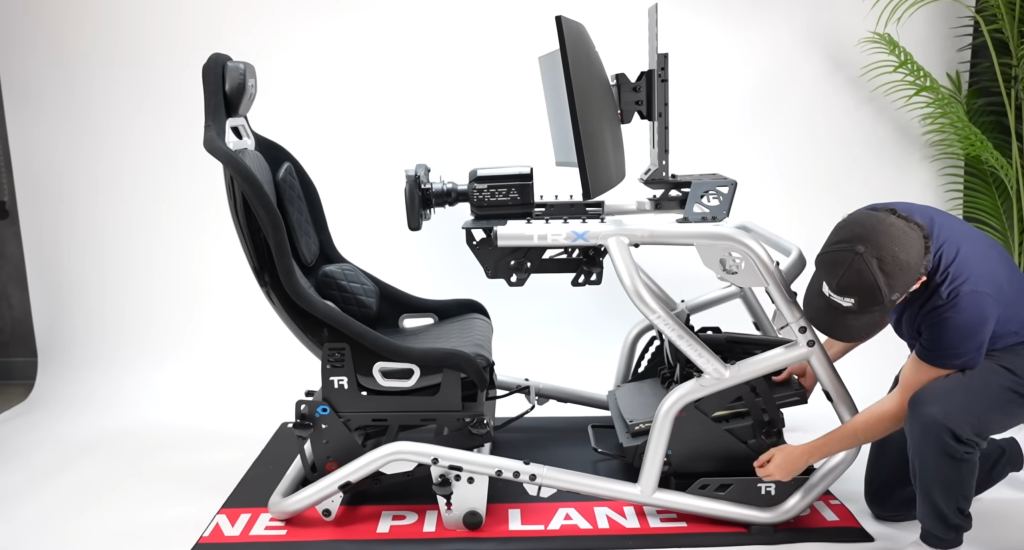
Once the cockpit is built though, the TRX V2 starts to make a lot more sense. The strongest part of the whole rig is just how adjustable it is. The wheelbase mount, pedal tray, and seat all sit on sliders, which means you can make meaningful changes very quickly and without needing tools. That is not only convenient, it is genuinely useful.
The range of motion is also very good. You can go low and stretched out for a Formula-style setup, or move things into a much more familiar GT or road car position. And importantly, these are not only technical possibilities on a spec sheet. The rig is actually practical enough that you can make those changes without turning every adjustment into a major project.
This is one of the reasons the TRX V2 works so well for shared rigs, events, and showrooms. If different people are going to be using it regularly, the ability to change positions quickly becomes a huge plus. It also helps if you are someone who enjoys switching between driving styles instead of locking yourself into one static setup forever.
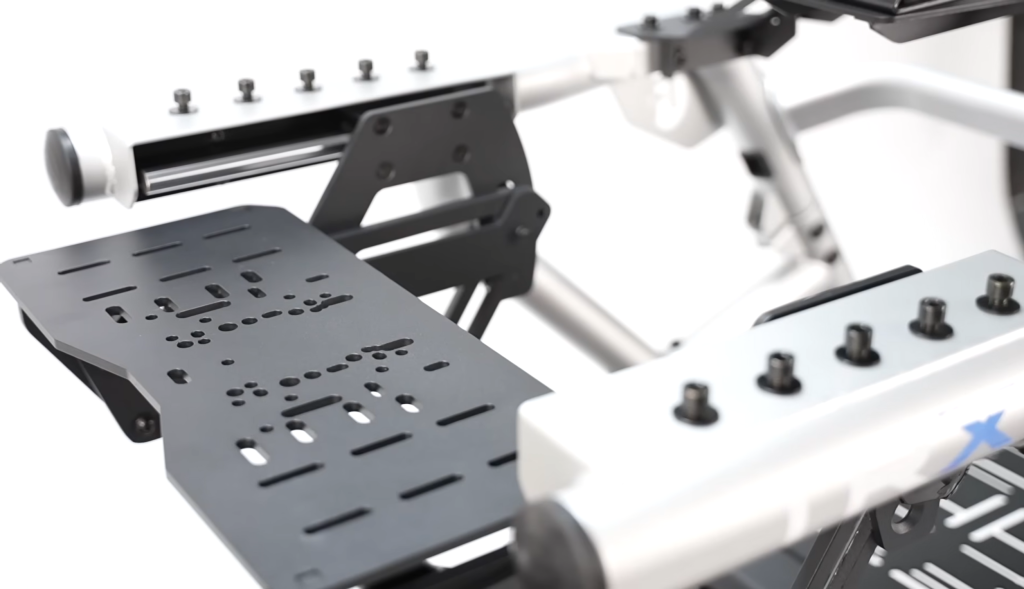
Now, while the TRX V2 is more flexible than it looks in terms of core seating position, it is still not as easy to accessorize as a traditional aluminum profile cockpit. That is just reality. If your ideal rig setup includes cup holders, phone mounts, button boxes, wind simulator hardware, and every other little extra you can think of, then a profile rig is still going to be easier to work with.
You can still add those things to the TRX V2, of course, but it will usually involve more thought, more compromise, and often a bit more DIY than it would on a square-profile chassis. So while the TRX V2 wins on visual appeal and fast core adjustability, it does not win on pure customization freedom. That is an important tradeoff to understand before buying one.
If you care most about having a clean blank platform that can be endlessly modified, aluminum profile still makes more sense. If you care more about appearance, fast position changes, and a more premium visual identity, then the TRX V2 becomes much more appealing.
In terms of actual sim racing hardware compatibility, the TRX V2 generally does a good job. Various wheel mounting options are available, and the universal bottom mount works well. The pedal tray is also broad enough to support different hardware combinations without much trouble. So from a practical mounting standpoint, I did not run into any major issues.
What is worth knowing, though, is that the price of the full setup rises very quickly. Around the thousand-dollar mark, what you are really getting is mainly the frame itself. Once you start adding the seat, seat brackets, integrated monitor stand, and other extras, the total climbs much faster than some buyers may expect. So while the TRX V2 looks like one complete premium cockpit in photos, the real total for a similarly built setup can end up significantly higher than the base frame price suggests.
A$1,399.00 ~$976.40 at Trak Racer AU Unchanged over 90 days
82 readings so far — not daily. · Sale prices predate daily tracking.
That does not automatically make it poor value, but it does mean you should look at it as a premium cockpit purchase rather than only a thousand-dollar chassis. By the time everything is properly built out, it firmly sits in a much more expensive part of the market.
At $976.40 this is its usual price.
The lowest we have recorded is $921.69 on 22 Jul 2026.
Once everything is assembled and dialed in, the TRX V2 does feel very good on track. The overall experience is premium, the rig feels solid, and vibrations stay fairly limited throughout the chassis. It does not feel cheap, hollow, or rattly, and the wheel deck in particular impressed me. Even with a powerful wheelbase mounted to it, I found no real unwanted flex there, which is exactly what you want from a rig at this level.
But this is also where the biggest compromise shows up. While the cockpit felt very good overall, I did notice some visible flex in the pedal tray and some movement in the seat under harder braking. To be clear, neither of these issues ruined the driving experience, and much of it was harder to notice while actually driving than it was on camera. Still, it is there, and it seems to be the natural result of how many adjustable pieces and connection points are involved in the design.
That is really the main tradeoff with the TRX V2. In exchange for looks, fast adjustability, and a more complex multi-position design, you do give up a little of the totally static feel that a more straightforward aluminum profile rig can offer. So if your one and only priority is maximum rigidity above everything else, a traditional profile rig still makes more sense.
| Shop | Price | |
|---|---|---|
| Trak Racer | A$1,399.00≈ $976.40 | Buy |
The Trak Racer TRX V2 is not the most practical cockpit on the market, and it is not the most purely rigid or most endlessly customizable either. But that is also not really the point. This cockpit is designed to offer more than just a basic structure to bolt hardware onto. It is meant to look more premium, feel more special, and provide a level of quick adjustment that many other rigs simply do not match.
That is why it makes sense for the right buyer. If you want the most rigid, most functional, and most easily expandable option possible, then a traditional aluminum profile rig still remains the smarter route. But if you want a cockpit that looks fantastic, offers a huge amount of fast adjustment, and feels more premium and distinctive than most of the competition, then the TRX V2 becomes a very compelling option.
It is not perfect, and the final price can become substantial once everything is added. But it is also one of the most interesting and best-looking cockpits I have tested, and for the right person, that absolutely counts for something.


Design & development by CIDIX
· Sim rig builder, deals pipeline, simracing tools, comparisons, adspace & forum · Custom code licensed to OC Racing