Assetto Corsa EVO Major 0.9 GT Tyre Model Update Explained
Assetto Corsa EVO Update 0.9 introduced a major overhaul to the game's GT tyre model, changing how cars behave around the limit across a wide range of GT machinery.

Assetto Corsa EVO Update 0.9 introduced a major overhaul to the game’s GT tyre model, changing how cars behave around the limit across a wide range of GT machinery.
The update focused on several fundamental areas of tyre behaviour, including yaw moments, steering response, grip loss, force feedback, camber and the way lateral and longitudinal grip interact.
The changes apply to GT slick tyres used by cars ranging from the Mazda MX-5 Cup to the Ferrari F40 LM, including GT2, GT3, GT4 and Cup cars. F1 cars and road tyres are not affected.
The developers explained that many of the issues addressed in Update 0.9 could be traced back to previous tyre models, including Assetto Corsa Competizione and, in some cases, the original Assetto Corsa.
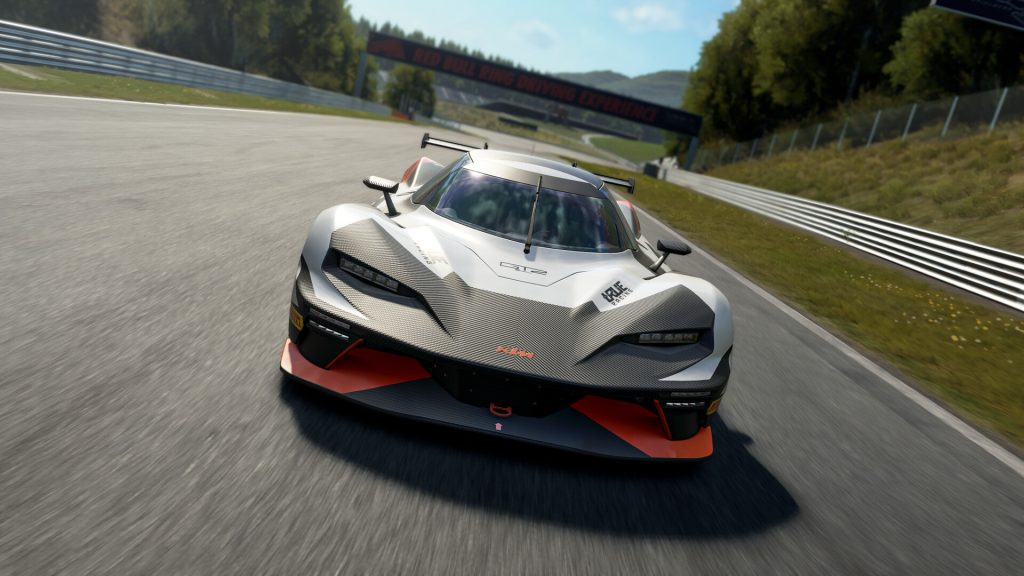
One of the most important areas addressed in Update 0.9 is the yaw moment created by the rear differential when accelerating through a corner.
On race cars with a limited-slip differential, torque is distributed between the rear wheels under power. Because the inside and outside tyres can have significantly different loads, the difference in forces between the two tyres can influence how the car rotates.
The development team reviewed a wide range of factors affecting this behaviour, including tyre load, slip, camber, speed, temperature, pressure and toe.
The effect is particularly noticeable in slower corners, especially in first through third gear. At higher speeds, aerodynamic downforce increases the grip available to the inside rear tyre, reducing the influence of this behaviour.
The previous tyre model relied on relatively high slip angles to generate peak grip. This could make the cars feel slow to respond to steering inputs, as drivers needed to turn the wheel further before reaching the tyre’s maximum grip.
The rear of the car could also begin moving laterally before the tyres reached their peak grip, resulting in a more floaty and sensitive feeling around the limit.
Update 0.9 reduced the slip angle required to reach peak grip. This gives the tyres a sharper response and makes the cars react more directly to steering inputs.
The update also addressed how GT tyres lose grip when pushed beyond their limits.
The previous calibration could allow the tyres to continue generating additional grip as they were pushed further beyond the ideal slip range. This reduced the consequences of excessive steering and made traction control less important in some situations.
Update 0.9 introduced additional controls and changes to the slip and grip curves to produce more defined grip loss.
The developers noted that this area is still being worked on, but the revised behaviour makes driving without traction control more demanding, particularly during a race where maintaining tyre grip over longer periods becomes more important.
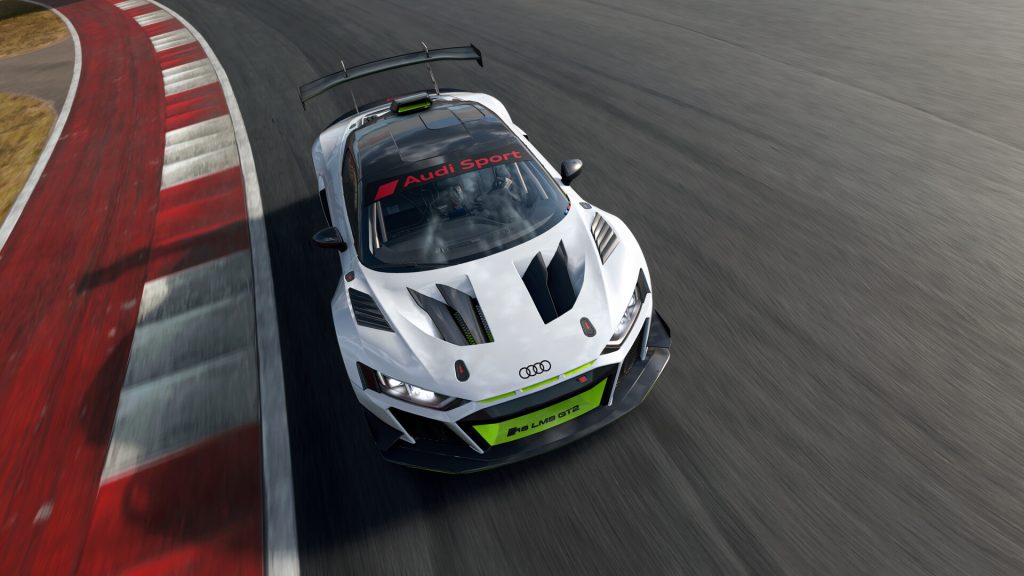
The force feedback changes in Update 0.9 are largely a consequence of the revised tyre behaviour.
A small adjustment was also made to the scaling of self-aligning torque. This makes oversteer more noticeable through the steering wheel and generally produces higher force feedback forces.
Camber behaviour was another major area of development.
The update fixed a bug that could cause the inside cambered tyre to produce excessive longitudinal friction. More importantly, the tyre model now handles the effects of camber on longitudinal and lateral grip separately.
This means increased negative camber can improve cornering performance and tyre response while also reducing available traction and braking performance.
As a result, setup choices now involve more of a compromise. The developers highlighted this as a change from Assetto Corsa Competizione, where maximum negative camber could often be used without comparable trade-offs.
Update 0.9 also made extensive changes to how tyres combine lateral and longitudinal grip.
The tyre’s available grip is constantly divided between different demands. For example, a tyre already being pushed heavily through a corner has less capacity available for acceleration or braking.
The updated model changes how different factors influence this balance. Load, temperature, speed and camber can all affect both the amount of grip available and the slip angle at which peak grip occurs.
Previously, some effects could push the peak grip point further and further away, creating a situation where adding more slip could appear to produce more grip.
The developers removed this behaviour and adjusted the underlying curves.
This allowed the team to increase the amount of combined grip available without losing the desired car rotation. Drivers therefore have a wider window in which they can combine throttle application with cornering before the tyre gives up.
The result is intended to make corner exits less sensitive while giving drivers more room to work with when approaching the limit.
The update also introduced new logic for how the tyre’s contact patch behaves under different conditions.
The distribution of load across the contact patch can influence where peak grip occurs. This means the effectiveness of a particular camber setting can change depending on how heavily the tyre is loaded.
For example, high camber can make a tyre more responsive, but under low-load conditions the contact patch may not be used effectively enough to provide the expected increase in lateral grip.
As the load increases and the tyre deforms, more of the contact patch becomes available, potentially making the same camber setting more effective.
This could result in situations where maximum camber is not automatically the most suitable setup choice, depending on the characteristics of the track and car.
The tyre model changes in Update 0.9 represent a significant revision of the underlying physics, but development is continuing.
Future work includes further investigation into tyre pressures, temperature behaviour, tyre wear and damage effects such as graining, blistering and flat spots.
The developers are also working beyond the tyre model. Improved differential modelling and other drivetrain components are being investigated, while aerodynamic behaviour and slipstreaming are also areas planned for further development.
Some vehicles also require individual solutions for their specific engineering systems, such as torque vectoring and magnetic dampers.
Update 0.9 made substantial changes to the way Assetto Corsa EVO’s GT cars generate and lose grip. The revised model affects everything from steering response and power application to camber setup and the balance between braking, acceleration and cornering grip.
For players, the changes also mean existing setups may no longer behave as they did before the update, making it worthwhile to revisit setup work for the affected GT cars.
With tyre pressures, temperatures, wear and damage still receiving further attention, the tyre model remains an active area of development in Assetto Corsa EVO.