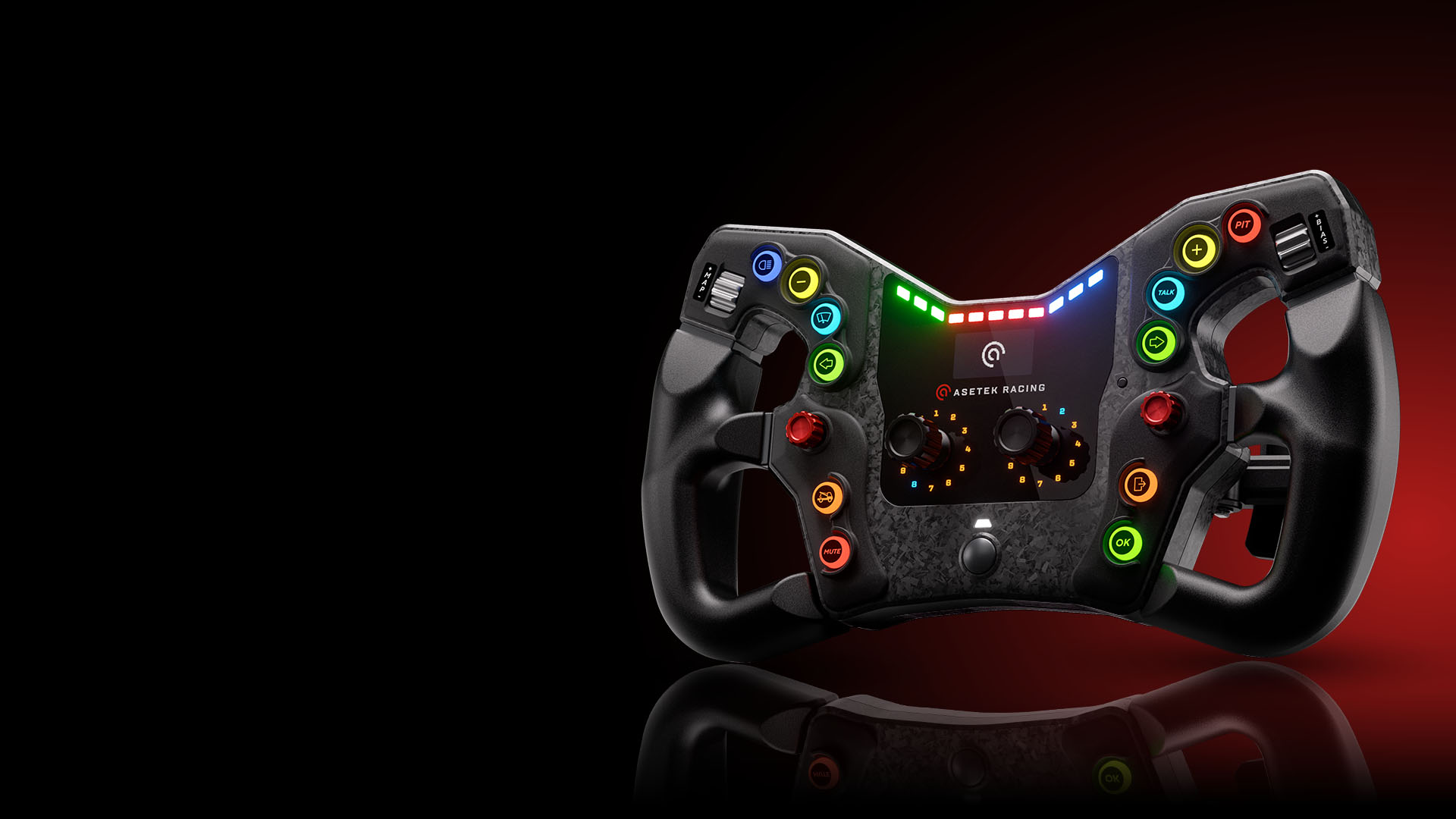
Asetek GT Nova Revealed at $299 With RaceHub Link
Asetek has revealed the GT Nova, a new 290mm GT steering wheel with an OLED display, RaceHub controls, MultiLink functionality, RGB lighting, and a $299.99 price.

Reviewed by OC Racing
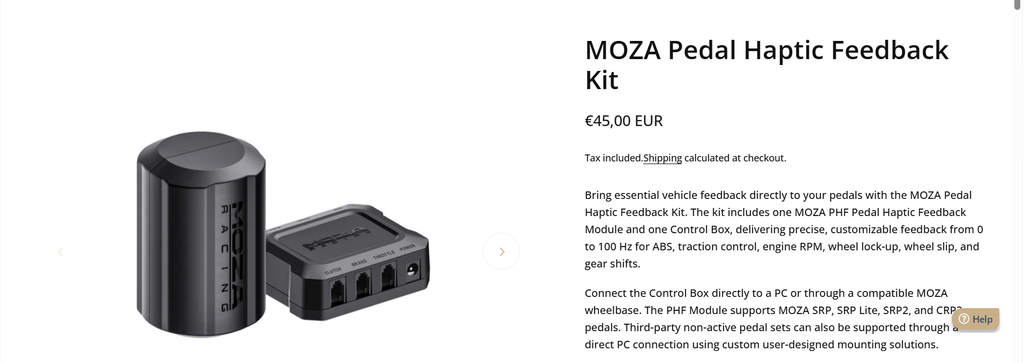
The Moza PHF Pedal Haptic system is one of the cheapest ways to add telemetry-based feedback directly to your sim racing pedals. The system is small, lightweight, easy to configure, and can be fitted to several Moza pedal sets or adapted to work with third-party hardware.
There are some compromises, though. The PHF relies on relatively simple vibration-based feedback rather than the sharper movement of a linear haptic actuator, so the experience is more focused on adding sensation and immersion than delivering extremely precise information.
After using the PHF system daily for several weeks, there is quite a bit worth knowing before deciding whether it makes sense for your setup.
MOZA Pedal Haptic Feedback Kit
A simple and accessible introduction to pedal haptics: surprisingly strong vibration for the size and easy to configure in Pit House, but the feedback is buzzy and vibration-based rather than the sharper movement of a li
Best for Someone with passive pedals who wants an inexpensive way to
Price tracked since 26 Aug 2026 — 61 readings.
Editorial policy and disclosure
Get 3% off on anything Moza including the PHF using code: “OCRACING” at checkout
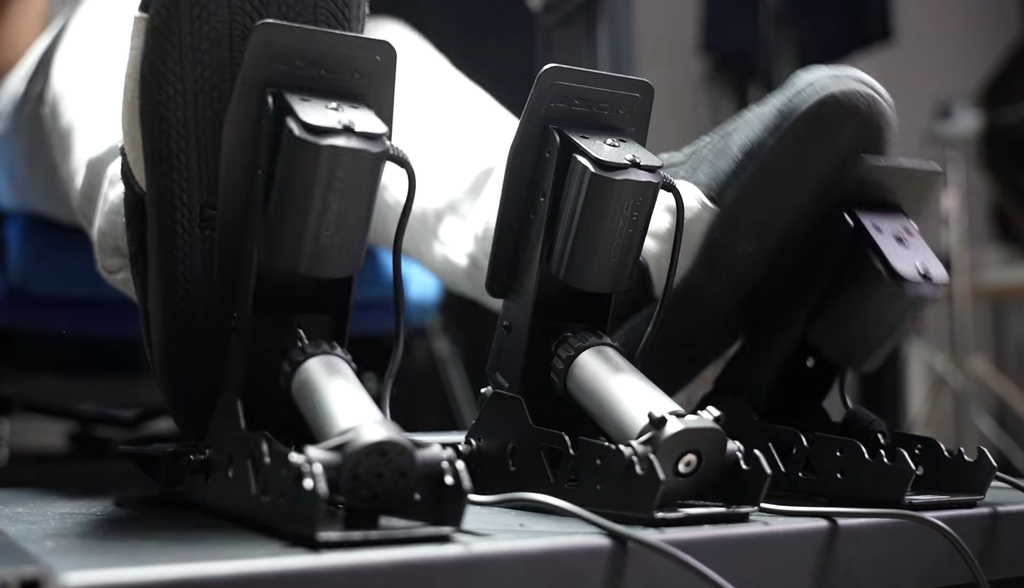
The PHF is a compact haptic motor designed to mount directly onto a sim racing pedal. Telemetry from the simulator can then trigger different vibration effects through the pedal, giving your feet another way of feeling what the car is doing.
This can include ABS activation through the brake, wheel spin through the throttle, or more immersion-focused effects such as engine vibration and road texture. Multiple PHF modules can be installed if you want separate feedback through your brake, throttle, and clutch.
The system operates across a 0 to 100 Hz haptic range. Different frequencies and intensities can be assigned to different effects, allowing the same relatively simple motor to communicate several types of information.
Price is easily one of the PHF system’s biggest strengths. The main Pedal Haptic Kit costs around $45 and includes one PHF haptic module, the control box, and the cables required to connect the system.
Additional haptic modules cost around $20 each. This means you can start with a single motor on the brake pedal and add another to the throttle or clutch later rather than buying a complete three-pedal system immediately.
All of the motors connect back to the same control box. Each module also includes its own mounting bracket and the hardware needed for compatible non-active Moza pedals.
That modular approach makes a lot of sense at this price. You can spend $45, see whether pedal haptics actually add anything to your experience, and expand from there if you enjoy them.
| Model | Price | Difference | |
|---|---|---|---|
| MOZA Pedal Haptic Feedback KitMain kit: one PHF haptic module, the control box and the cables | $39at MOZA Racing US | +$20 | BuyBuild |
| MOZA PHF Pedal Haptic Feedback ModuleAdditional module: connects back to the same control box, includes its own mounting bracket | $19at MOZA Racing US | cheapest | BuyBuild |
Installation on compatible Moza passive pedals is straightforward. The included mounting hardware allows the haptic modules to attach directly to the pedal structure without requiring a complicated installation.
Third-party pedals can also potentially be used. You will need to purchase or make an appropriate mounting adapter, but the haptic system itself is not completely restricted to Moza pedal sets.
The main inconvenience comes from cabling. Once you start adding several motors, there are naturally more wires running around the pedal area. A few inexpensive adhesive cable clips included in the package would have made keeping everything tidy considerably easier.
The low price is reflected in the construction. Both the PHF motors and control box use a lot of plastic, and neither gives off the premium feeling you would get from more expensive haptic hardware.
That does not necessarily make the construction bad. The modules are small and lightweight, and after several weeks of daily use, I had no reliability issues with the system.
Once installed, they also integrate quite neatly with compatible pedals. This is hardware designed primarily to perform a simple job without dramatically increasing the cost or weight of the pedal set.
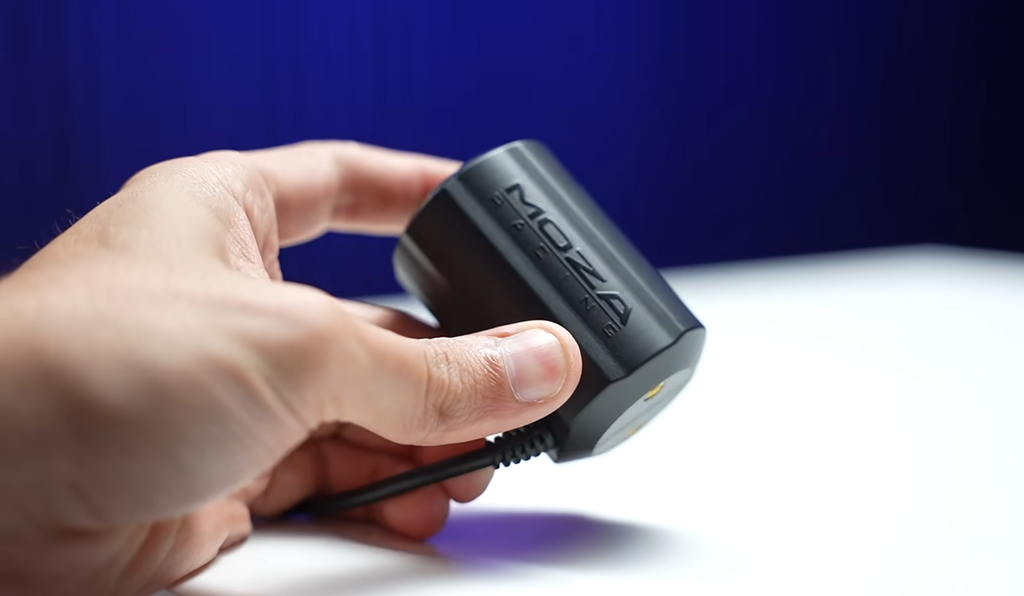
This is probably the most important thing to understand about the PHF. The system produces its feedback through vibration rather than the sharper physical movement associated with a more sophisticated linear actuator.
Strength is actually quite impressive considering the size. Turning the intensity up produces plenty of vibration, and I had no difficulty feeling stronger effects even while wearing shoes.
The bigger limitation is definition. The feedback has a fairly buzzy character, and although different frequencies can make individual effects feel noticeably different, they still share the same basic vibration-based sensation.
That becomes especially noticeable when too many effects are enabled simultaneously. ABS, road texture, engine vibration, wheel spin, and other signals can begin blending together, making it harder to identify exactly what the pedal is trying to communicate.
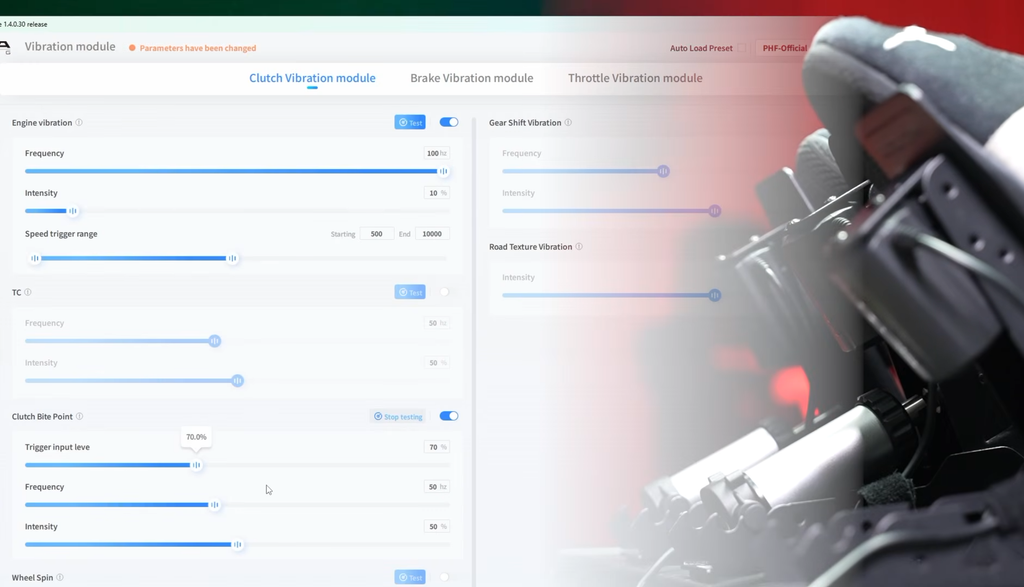
Moza Pit House allows individual effects to be configured with different frequencies and intensity levels. During my testing, available effects included ABS, wheel lock, wheel spin, road texture, engine vibration, and gear shifts.
ABS is probably the most useful implementation. Having the brake pedal vibrate as ABS activates makes immediate sense, and wheel lock can provide a similarly useful indication during braking.
Wheel spin can be assigned to the throttle, providing another cue for rear tire behavior. I personally found this less convincing than ABS, but the sensation is still easy enough to feel.
Gear shifts are surprisingly enjoyable. They produce short individual hits through the pedals each time you change gear, while road texture and engine vibration provide more continuous sensations.
The clutch can also receive immersion-focused effects, including vibration around the bite point. I did not find that particularly realistic, but it can give an otherwise completely passive clutch pedal some additional feeling.
Configuration through Moza Pit House is one of the stronger parts of the system. Effects can be adjusted independently, allowing something like ABS to use a lower-frequency, heavier pulse while road texture can use a faster and lighter vibration.
It makes experimentation very easy. You can quickly change effect strength and frequency until the pedals feel appropriate for the car and simulator you are using.
At the time of my testing, however, there was no integrated SimHub support. More advanced users who already build detailed SimHub profiles will therefore have less freedom than they would with some competing haptic systems.
For someone who simply wants to configure a handful of effects and start driving, Pit House does the job perfectly well.
I would primarily consider the PHF an immersion upgrade. Effects such as road texture, engine vibration, gear changes, and ABS can make completely passive pedals feel considerably more alive.
I also noticed no meaningful latency between what happened in the simulator and what I felt through my feet. The feedback responded quickly enough that timing was never an issue during normal driving.
What I did not notice was a significant competitive advantage. ABS and wheel lock can provide genuinely useful information, but the feedback does not have the definition of a more expensive linear haptic system.
For around $20 per additional motor, though, that is difficult to complain about. The PHF gives you a taste of pedal haptics without requiring a major investment.
Noise is worth considering. At maximum intensity, the PHF modules can become surprisingly loud, especially when using stronger or more continuous effects.
Lowering the intensity makes a significant difference. With headphones on, the sound did not bother me much, and it was not something I found particularly noticeable from another room.
Someone sitting directly beside your simulator may have a different opinion. If noise is important in your setup, you will probably want to spend some time balancing strength against volume.
The Moza PHF makes the most sense for someone with passive pedals who wants an inexpensive way to add more sensation to their setup. It is especially appealing if ABS feedback is your main priority.
I would personally start with one PHF on the brake pedal. That gives you the most useful effects while keeping the initial cost at around $40, and you can decide afterward whether adding throttle or clutch feedback is worthwhile.
| Shop | Price | |
|---|---|---|
| MOZA Racing | $39.00 | Buy |
$39.00 at MOZA Racing US Up 105.3% in 90 days
The highest price we have recorded in the last 12 months.
If you want extremely sharp, detailed haptic feedback, a more capable linear system will perform better. Active pedals can go considerably further again by physically changing pedal resistance and movement, but those solutions also sit in a completely different price category.
For the money, the PHF is a simple and accessible introduction to pedal haptics. It has limitations, but if your goal is to bring otherwise static pedals to life without spending hundreds of dollars, it makes a surprisingly strong case for itself.


Design & development by CIDIX
· Sim rig builder, deals pipeline, simracing tools, comparisons, adspace & forum · Custom code licensed to OC Racing