MOZA supplied this sample at no cost, MOZA is a paying sponsor of the site. They had no input on this article and did not see it before publication.
Before getting into the product itself, a necessary disclosure. Moza provided the PHF Pedal Haptic system at no cost for review and is also a paid sponsor of OC Racing. Moza had no input on this article and did not see it before publication. As always, all thoughts and opinions here are entirely my own.
The Moza PHF Pedal Haptic system is extremely affordable, widely compatible, small, lightweight, and very easy to configure. After using it daily for several weeks, though, I also think expectations need to be kept realistic.
These are ultimately inexpensive vibration motors attached to your pedals. They can add a surprising amount of feeling to an otherwise lifeless pedal set, but the feedback is noticeably less defined than more expensive linear haptic systems.
MOZA Pedal Haptic Feedback Kit
Cheap, widely compatible and very easy to configure pedal haptics that make passive pedals feel much more alive, but the vibration-based feedback is noticeably less defined than a more expensive linear haptic system and
Best for Anyone who wants an inexpensive way to make passive pedals f
SETUP: MOZA SR-P Lite pedalsDURATION: Several weeks of daily useEFFECTS TESTED: ABS, wheel spin, gear shifts, road textureTUNING: Frequencies and strengths adjusted independently in Moza Pit HouseCOMPARED AGAINST: Linear haptic actuatorsREVIEW UNIT: Supplied by Moza at no cost
Pricing Is the Biggest Selling Point
The main PHF kit costs around $40. That includes one PHF haptic module, the control box, and the cables required to connect everything either through a compatible Moza wheel base or directly to your PC.
The highest price we have recorded in the last 12 months.
Range
$19.00 – $39.00
Typical
$39.00
Readings
58
Retailers
5
Tracking since
26 Aug 2026
Last checked
22 Oct MOZA Racing US
Tracked daily across every shop we follow+Add to build
Additional PHF modules cost around $20 each, allowing you to add feedback to the throttle or clutch while using the same control box. Each module also comes with the necessary mounting hardware for Moza passive pedals.
That price immediately makes these interesting. Dedicated pedal haptics have historically been a relatively expensive upgrade, while something like the PHF lets you start with a single brake motor for very little money and add more later if you actually enjoy using it.
The low price is reflected in the construction. Both the vibration modules and control box are predominantly plastic, and neither feels particularly premium. They are lightweight pieces of hardware designed to perform a fairly simple job.
That has not caused any problems during my testing. After several weeks of daily use, I have had no reliability issues, and everything has continued working exactly as expected.
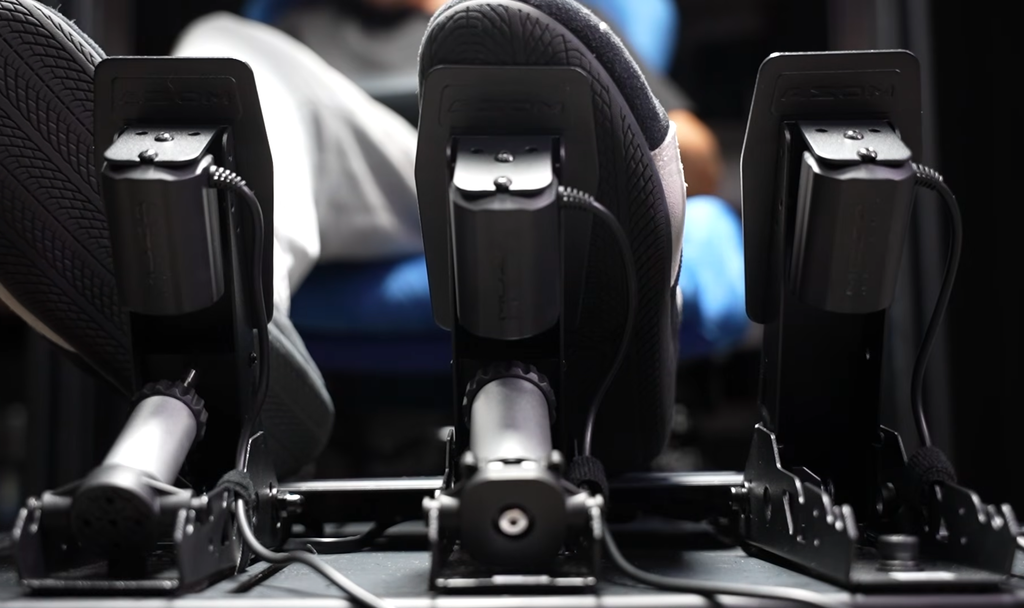
Installation on compatible Moza pedals is extremely straightforward. I tested the system on the SR-P Lite pedals, where the modules mount cleanly and integrate nicely with the existing pedal structure.
Third-party pedals can also be used, although you will need an appropriate adapter or custom mounting solution. This gives the PHF considerably more potential than something locked entirely to one pedal ecosystem.
I would like to see Moza include a few small adhesive cable clips in the package. There are several cables involved once multiple motors are installed, and some basic cable-management hardware would make an already simple installation considerably cleaner.
How the PHF Feedback Actually Feels
The PHF operates across a 0 to 100 Hz haptic range and produces its feedback through vibration. That is an important distinction because it directly affects how the system feels under your feet.
A more sophisticated linear haptic actuator can physically move back and forth to create sharper and more defined pulses. The PHF instead relies on different vibration frequencies, giving the feedback a softer and noticeably buzzier character.
Strength is surprisingly not the problem. These little motors can produce plenty of vibration, and at higher intensity settings I had absolutely no trouble feeling them through shoes.
The limitation is definition. Different effects can be distinguished through frequency tuning, but they still share the same basic vibration-based character. Once too many effects are running simultaneously, some of that information starts blending together.
The PHF operates across a 0 to 100 Hz haptic range and produces its feedback through vibration.
ABS Is Where the PHF Makes the Most Sense
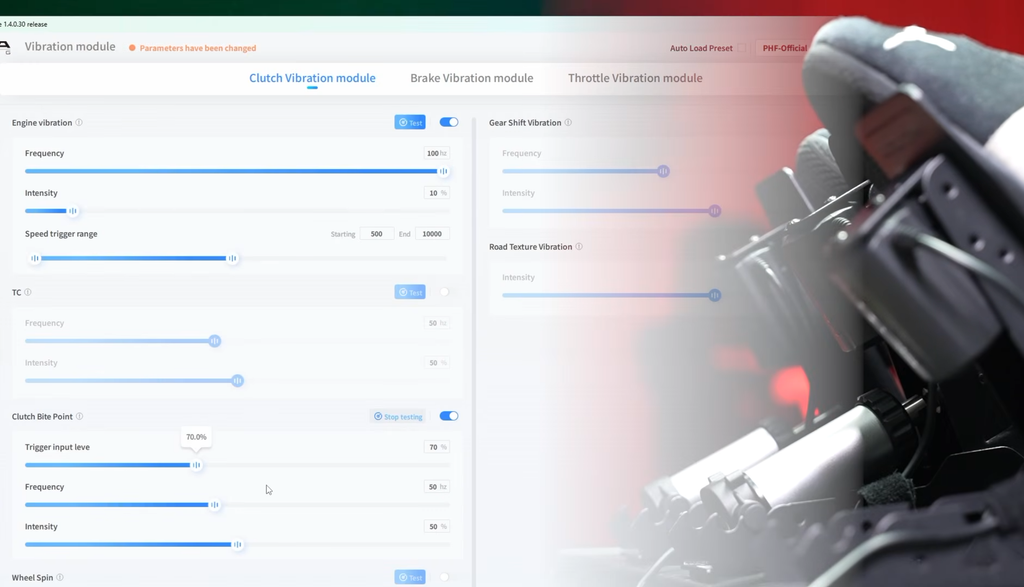
Moza Pit House allows the frequency and intensity of individual effects to be adjusted independently. Available feedback includes ABS, wheel lock, wheel spin, road texture, engine vibration, and gear changes, among others.
ABS was easily the most useful effect for me. Feeling the brake pedal vibrate as ABS activates is intuitive, immediate, and provides information exactly where you would expect to feel it. Wheel lock can also be useful for similar reasons.
Wheel spin through the throttle provides another physical cue for what the rear tires are doing, although I did not find the sensation particularly convincing. It works, but it never became something I relied on while driving.
Gear changes are surprisingly fun. Each shift produces a short vibration through your feet, while road texture and engine vibration provide more continuous feedback. I found a small amount of road texture particularly enjoyable because it made otherwise static pedals feel more connected to the car.
The clutch can also vibrate around the simulated bite point. I did not find this especially realistic, but it at least adds some sensation to a pedal that would otherwise provide very little information.
The takeaway: Start with one module on the brake pedal. ABS is easily the most useful effect here.
Software Is Easy, but Limited
Configuring everything through Moza Pit House is extremely easy. Frequencies and strengths can be adjusted independently, allowing a heavier low-frequency pulse for ABS and a lighter high-frequency vibration for road texture.
The downside is the current lack of integrated SimHub support. For someone who simply wants a few effects configured quickly, this probably will not matter at all.
More advanced users may find it limiting. SimHub provides much deeper control over telemetry effects, profiles, and filtering, while the PHF currently relies primarily on what Moza provides through Pit House.
Even with additional software control, though, there is still a physical limitation to what this type of haptic motor can reproduce. Frequency changes can alter the sensation, but they cannot suddenly give the PHF the sharp response of a more advanced linear system.
Configuring everything through Moza Pit House is extremely easy.
Immersion Over Performance
After spending a few weeks with the PHF, I think immersion is where these make the most sense. Road texture, engine vibration, gear changes, ABS, and other effects can genuinely make passive pedals feel much more alive.
I also noticed no meaningful latency between what was happening in the simulator and what I felt through my feet. The response itself feels immediate, which is particularly important for effects such as ABS and wheel lock.
What I did not experience was any noticeable competitive advantage. The feedback simply is not defined enough for me to say that it transformed my braking or throttle control.
Worth knowing: Do not expect a competitive advantage. The feedback simply is not defined enough for that; these are about immersion, not pace.
And considering the price, I do not really see that as a major criticism. You are paying around $20 per additional haptic motor, and the performance you get feels appropriate for that price.
Noise is something worth keeping in mind. At maximum intensity, the PHF modules can become surprisingly loud, particularly when stronger continuous effects are running.
Reducing the intensity makes a substantial difference. With headphones on, I stopped caring about the noise almost entirely, and it is not something I would expect to hear throughout the house.
If someone is sitting close to your simulator trying to work or study, though, they will probably notice it.
Final Thoughts
The Moza PHF Pedal Haptic system makes a lot of sense when judged according to its price. If you want an inexpensive way to make passive pedals feel more alive, Moza has done a pretty good job here.
I would personally start with one module on the brake pedal. ABS and wheel lock are the effects I found most useful, and spending $40 gives you a chance to see how much haptic feedback actually adds to your setup before buying additional motors.
If you want extremely sharp and defined feedback, I would save the money and look toward a proper linear haptic system. Active pedals will obviously take things considerably further as well, although they remain in an entirely different price category.
For the money, there is very little to complain about with the PHF. There is also no reason to pretend these are more sophisticated than they actually are.
They are cheap, simple, accessible pedal haptics that add some extra life to your simulator. For the right setup, that is probably all they need to be.
FINAL VERDICT
Recommendation: Recommended. Cheap, simple pedal haptics that add life to your simulator.
Ideal buyer: Anyone wanting cheap pedal haptics that just work
Major drawback: Definition is limited by the vibration design
Bottom Line: They are cheap, simple, accessible pedal haptics that add some extra life to your simulator.
Sim racing hardware reviewer and creator. Every review on this site is hands-on tested across direct-drive wheelbases, pedals, cockpits, motion systems and accessories before a word is published.
Sim-Lab brought one of the biggest booths to SimRacing Expo Frankfurt, with its DDS TorqueSync bases, new GTSL Ultimate, Porsche 963 and Cosworth wheels, DBX button box, MLD displays, and…
I tried the latest BDH Active Shifter, and the updated system feels far more convincing, with proper shift lockouts, custom gate layouts, and a much more solid mechanical feel.
I got an early hands-on test with the new Simucube ActivePedal Sport, and despite lower force and travel, it delivers much of the same experience as the Ultimate for considerably…
Simucube has unveiled the ActivePedal Sport, a more affordable version of its force-feedback pedal technology. The new model will make its public debut at SimRacing Expo Frankfurt from 16 to…
Simagic is finally preparing to reveal its long-awaited Active Pedal during its global product launch on October 14, nearly two years after the first prototype appeared.
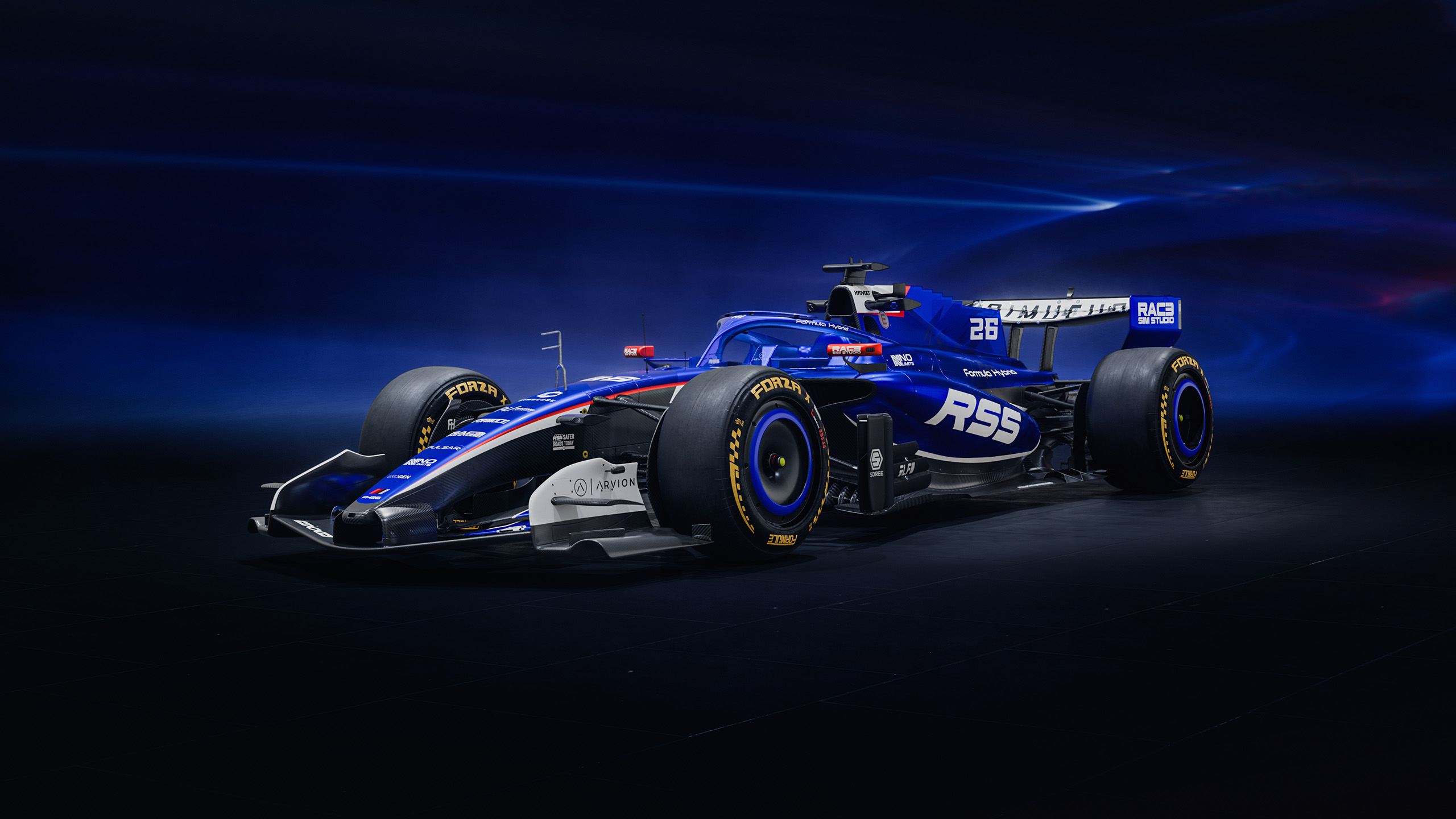
Race Sim Studio has released the Formula Hybrid 2026 for Assetto Corsa, bringing active aerodynamics, a new 350 kW hybrid system, adaptive ERS deployment, and an extensive suite of racing…



Moza PHF Pedal Haptics: Everything You Need to Know - OC Racing says:
[…] MOZA Official Website Trusted Moza Distributors Full Moza PHF Review […]