PXN VD4 vs VD6 vs VD10: Which PXN Direct Drive Wheelbase Should You Buy?
OC Racing
December 22nd, 2025
One of the most unexpected and genuinely impressive comebacks in the sim racing space this year has come from PXN. Not long ago, PXN was largely dismissed by many enthusiasts due to the shortcomings of its older gear. But instead of doubling down or ignoring criticism, the company did something far more interesting: it listened.
Out of seemingly nowhere, PXN launched an entirely new direct-drive ecosystem designed to compete head-to-head with established sim racing giants. With the VD4, VD6, and VD10, PXN isn’t just entering the most competitive segment of the market, it’s aggressively undercutting rivals like Moza Racing, Fanatec, and others on price, while still delivering a compelling hardware package.
That combination alone has sparked a lot of discussion, skepticism, and curiosity online: PXN VD4 vs VD6 vs VD10: Which PXN Direct Drive Wheelbase Should You Buy? So in this review, I’m breaking down all three PXN wheelbases, explaining how they differ, how they stack up against the competition, and ultimately which one makes the most sense depending on the type of sim racer you are.
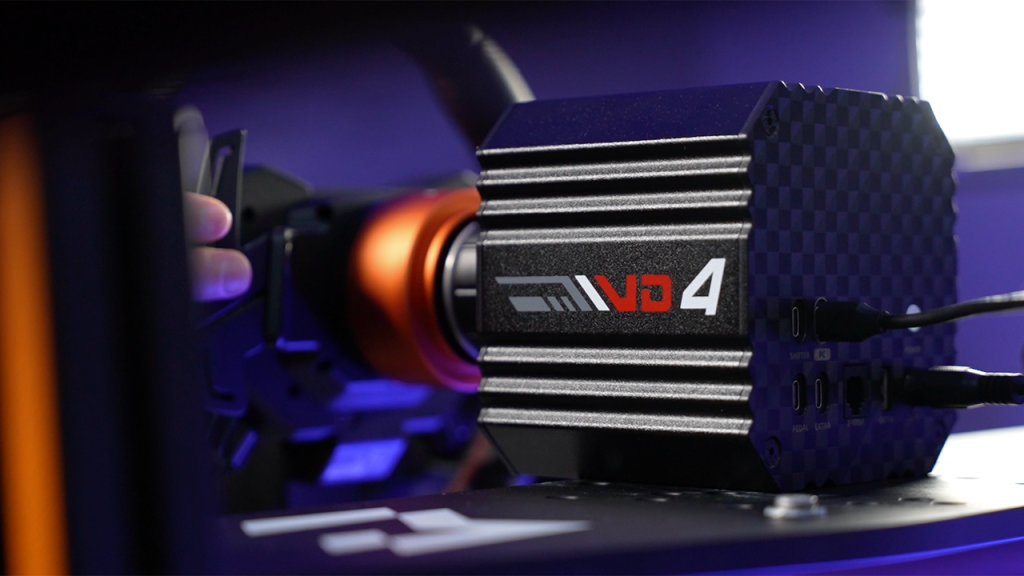
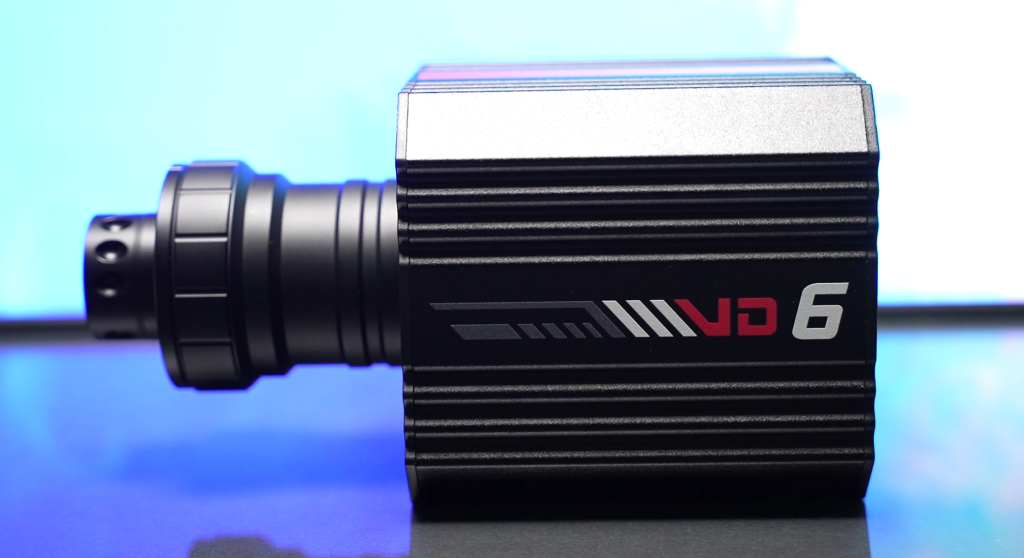
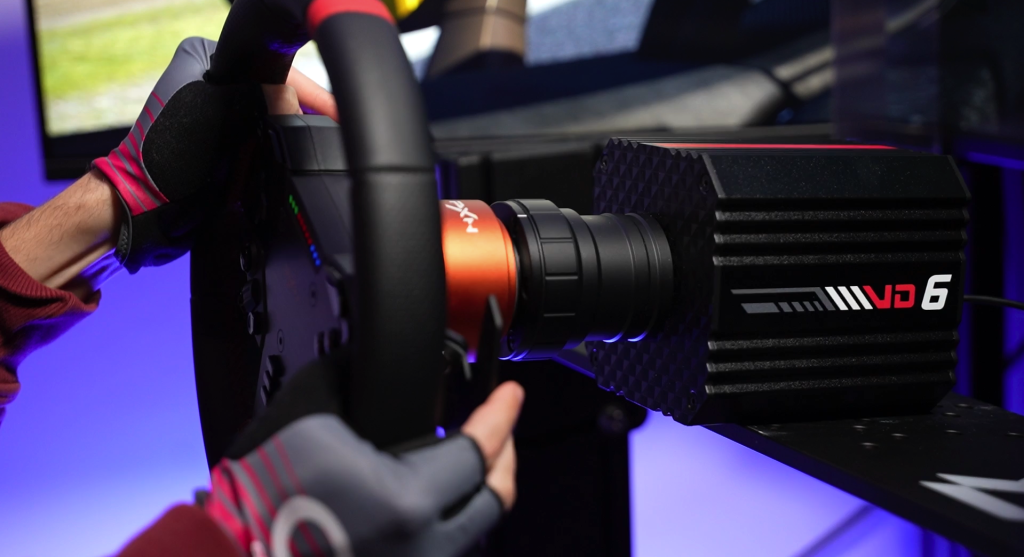
At a glance, the VD4, VD6, and VD10 look remarkably similar despite their differences in size and power. All three wheelbases use full metal housings and share the same angular, geometric front design. Internally, they all rely on direct-drive motors running at a 24-bit resolution, and each base uses an NRG-style quick-release system similar to what you’ll find from Moza or Simagic. In practice, that quick release works very well and allows compatibility with PXN’s own wheels, such as the WDSR2 and WCSR2.
The biggest differences begin to appear when you look at how PXN bundles each base.
The VD4 and VD6 are aimed at entry-level and mid-range users. Both bundles include a two-pedal metallic pedal set, a basic steering wheel, and a desk clamp, making them suitable for desktop setups straight out of the box. The VD10, on the other hand, is clearly targeted at more serious sim racers. It’s sold as a base-only package with your choice of higher-end steering wheels, assuming you already have pedals and a cockpit.
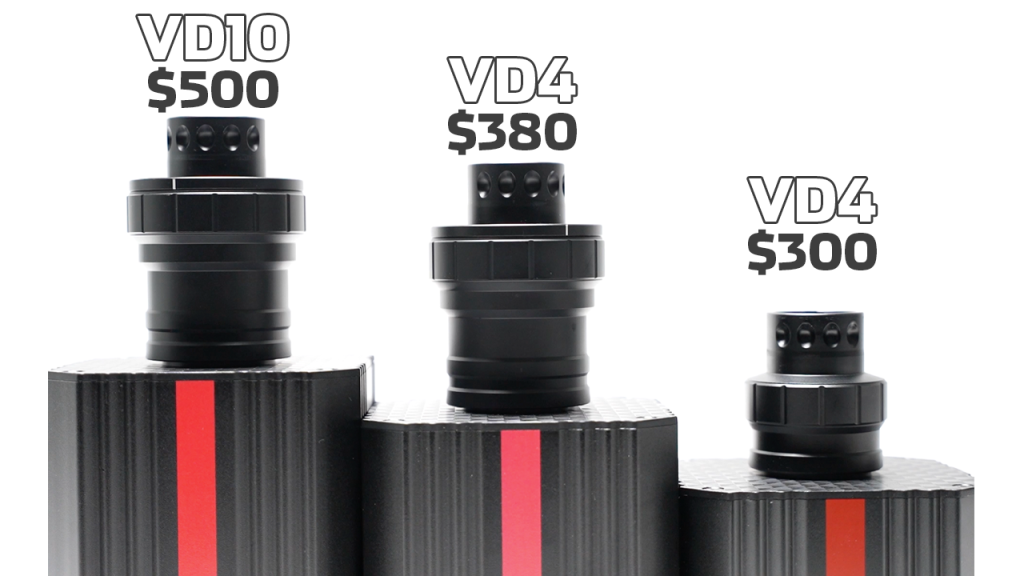
Pricing is one of the most aggressive aspects of PXN’s lineup. The VD4 bundle comes in at around $300, the VD6 at roughly $380, and the VD10 lands around $500 depending on the steering wheel you choose. Considering what’s included, all three are undeniably tempting on paper.
PXN VD4: Entry-Level, but Surprisingly Capable
Starting with the most affordable option, the PXN VD4 is rated at a constant 4 Nm of torque, with peaks up to 5 Nm. Despite those modest numbers, the on-track experience is better than you might expect.
Because the VD4 delivers its torque consistently rather than relying purely on peak figures, it actually feels more substantial than many entry-level wheelbases. Compared directly to something like the Moza R3, the VD4 offers noticeably more resistance and weight in the steering. Fully maxed out, it feels heavier than anticipated and provides enough strength to catch slides and recover mistakes confidently.
Detail levels are also respectable. Kerbs, rumble strips, and different road surfaces are clearly communicated, and while it doesn’t approach the refinement of higher-end bases, it delivers a convincing and immersive driving experience for its class.
That said, there are limitations. Rotational speed can feel slightly sluggish in moments where the rear steps out suddenly, and the wheel sometimes struggles to snap back as quickly as you’d want. This is a common trait among lower-torque direct-drive bases. Additionally, there’s a slightly “robotic” character to certain force feedback effects. Road texture feedback, in particular, can feel a bit artificial and segmented rather than smooth and organic.
Those drawbacks are noticeable if you’ve spent time on higher-end wheelbases, but they don’t overshadow the overall value. For the price, the VD4 is a very solid entry point. Still, it’s hard to imagine many users stopping here long-term, which naturally leads into PXN’s more powerful options.
PXN VD6: The Real Sweet Spot
The VD6 positions itself squarely as PXN’s mid-range offering, delivering a constant 6 Nm of torque with peaks up to 7 Nm. On paper, that increase over the VD4 doesn’t look dramatic, and purely from a spec-sheet perspective it’s easy to assume the jump would be minor. On track, however, the difference is immediately obvious, not just in raw strength but in how the wheelbase behaves under sustained load. The additional torque headroom allows the VD6 to operate more comfortably during heavier moments, which prevents the force feedback from feeling compressed or strained when the car is generating high lateral forces.
Everything about the VD6 feels stronger and faster. Steering reactions are sharper, turn-in feels more decisive, and the wheel responds more naturally to sudden weight shifts. Mid-corner forces are held more consistently, rather than flattening out, which makes the steering feel more stable and predictable. Just as importantly, the robotic sensation present in the VD4 is significantly reduced here. Even with identical in-game settings, the feedback feels smoother and more continuous, giving the impression of a more mature and better-balanced force feedback signal.
Compared to 5 Nm wheelbases like the Fanatec CSL DD or the Moza R5, the VD6 delivers noticeably more resistance and weight through the steering. That extra headroom allows the self-aligning torque to build more progressively as grip increases, rather than hitting a ceiling early. As a result, load buildup through corners is clearer and easier to read, with subtle changes in grip communicated more effectively. As the car approaches the limit, the steering weight begins to plateau and then gently lighten, making it easier to judge understeer and balance the car on the edge of adhesion. Through fast direction changes, the wheel also feels more anchored and less prone to being pulled around by sudden force spikes, which contributes to a more confident and planted driving feel overall.
There are still some rough edges. Rumble strips, in particular, continue to feel a bit artificial, presenting more as vibration than nuanced surface detail. However, this feels far more like a software limitation than a hardware one. The underlying force feedback signal has the strength and resolution to deliver more detail, and with further refinement, the VD6 could easily compete on feel alone with more established options in this segment.
Considering the relatively small price increase over the VD4, the VD6 offers a disproportionately large improvement in performance and refinement. It feels more responsive, more composed, and more communicative across a wide range of driving scenarios. For most sim racers, this is the standout option in PXN’s lineup and the point where the hardware truly starts to feel complete.
PXN VD10: Power With a Catch!
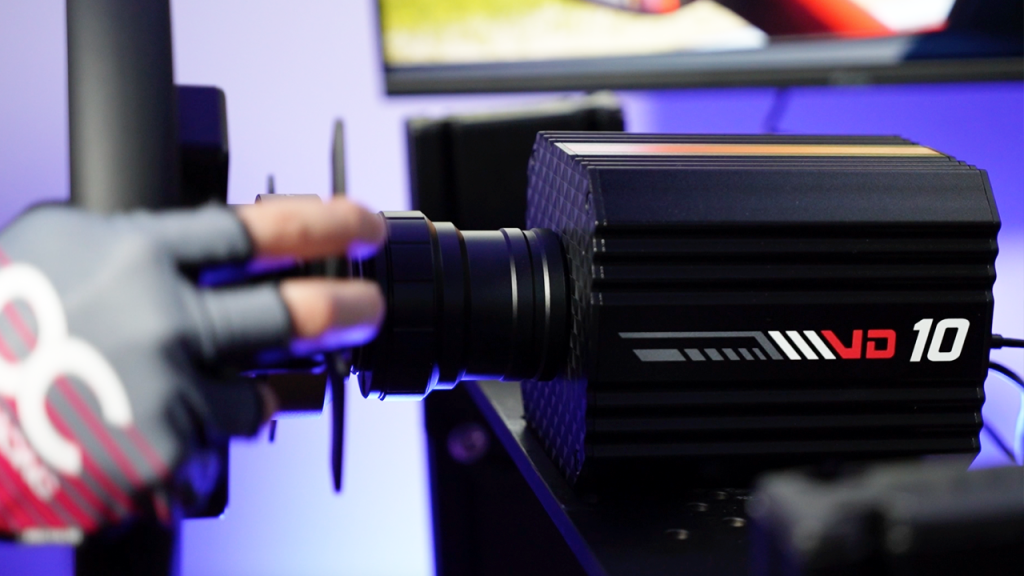
At the top of the range sits the VD10, delivering a constant 10 Nm of torque with peaks up to 12 Nm. Unsurprisingly, the jump in raw strength is immediately obvious. At full power, the wheel is genuinely intense, to the point where it becomes uncomfortable to run at maximum settings for extended periods.
The advantage of this higher torque ceiling is increased dynamic range. With more headroom available, the wheelbase should theoretically avoid clipping and preserve fine details even when heavier forces are present. Instead of smaller signals being flattened or drowned out when steering loads spike, the motor has the capacity to reproduce both subtle and heavy forces at the same time. In theory, this allows the force feedback signal to remain cleaner and more expressive across a wider range of driving scenarios.
In practice, this added dynamic range should improve how the wheel communicates transitions. Subtle surface textures, micro-corrections, and changes in grip are meant to remain present even during high-speed cornering, hard braking, or moments where self-aligning torque is at its strongest. Rather than feeling like the wheel “tops out” and loses detail under load, a higher-torque base is expected to maintain separation between different force layers, making it easier to distinguish between tire slip, chassis movement, and road texture.
In practice, however, the VD10 doesn’t fully deliver on that promise just yet.
While the VD10 undeniably feels more powerful and more serious than the VD6, the actual clarity and detail of the force feedback doesn’t scale in the same way. In some situations, the VD6 actually feels clearer and more communicative, which is not what you’d expect when stepping up to a higher-torque base.
This becomes more apparent when comparing the VD10 to similarly priced competitors from Moza, Fanatec, Simagic, or Asetek. Those wheelbases tend to deliver more nuanced, refined feedback with better separation between forces. The VD10 gets most of the way there, but it lacks that final layer of polish that elevates a wheelbase from good to excellent.
That said, the VD10 is still a good wheelbase. It does the vast majority of what you’d want from a direct-drive system. The missing refinement feels like a software issue rather than a fundamental hardware flaw, which is encouraging. A well-executed firmware update could realistically unlock the clarity and detail that the hardware seems capable of delivering.
My Final Thoughts: PXN VD4 vs VD6 vs VD10
PXN deserves genuine recognition for what they’ve accomplished with this lineup. Compared to where the brand was just a few years ago, the VD4, VD6, and VD10 represent a massive step forward. It’s clear that PXN listened carefully to community feedback and made deliberate choices to address past weaknesses.
The VD4 makes sense for budget-conscious beginners, especially those running desk setups. It offers a surprisingly engaging direct-drive experience for the money. The VD6 is the clear highlight and easily my personal favorite. It delivers more than enough torque for most users, feels significantly more refined, and offers exceptional value. The VD10 has the most long-term potential, but at the moment, it’s held back slightly by software refinement rather than hardware limitations.
PXN’s biggest remaining drawback is its limited ecosystem. Compared to more established brands, wheel, pedal, and accessory options are still sparse. However, if PXN continues expanding its ecosystem and refining its software, this new direct-drive lineup positions the brand as a legitimate competitor rather than just a budget alternative.
And ultimately, that’s great for sim racing as a whole.
really enjoyed the review on this it gave me more options to look at to start out sim racing since ive been looking at gear to start while im playing on controller rn
bro that was lovely review i just thought that i can buy, but i dont have money and i am oc racing’s biggest fan please someone give a cheap ffb bundle please
After reading the OC Racing review, it’s clear that PXN is seriously stepping up their game in the direct-drive market. The VD4 is a solid entry-level DD, the VD6 feels like the real sweet spot with better balance and feedback, and while the VD10 is stronger on paper, it doesn’t always feel like a big leap in real driving.
Overall, these wheelbases offer great value for the price, especially for beginners who want to jump into direct drive without breaking the bank. The main downside is still the software and ecosystem, but for the money, PXN is definitely worth considering.
I’m between VD10 and simagic alpha evo, I know the simagic would be better (and has one of my favourite wheels) however I do like how PXN evolved during these last years and how much cares about the customer feedback, it is promising and makes me want to “invest” in one of their wheel bases…
Been dreaming about Simagic aplha Evo, but positive reviews and mostly the price made me buy PXN VD10 as my first DD setup and I’m truly satisfied yet. Thanks for your review.
Assetto Corsa EVO Update 0.6 introduces six new cars, Sebring International Raceway, and major physics and multiplayer improvements, but players are still calling for missing core features.
Looking for the best cheap direct drive wheel base? Here is how the Fanatec CSL DD, Moza R3, PXN VD4, and Moza R5 compare, and which one I would actually…
The Moza GS wheel is a high-end formula-style sim racing wheel featuring forged carbon fiber, Alcantara grips, magnetic paddles, and deep software integration. Here is a full breakdown of how…
Hot Wheels and Trak Racer have announced a new collaboration that blends iconic automotive design with immersive sim racing hardware, marking a unique crossover between nostalgia and modern racing simulation.
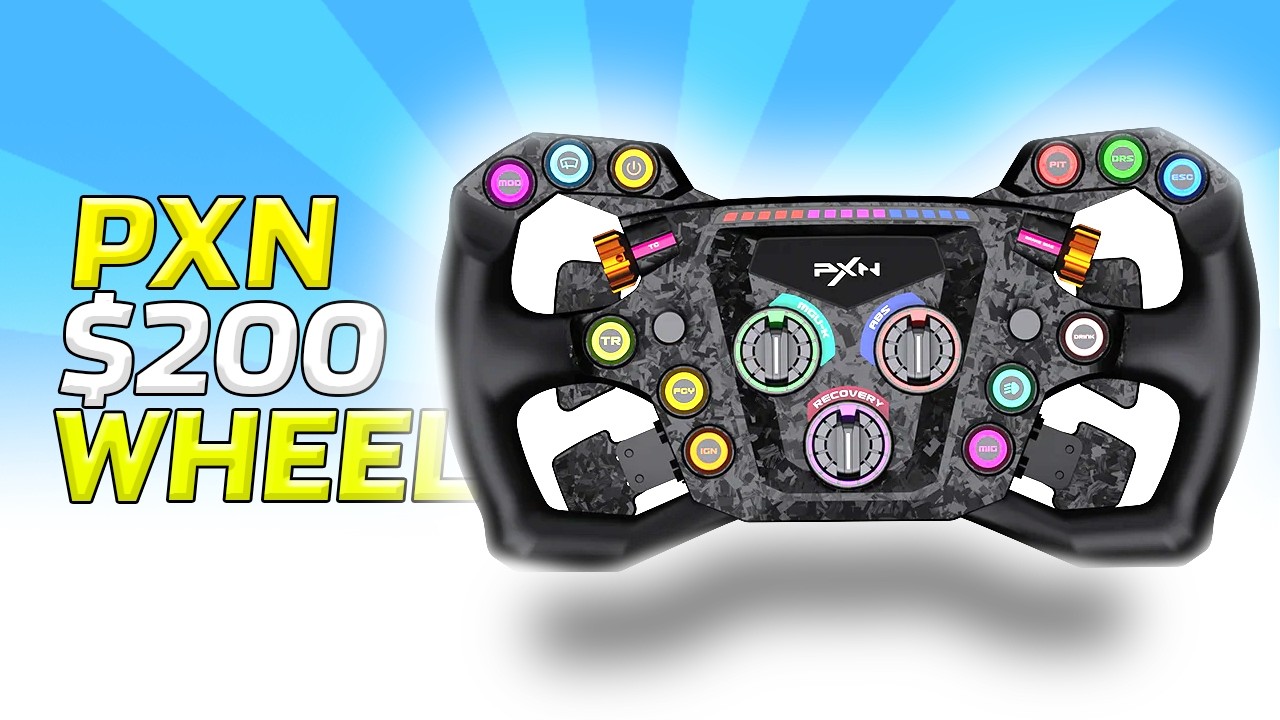
The PXN GT One aims to bring GT-style sim racing features to a lower price point, with solid ergonomics, strong compatibility, and better materials than many rivals.
These are my top 3 sim racing hardware upgrades that I would recommend to almost everyone, from a sturdy cockpit and load cell pedals to haptics that make the whole…
The Simagic P500 pedals bring a full metal build, 100 kg load cell braking, and optional pedal rumble to the entry-level market at only 200 dollars. Here is my full…
Race Sim Studio’s GT-M Bayer i6 Evo brings the BMW M4 GT3 EVO to Assetto Corsa with elite visuals, excellent force feedback, and a tricky braking balance that takes real…


NaoxMichi says:
really enjoyed the review on this it gave me more options to look at to start out sim racing since ive been looking at gear to start while im playing on controller rn
Tricky says:
yeah seems pretty great, especially the vd6 it’s offer is insane for how much money you need to spend on it
John says:
Really enjoyed the insight.
Optional says:
lovely review on those nice pxn bases!
Taanish Shaikh says:
bro that was lovely review i just thought that i can buy, but i dont have money and i am oc racing’s biggest fan please someone give a cheap ffb bundle please
ehSeta says:
for me the pxn vd series is much more cheap than a moza or simagic, gonna grab the vd10 soon.
Gabriel Valério says:
This is a big step to make sim gear up there prefomance and drop there prices!!
michx63 says:
definitly gonna be checking out the pxn website!
ai says:
pxn makes such affordable product would have to check it out
Danny says:
👍🏿
Jens says:
PXN has definitly made a good desigen by doing such low price point wheel bases.
ALIBOI14 says:
nice review very helpful
ganis_123 says:
After reading the OC Racing review, it’s clear that PXN is seriously stepping up their game in the direct-drive market. The VD4 is a solid entry-level DD, the VD6 feels like the real sweet spot with better balance and feedback, and while the VD10 is stronger on paper, it doesn’t always feel like a big leap in real driving.
Overall, these wheelbases offer great value for the price, especially for beginners who want to jump into direct drive without breaking the bank. The main downside is still the software and ecosystem, but for the money, PXN is definitely worth considering.
potatobeef says:
nice review
CatJWK says:
Bro like low key pxn kinda cooking rn
JT says:
I need one of these
Lol says:
This article helped me make a decision
Forg says:
Definitely convinced me to buy the VD 6 over the Moza R5, I rate the extra NM will be worth it.
SpiderKing says:
Finally PXN stopped doing low quality sim racing stuff.
baumtoaster says:
nice review and the bundles look interesting
Anonymous says:
Really helpfull, I am looking for my first dd wheel and I think this might be it.
max says:
Crazy how good PXN is getting
Raz_FN says:
was thinking about getting the moza r9 ks bundle but after this review i think that i should save money and get the vd6 bundle instead opinions?
HolyShweeze says:
Thanks to this review i know which direction im going when i upgrade!!!
Ivan says:
I’m between VD10 and simagic alpha evo, I know the simagic would be better (and has one of my favourite wheels) however I do like how PXN evolved during these last years and how much cares about the customer feedback, it is promising and makes me want to “invest” in one of their wheel bases…
Ahmed says:
Nice
Vítek says:
Been dreaming about Simagic aplha Evo, but positive reviews and mostly the price made me buy PXN VD10 as my first DD setup and I’m truly satisfied yet. Thanks for your review.
Ozzy says:
In eu they know include the table clamp so it seems to be a better deal
Anonymous says:
Great review
PXN GT One Review: A Budget GT Wheel That Competes Better Than You’d Expect - OC Racing says:
[…] with PXN’s VD6, the GT One actually delivers a very enjoyable experience on track. No, it does not feel like some […]