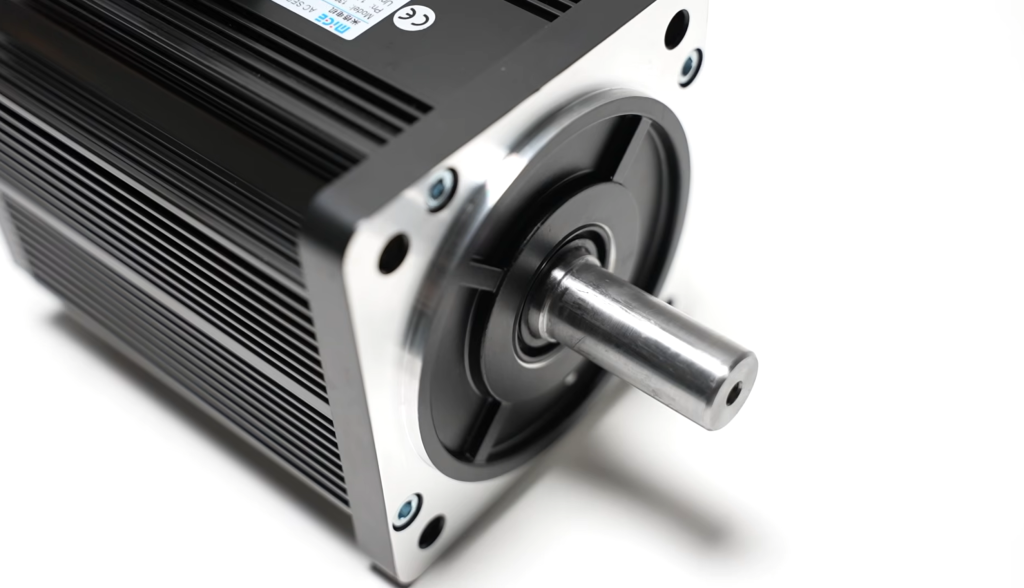
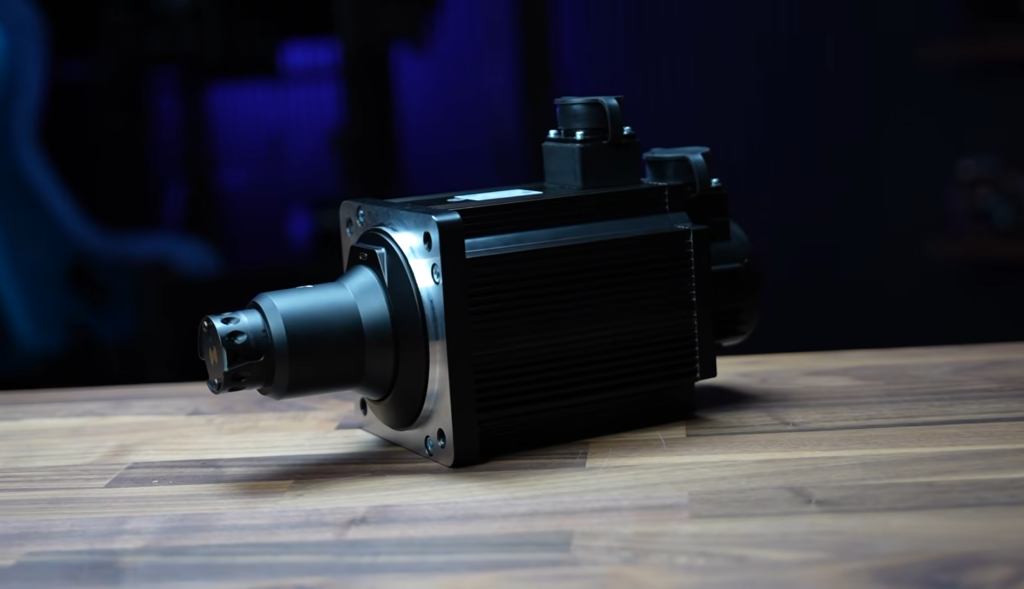
The VRS DFP20 is one of the most unusual direct drive wheel bases in sim racing right now. It looks industrial, awkward, and a little bit unfinished. There are warning labels, large plugs, exposed hardware, and a separate control box, all of which make it feel far removed from the cleaner, more polished wheel bases that most companies are pushing today. So yes, first impressions here are definitely strange.
But that is also exactly what makes this base so interesting. Because once you get past the weird looks, the rough presentation, and the clear lack of luxury, the DFP20 starts making a lot more sense. VRS has gone for a very clear function-first approach, and while that does come with real compromises, it also allows this wheel base to focus almost entirely on the thing that actually matters most; What it feels like on track.
VRS DirectForce Pro DFP20 Direct Drive Wheel Base 20Nm
Awkward-looking, light on convenience and needing an adapter for a proper quick release, but the force feedback is excellent – one of the best bang-for-your-buck direct drive bases in the category.
Best for Drivers whose first priority is force feedback quality rathe
The DFP20 is a direct drive wheel base from VRS built around a simple idea. Deliver high-end force feedback performance without wasting time on unnecessary fluff. That means no fancy housing, no extra visual drama, and not much in the way of convenience features either. Instead, what you get is a very barebones, motorsport-style package with performance as the obvious priority.
One of the more unusual things about it is the way VRS handles torque. Rather than forcing buyers to move to a completely different base when they want more power, the platform can start at a lower torque level and then be upgraded later through software. In other words, you can unlock more force without changing ecosystem, selling old hardware, or rebuilding your rig from scratch. Whether people like that model or not will depend on the person, but the idea itself is actually pretty clever.
VRS DirectForce Pro bases, priced today
Model
Price
Difference
VRS DirectForce uDFP20 Upgradable Direct Drive Wheel Base
Let us get the obvious part out of the way. The DFP20 is not a beautiful product. It has a rugged, industrial look with big cables, a separate control box, and a general appearance that feels much closer to workshop hardware than premium consumer electronics. In a market full of sleek housings, smooth lines, RGB lighting, and integrated features, this thing goes completely the other way.
That also comes with some practical downsides. Out of the box, it only supports front mounting unless you buy extra hardware. There are no extra built-in inputs or convenient ecosystem features here either. Compared to more polished alternatives, the full setup feels less elegant and less refined. So if design, cable management, and general ease of ownership matter a lot to you, that is something you really do need to keep in mind.
The quick release situation needs extra effort
Another thing worth knowing straight away is that the DFP20 does not arrive as a complete modern quick release solution in the way many buyers may expect. The base uses an exposed shaft setup, which means you need an adapter if you want a more standard and usable quick release arrangement. That is definitely a little annoying, and it is one of the areas where the product feels more awkward than its competition.
That said, once the right adapter is in place, things improve a lot. The result is a very rigid connection with no unwanted play, no flex, and no obvious movement even under high torque. More importantly, this also opens the door to broader third-party steering wheel compatibility. So while the base does not make the best first impression here, the end result is still very solid once everything is properly sorted.
On track is where it starts making sense
If the DFP20 did not deliver out on track, all of these strange design choices would be much harder to excuse. Thankfully, it absolutely does. The force feedback is incredibly clear, well defined, and immediately impressive. Fine details come through cleanly, whether that is the texture of the road surface, small shifts in tire loading, early grip loss, curbs, or sharper impacts. Nothing feels muddy or blurred together.
That clarity is one of the biggest strengths of the base. The motor feels smooth, fast, and very natural without becoming robotic or artificially harsh. Slower corners feel fluid and controlled, while sudden snaps, bumps, and fast direction changes come through with real sharpness and speed. It reacts quickly, but not in a way that feels exaggerated or tiring. Once dialed in properly, the whole thing just feels very coherent.
The DFP20 also uses telemetry-driven force feedback in compatible titles, which adds another layer of information on top of the usual steering forces. More importantly, it does this in a way that still feels very natural rather than forced. The result is a driving experience that feels highly detailed, very immediate, and much more premium than the exterior would ever lead you to believe.
It gets surprisingly close to the best
This is where the VRS really becomes hard to ignore. In terms of pure driving feel, it gets remarkably close to the very best wheel bases in the market. Something like a Simucube 3 Pro may still have a tiny edge in some of the most subtle sensations, and other bases may offer extra software features or ecosystem conveniences that you do not get here, but the actual gap in force feedback quality is far smaller than many people probably expect.
That is the real appeal of the DFP20. It is not trying to win on looks, convenience, or luxury. It is trying to win on driving feel, and there it does an excellent job. In a blind comparison, the differences between this and some much more expensive alternatives would be much smaller than the visual presentation of the product might suggest.
Price history
$799.00at VRS RacingUp 1.6% in 90 days
Range
$749.00 – $799.00
Typical
$799.00
Readings
81
Retailers
4
Tracking since
21 Dec 2025
Last checked
11 Oct VRS Racing
81 readings so far — not daily. · Sale prices predate daily tracking.
Tracked daily across every shop we follow+Add to build
Who this wheel base is really for
The DFP20 is not going to be for everyone. In fact, many of the drawbacks mentioned here could easily be dealbreakers for some buyers. If you want a more complete ecosystem, a prettier product, easier mounting, cleaner cable management, and a more refined ownership experience overall, there are absolutely other wheel bases that will make more sense.
But if your number one priority is force feedback quality, then the VRS becomes a much stronger proposition. Because once you get past the rough exterior, the extra setup effort, and the lack of polish, what you are left with is a wheel base that performs at a very high level and focuses almost entirely on what matters once you are actually driving.
The VRS DFP20 is one of the clearest examples of function over form in sim racing today. It is unconventional, awkward in places, and definitely not the most refined wheel base you can buy. But all of those compromises live outside the most important part of the product, which is the actual driving experience. And there, the DFP20 is genuinely excellent.
It is not the most complete package, and it is definitely not the prettiest. But for the buyer who cares most about force feedback quality, speed, detail, and raw on-track performance, the VRS DFP20 is one of the best bang-for-your-buck options in the category. Strange, yes. Impractical in places, absolutely. Surprisingly incredible, also yes.
Kunos Simulazioni has shared a detailed look at the future of Assetto Corsa EVO, outlining changes to the game's development direction and revealing more information about its long-awaited Free Roam…
Conspit CHS · $369 Conspit sent this product to me for review. Conspit has entered the shifter market with the CHS, a dual-mode shifter that combines a 7-gear H-pattern with…
After making its public debut in Chicago, Sim-Lab is bringing its upcoming Porsche 963 replica steering wheel to SimRacing Expo Frankfurt for another major showcase.
Gran Turismo 7 Spec IV Part 1 arrives October 15 with Sportsland SUGO, six new cars including the Ferrari F355, new Brand Central challenges, Car Concierge, Car Viewer and more.
The new Thrustmaster T-GT III brings Direct Axial Drive, 5 Nm of constant torque, load cell pedals, and dedicated Gran Turismo 7 haptics to PS5 and PS4.
The Circuit One D Force 1 packs four motion actuators into a suitcase, installs in about 10 minutes, and trades big travel for detail you can actually use.
Assetto Corsa EVO Update 0.9 introduced a major overhaul to the game's GT tyre model, changing how cars behave around the limit across a wide range of GT machinery.
Project Motor Racing has received its Version 2.3 update, bringing the Lamborghini Temerario to the simulator alongside a new vehicle class, physics revisions, visual improvements and a series of changes…