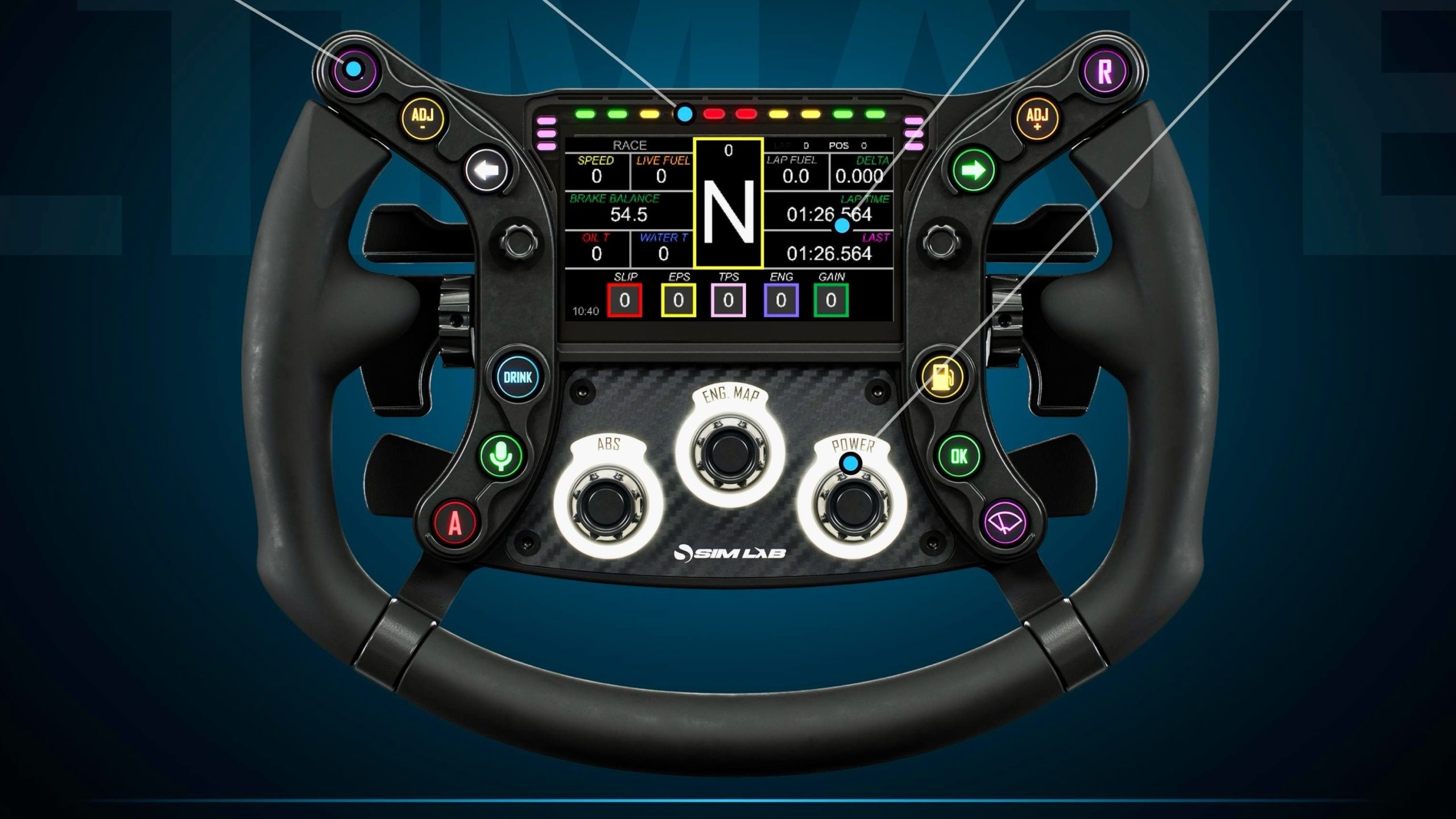
Sim-Lab unveils GTSL Ultimate steering wheel at Sim Racing Expo Frankfurt
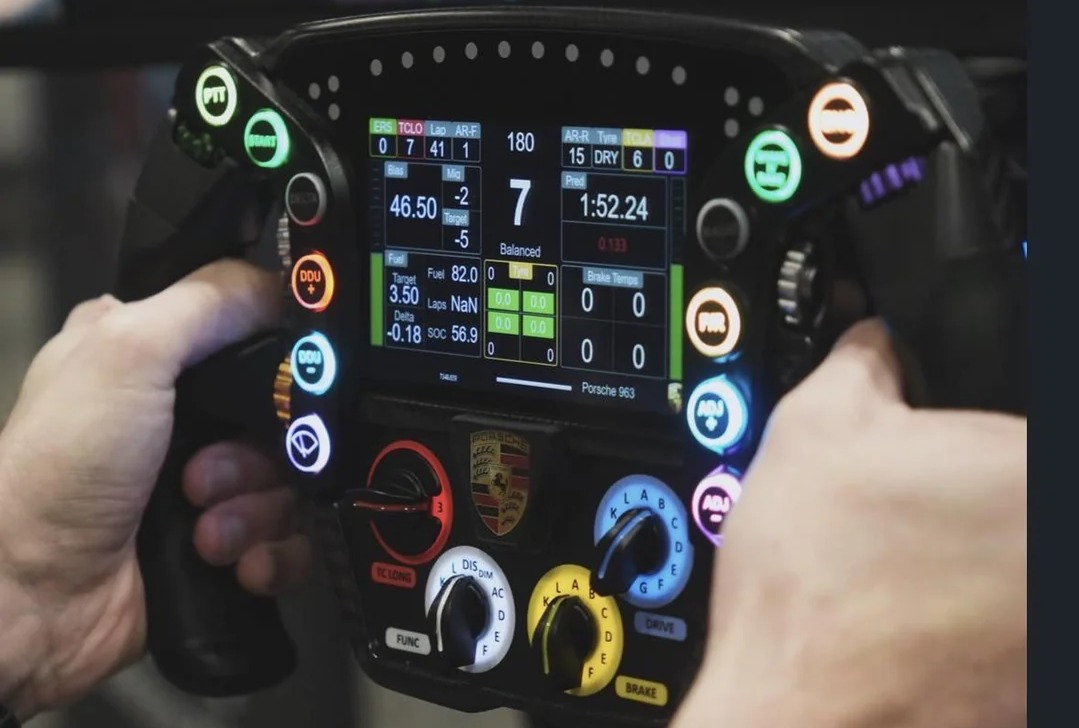
Sim-Lab will unveil the GTSL Ultimate, a new version of its GTSL steering wheel platform, at Sim Racing Expo Frankfurt this weekend.

If you are new to sim racing, the Moza ecosystem can look a little confusing at first. There are multiple wheel bases, several pedal options, a growing range of steering wheels, and then a bunch of accessories that start making you wonder whether you are building a race car or just trying to buy a wheel. So, if you want the simple version, this is Moza’s 2026 sim racing ecosystem explained as clearly as possible.
And honestly, once you break it down, it is not that complicated. Moza has built one of the broadest and easiest-to-understand ecosystems in sim racing right now. The brand covers everything from beginner bundles to genuinely high-end direct drive bases, with enough wheels, pedals, and accessories in between that most people can stay in the ecosystem for a very long time without feeling boxed in. That is a big reason why Moza has become such a common recommendation.
Verified purchase options at lowest current prices:
Affiliate disclosure
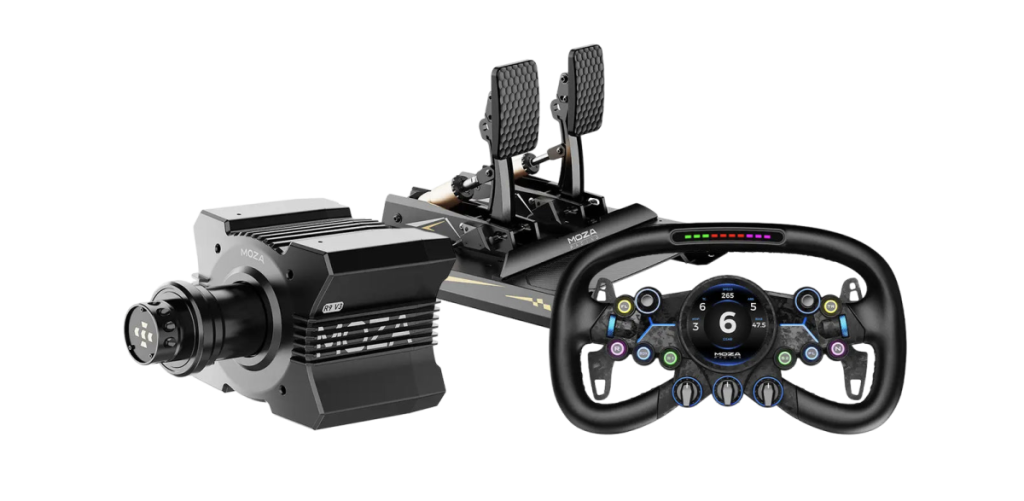
The easiest way to understand Moza’s ecosystem is to start with the wheel bases. Right now, the lineup most people will care about is built around the R3, R5, R9, R12, R21, and R25. In very simple terms, the number roughly matches the torque output, so the bigger the number, the more powerful and more expensive the base tends to be. That means the R3 is the cheapest and least powerful, while the R25 sits at the top as the most capable option in the current range.
That structure is a big part of why the ecosystem is easy to understand. If you are a complete beginner, the R3 and R5 are the obvious entry points. If you want something more serious for long-term use, the R9 and R12 are where a lot of people will probably find the sweet spot. And if you are going after high-end territory, the R21 and R25 are there for that. Moza has basically built a ladder, and it is a very easy one to follow.
For most people, I still think the sweet spot sits somewhere between the R9 and R12. That is where the performance starts feeling very serious without stepping into the more extreme side of the market. But the good thing about Moza’s lineup is that even the cheaper options now make proper sense, because entry-level direct drive has become much better than it used to be
| Model | Price | Difference | |
|---|---|---|---|
| R5 Wheel Base | $390.19at Sim-Motion | +$91.19 | BuyBuild |
| MOZA R9 V3 Direct Drive Wheel Base | $299at MOZA Racing US | cheapest | BuyBuild |
| MOZA R12 V2 Direct Drive Wheel Base | $316.27at Advanced Sim Racing | +$17.27 | BuyBuild |
| MOZA R21 Ultra Direct Drive Wheel Base | $694.23at MOZA Racing JP | +$395.23 | BuyBuild |
| MOZA R25 Ultra Direct Drive Wheel Base | $877.42at MOZA Racing JP | +$578.42 | BuyBuild |
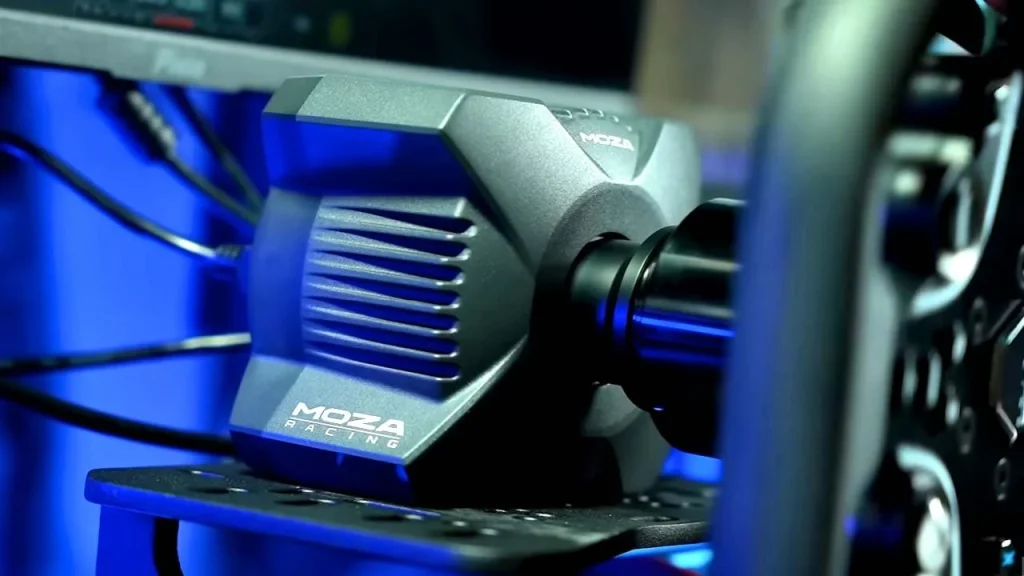
This is one of the most important things to understand early on. Moza is still primarily a PC ecosystem. Most of its wheel bases and steering wheels are officially supported on Windows, and that is still the platform where the ecosystem makes the most sense. There is no native PlayStation support across the range right now, which is something a lot of people still ask about.
Xbox is a little more specific. Some Moza setups can work on Xbox, but only when paired with an officially licensed Xbox wheel. That is where the ESX steering wheel comes in. It is Moza’s official Xbox wheel, and it is the key to getting Xbox compatibility in this ecosystem. So the short version is this: PC is the main home, Xbox is possible with the right wheel, and PlayStation is still not really part of the conversation.
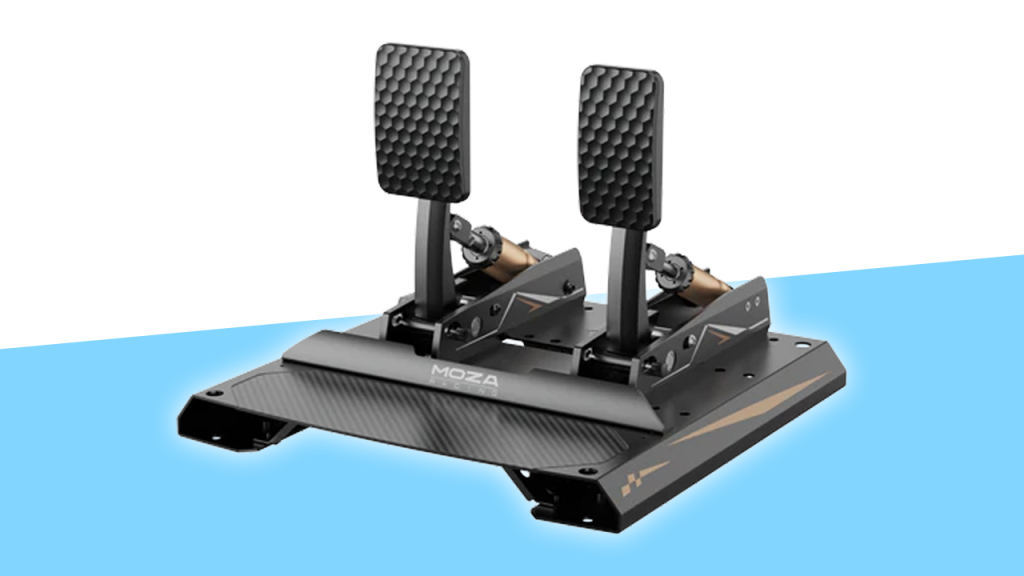
On the pedal side, Moza has done a pretty good job of covering different budgets and different types of users. At the entry level, the main names to know are the SR-P Lite, SR-P, and SR-P2. The SR-P Lite pedals are the simpler budget option most closely associated with the R3 bundle, while the SR-P and newer SR-P2 move things forward with stronger specifications, a load cell brake, and more adjustment.
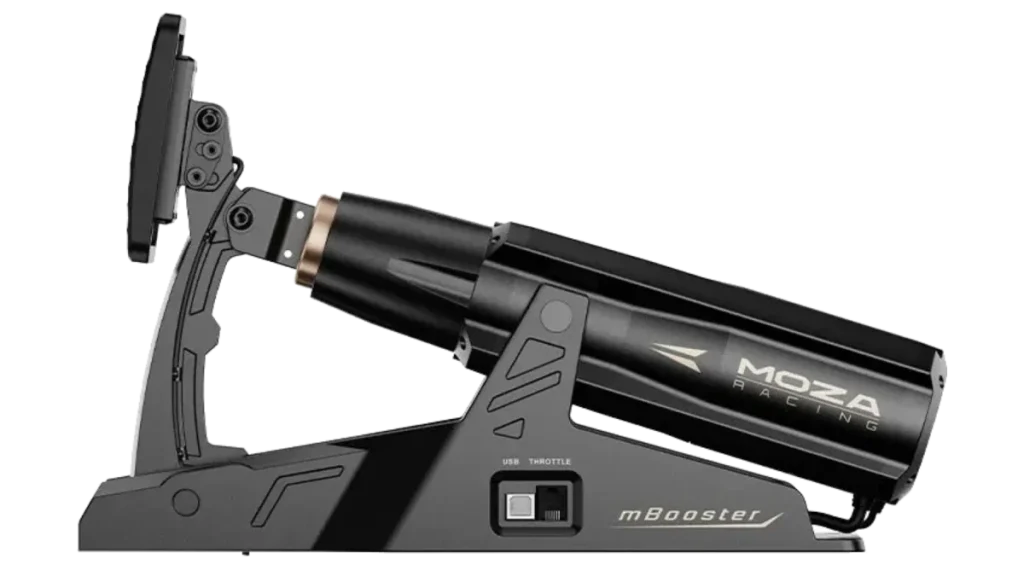
The SR-P2 in particular looks like Moza’s more serious lower-cost pedal option now, with a 100 kg load cell brake and a much more adjustable design than the Lite pedals. That matters because it gives people a clear upgrade path without jumping straight into the expensive stuff. And then if you do want the expensive stuff, that is where the CRP2 and mBooster products come in.
| Shop | Price | |
|---|---|---|
| MOZA Racing | $149.00 | Buy |
The CRP2 is the higher-end mechanical pedal set, while the mBooster is Moza’s active pedal system and very clearly the halo product in this part of the ecosystem. That one is for the buyer who wants the most advanced option Moza offers rather than just a sensible value play. So again, just like the wheel bases, the pedal ecosystem forms a pretty easy ladder from beginner to high-end.
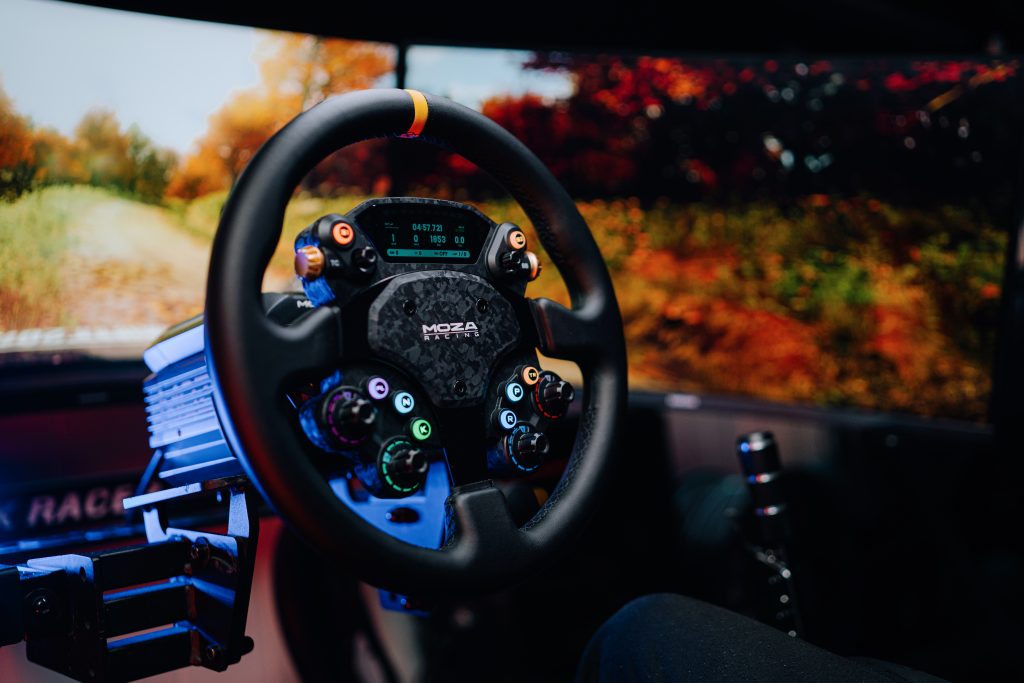
If there is one area where Moza really starts to feel broad as a brand, it is in the wheel range. There are a lot of options now, and that is a good thing because different people want very different things out of a steering wheel. Some want cheap and functional. Some want licensed and flashy. Some want truck-specific. Some want formula or GT style. Moza has enough variety now that most people can find something that makes sense.
The more affordable wheels are usually the easier ones to recommend on value, and that is where wheels like the KS and KS Pro come in. Those are the types of wheels that really help the ecosystem because they give buyers lots of functionality without making them spend halo-product money. The KS Pro in particular has become one of the standout value picks because it gives you a screen, strong ergonomics, a lot of inputs, and good flexibility at a price that still feels relatively sane.
At the other end, Moza also has a growing collection of more expensive licensed wheels, which is another reason the ecosystem has become more interesting over time. Those products help the brand feel broader and more mature, even if they are not necessarily the wheels most people will buy first. Then beyond the usual GT and formula stuff, Moza also has more niche products like the TSW truck wheel, which shows just how far the ecosystem is now stretching beyond standard circuit racing.
Once you get past the main hardware, Moza also has a surprisingly wide accessories catalogue. The obvious names to know are the HGP H-pattern shifter, the SGP sequential shifter, and the HBP handbrake. Those are the core sim racing accessories most people will care about if they want to round out a more complete setup.
Then there are the more niche products, and this is where Moza starts getting interesting. The brand now has an active shifter knob, multi-function stalks, truck-specific gear, and other products that push the ecosystem beyond just “wheel, pedals, and done.” The stalks are a good example. They are meant to add more realism for road car, truck, and general driving setups, and they are one of those products that you absolutely do not need, but that make a lot of sense if immersion is your thing.
This is also one of the reasons Moza has become such a common recommendation. The ecosystem is no longer narrow. You can start small, stay sensible, and still have plenty of room to grow into something much more involved later on without needing to leave the brand behind. That flexibility matters.
So if you want the short version, Moza’s 2026 ecosystem is actually pretty easy to understand. The wheel bases run from the beginner-friendly R3 and R5 to the more serious R9 and R12, then into the high-end R21 and R25. Xbox support exists with the right wheel, PC is still the main platform, and PlayStation support is still not really there. The pedals range from the simpler SR-P Lite and SR-P options up to SR-P2, CRP2, and the mBooster active pedal. And the wheel range is broad enough now that there is something for almost every type of buyer.
Add in the HGP shifter, SGP sequential, HBP handbrake, active shifter knob, truck wheel, and multi-function stalks, and you end up with one of the broadest ecosystems in sim racing right now. It is not perfect, and some parts of the lineup will make more sense than others depending on your budget, but as a whole, it is very easy to see why Moza has become such a common recommendation. The ecosystem is broad, fairly logical, and for the most part, very easy to grow with.

Design & development by CIDIX
· Sim rig builder, deals pipeline, simracing tools, comparisons, adspace & forum · Custom code licensed to OC Racing