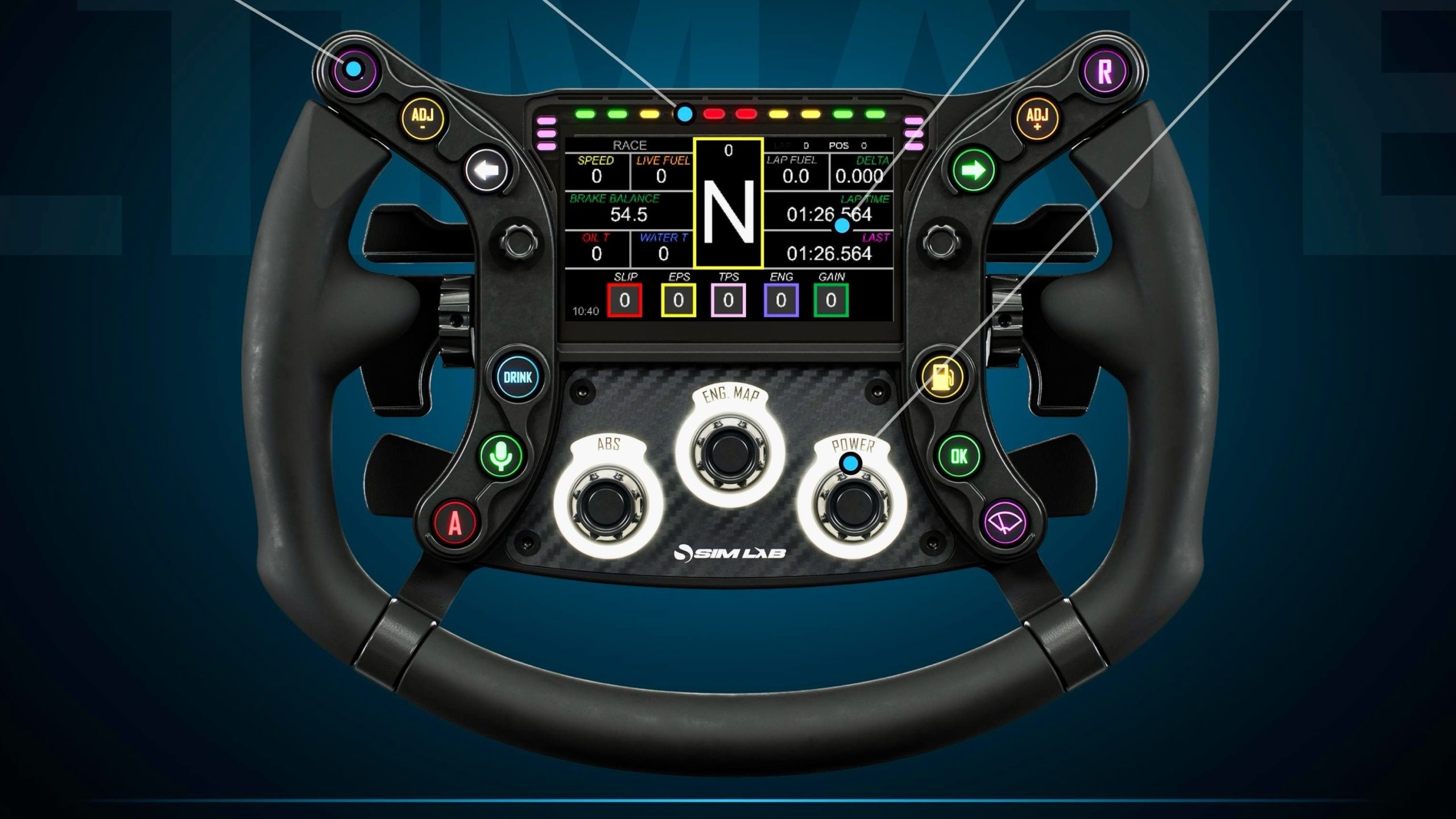
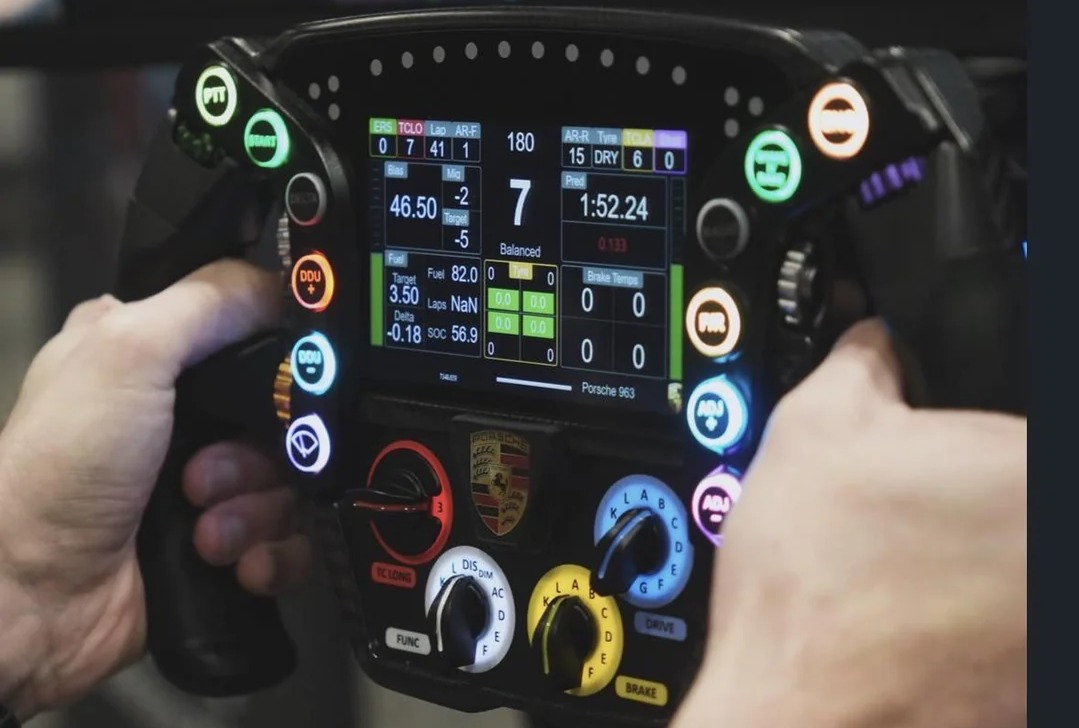
Sim-Lab unveils GTSL Ultimate steering wheel at Sim Racing Expo Frankfurt
Sim-Lab will unveil the GTSL Ultimate, a new version of its GTSL steering wheel platform, at Sim Racing Expo Frankfurt this weekend.

When people start shopping for their first proper sim racing wheel with force feedback, the same names keep popping up over and over again. The Logitech G29 and G920 on one side, and the Thrustmaster T150 and TMX on the other. For a long time these were the go to recommendations, and in many ways they still offer a very solid first step into the hobby, especially if you are on a very tight budget and looking at the second hand market.
This article is a written version of my original comparison, but with a few years of extra experience on top. I will walk through what actually matters between these two wheel families, what each one does better, which one I would still pick today, and how they compare against modern entry level options like the G923, T128, T248 and the Moza R3 bundle.
Verified purchase options at lowest current prices:
Affiliate disclosure
| Shop | Price | |
|---|---|---|
| Logitech G | $299.99 | Buy |
On Logitech’s side you have the G29 and the G920. In practical terms they are the same wheel. The G29 works on PlayStation and PC, the G920 works on Xbox and PC. They share the same internal mechanism and feel identical on track, so the choice between them really comes down to which console you own and which look you prefer. Personally I have always liked the look of the G29 a bit more, but performance wise they are the same.
Thrustmaster’s lineup mirrors this idea. The T150 works on PlayStation and PC, while the TMX works on Xbox and PC. Again, same internals, slightly different branding and button layouts, same experience behind the wheel. Thrustmaster also offers “Pro” versions that bundle in the better T3PA pedal set, which is worth remembering if you find a used deal that includes them.
All of the points in this article apply across those families. When I say “G29” you can mentally include the G920, and when I say “T150” you can think of the TMX as well.
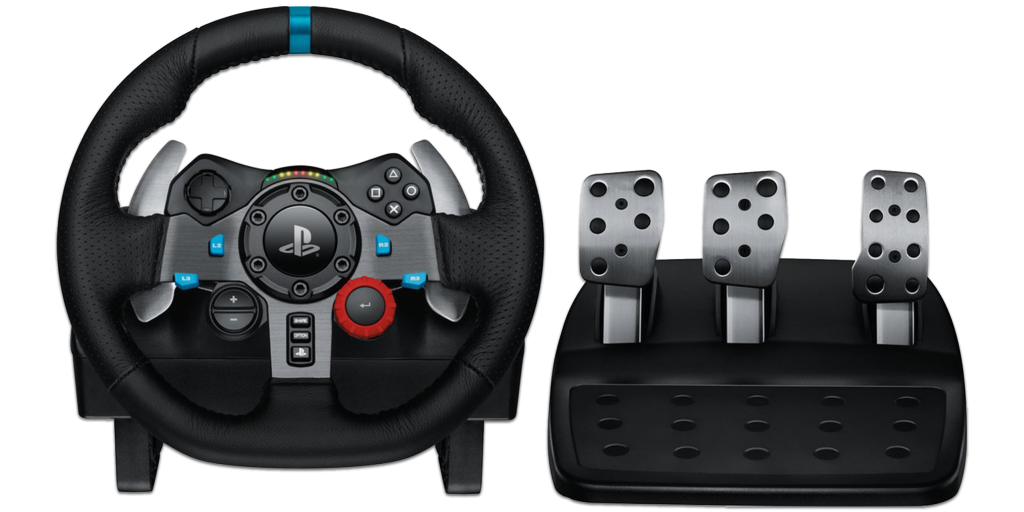
The biggest strength of the Logitech G29 and G920 is how complete and polished the package feels. The wheel rim is wrapped in genuine hand stitched leather, the metal faceplate catches the light nicely, and overall it gives a surprisingly premium impression for an entry level product. If you care about how your setup looks and feels in your hands, Logitech absolutely nails that first impression.
The default pedal set is also stronger than what you get with the non Pro Thrustmaster bundles. You receive three pedals out of the box, metal pedal faces, basic adjustability, and carpet spikes. The brake is notoriously stiff and not perfect, but for most new sim racers it is more than enough to get started and feels grown up compared to the small plastic two pedal set that comes with the base T150 and TMX.
Logitech also has a simple path into H pattern shifting. Their Driving Force shifter is relatively inexpensive and plugs directly into the wheel. It is not the most realistic shifter in the world, but it gets the job done and gives you that manual experience without spending a fortune. Thrustmaster’s TH8S is also a nicer shifter, but it comes at a slightly higher price point.
There are also a lot of third party mods and accessories available for the Logitech ecosystem. Replacement pedal plates, load cell mods, shifter upgrades, desk mounts and more exist simply because of how many G29s and G920s are out in the wild. That makes it easier to slowly upgrade and tweak your setup without changing wheelbase immediately.
In short, if you want a beginner package that looks and feels higher quality on the desk, and you like the idea of a three pedal set and a cheap shifter add on, Logitech takes the lead.
The Thrustmaster T150 and TMX have always fought back in the area that matters most once the honeymoon phase is over: force feedback.
The mixed belt and gear mechanism inside the T150 and TMX produces smoother, stronger and more detailed force feedback than the pure gear driven system inside the G29 and G920. In practice it means you can usually turn the overall strength up higher before it starts feeling angry and mechanical, and small details like weight transfer and steering resistance come through with a bit more nuance.
Another advantage is noise. Anyone who has used a Logitech gear driven wheel at high force settings knows how much it loves to clatter and grind its way around the rack. The Thrustmaster units are not silent, but they are noticeably quieter in use, which can matter a lot if you live with others or race at night.
The T150 also offers up to 1080 degrees of rotation, compared to the 900 degrees of the Logitech wheels. That extra steering range is not essential for everyone, but it can be nice if you plan to play truck simulators or titles that simulate large steering racks.
Thrustmaster also makes a wider range of compatible peripherals, including cheaper load cell pedals, handbrakes and shifters that can be paired with the T150 and TMX. In practice you can mix a lot of these with other wheelbases via USB as well, but if you want to stay inside the Thrustmaster ecosystem this is still a point in their favour.
If your priority is pure driving feel and you are willing to accept a cheaper looking wheel and weaker base pedals, the T150 and TMX have a very real advantage in how they drive.
When you put everything together, the trade off between these two families becomes clear. The Logitech G29 and G920 win on build quality, presentation and default pedal set. The Thrustmaster T150 and TMX win on force feedback quality and noise levels.
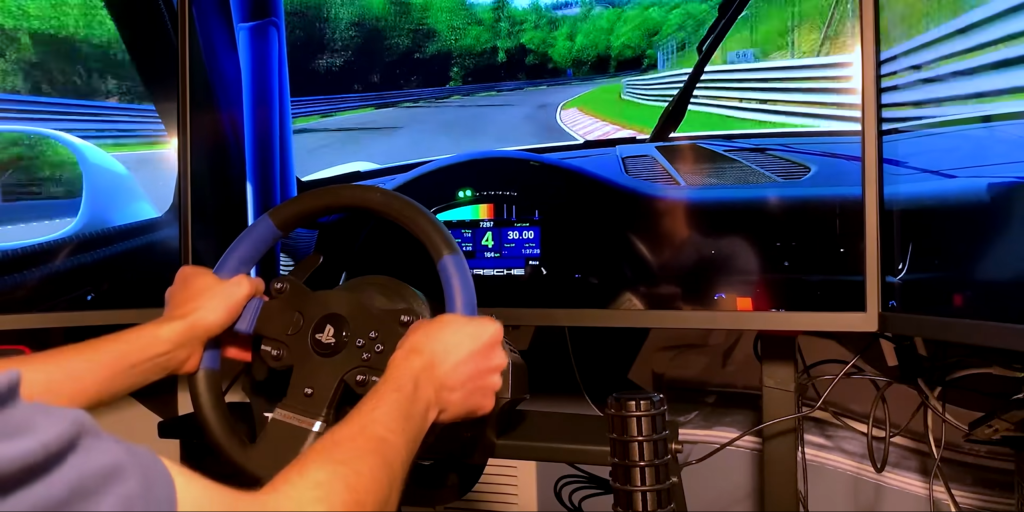
Behind the wheel, the Logitech has that classic gear driven feel. It can be fun and lively, but the gears often make themselves known through notchy movement and loud clunks when you hit kerbs or catch slides. The Thrustmaster feels more refined, with smoother rotation and stronger resistance when you load up the front tyres. It simply does a better job at fading into the background and letting the car physics speak.
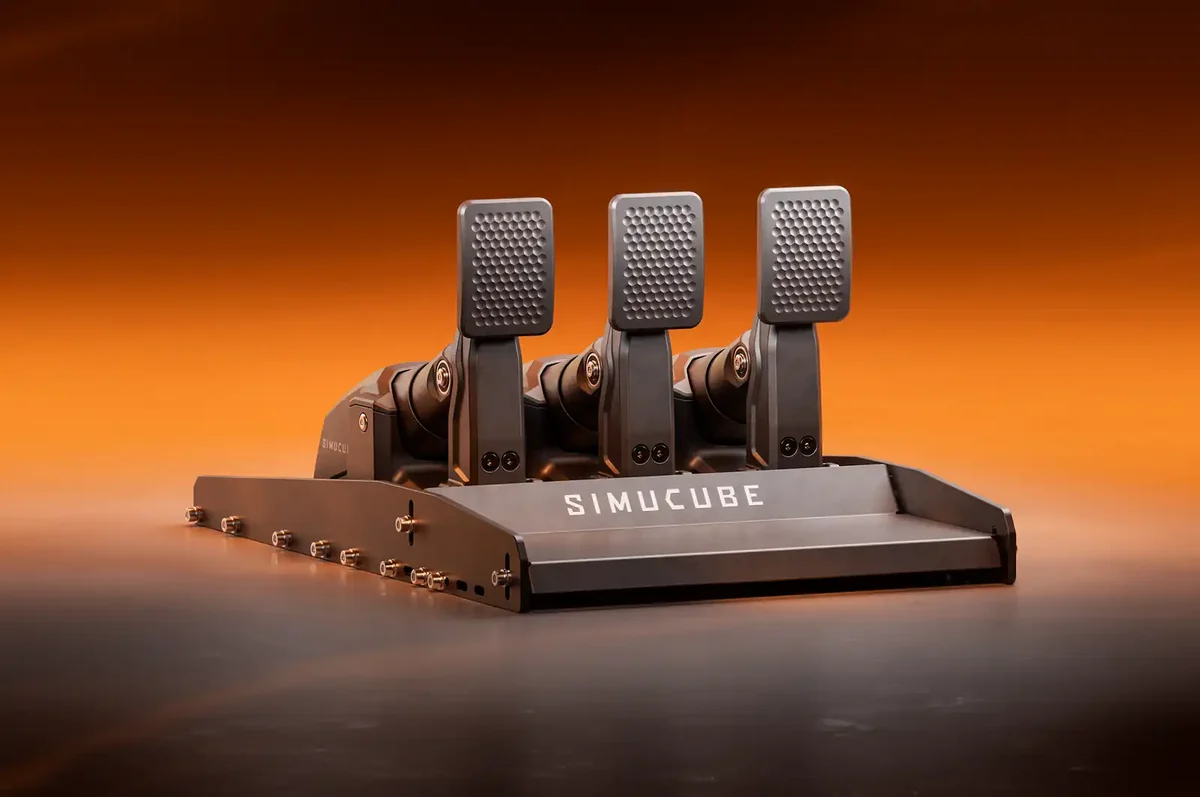
Under your feet, the story flips. The non Pro Thrustmaster pedals feel very basic, with a light brake and child sized footprint. The Logitech pedals feel more like something from a proper sim setup and are easier to live with long term. Once you move into Raceline Lite territory the Thrustmaster side catches up, but that involves a different price bracket. It is however good to note that the upgrade path for your pedals is much better with Thrustmaster; they offer some great pedals in the $100-$250 range.
From a build standpoint, the Logitech wheel looks like a finished consumer electronics product, while the T150 and TMX very much look like starter gear. Neither is indestructible, and both can fail, but if you unpack them side by side the difference in materials is obvious.
When this comparison was first recorded, the G29, G920, T150 and TMX were the obvious entry level choices. The market has changed a lot since then.
Today, if you are buying brand new, there are much better options around the same price range or slightly above. Logitech has the G923, which brings TrueForce and some improvements to the same familiar platform. Thrustmaster has the T128 and T248, which target different budgets and use more modern designs. On top of that, you now have beginner friendly direct drive bundles like the Moza R3, which completely change what “entry level” can mean if you are willing to stretch the budget.
This is why my view today is a bit more nuanced. For someone on the lowest of low budgets, these older wheels still make a lot of sense if you can pick them up cheaply on the second hand market. In many regions you can now find used G29s, G920s, T150s and TMXs for very little money, and at those prices they are an incredible gateway into sim racing. You get real force feedback, proper pedals, and a taste of the hobby without committing hundreds and hundreds of dollars.
However, if you are planning to buy brand new, I would strongly suggest looking at the more modern options first. A G923, a T128 or T248, or a Moza R3 bundle will give you a more current feature set, better force feedback in many cases, and a clearer upgrade path. They also benefit from newer software support and more refined overall designs.
So the short version is this. Used G29, G920, T150 and TMX: still great value and a smart way to start if you want the cheapest possible route in. Brand new at full retail: I would look elsewhere first.
$299.99 at Logitech G Unchanged over 90 days
86 readings so far — not daily. · Sale prices predate daily tracking.
G920/G29
Between these two families the Logitech G29 and G920 are still the better first wheel: a more polished complete package with a three pedal set and a cheap shifter path, even though the Thrustmaster T150 and TMX drive bet
Best for Beginners buying used on the tightest budget
Price tracked since 21 Dec 2025 — 86 readings.
With all of that said, if you put a working Logitech G29 or G920 on one side, a T150 or TMX on the other, and tell me to pick one for a beginner today, I would still go with the Logitech offering.
The reason is simple. As a complete package, especially for someone just stepping into sim racing, the Logitech bundle feels more polished and more satisfying to own. The leather wrapped wheel, the metal faceplate, the three pedal set and the easy shifter add on combine into a setup that feels like a proper product rather than a bare minimum starter kit. Even if the force feedback is a bit weaker and a bit noisier, the overall experience of using it each day is more pleasant for most people.
The Thrustmaster T150 and TMX are still very good wheels that punch above their weight in driving feel, and I still respect them for that. If someone told me they value force feedback quality above everything else and do not care how the wheel looks or how basic the pedals are, I would have no problem pointing them toward the Thrustmaster side, ideally with the Pro pedals included.
But for the average new sim racer, especially one buying used on a budget, the Logitech G29 and G920 remain my preferred recommendation between these two families. They are not the best wheels on the market, and they have definitely been overtaken by newer hardware, but as a cheap and accessible entry point into sim racing they still make a lot of sense.
If you can find one for the right price, it is still a very solid way to start the journey.

Design & development by CIDIX
· Sim rig builder, deals pipeline, simracing tools, comparisons, adspace & forum · Custom code licensed to OC Racing
Michael says:
I’m confused by your picking the wheel that looks better over the wheel that drives better.