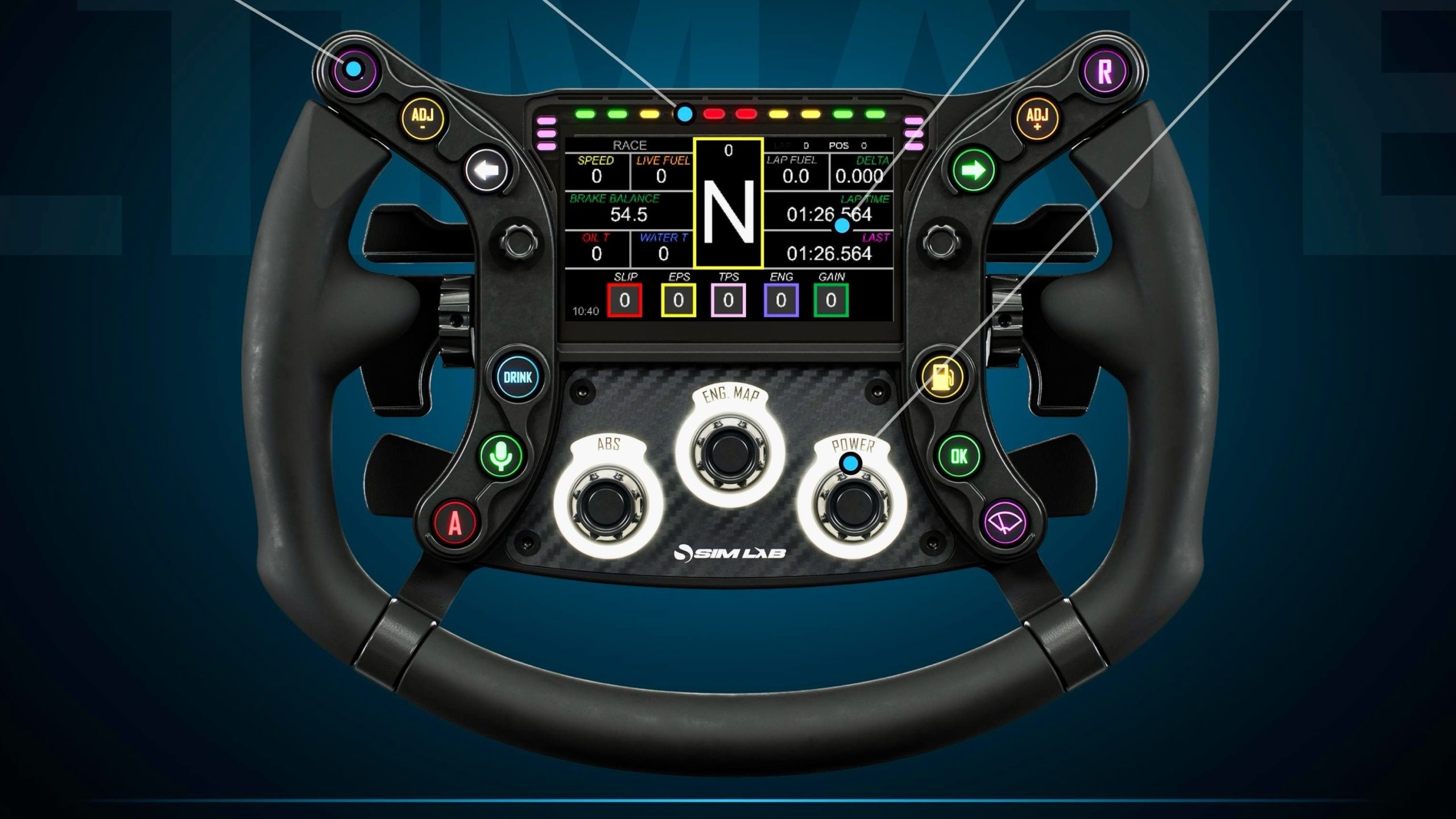
Sim-Lab unveils GTSL Ultimate steering wheel at Sim Racing Expo Frankfurt
Sim-Lab will unveil the GTSL Ultimate, a new version of its GTSL steering wheel platform, at Sim Racing Expo Frankfurt this weekend.

The Thrustmaster EVO Racing 32R Leather is the first product in what feels like a very important new chapter for Thrustmaster. For a long time, the brand has sat in a strange place within sim racing. It is still one of the most recognizable names in the space, but the market around it has become much more competitive, with newer brands pushing harder on value, materials, and functionality than ever before.
That is why this wheel matters. It is not just another Thrustmaster rim. It feels more like an early sign of where the company wants to go next. The EVO Racing 32R Leather introduces a more modular approach, opens the door to future rim swaps, and aims to bring Thrustmaster back into the conversation in a more serious way. After spending time with it, I can say there is definitely something here. But at the same time, there are also some pretty obvious misses that stop this from being the easy recommendation it probably should have been.
Verified purchase options at lowest current prices:
Affiliate disclosure
Evo Racing 32R Leather
Comfortable, versatile and good on track, but at around $300 the missing button backlighting, number-only button labels, plastic-feeling paddles and noticeable flex make it a hard sell.
Best for One versatile 320 mm rim for road, GT and rally use, on both
Price tracked since 21 Dec 2025 — 82 readings.
Comfortable, versatile and good on track, but at around $300 the missing button backlighting, number-only button labels, plastic-feeling paddles and noticeable flex make it a hard sell.
One versatile rim for road, GT and rally
Buyers expecting backlit buttons and premium paddles at this price
As the name suggests, the EVO Racing 32R Leather is a 320 mm wheel, and that immediately makes it one of the more versatile rims in this part of the market. It is large enough to feel natural for road cars, GT cars, and rally use, while still being manageable enough that it does not feel wildly out of place in more aggressive driving scenarios. If you want one wheel to cover a lot of ground, the sizing here makes sense.
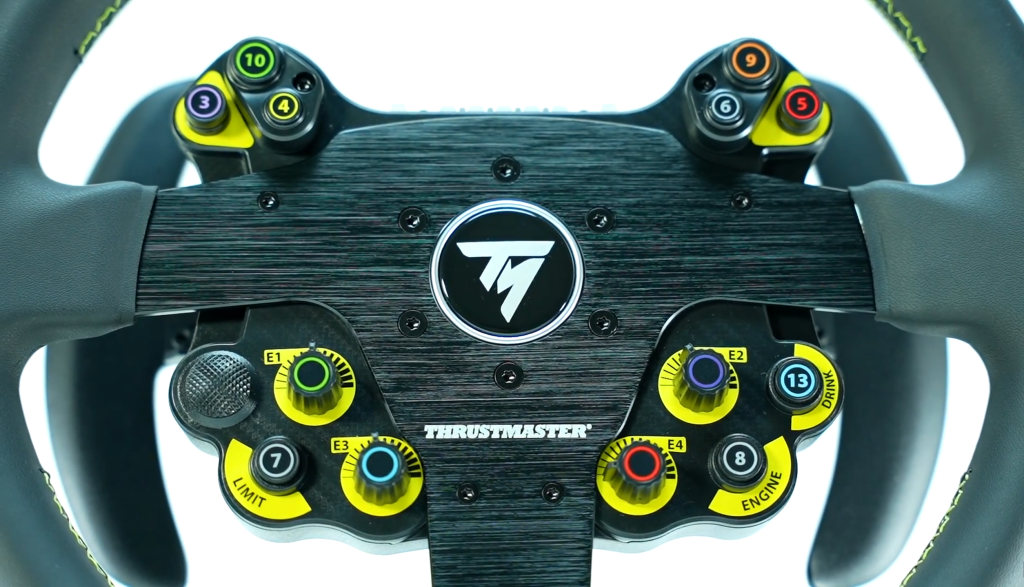
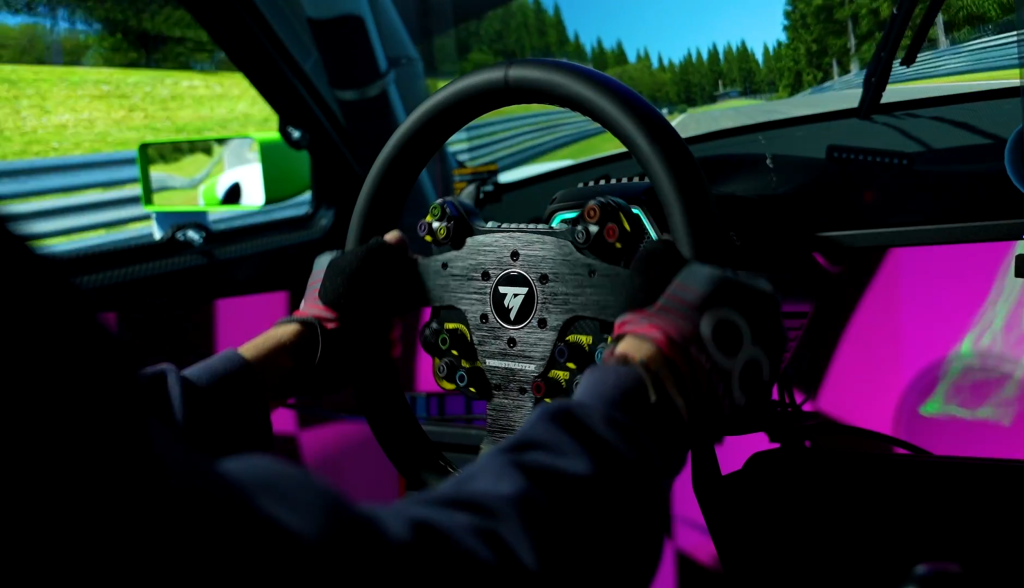
The wheel uses a synthetic leather finish with bright yellow stitching and a brushed aluminum faceplate, and visually I think it does a pretty good job. It looks clean, sporty, and a bit more premium than some people may expect from Thrustmaster. More importantly, it also feels good in the hands. The grip thickness is well judged, the leather feels soft and smooth while driving, and overall the rim has a comfortable, usable shape that works very well on track.
That comfort is one of the first things I noticed while using it. This is not one of those wheels that tries too hard to look exotic and then ends up feeling awkward once you actually start driving. It is straightforward, sensible, and easy to get along with, which is exactly what a versatile round wheel needs to be.
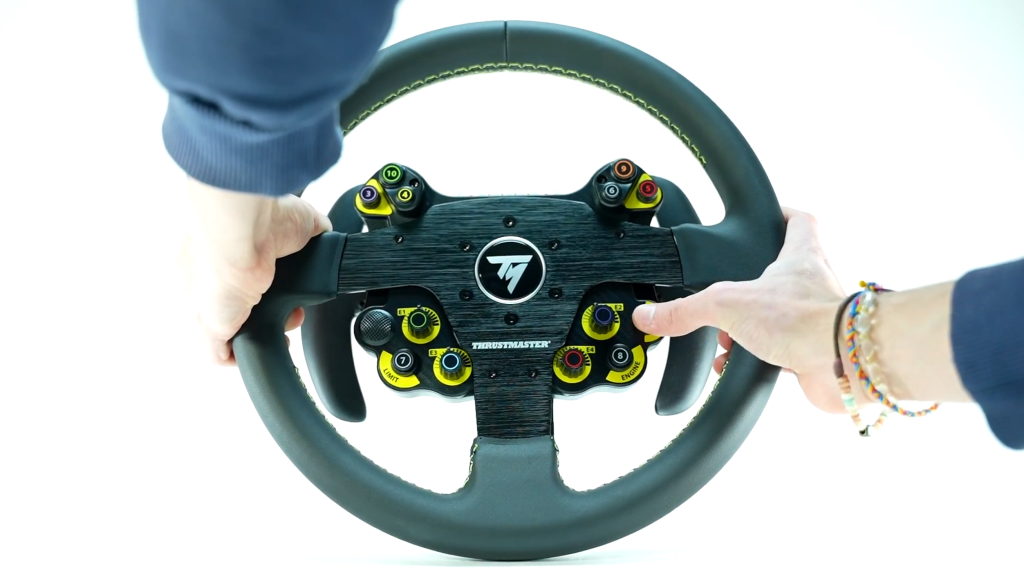
The biggest reason this product is important is not only the rim itself, but what it represents for Thrustmaster moving forward. For the first time in this newer lineup, the steering wheel can be detached from the button box and replaced with other rims, from Thrustmaster itself in the future or potentially compatible third-party options. That is a genuinely meaningful shift for the brand.
Now, I do need to point out that the process is not especially elegant. Swapping the rim involves removing and reinstalling a total of ten bolts, which makes it much more tedious than it probably should be. So no, this is not the kind of system where you are going to casually swap rims in thirty seconds before every session. But even so, I am still very happy to see Thrustmaster finally moving in this direction. It gives the ecosystem more future potential than it had before, and that matters.
That future potential is a big part of how I see this wheel overall. On its own, it is decent. But if Thrustmaster follows up with more compatible D-shaped, GT, and Formula-style rims at sensible prices, then the value of this whole modular direction becomes much clearer. Right now, that promise is more important than the reality, but the promise is still there.
On the front of the wheel, you are getting 12 buttons, 4 rotary encoders, and a D-pad with a more ergonomic design than the usual basic approach. In terms of feel, the controls are decent enough. They do not have a particularly standout click or especially premium sensation, but they are good enough and feel more or less in line with what you would expect in this part of the market. Nothing here blew me away, but nothing here felt especially bad either.
The rotary encoders and buttons are all within close reach, and that helps the wheel feel practical in actual use. It is not overloaded with controls, but it has enough to be useful without making the front face feel cluttered. This is another area where the wheel benefits from being sensibly designed rather than trying too hard to impress with spec-sheet overload.
Moving around to the back, you get very large magnetic paddle shifters, and overall I think they both look and feel pretty good. They are tactile, clicky, and absolutely usable, but their plastic finish does slightly hurt the overall premium feel. That is especially noticeable because the rest of the wheel is trying quite hard to feel like a step up for Thrustmaster. They are not bad paddles, but they do remind you that this is still not quite as refined as some of the strongest rivals.
They are also loud. That is not necessarily a dealbreaker, but it is worth knowing. If you like a more discrete shifting experience, these are definitely on the noisier side.
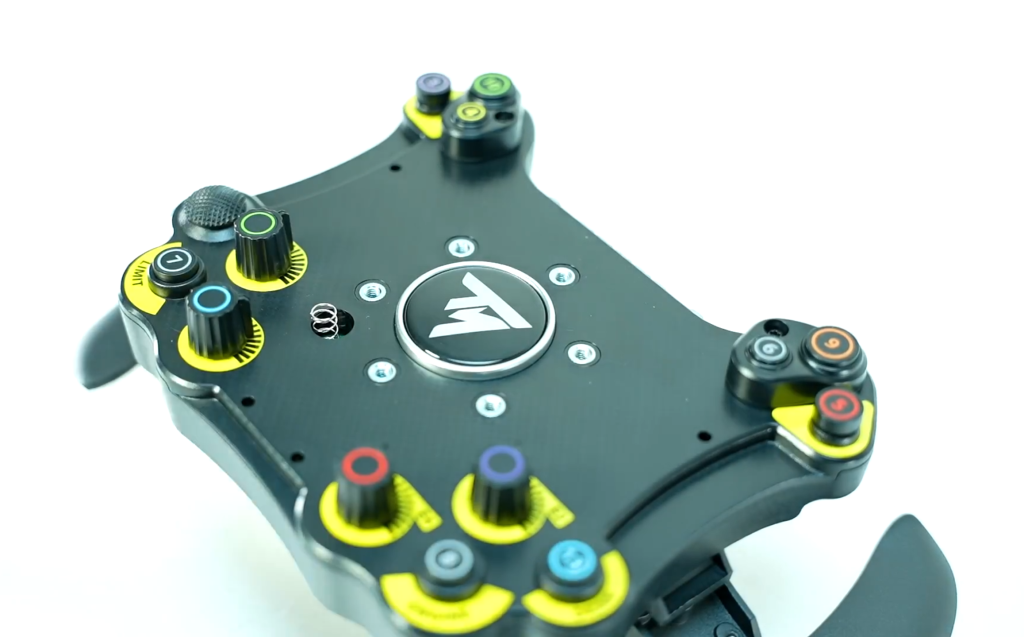
One thing Thrustmaster did get right here is that the wheel includes both of its quick release systems. You get the newer quick release intended for the T818 direct drive wheelbase, and you also get the older style used across the brand’s previous wheelbases. That is good, because it means the wheel can serve both newer and older Thrustmaster users without forcing a separate purchase right away.
Actually installing the correct quick release is another matter. You have to connect a small wire, bolt everything down, and go through a process that feels more cumbersome than it should. Thankfully, this is mostly a set-it-and-forget-it situation rather than something you will constantly be repeating. Still, many competitors have solved this in cleaner ways, and that makes Thrustmaster’s approach feel a little behind the curve.
That is really a recurring theme with this wheel. There are several areas where it is perfectly usable and not necessarily broken, but the market around it has moved on enough that merely being acceptable no longer feels like quite enough.
Once I actually got out on track with the wheel, I was, for the most part, pretty happy. This is a very versatile rim, and that comes through clearly in driving. It works well across a wide range of disciplines, from rally to GT-style driving, and the general hand feel stays comfortable across longer sessions. The synthetic leather feels smooth and premium enough, the paddles are easy to reach, and overall the wheel does what I wanted it to do on track.
One of the more pleasant surprises was the weight. Despite being a 320 mm wheel, this thing is surprisingly light. It feels noticeably lighter than some equivalent offerings from Moza, Simagic, and Fanatec, and while I would not call the difference dramatic, it does help a little with keeping force feedback feeling more direct and clear. It is a subtle advantage, but a real one.
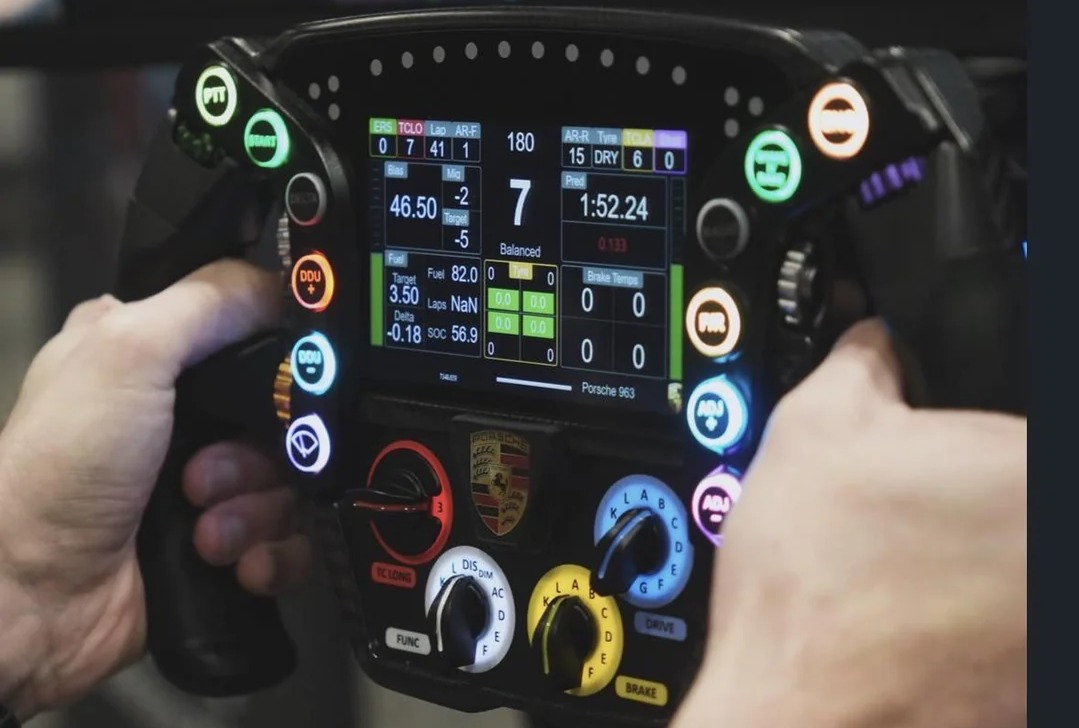
I was also pleasantly surprised by the RGB telemetry lights integrated into the top of the wheel. It is not something I expected to stand out much, but in actual use they were responsive, accurate, and genuinely useful. That part was very nicely done, and it helped the wheel feel a little more modern than some of its other decisions suggest.
Unfortunately, this is where the real problem starts. Because if this wheel were cheaper, I think I would be much more forgiving. But at around $300, it becomes much harder to ignore what competing products are doing better for less money.
€299.99 ~$335.40 at Thrustmaster EU
82 readings so far — not daily. · Sale prices predate daily tracking.
The cheapest retailer changed over this window, so we are not stating a price movement: its two ends are different shops.
For starters, there is no button backlighting. That alone feels like a miss in this segment. Then there is the button labeling, which I genuinely dislike. The wheel comes with buttons labeled by number rather than by actual function, and when I saw that a sticker sheet was included, I thought that might save the situation. But no. The sticker sheet also uses numbers, just in slightly different styles. And honestly, that makes almost no sense to me. If someone is spending this kind of money on a sim racing wheel, why would they want every control labeled by random numbers instead of useful functions like ABS, traction control, or fuel?
That is the kind of thing that makes the product feel less thought-through than it should. And it is not the only example. Rival wheels in this broad price range are offering carbon fiber faceplates, carbon fiber paddles, metal quick releases, backlit buttons, and much more sensible button labeling. Thrustmaster misses the mark on too many of those details here, and because of the price, those misses matter more.
I also found significant flex in the wheel. To be fair, this was more noticeable when I deliberately applied pressure in unnatural ways rather than during normal driving, but it was still there. And it is something the competitors I have in mind generally handled better. Again, not a fatal flaw, but another thing that becomes harder to excuse when the price is already asking a lot.
Cheapest today: $335.40 at Thrustmaster EU.
Between $327.35 and $349.99 over the last 12 months. The cheapest shop has changed recently, so we are not calling this a rise or a fall.
The Thrustmaster EVO Racing 32R Leather is not a bad product. In fact, in some ways, it is a promising one. It feels good in the hands, performs well on track, introduces a more modular direction for Thrustmaster, and shows signs that the company is at least thinking more seriously about where it wants its ecosystem to go next. That part is encouraging.
But at the same time, I do think it is a hard sell right now. The asking price is high, the competition in this segment is brutal, and there are just too many areas where rivals are offering more for less. No button backlighting, weak button labeling, plastic-feeling paddles, and noticeable flex are all things that stop this wheel from feeling as convincing as it needs to at three hundred dollars.
So where does that leave it? For me, the answer is potential. If Thrustmaster follows this up properly with more compatible rims at much more aggressive prices, this could become the start of something genuinely worthwhile. But for the time being, with no broader rim range yet available for this new button module, the EVO Racing 32R Leather feels more like a first step than a complete success. There is something here, but it is not quite there yet.
A promising modular first step, but a hard sell at around $300 right now. It is not a bad product, but it is not the easy recommendation it probably should have been.
Ideal buyer: Thrustmaster users wanting one versatile 320 mm rim for road, GT and rally use
Major drawback: No button backlighting, number-only button labels, plastic-feeling paddles and noticeable flex at this price
Bottom line: It feels good in the hands, performs well on track and introduces a more modular direction for Thrustmaster, but there is something here that is not quite there yet.
Check Price at Thrustmaster
Sim racing hardware reviewer and creator. Every review on this site is hands-on tested across direct-drive wheelbases, pedals, cockpits, motion systems and accessories before a word is published.
Design & development by CIDIX
· Sim rig builder, deals pipeline, simracing tools, comparisons, adspace & forum · Custom code licensed to OC Racing