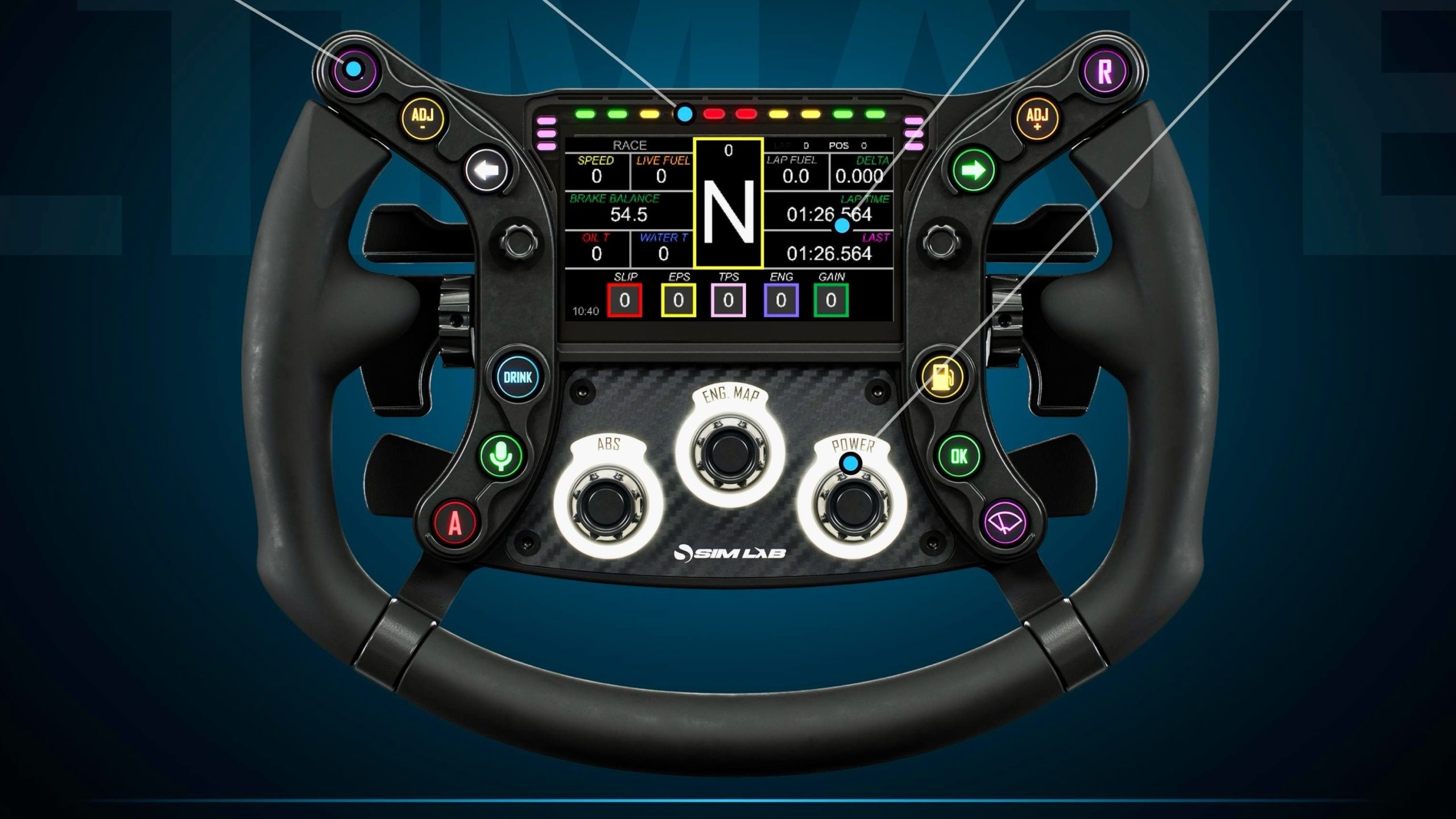
Sim-Lab unveils GTSL Ultimate steering wheel at Sim Racing Expo Frankfurt
Sim-Lab will unveil the GTSL Ultimate, a new version of its GTSL steering wheel platform, at Sim Racing Expo Frankfurt this weekend.

MOZA HMA150 Motion Platform technology has officially been unveiled by MOZA Racing at GDC 2026. The company revealed its new HMA150 Haptic Motion Actuator alongside two additional software systems called Motion Manager and Racing Lab. Together they introduce a new approach to immersive simulation hardware and AI driven driver training.
The announcement was made during the GDC Festival of Gaming, where MOZA is showcasing the new technologies from March 9 to March 13 at booth #1055. While MOZA Racing is best known for its wheelbases, pedals and other sim racing peripherals, the new MOZA HMA150 Motion Platform represents a significant step into the world of motion simulation.
| Shop | Price | |
|---|---|---|
| MOZA Racing | $2,999.00 | Buy |
Over the past few years, MOZA Racing has become one of the fastest growing brands in the sim racing hardware market. The company has gained attention through its distinctive hardware design and steadily expanding product lineup.
The reveal of the MOZA HMA150 Motion Platform indicates that the company is now aiming to build a broader simulation ecosystem. Rather than focusing only on steering hardware and pedals, MOZA appears to be exploring a more complete simulation experience.
At the center of this strategy is the HMA150 actuator system, supported by the new Motion Manager AI motion engine and the Racing Lab driver coaching system.
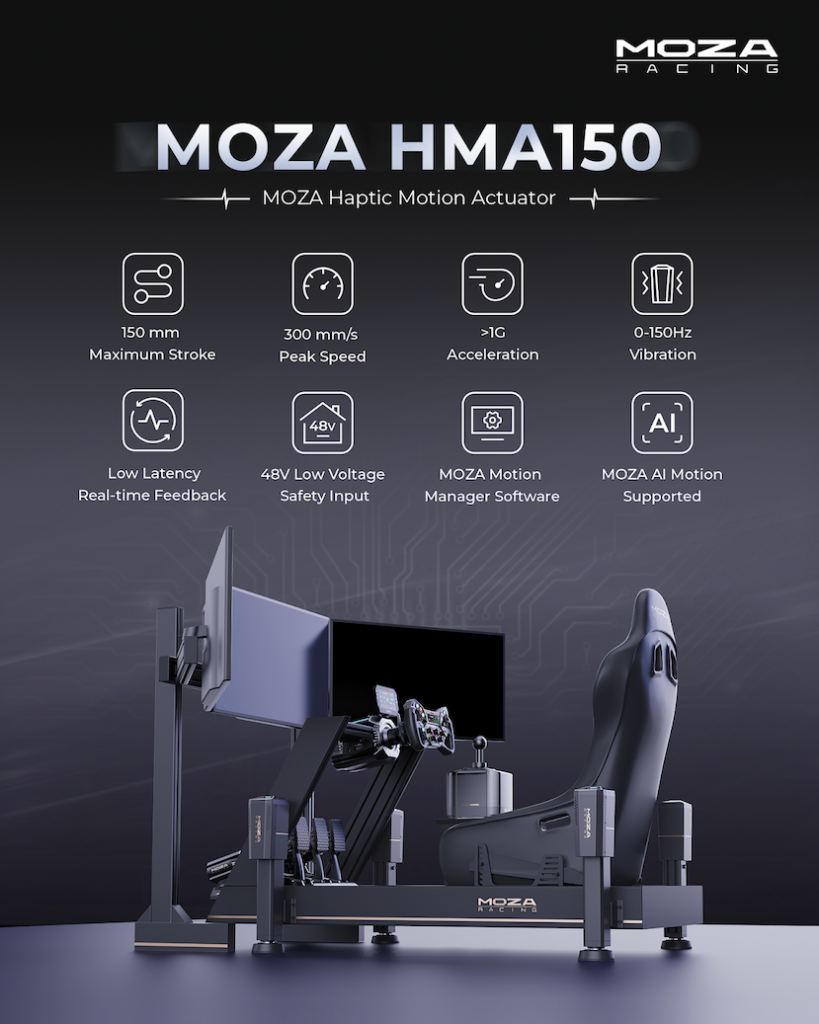
The HMA150 Haptic Motion Actuator forms the hardware foundation of the new MOZA HMA150 Motion Platform. According to MOZA, the system was developed entirely in house and includes proprietary motors, integrated electronics and custom motion control algorithms.
The actuator configuration uses a four axis layout with three degrees of freedom. This allows the system to reproduce pitch, roll and heave movements that correspond to vehicle behavior within racing simulations.
MOZA states that the actuators deliver up to 150 millimeters of travel, with a maximum movement speed of 300 millimeters per second. Peak acceleration is rated at over 1G, which enables the platform to simulate intense vehicle dynamics such as hard braking, rapid weight transfer and aggressive cornering loads.
The actuators shown during the presentation feature a compact vertical construction with integrated housings and a robust mechanical design. Each actuator appears to function as a self contained module that can be combined into a full motion platform beneath a racing cockpit.
A key objective behind the MOZA HMA150 Motion Platform is accurate synchronization with in game physics. By translating telemetry data into precise mechanical movement, the system aims to reproduce vehicle motion cues with a high level of responsiveness and realism.
Motion platforms have traditionally remained a niche within the sim racing market due to their complexity and cost. With MOZA entering this segment, the motion simulation landscape could see increased competition and innovation.
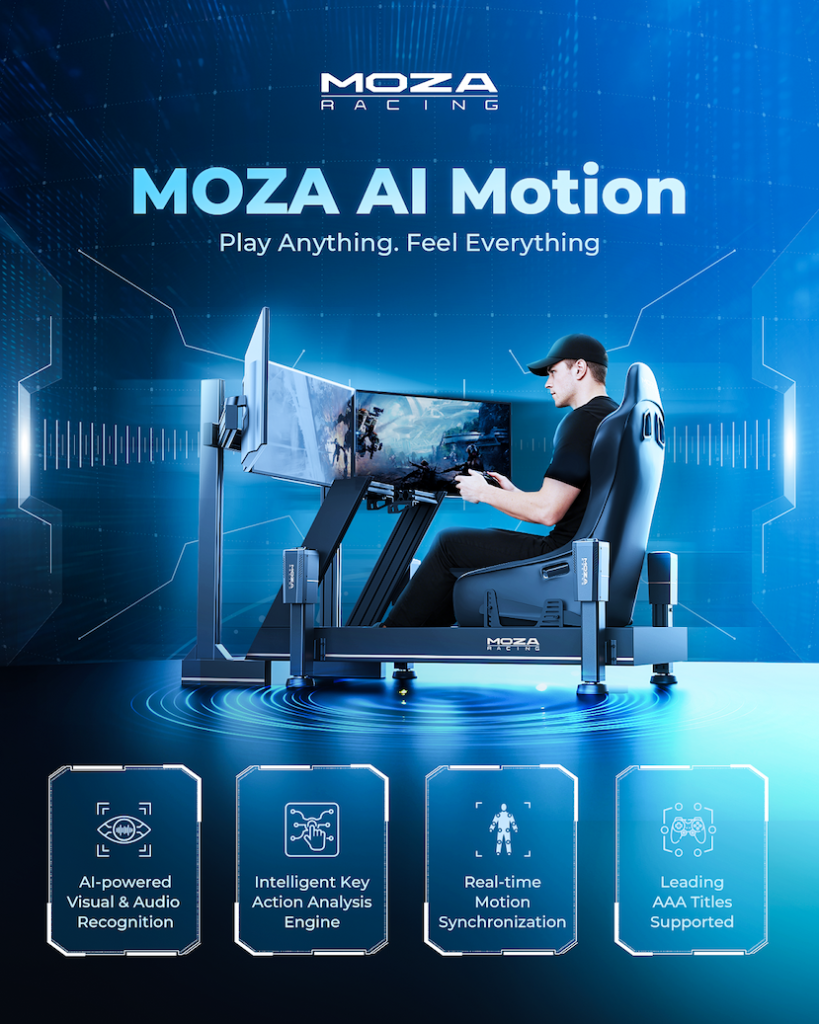
In addition to the hardware platform, MOZA introduced Motion Manager, an AI powered motion feedback engine designed to expand game compatibility for the MOZA HMA150 Motion Platform.
One of the biggest limitations for motion systems has always been software support. Many games either provide limited telemetry access or lack official integration for motion hardware entirely.
Motion Manager attempts to overcome this limitation by analyzing visual and audio signals from the game in real time rather than relying solely on telemetry data.
Through this process the software can detect events such as vehicle movement, impacts, environmental interactions and other gameplay elements. Once detected, these events are translated into motion and haptic feedback signals for compatible hardware.
This approach allows the MOZA HMA150 Motion Platform to generate physical feedback even in titles that were never designed with motion simulation support.
If the system performs consistently across different games, it could significantly increase the number of compatible titles available for motion platform users.
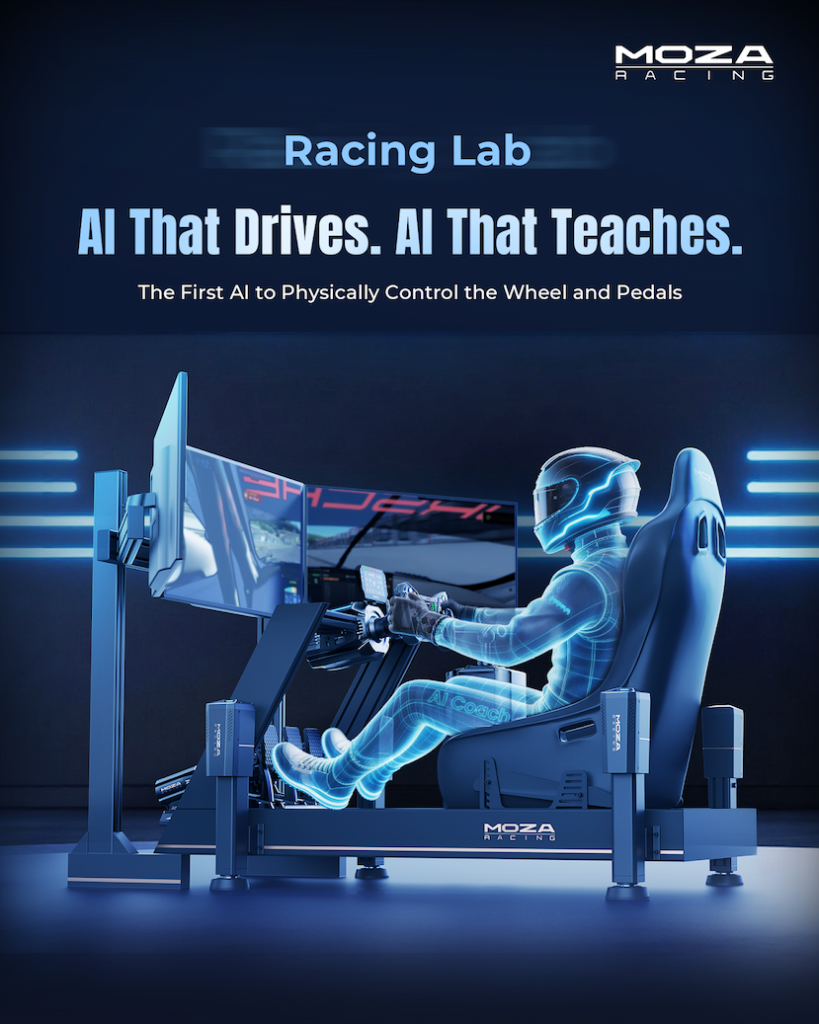
The third technology introduced at GDC is Racing Lab, an AI driven coaching system developed for sim racing driver training.
While many drivers rely on telemetry analysis tools or ghost laps to improve their performance, Racing Lab focuses on a more direct and physical learning method.
The system uses AI algorithms together with MOZA hardware to reproduce expert steering and pedal inputs directly through the driver’s equipment.
The system actively controls the steering wheel and pedals to simulate professional level driving techniques. Drivers are able to feel optimal steering corrections, throttle modulation and braking pressure through their hardware.
This method allows drivers to learn racing techniques through physical feedback rather than simply observing visual data.
Racing Lab is designed to integrate with MOZA wheelbases and the company’s active pedal systems, enabling the software to recreate realistic steering forces and pedal resistance during training sessions.
Visitors attending the GDC Festival of Gaming are able to experience the MOZA HMA150 Motion Platform firsthand at the MOZA booth.
The demonstration rigs combine the motion platform with MOZA steering hardware and the Racing Lab coaching system to create a fully integrated simulation environment.
Based on the presentation visuals, the setup forms a highly immersive racing simulator where motion feedback, steering force feedback and pedal input all work together.
The introduction of the MOZA HMA150 Motion Platform signals a significant expansion of MOZA’s ambitions within the sim racing industry.
By combining motion hardware with AI driven software systems like Motion Manager and Racing Lab, the company is moving toward a more interconnected simulation ecosystem.
The HMA150 Motion Actuator, the Motion Manager AI motion engine and the Racing Lab coaching system collectively represent MOZA’s latest effort to enhance immersion and driver development within sim racing.
As further information about pricing, release timelines and supported hardware becomes available, the MOZA HMA150 Motion Platform could become an important new entry in the evolving motion simulation market.
Design & development by CIDIX
· Sim rig builder, deals pipeline, simracing tools, comparisons, adspace & forum · Custom code licensed to OC Racing